Artwork
Ofițer de cavalerie
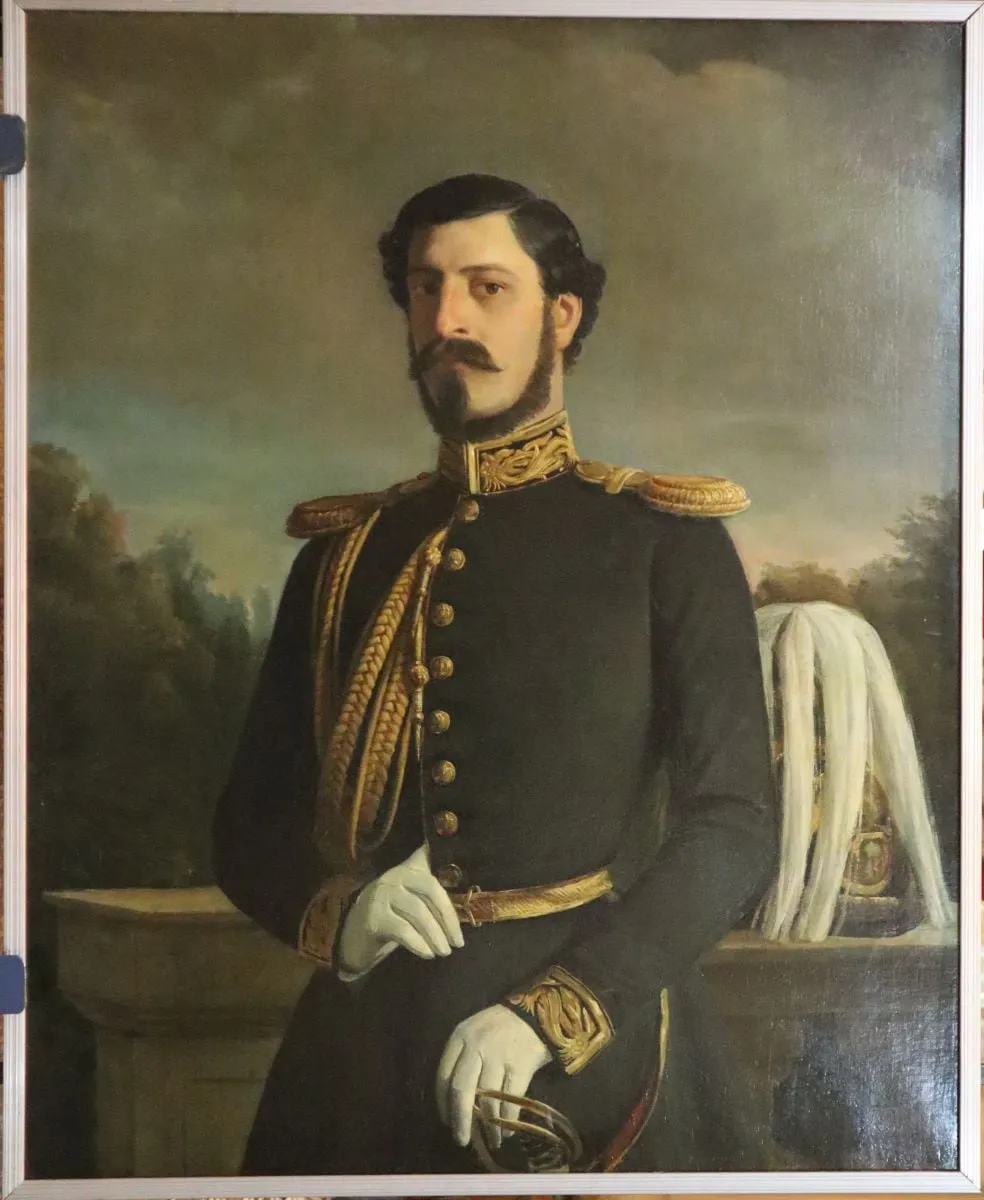
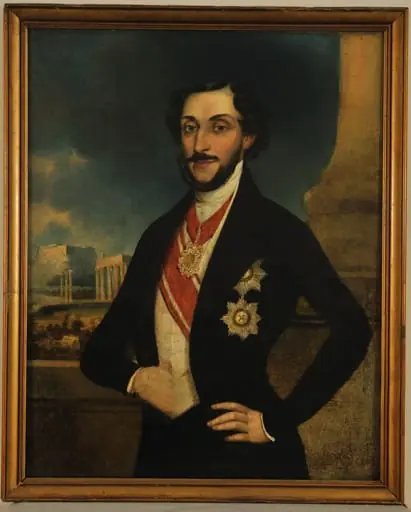
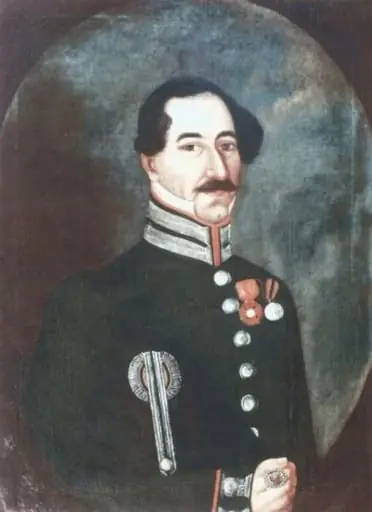
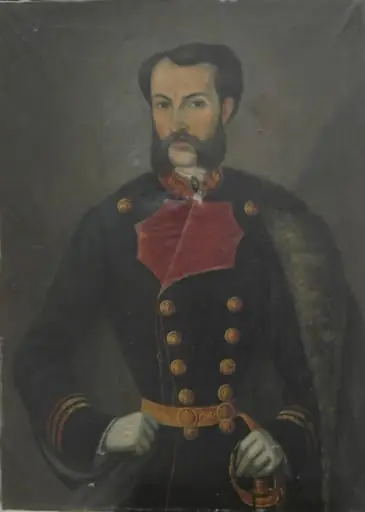
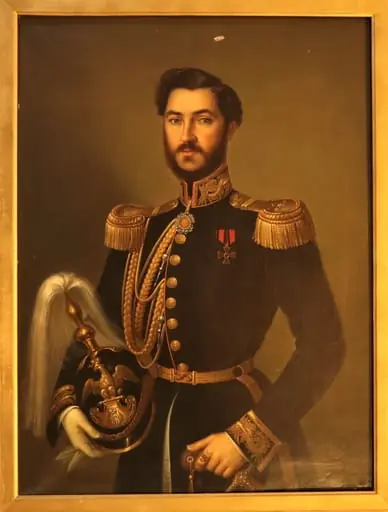
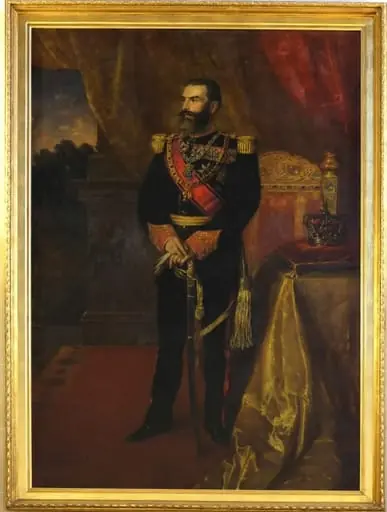
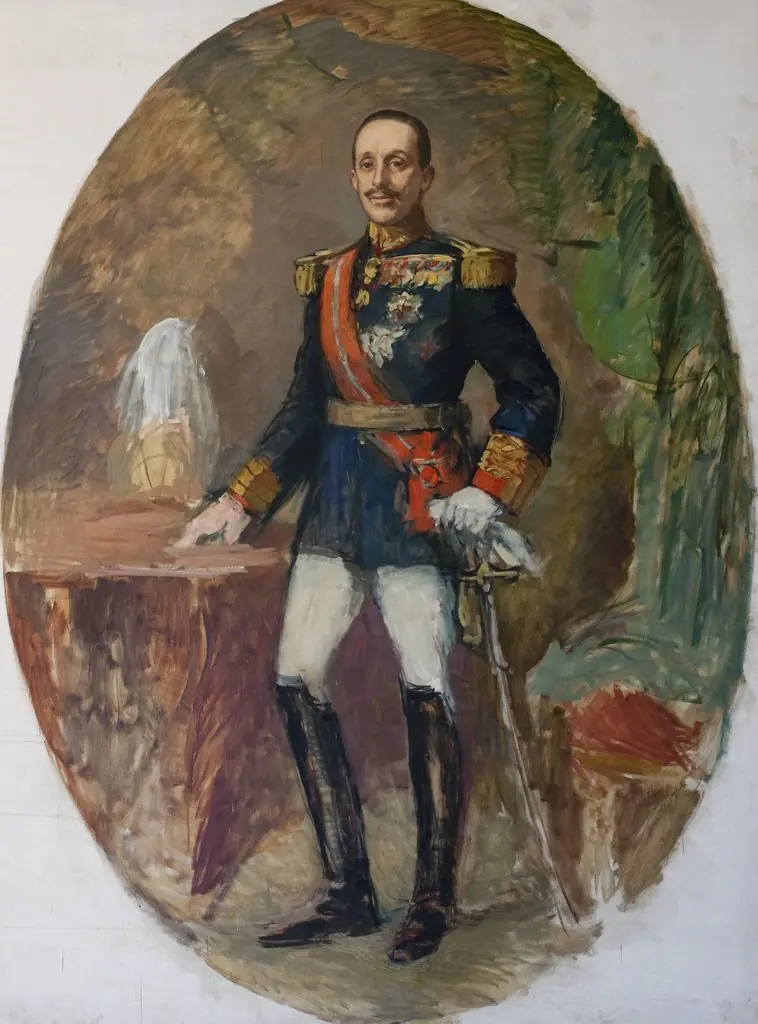
Ofițer de cavalerie is an unspecified painting by Ion Negulici. It is held in the collection of the King Ferdinand I National Military Museum. This portrait presents a cavalry officer in formal military dress, rendered with restrained elegance against a muted landscape.
About this work
Overview
The background suggests an open outdoor setting with indistinct trees and overcast skies, providing spatial depth without distracting from the subject.
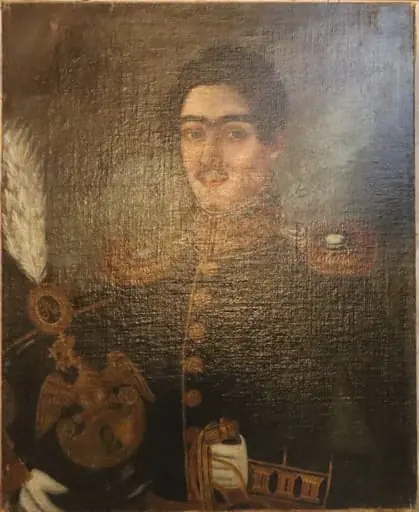
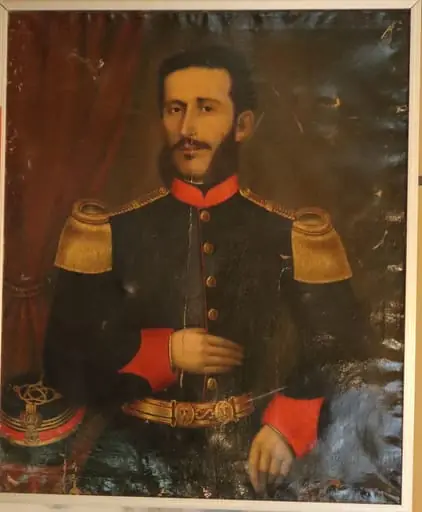
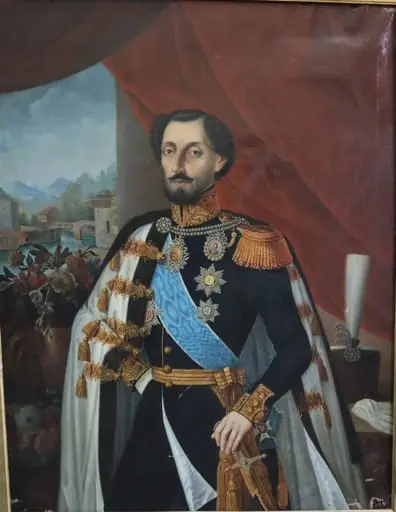
This portrait presents a cavalry officer in formal military dress, rendered with restrained elegance against a muted landscape. The figure stands centered, facing the viewer, his posture upright and composed. The background suggests an open outdoor setting with indistinct trees and overcast skies, providing spatial depth without distracting from the subject. The painting emphasizes dignity through controlled composition and attention to uniform detail.
Subject & Meaning
The subject is a military officer, likely of Romanian origin, identified through his uniform’s gold trim and ceremonial style. His white gloves and neatly groomed appearance indicate a formal occasion, possibly a portrait commissioned to affirm status or service. The absence of weapons or action implies a focus on identity rather than battlefield prowess, reflecting the cultural value placed on rank and decorum in late 19th-century military circles.
Technique & Style
The artist employs a smooth, precise brushwork typical of academic portraiture, with careful rendering of fabric textures and metallic accents. The palette is subdued—dark tones for the uniform contrast with pale gloves and a soft, atmospheric background. Lighting is even and directional, modeling the face and uniform without dramatic shadows. The background is loosely painted, allowing the figure to remain the focal point through tonal and compositional contrast.
History & Provenance
The painting is attributed to Ion Negulici, a Romanian artist active in the late 19th and early 20th centuries, known for portraits of military and civic figures. While specific commission details are unrecorded, the work aligns with Negulici’s practice of documenting Romania’s emerging national elite during a period of institutional consolidation after independence. Its current location and ownership history remain undocumented in public records.
Context
Created during a time when Romania was formalizing its state institutions after gaining independence in 1877, such portraits served to visually affirm military authority and national identity. Officers like the one depicted were symbols of order and modernization. The painting reflects broader European trends in academic portraiture, where dress, posture, and setting communicated social standing rather than individual personality.
Legacy
Ion Negulici’s work, including this portrait, contributes to a visual archive of Romania’s early modern military class. Though not widely exhibited internationally, his portraits remain significant within Romanian art history for their documentation of civilian and military elites during a formative national period. This piece exemplifies the quiet, dignified realism favored in state-commissioned portraiture of the era.
Artist & collection
Artist
Ion Negulici was the kind of artist who kept one foot in the drawing room and the other in the street, sketching politicians and soldiers when they weren’t looking.
Museum
King Ferdinand I National Military Museum
Continue through works from the same source collection.