Artwork
Madonna and Child with Four Аngels
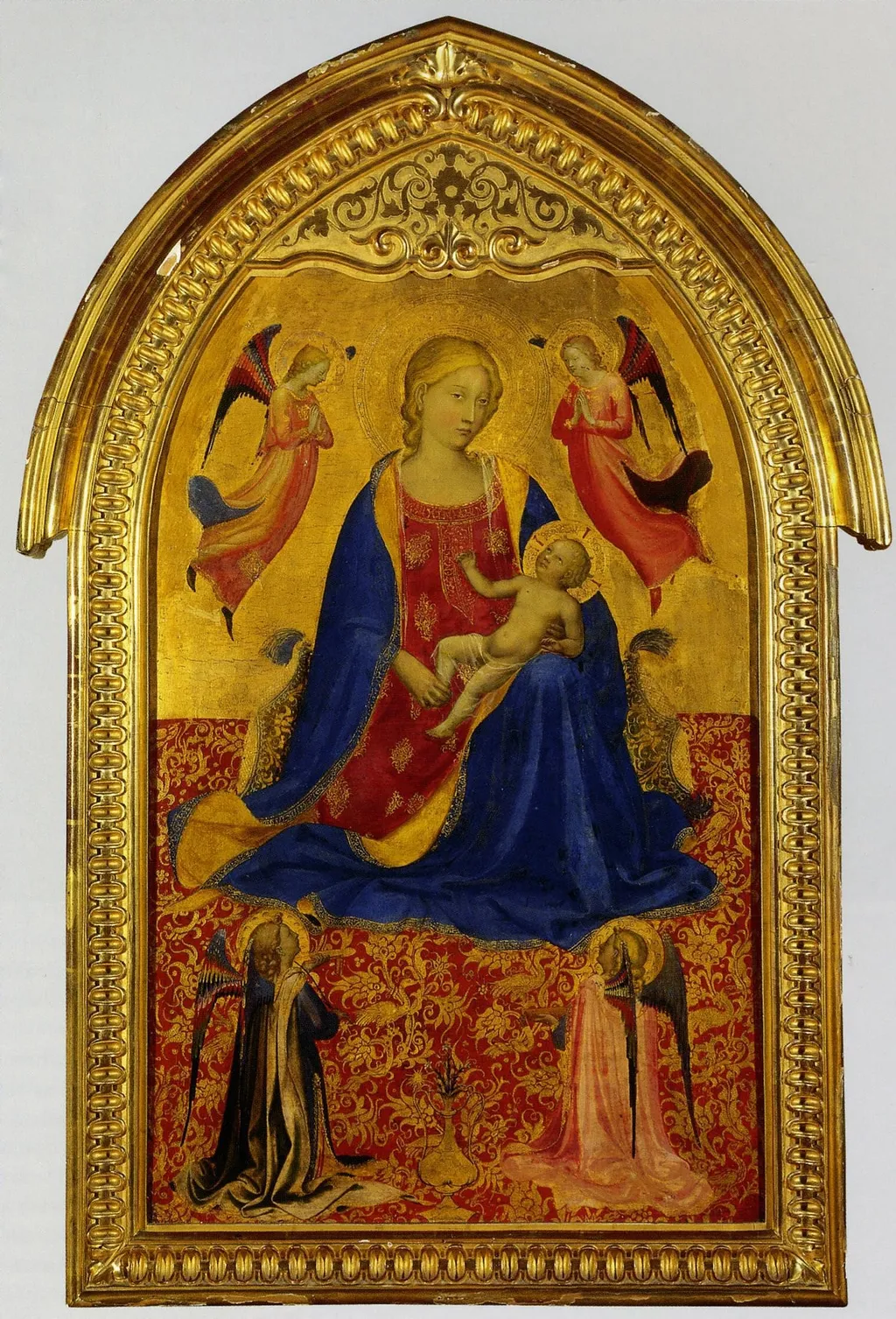
Madonna and Child with Four Аngels is a tempera painting by the Early Renaissance artist Fra Angelico. It dates from 1420 and is held in the collection of the Hermitage Museum.
About this work
Overview
Created circa 1420 by the Dominican friar Fra Angelico, this tempera panel presents a devotional image of the Virgin Mary with the infant Christ, attended by four angels. The work exemplifies early Florentine Renaissance painting and is part of the State Hermitage Museum’s collection.
Subject & Meaning
The central figure is a serene woman in a blue mantle, holding the Christ Child who reaches toward her. Four winged angels—two positioned beside the pair and two above—appear to observe or present gifts, reinforcing the sacred intimacy of the mother‑child bond.
Technique & Style
Executed in egg tempera, the painting displays the medium’s characteristic fine, luminous layers. A gold ground underlies the scene, while bright robes of blue, red, green, and white provide contrast. A decorative gold border with swirling motifs frames the composition, typical of early Renaissance devotional panels.
History & Provenance
After its creation in early 15th‑century Florence, the panel entered various collections before being acquired by the State Hermitage Museum, where it remains on display as a representative work of Fra Angelico’s religious output.
Artist & collection
Artist
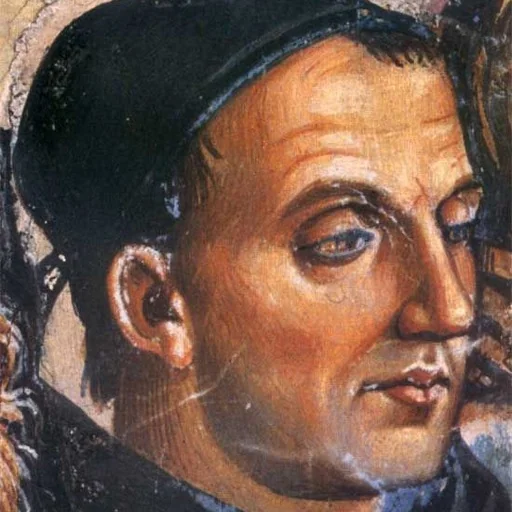
Fra Giovanni da Fiesole (born Guido di Pietro; c. 1395 – 18 February 1455), known posthumously as Fra Angelico ( FRAH an-JEL-ik-oh, Italian: ), was an Italian Dominican friar and painter active during the early…

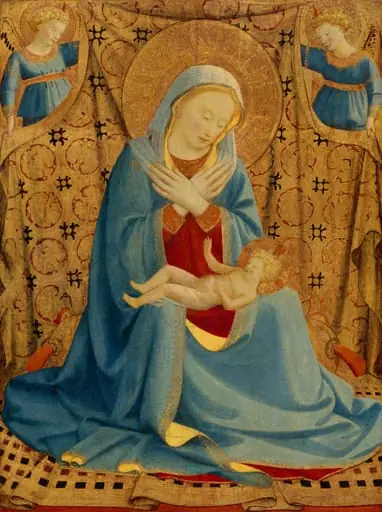
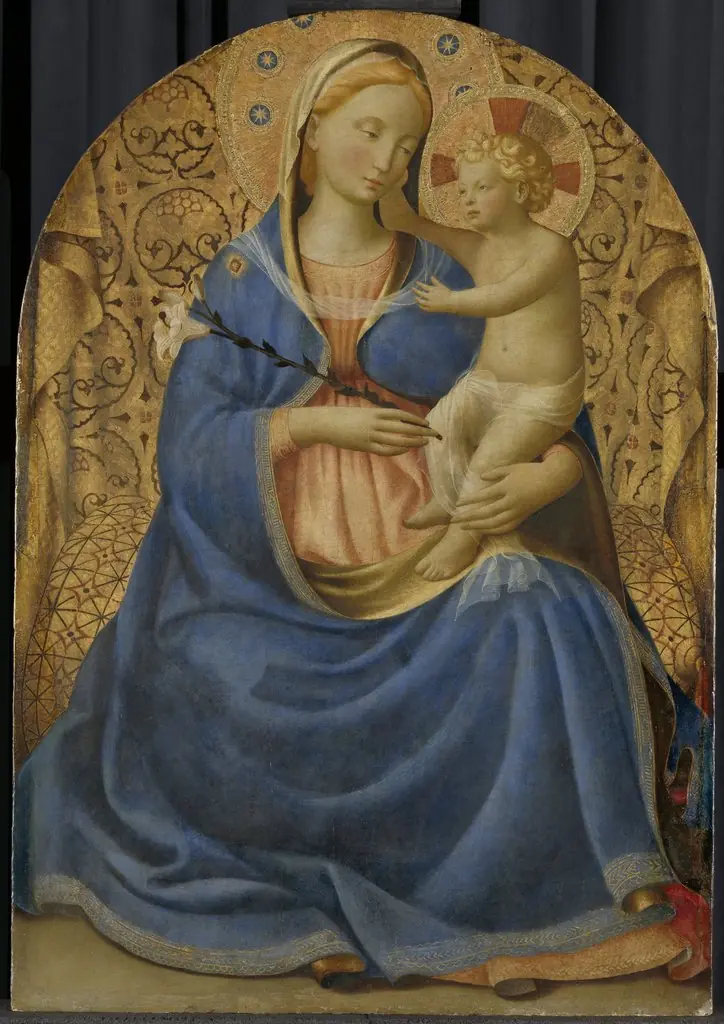
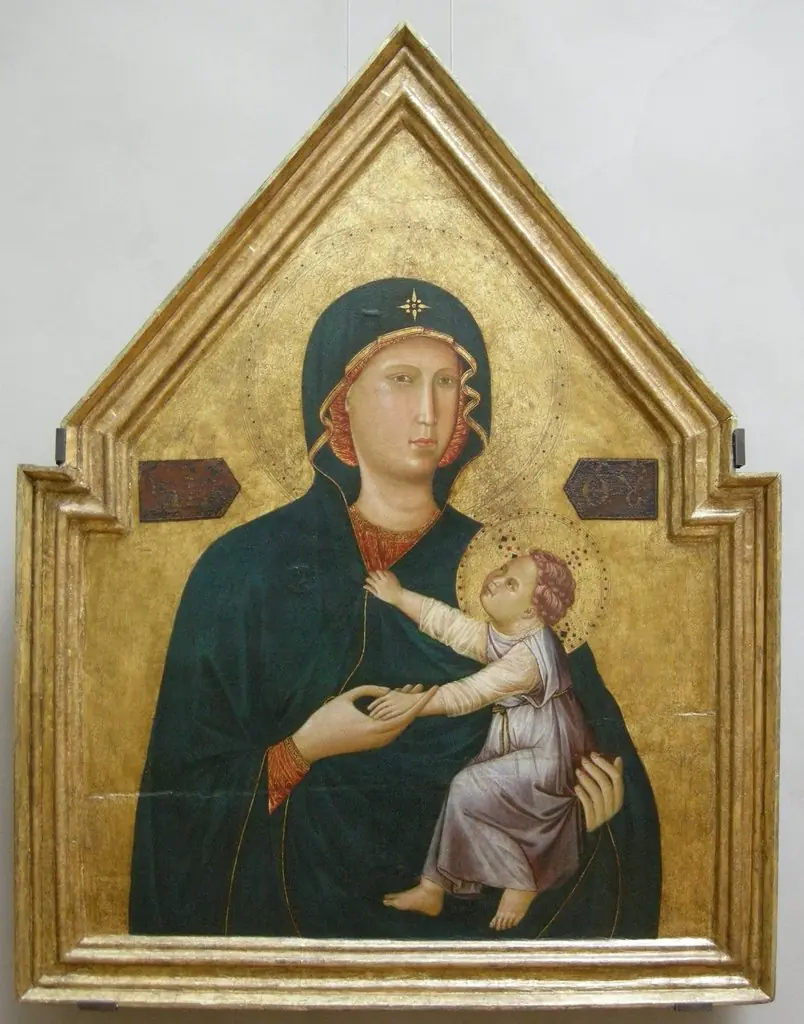 Madonna and Child
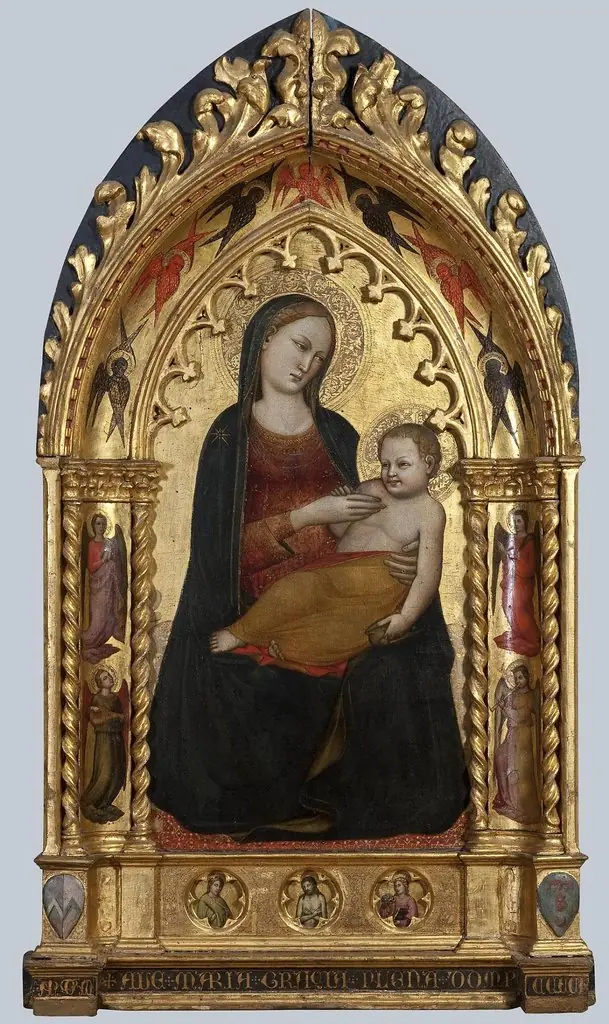 Madonna and Child
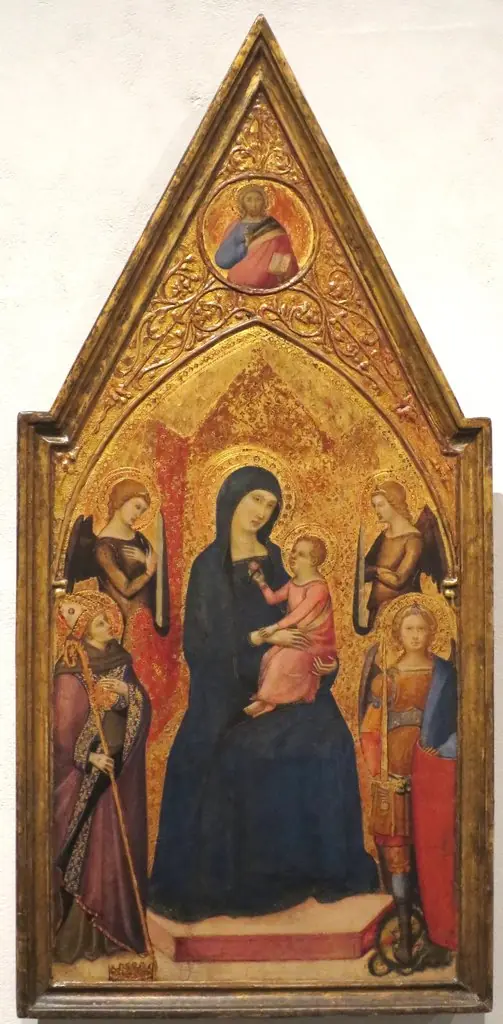 Virgin and Child with Sts. Louis of Toulouse and Michael
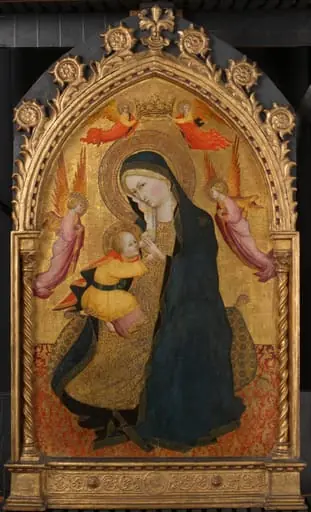 Madonna of Humility
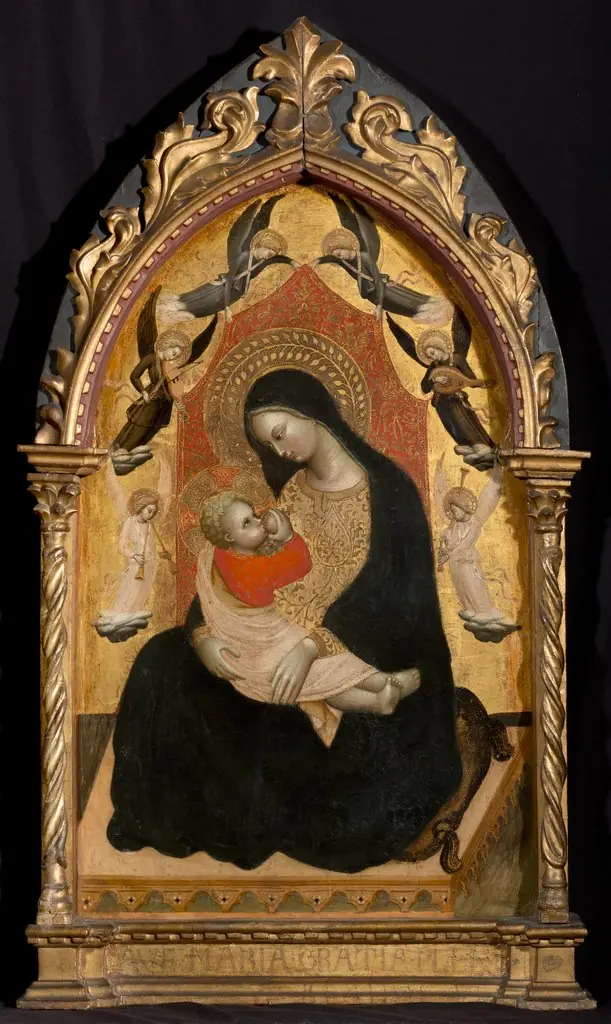 Virgin and Child with Music-Making Angels
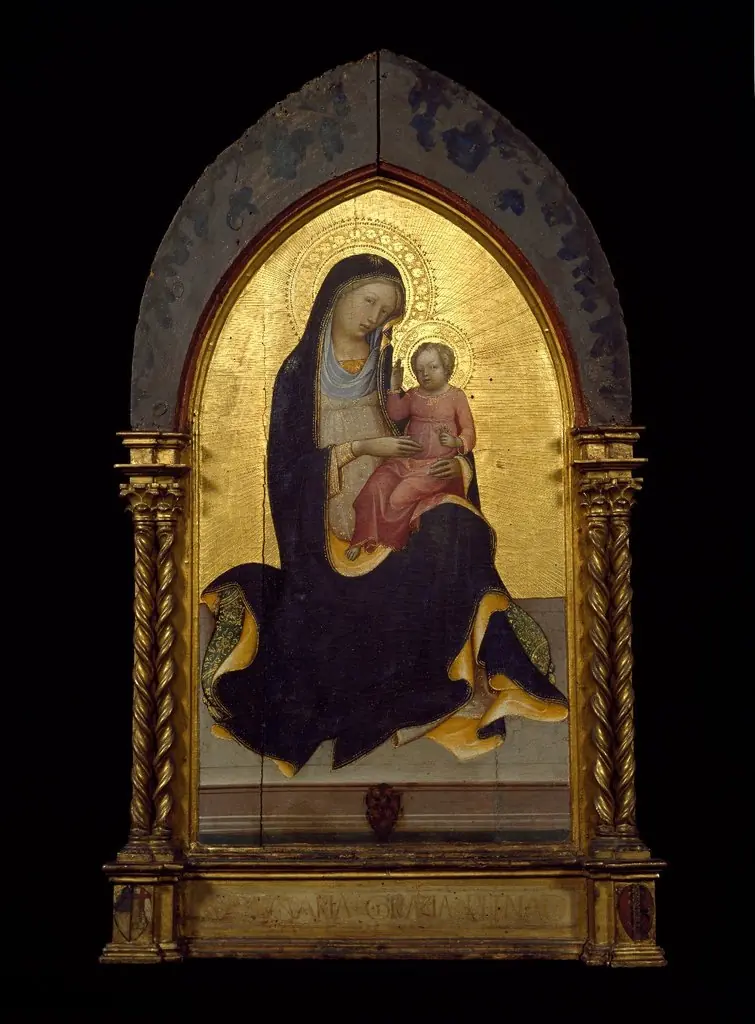 Madonna of humility
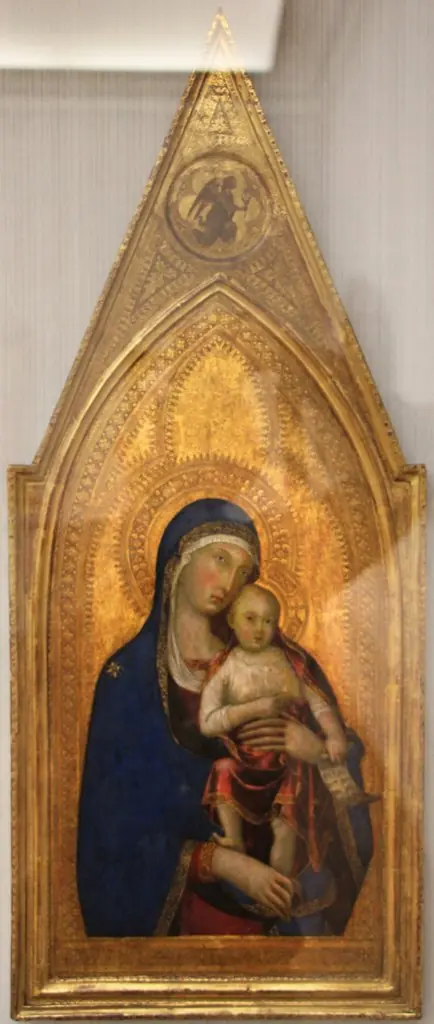 Maria mit dem Kind
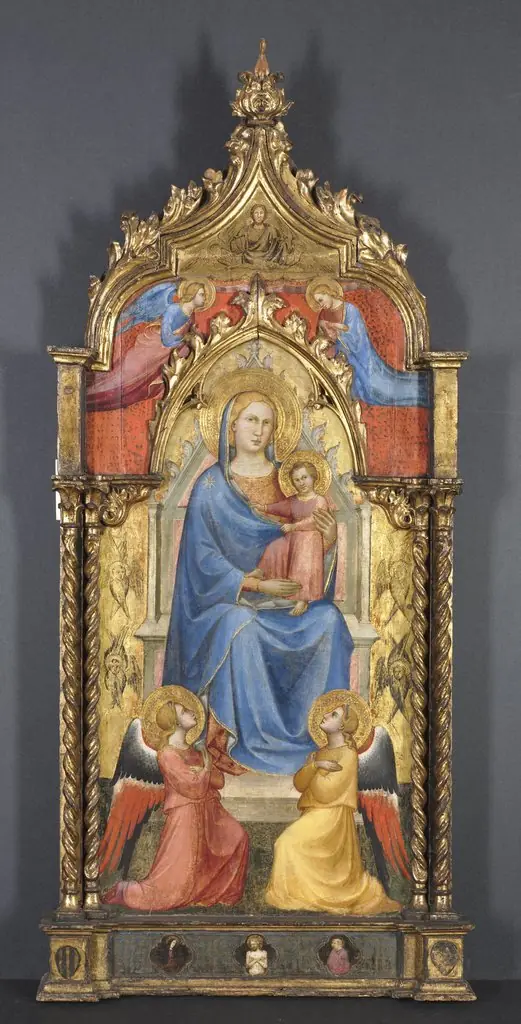 Virgin and Child with Angels
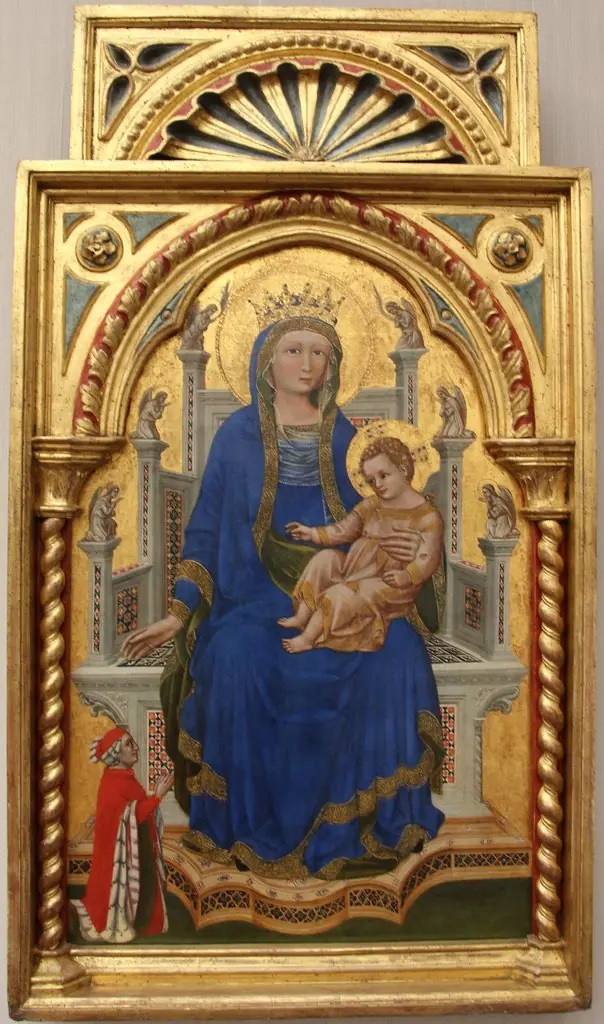 The Virgin and Blessing Child Enthroned with a Donor
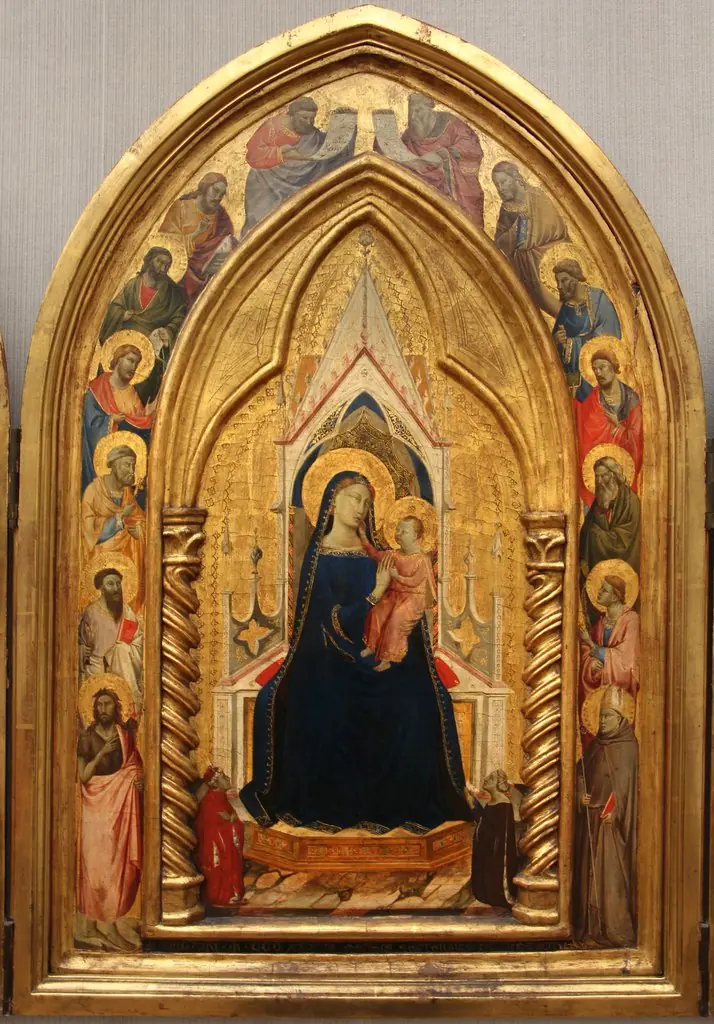 Central panel of the triptych
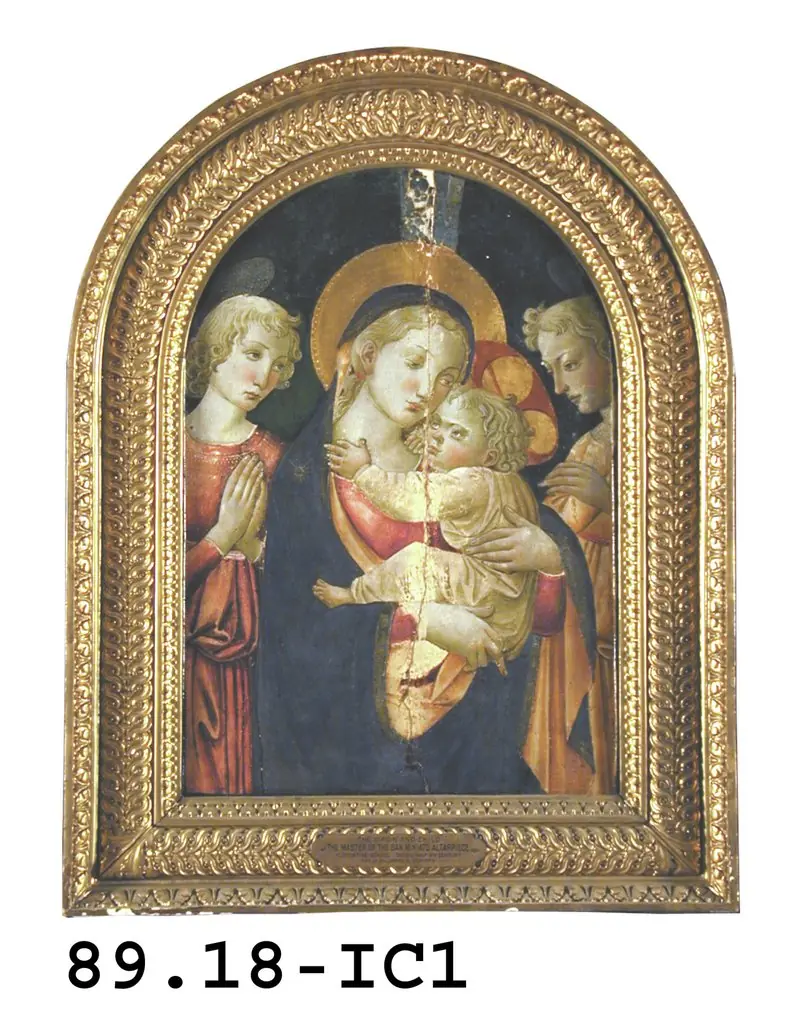 Madonna and Child with Two Angels
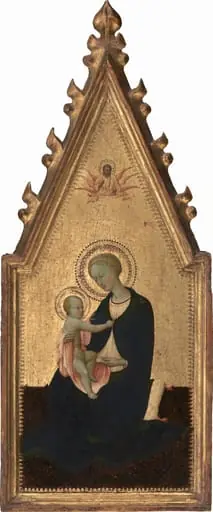 Madonna of Humility