Artwork
Virgin and Child with Sts. Louis of Toulouse and Michael
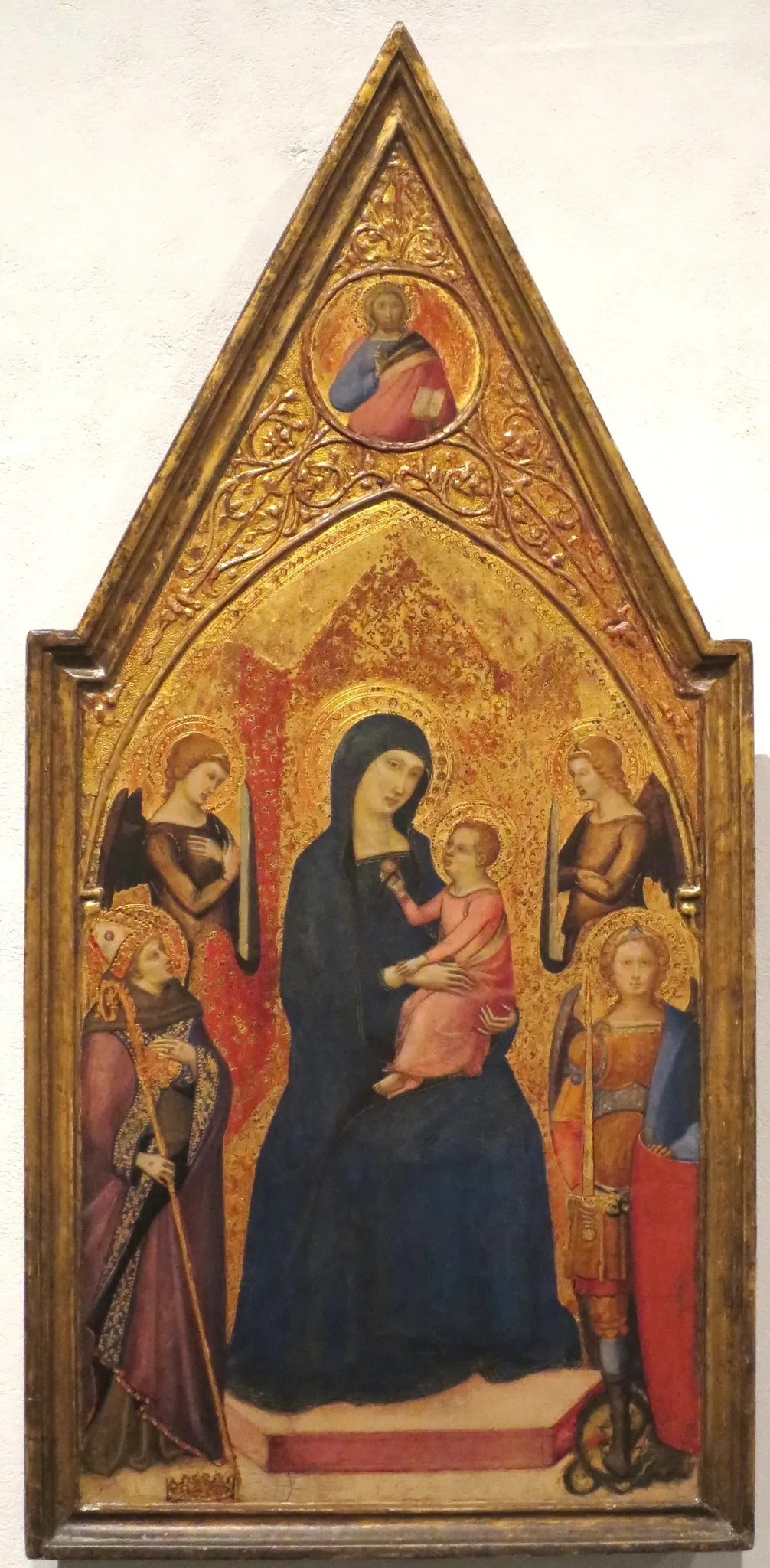
Virgin and Child with Sts. Louis of Toulouse and Michael is a tempera painting by Luca di Tommè. It dates from 1362 and is held in the collection of the Los Angeles County Museum of Art.
About this work
Overview
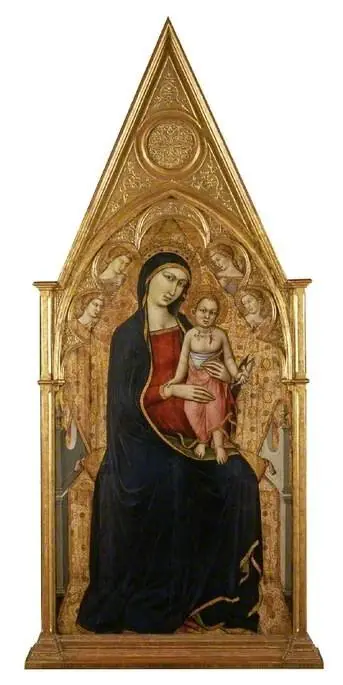
This tempera panel, dated 1362, is attributed to Luca di Tommè, a Sienese painter active during the fourteenth century. It presents the Virgin Mary seated with the Christ Child, accompanied by Saints Louis of Toulouse and Michael. The work exemplifies the artist’s adherence to the Sienese tradition, characterized by linear elegance and a restrained use of color.
Subject & Meaning
The central grouping of Mary and the infant Christ is flanked by two saints: Louis of Toulouse, identifiable by his episcopal vestments, and Michael, depicted with a sword. The arrangement underscores devotional themes common in late medieval altarpieces, where intercessory figures frame the holy pair, reinforcing their spiritual authority and protective roles.
Technique & Style
Executed in tempera—a medium of pigment bound with egg yolk—the painting displays the hallmarks of Sienese craftsmanship: delicate gold leaf backgrounds, intricate patterning, and elongated figures with muted, harmonious coloration. The composition reflects the influence of earlier masters such as Duccio and Simone Martini, while maintaining a distinctively linear and hieratic approach.
History & Provenance
The panel entered the collection of the Los Angeles County Museum of Art following its creation in the mid-fourteenth century. Its early history remains unrecorded, though its stylistic consistency with Luca di Tommè’s documented output supports attribution to his workshop. The work’s survival attests to its continued devotional or decorative significance over subsequent centuries.
Context
Fourteenth-century Sienese artists favored gold-ground panels for religious subjects, emphasizing spiritual transcendence over naturalistic representation.
Produced in Siena during a period of artistic continuity, the painting reflects the city’s enduring visual vocabulary. Fourteenth-century Sienese artists favored gold-ground panels for religious subjects, emphasizing spiritual transcendence over naturalistic representation. This work aligns with that tradition, serving liturgical or private devotional functions within a broader European context of Gothic painting.
Artist & collection
Artist
Luca di Tommè (or Luca Thome) (c. 1330–1389) was an Italian painter active between 1356 and 1389 in Siena. He worked in the style established by earlier Sienese painters Duccio, Simone Martini, Pietro Lorenzetti and…

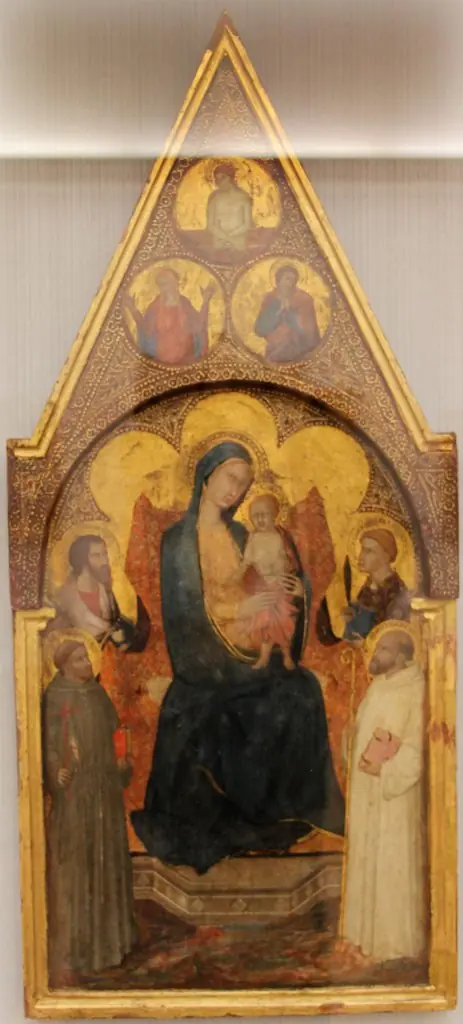 Thronende Maria mit dem Kind und vier Heiligen
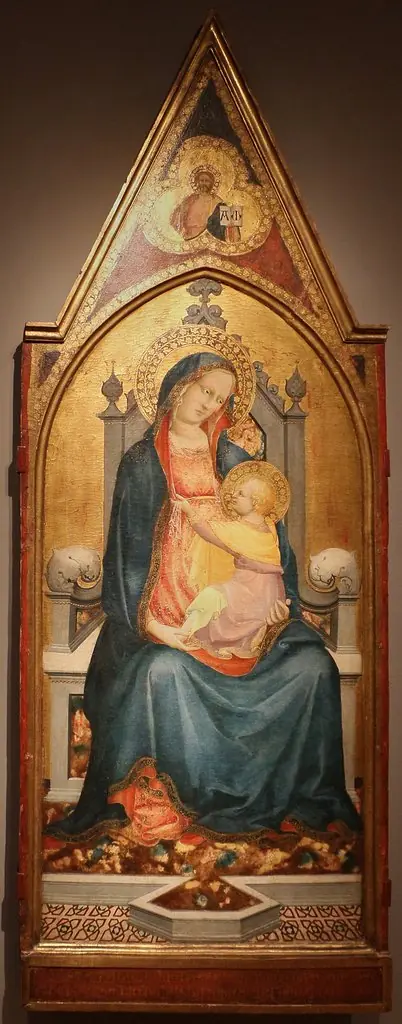 madonna col bambino in trono
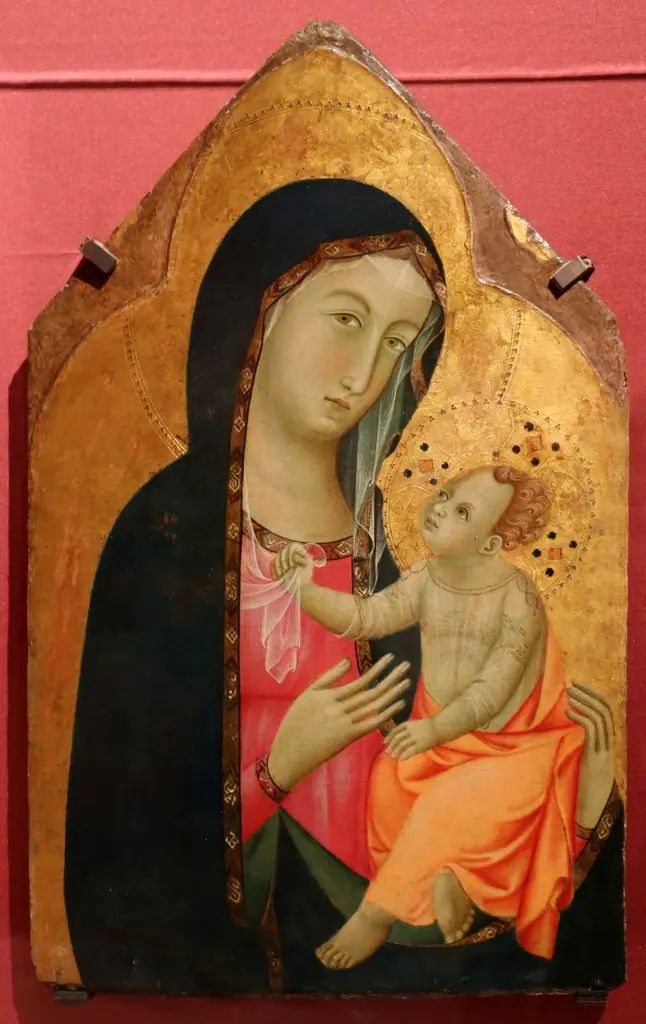 Madonna and Child
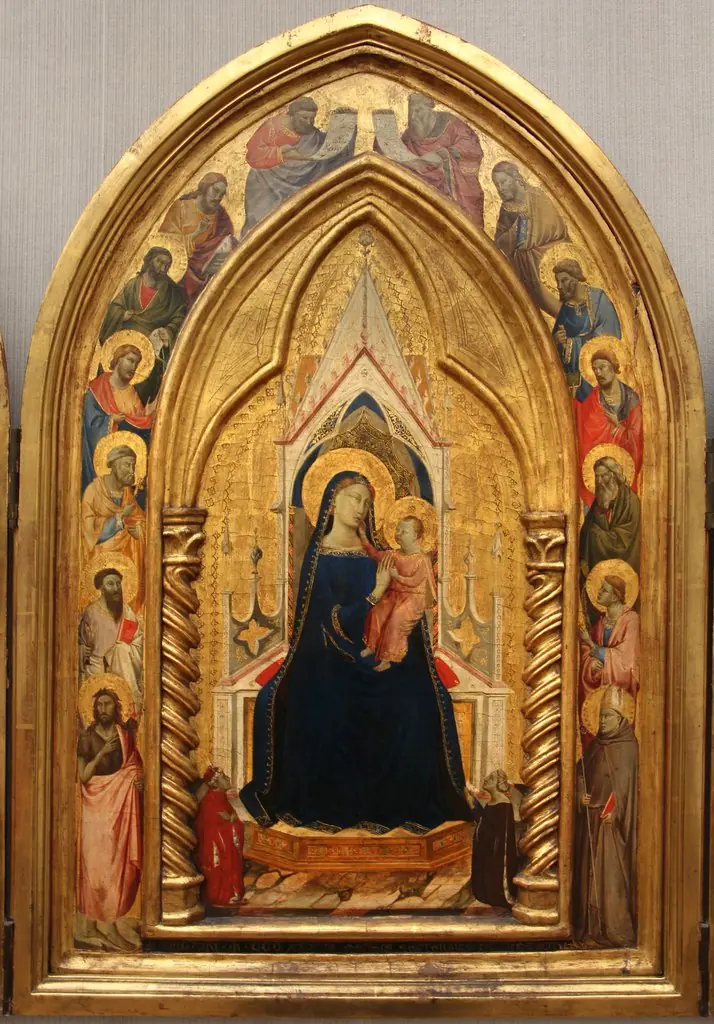 Central panel of the triptych
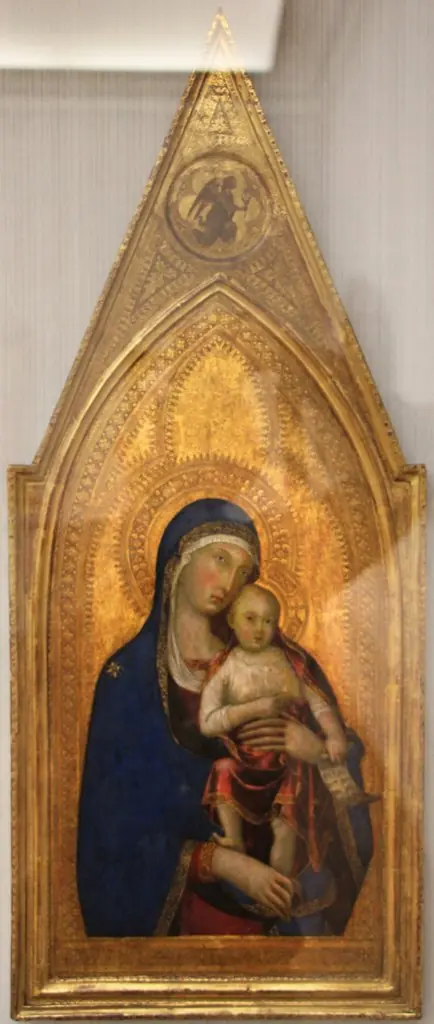 Maria mit dem Kind
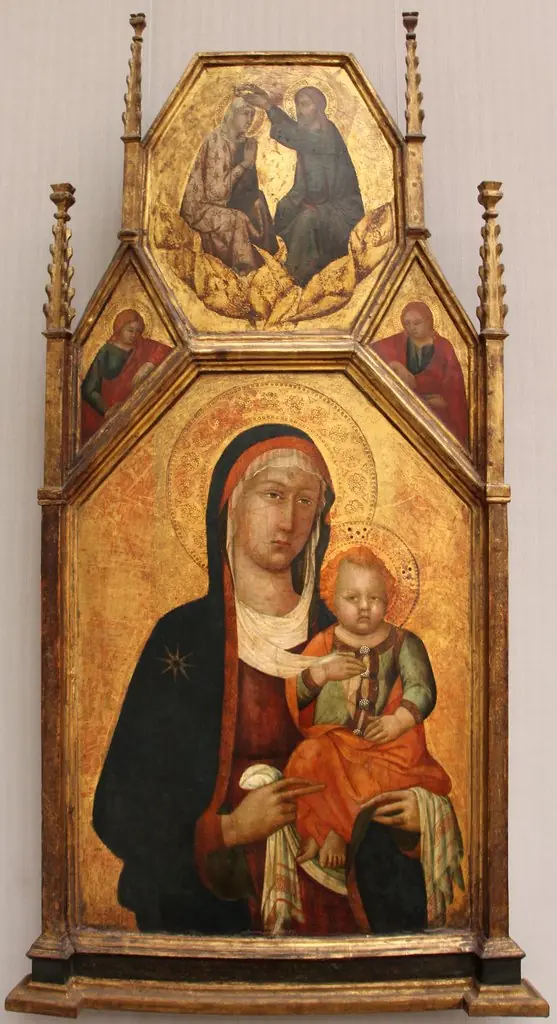 Maria mit dem Kind
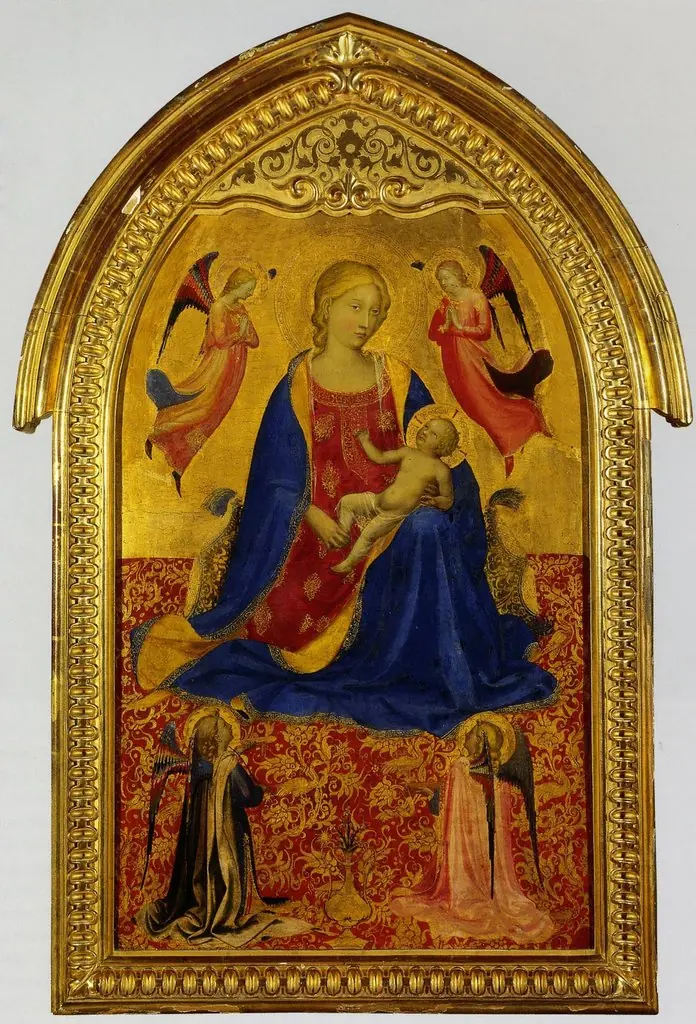 Madonna and Child with Four Аngels
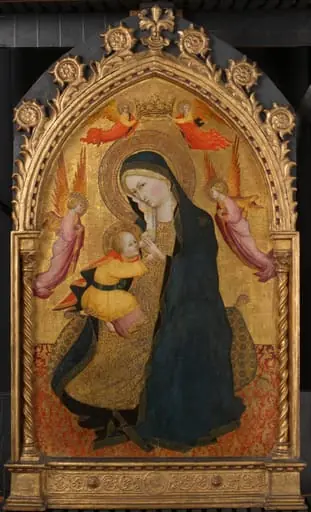 Madonna of Humility
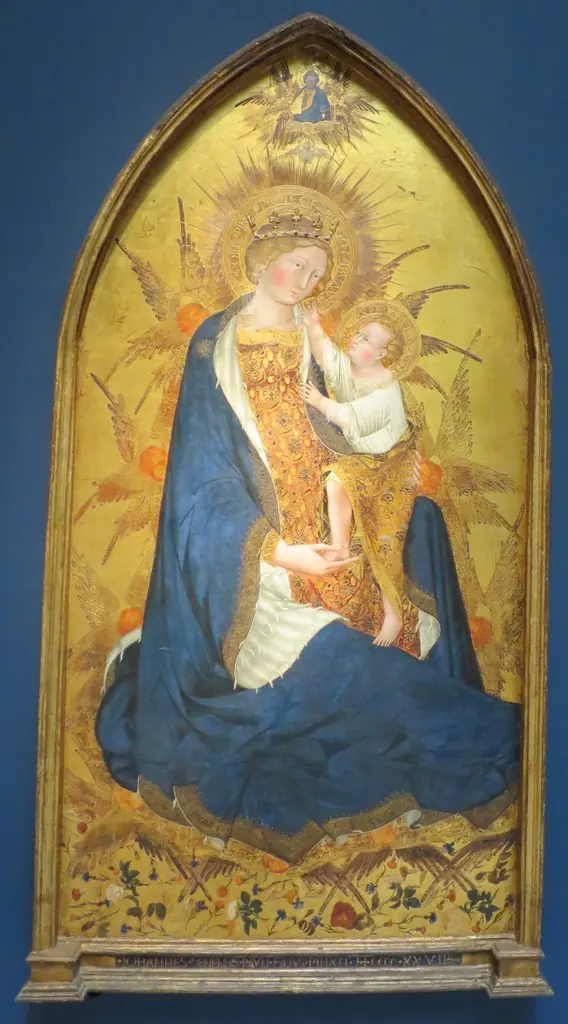 Branchini Madonna
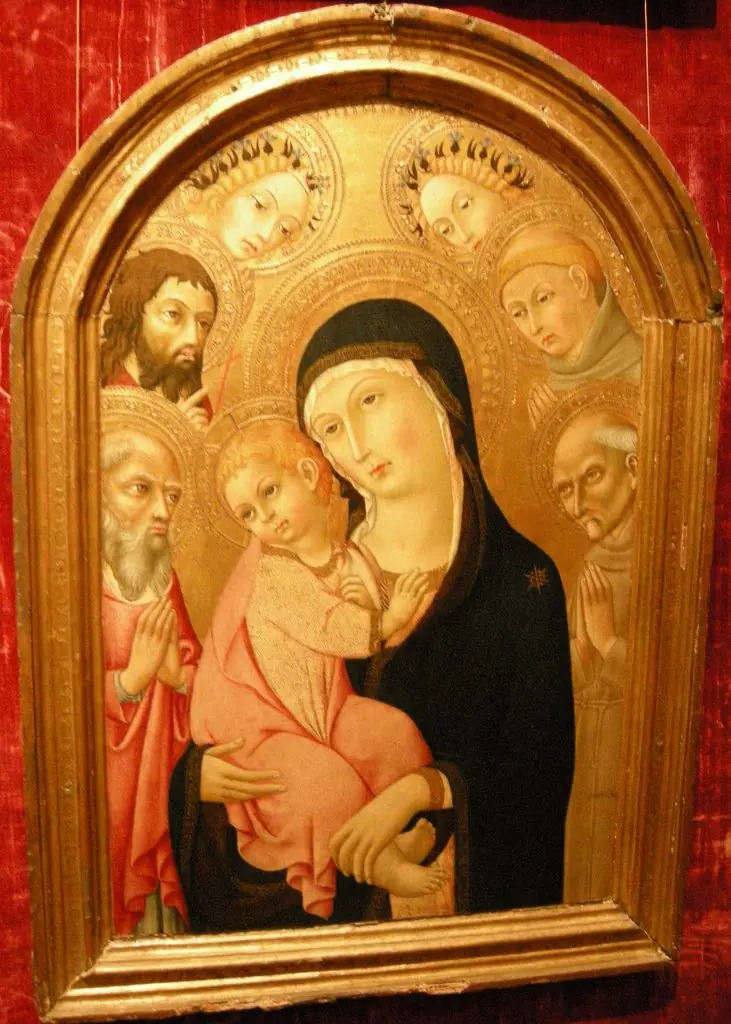 madonna col bambino, santi e due angeli
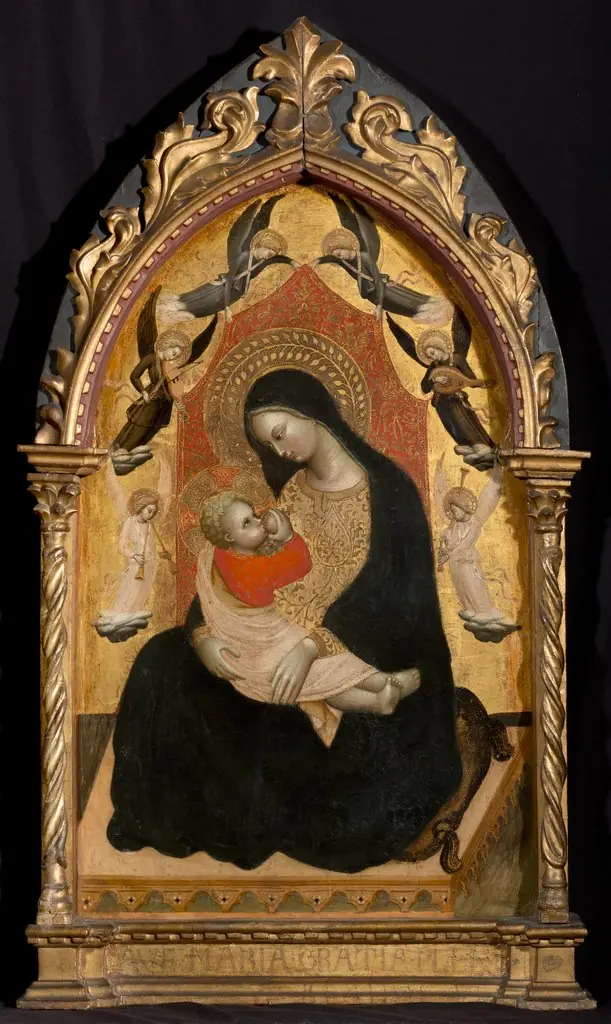 Virgin and Child with Music-Making Angels
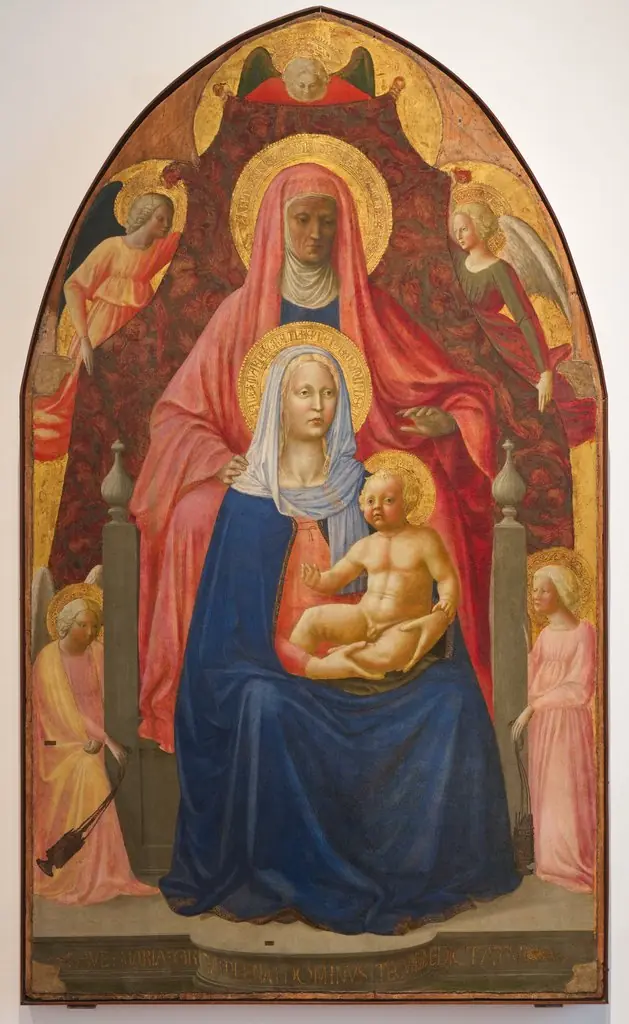 Virgin and Child with Saint Anne