Artwork
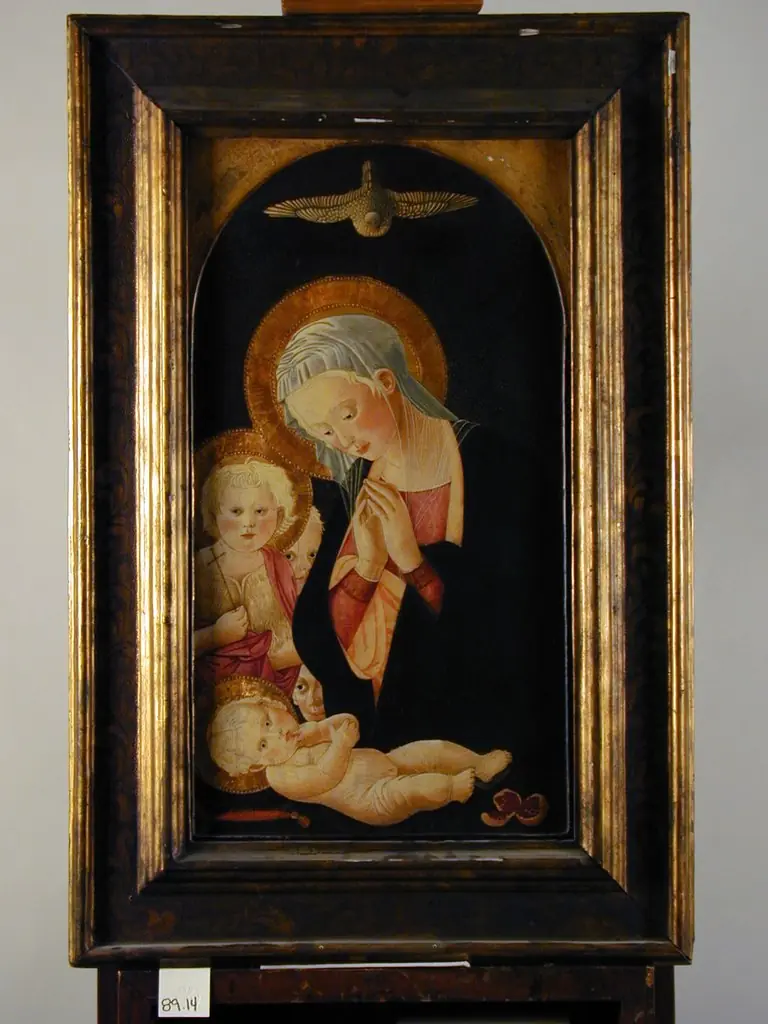
Madonna and Child with Two Angels
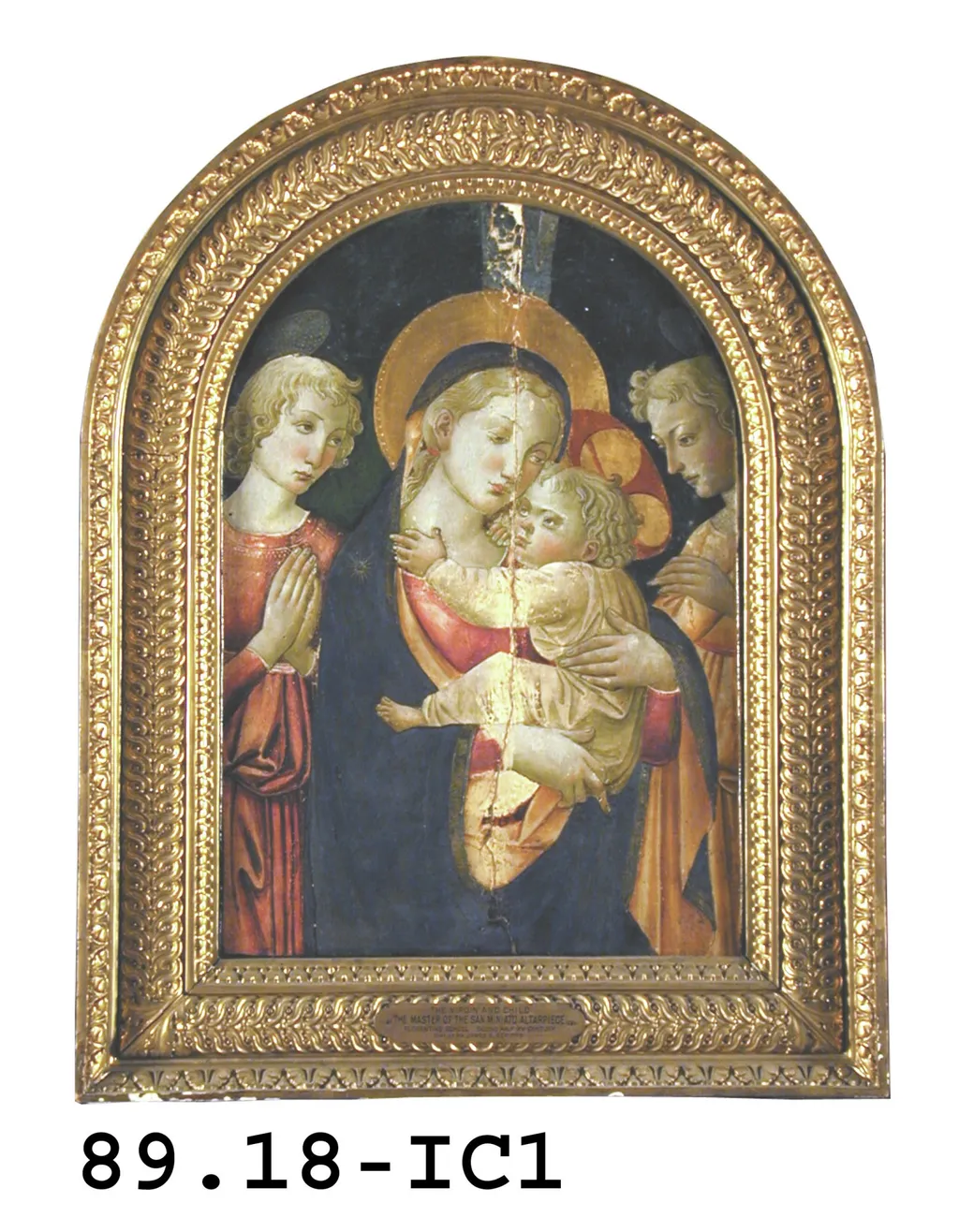
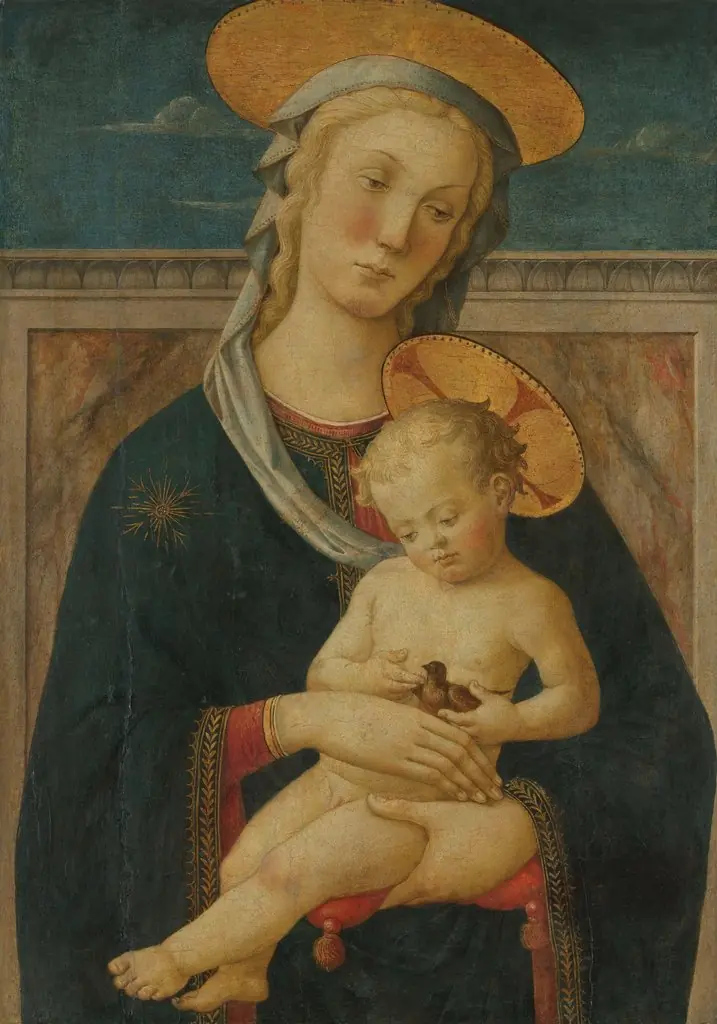
Madonna and Child with Two Angels is an unspecified painting by Master of San Miniato. It dates from 1480 and is held in the collection of the Detroit Institute of Arts.
About this work
Overview
Painted around 1480 by the artist known as the Master of San Miniato, this devotional panel portrays the Virgin Mary with the Christ Child and two attendant angels. Executed in tempera and gold leaf on wood, it reflects the devotional traditions of late 15th-century Florence. The work is part of the collection at the Detroit Institute of Arts, where it has been held since the early 20th century.
Subject & Meaning
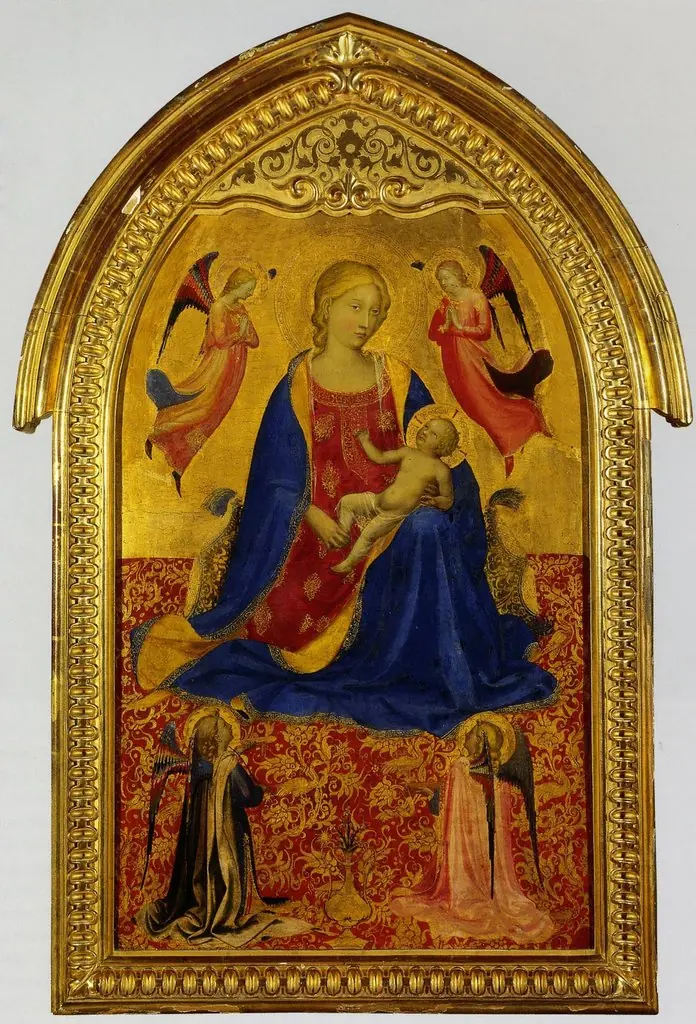
The composition centers on Mary, who holds the Christ Child with quiet solemnity, while two angels flank her, gazing toward the infant.
The composition centers on Mary, who holds the Christ Child with quiet solemnity, while two angels flank her, gazing toward the infant. This arrangement emphasizes divine intimacy and reverence. The figures’ focused attention underscores the Child’s spiritual significance, reinforcing the image as an object of contemplation rather than narrative storytelling. The gold halo signifies holiness, aligning with established iconographic conventions of the period.
Technique & Style
The painting employs tempera on wood panel, with delicate brushwork and areas of gold leaf used for halos and decorative accents. The figures are rendered with soft modeling and elongated proportions typical of late Gothic Florentine art. Rich colors—blue, red, and orange robes—contrast against the dark, unmodeled background, drawing focus to the central group. The ornate gold frame, though later, complements the original decorative intent.
History & Provenance
Attributed to an anonymous Florentine painter active in the late 15th century, the work was likely created for private devotion. It entered the Detroit Institute of Arts’ collection in the 1920s, acquired from a European source. Its history prior to the 20th century remains partially undocumented, though its style aligns with workshop practices in Florence during the decades following Fra Angelico.
Context
This painting emerged during a period when Florentine artists continued to refine religious imagery for domestic and chapel use, blending spiritual gravity with refined aesthetics. Though not by a named master, its execution reflects the influence of earlier painters like Fra Filippo Lippi and the enduring appeal of the Madonna and Child theme in private piety. The dark background and frontal composition suggest a continuation of medieval devotional formats.
Legacy
As an example of anonymous Florentine panel painting, it offers insight into the production of devotional art outside the most celebrated studios. Its preservation and display in a major American museum highlight the transatlantic circulation of Renaissance-era works. While not widely published, it remains a representative artifact of late Gothic religious art in Italy.
Artist & collection