Artwork
The Nativity
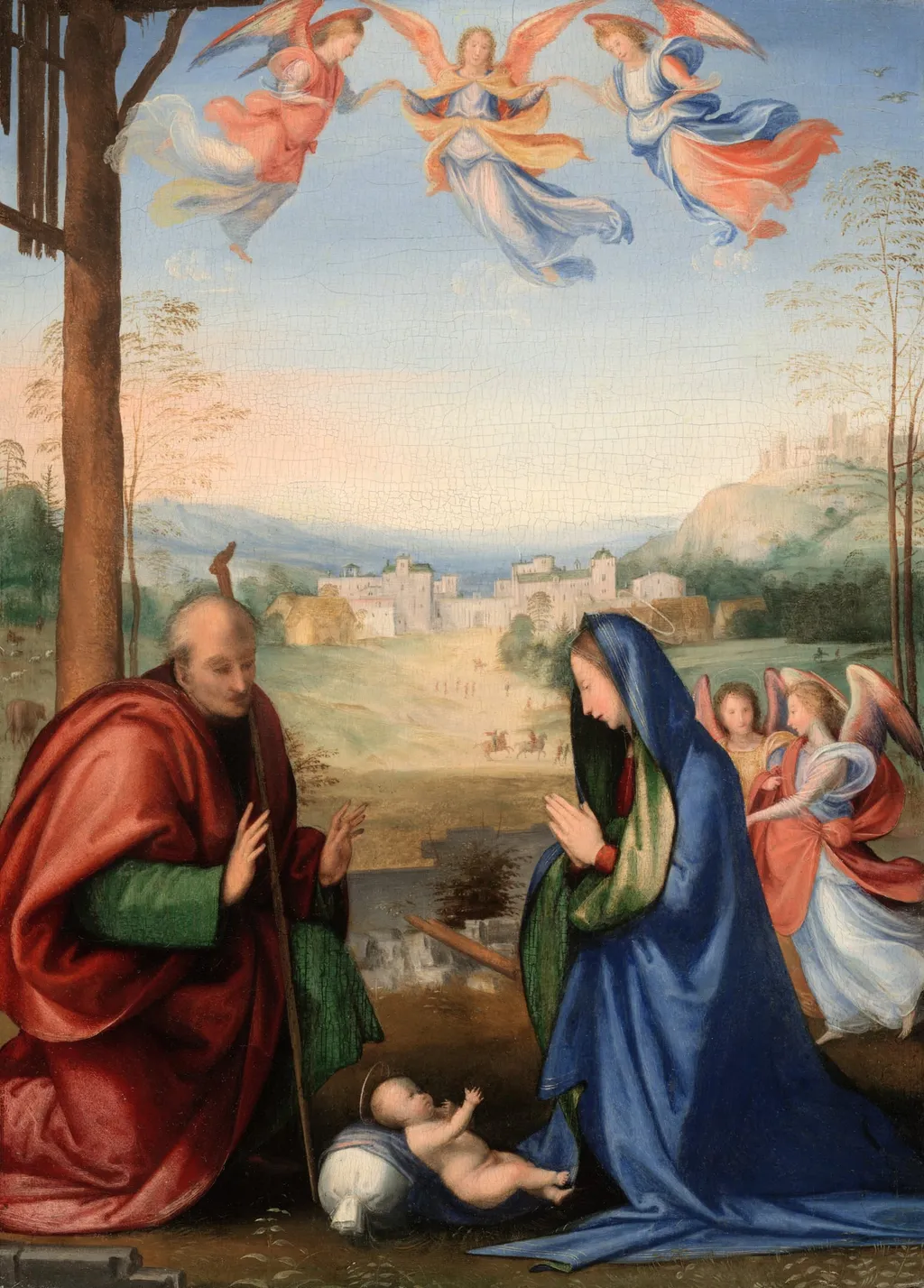
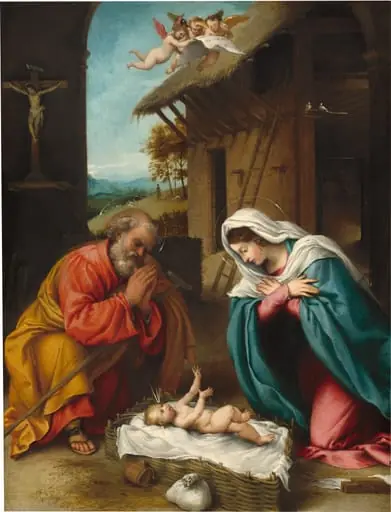
The Nativity is an oil painting by the High Renaissance artist Fra Bartolomeo. It dates from 1506 and is held in the collection of the Art Institute of Chicago.
About this work
Overview
It reflects a shift in his style following a four-year hiatus during which he joined the Dominican order under Savonarola’s influence.
Painted in oil on wood panel, The Nativity is a devotional work by Fra Bartolommeo, created after his return to art in 1504. It reflects a shift in his style following a four-year hiatus during which he joined the Dominican order under Savonarola’s influence. The composition centers on the quiet reverence of Mary and Joseph before the infant Christ, rendered with subdued emotion and a focus on spiritual stillness rather than dramatic action.
Subject & Meaning
The scene depicts the Virgin and Joseph kneeling in prayer before the newborn Christ, lying on straw in a dim stable. Their folded hands and lowered gazes convey humility and contemplation. The child’s luminous form, radiating softly against the darkness, suggests divine presence without overt spectacle. The absence of angels or shepherds narrows the focus to intimate human devotion, aligning with the ascetic spirituality Fra Bartolommeo embraced during his religious retreat.
Technique & Style
Fra Bartolommeo employed chiaroscuro to model forms with gentle gradations of light and shadow, enhancing the quiet dignity of the figures. Drapery flows in soft, rounded folds, suggesting suspended motion and inner calm. Faces are softened, losing the angularity of his earlier work, while the palette remains restrained—earthy tones balanced by the child’s warm glow. These choices reflect a deliberate move toward serenity and emotional restraint after his spiritual transformation.
History & Provenance
Created around 1504–1505, the painting marks Fra Bartolommeo’s return to art after abandoning his career to join the Dominican order in 1500. His time under Savonarola’s influence led him to reject worldly artistry, but upon resuming painting, he infused his work with renewed religious purpose. The panel likely originated in a Florentine convent or private chapel, serving as an object of meditative prayer rather than public display.
Context
In early 16th-century Florence, artistic ideals were shifting under the influence of Leonardo, Raphael, and Michelangelo, yet Fra Bartolommeo’s work diverged by prioritizing spiritual introspection over anatomical grandeur or dynamic composition. His retreat from secular art mirrored broader religious tensions in the city, where Savonarola’s reforms challenged artistic excess. This painting embodies a quiet counterpoint to the era’s growing humanism.
Legacy
The Nativity stands as a testament to the fusion of personal faith and artistic practice in Renaissance Italy. Though not widely imitated, its restrained emotional tone influenced later devotional works within monastic circles. Fra Bartolommeo’s ability to channel spiritual conviction into visual form helped redefine sacred imagery, emphasizing inner stillness over external drama in the years before the Reformation.
Own this work as a print
Artist & collection
Artist
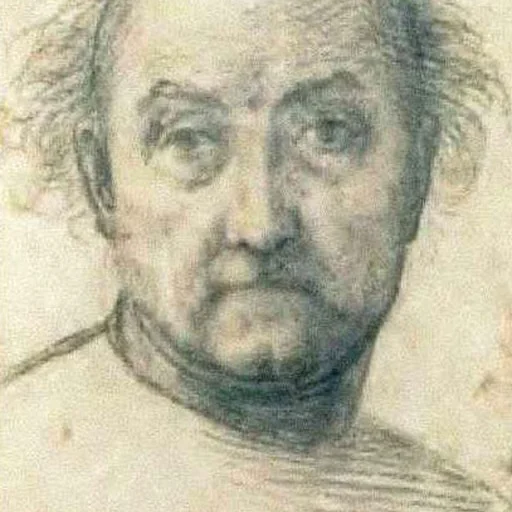
Fra Bartolomeo or Bartolommeo (UK: , US: , Italian: ; 28 March 1472 – 31 October 1517), also known as Bartolommeo di Pagholo, Bartolommeo di San Marco, Bartolomeo di Paolo di Jacopo del Fattorino, and his original…

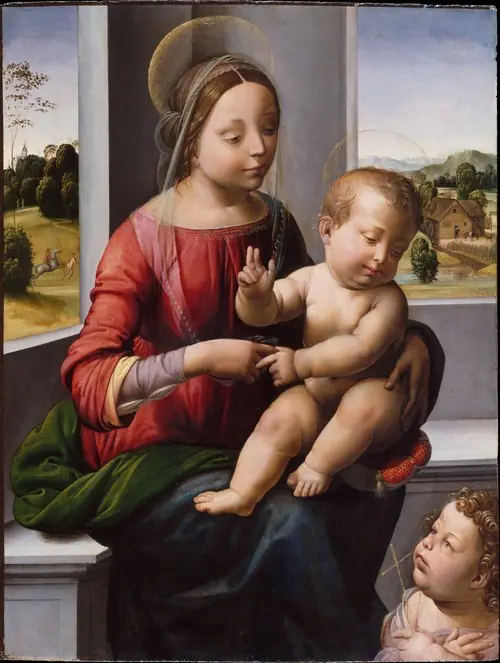 Madonna and Child with the Young Saint John the Baptist
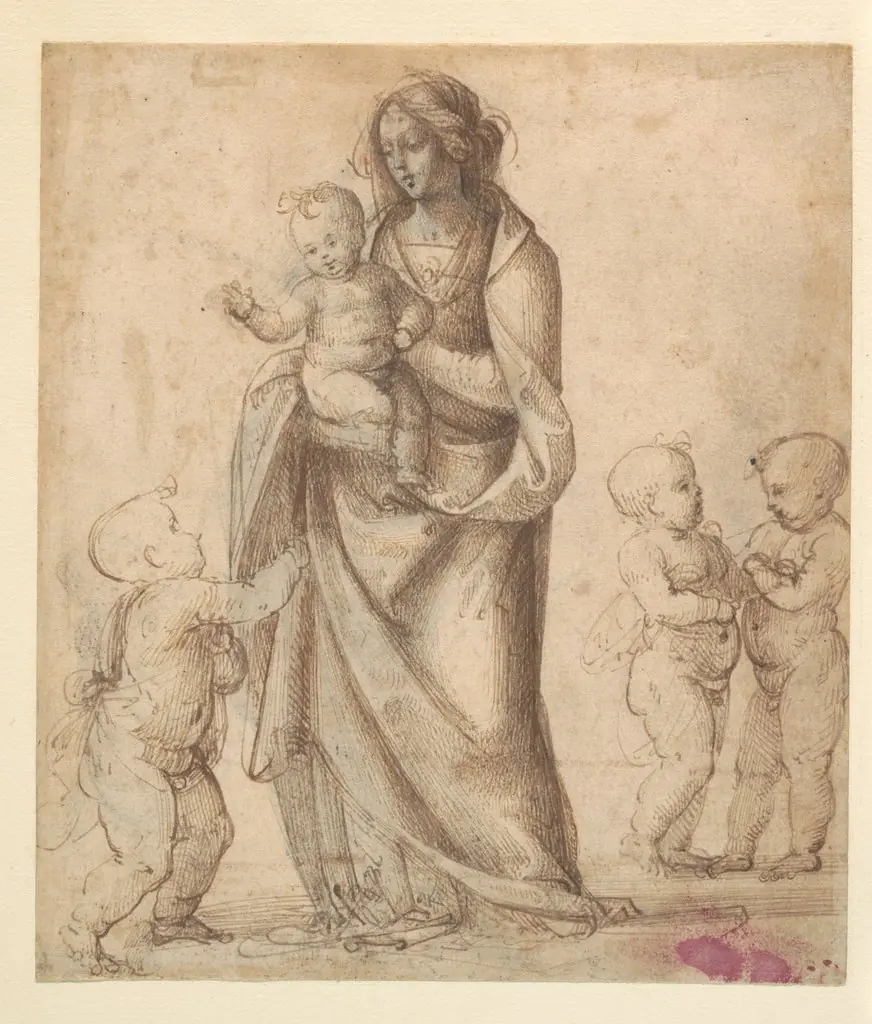 Madonna and Child with the Infant Saint John the Baptist and Two Putti (recto); Madonna and Child with the Infant Saint John the Baptist and a Putto (verso)
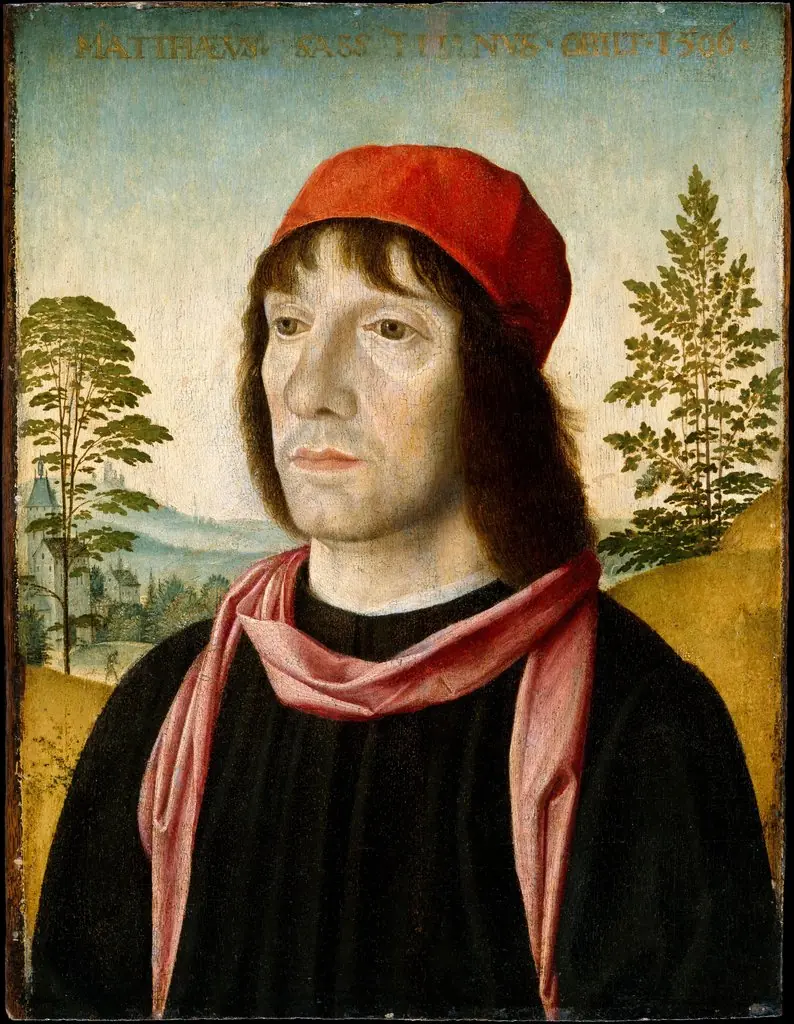 Portrait of a Man
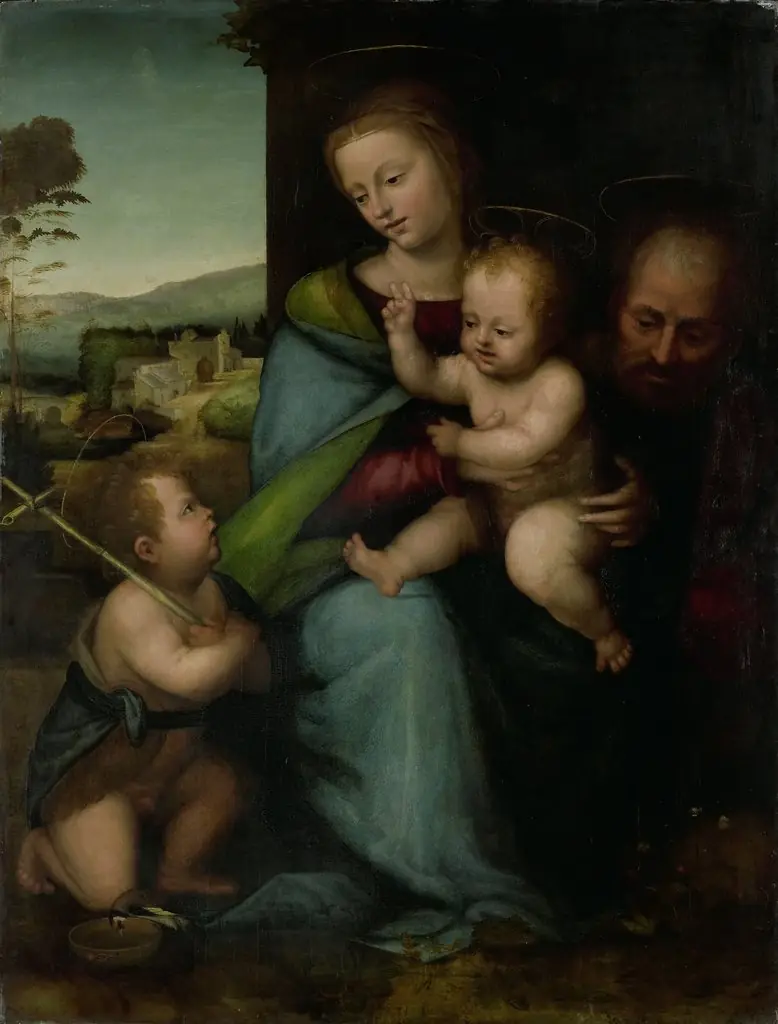 The Holy Family with the Infant John the Baptist
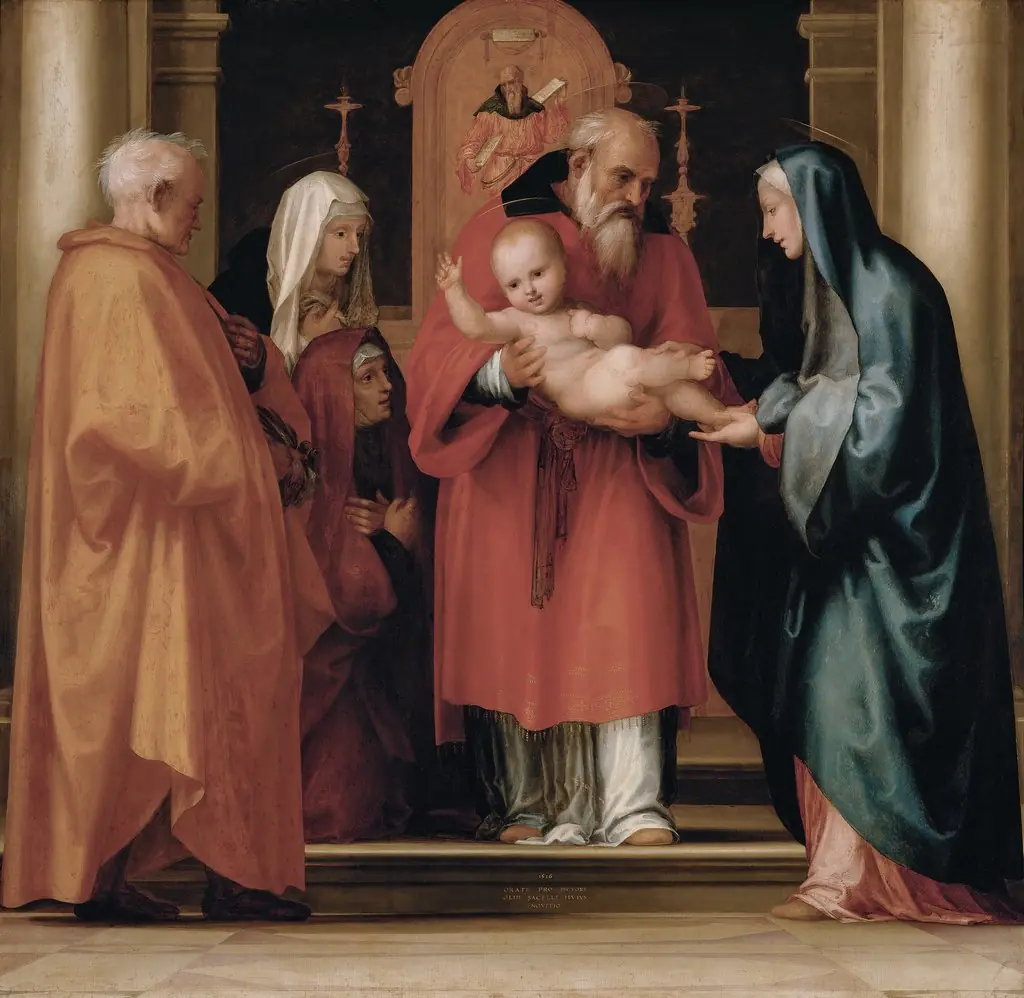 Presentation of Christ in the Temple
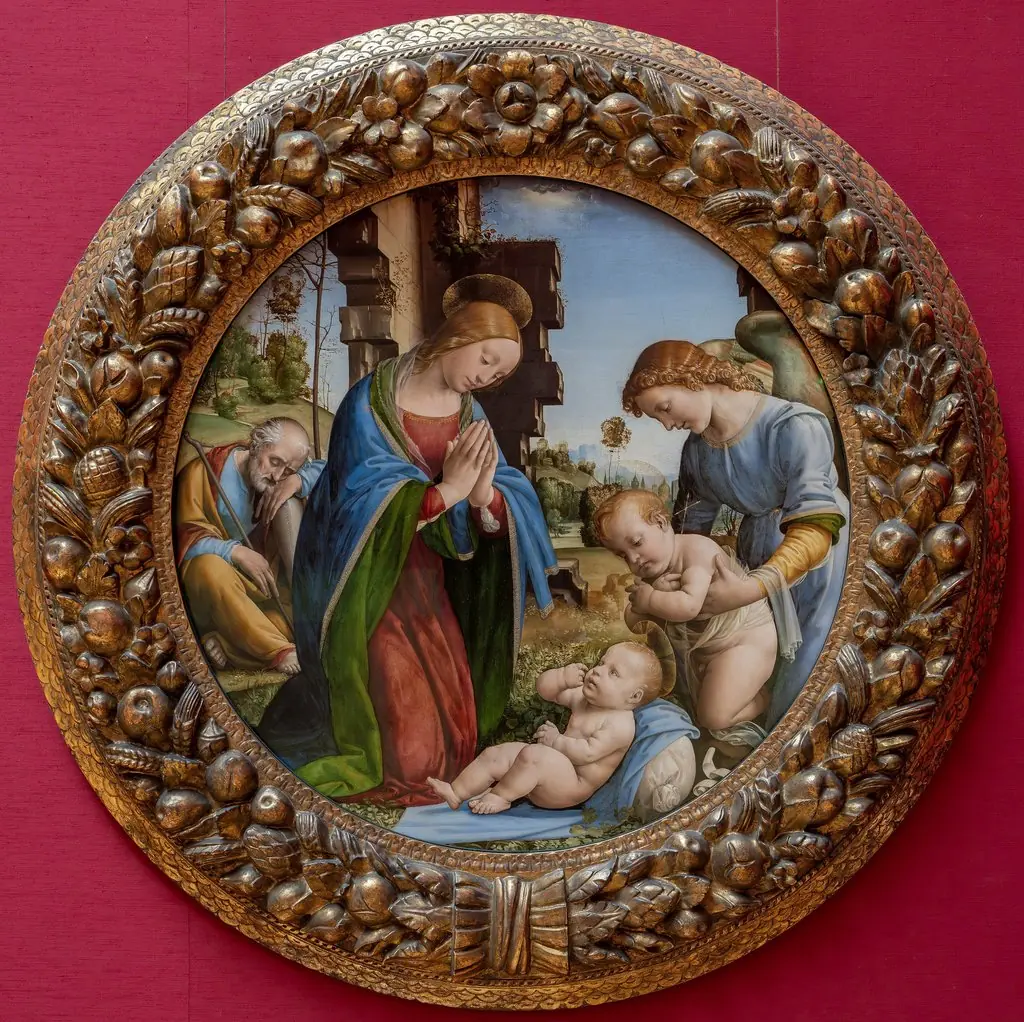 Adoration of the Child - Holy Family with child St. John
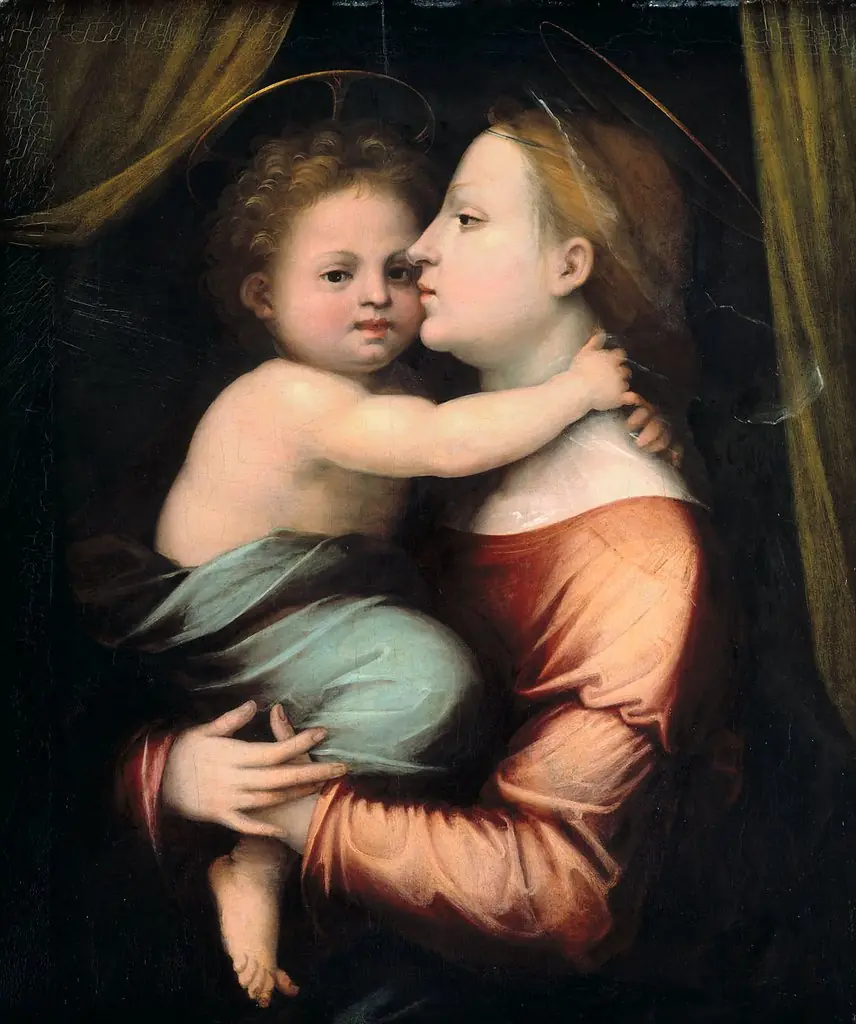 Madonna and Child
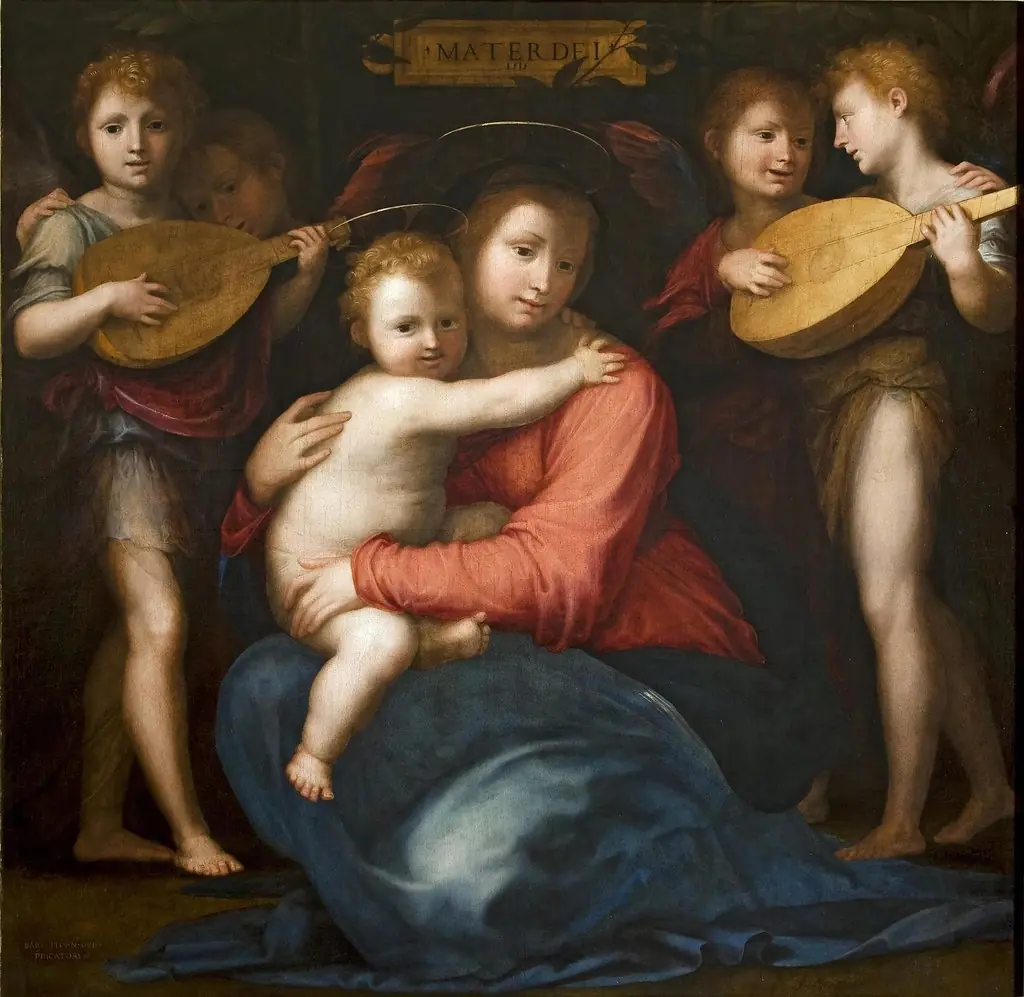 Madonna and Child with Four Angels
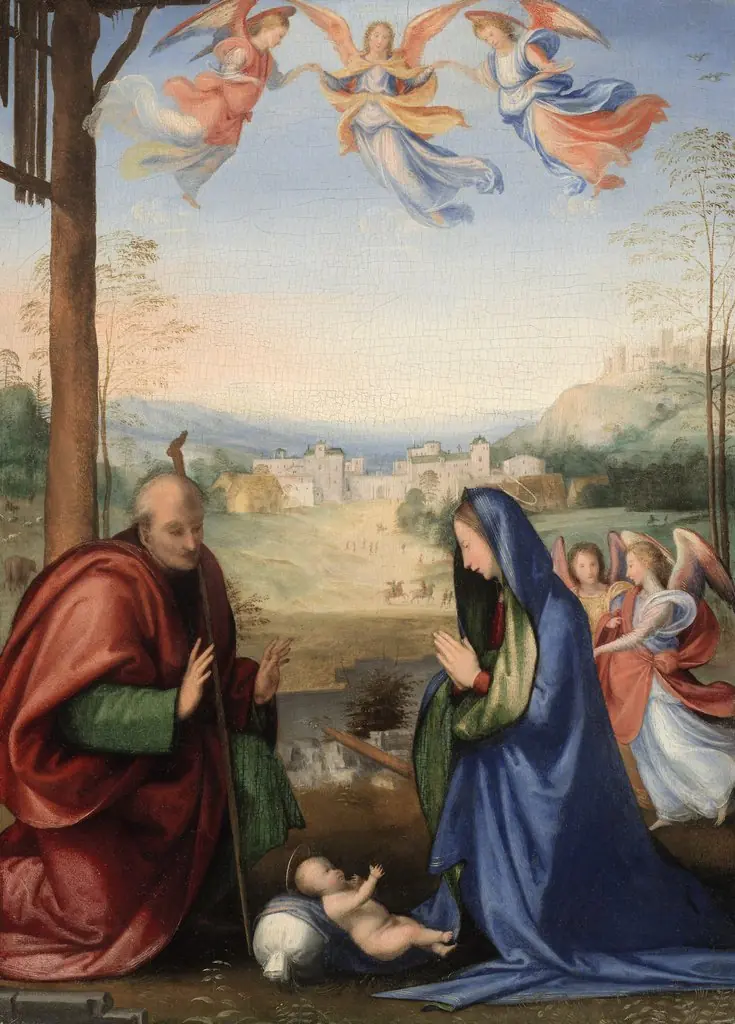 The Nativity
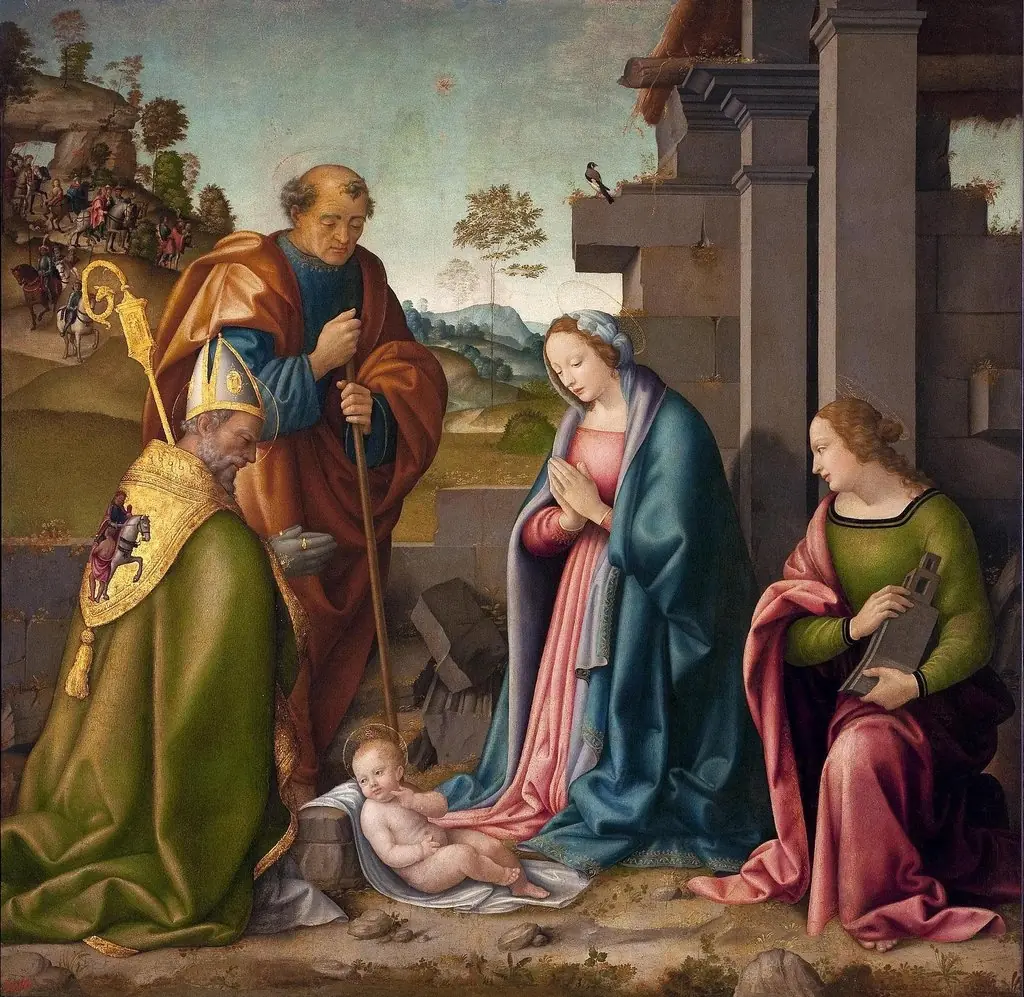 Adoration of the Christ Child, with Sts Barbara and Martin
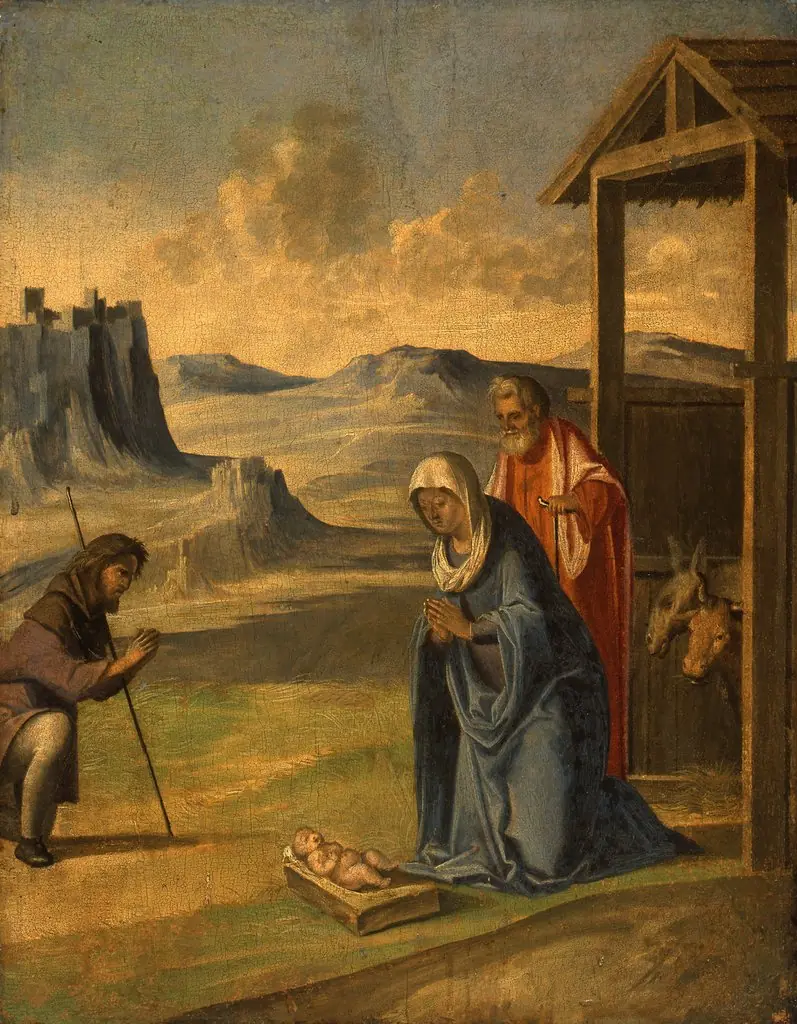 The Virgin Adoring the Child
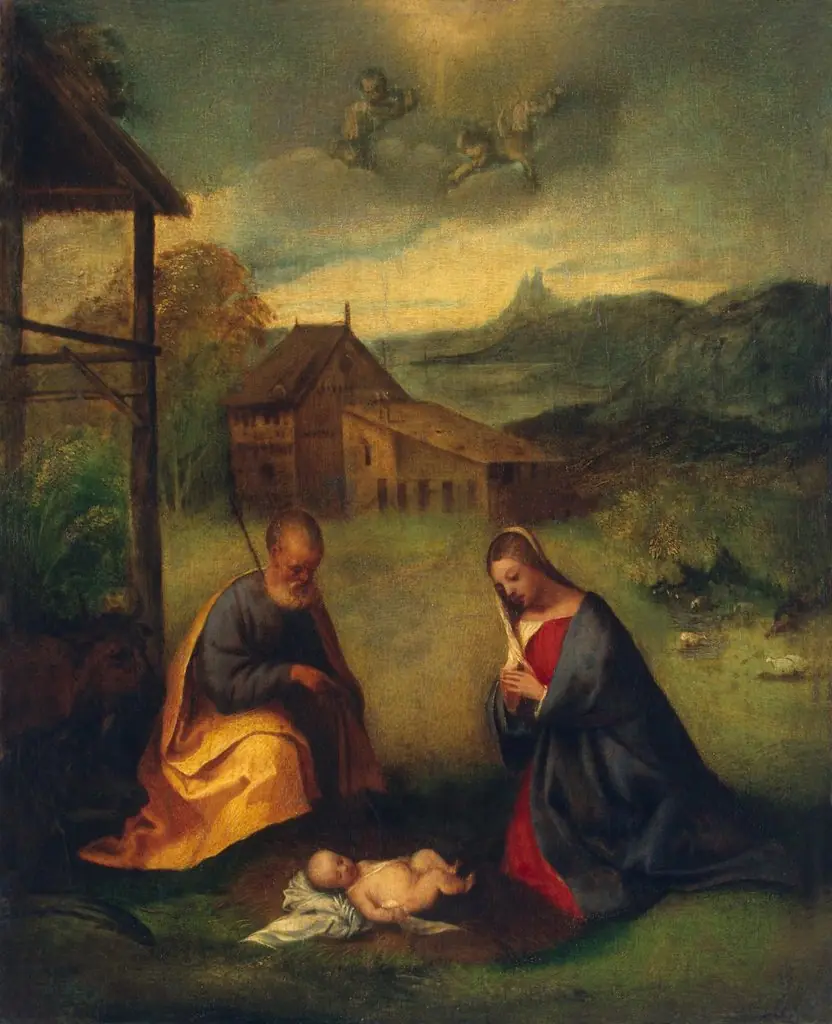 Adoration of the Christ Child
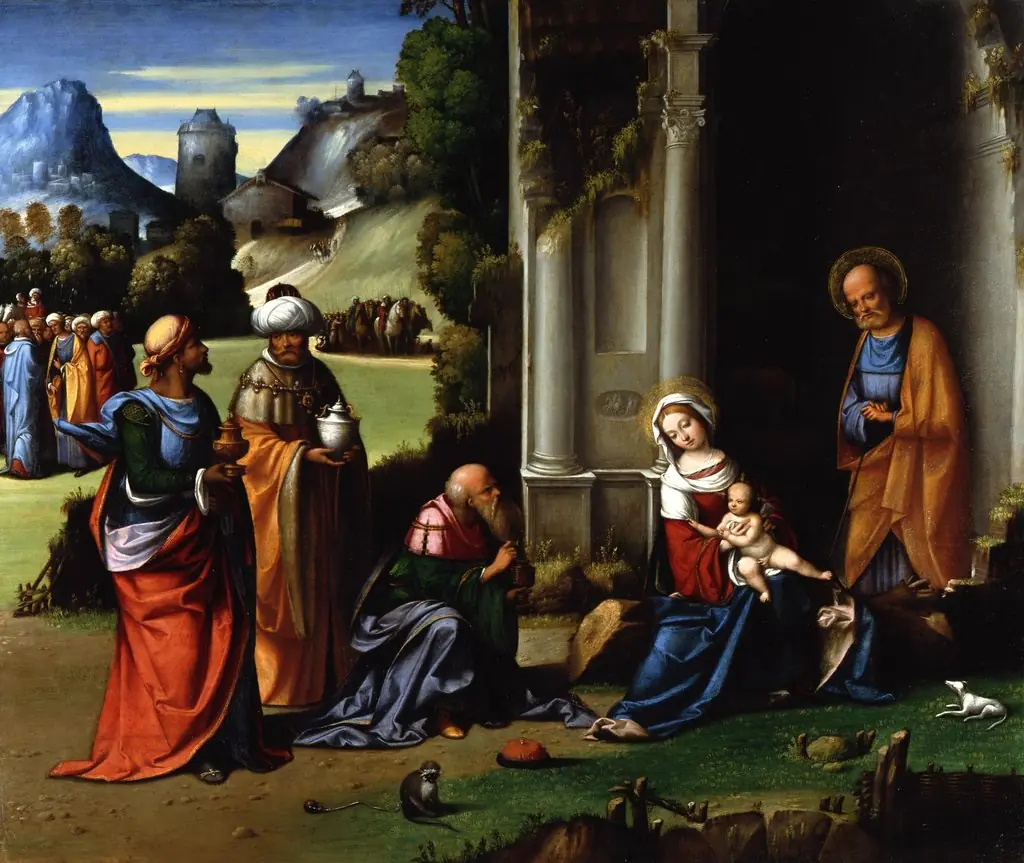 The Adoration of the Magi
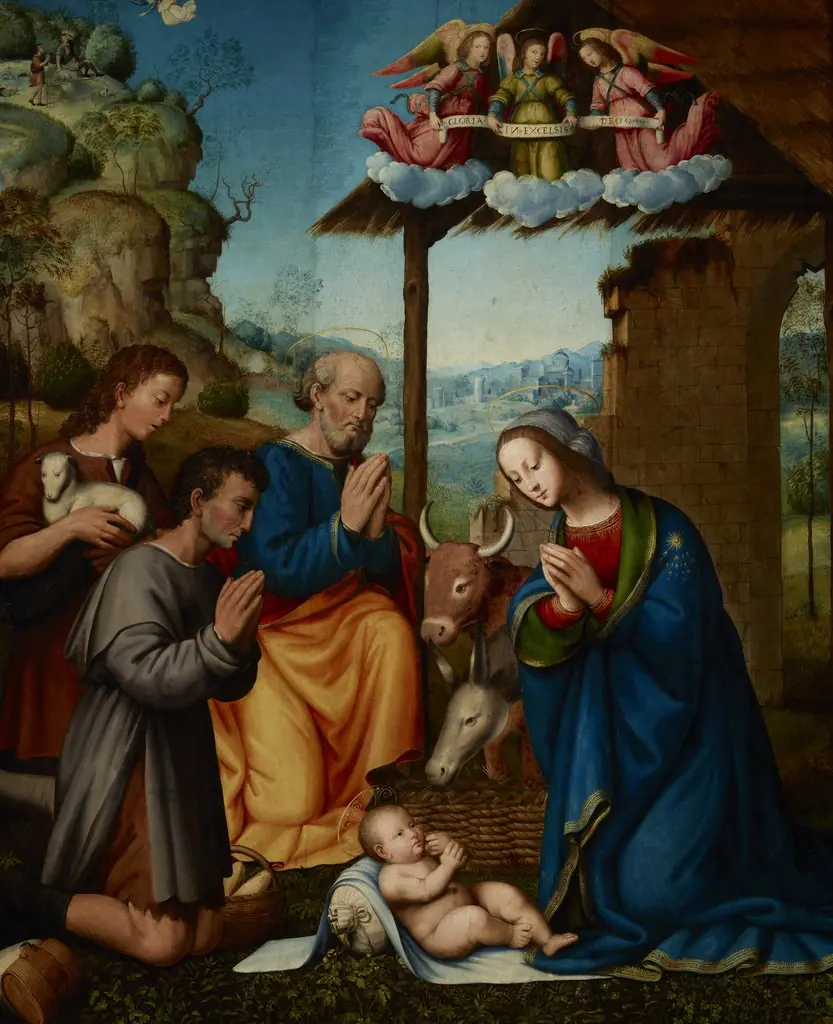 Adoration of the Shepherds (Adoration of the Child by Mary, St Joseph and Shepherds)
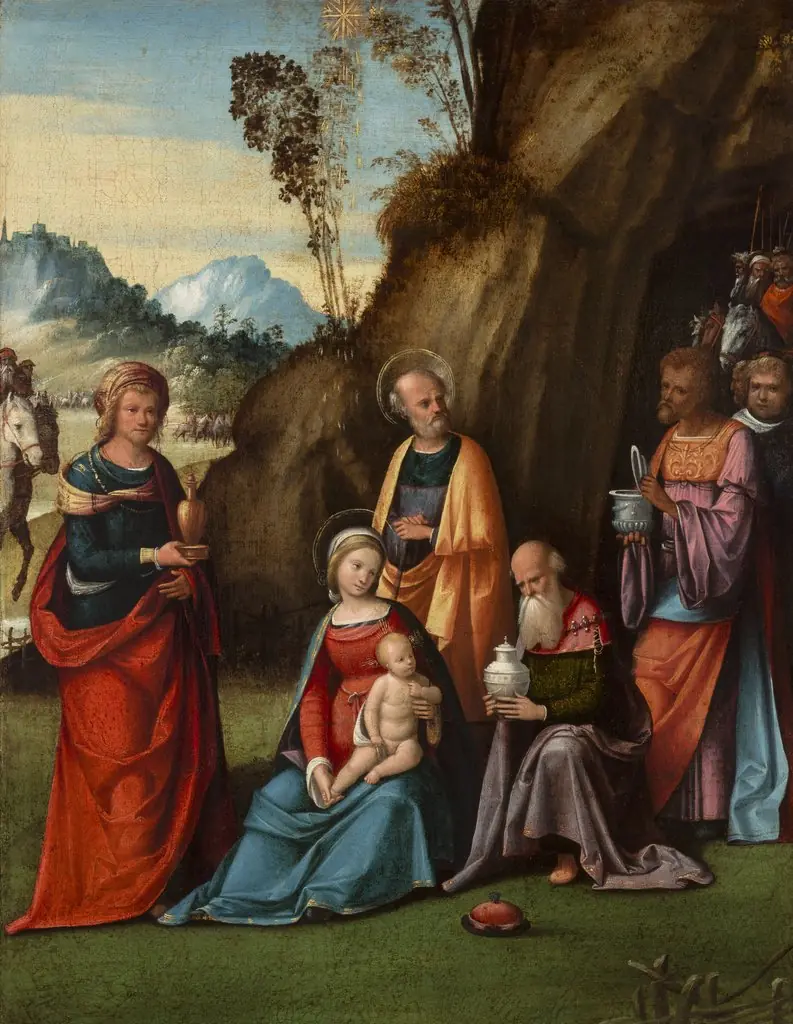 Adoration of the Magi
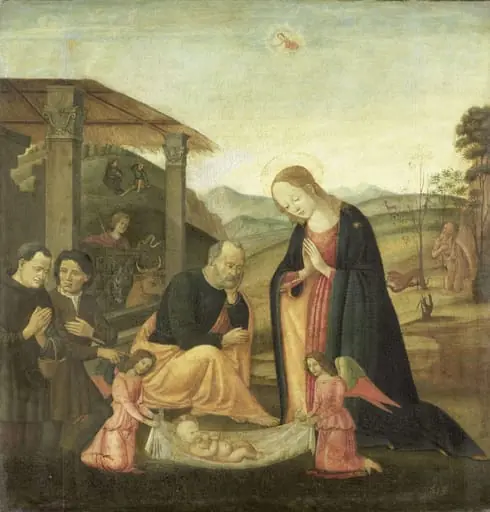 Adoration of the Christ Child
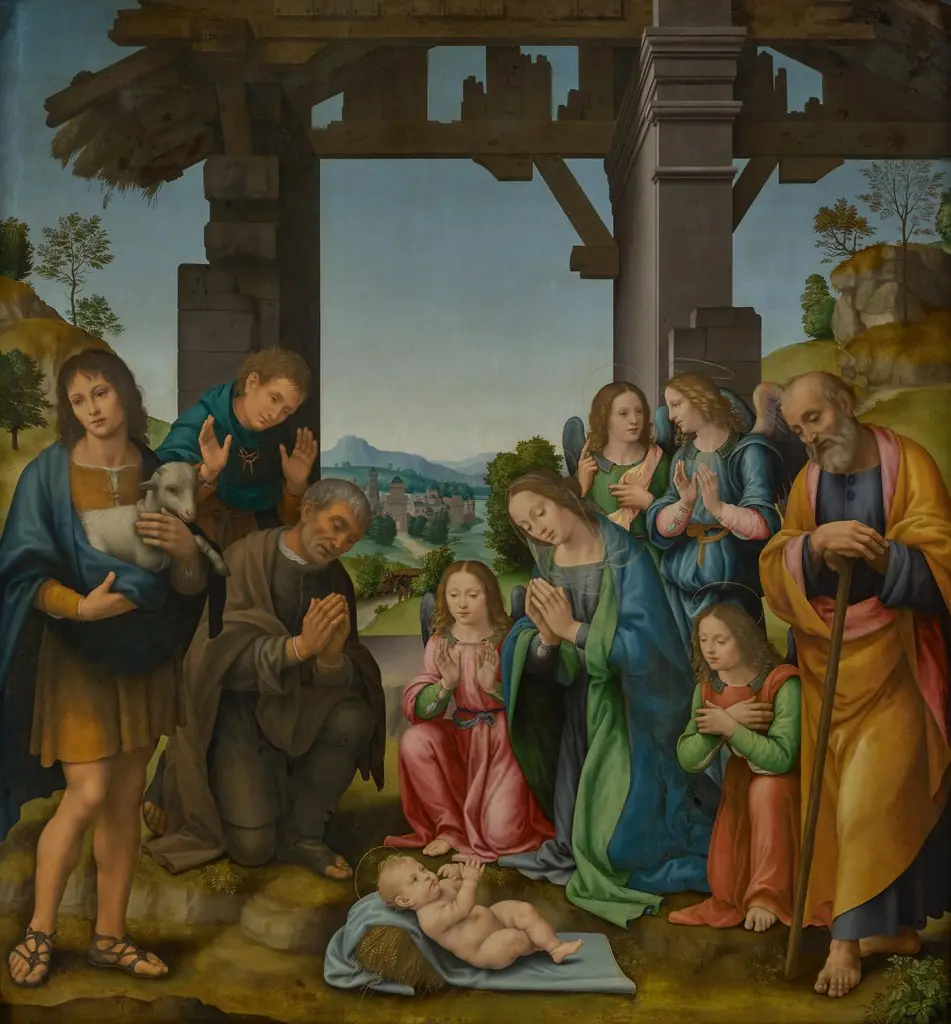 The Worship of the Shepherds
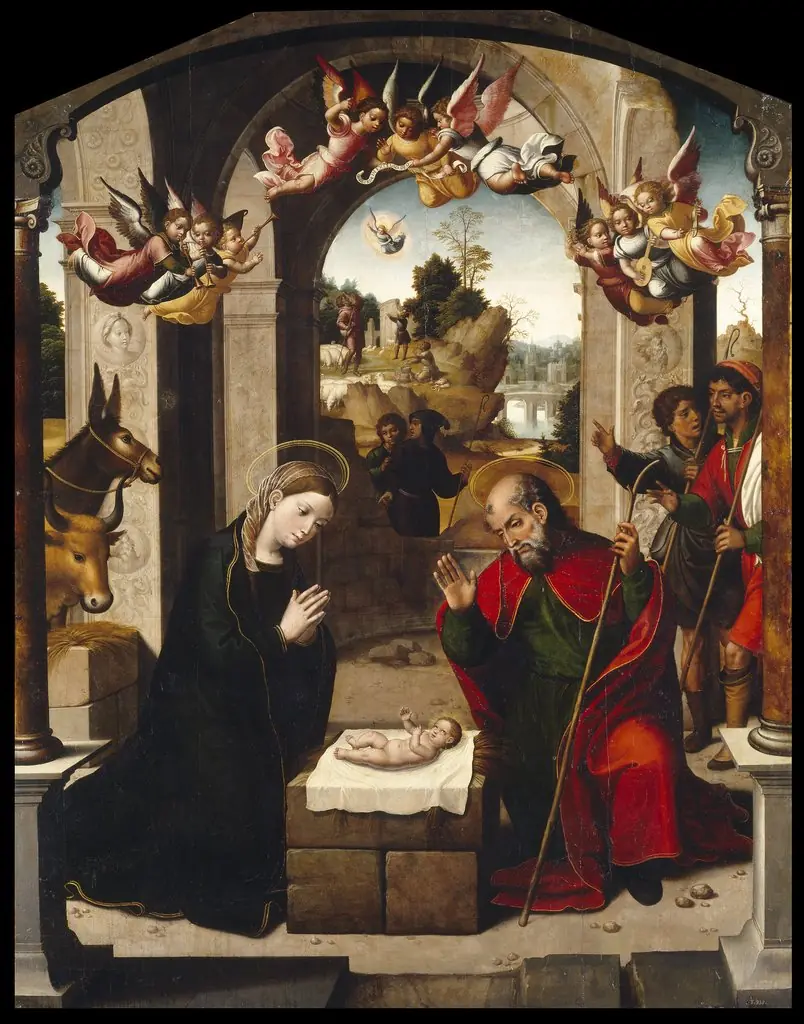 The Nativity
 The Nativity
 Adoration of the Christ Child