Artwork
Terrace and Garden of an Italian Villa
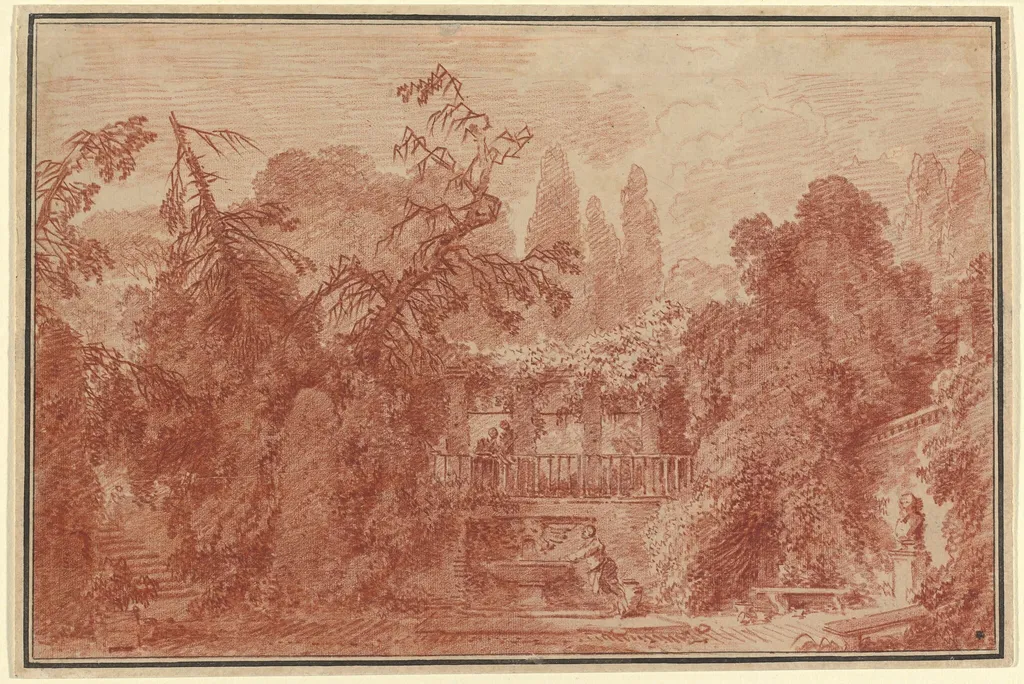
Terrace and Garden of an Italian Villa is a chalk drawing by the Romanticist artist Jean Honoré Fragonard. It dates from 1762 and is held in the collection of the National Gallery of Art. Created in 1762, this drawing by Jean-Honoré Fragonard depicts an Italianate villa terrace and its surrounding garden.
About this work
Overview
Executed in red chalk over faint black chalk underdrawing on laid paper, it captures a quiet, sunlit outdoor space with meticulous attention to natural detail.
Created in 1762, this drawing by Jean-Honoré Fragonard depicts an Italianate villa terrace and its surrounding garden. Executed in red chalk over faint black chalk underdrawing on laid paper, it captures a quiet, sunlit outdoor space with meticulous attention to natural detail. The work belongs to a series of topographical sketches Fragonard made during his time in Italy, reflecting his engagement with landscape and architecture beyond formal commissions.
Subject & Meaning
The scene centers on a stone terrace with a low railing, flanked by dense foliage and a solitary statue in the corner. A small group of figures—likely visitors or residents—gather casually, their postures suggesting leisure rather than ceremony. The composition conveys a sense of private tranquility, evoking the idealized yet unpretentious retreats favored by the European elite. No narrative is imposed; instead, the focus lies in the atmosphere of quiet contemplation.
Technique & Style
Fragonard employed a range of red chalk tones to model forms and suggest light, using varied pressure and hatching to render textures—from the roughness of stone balustrades to the softness of leaves and fabric folds. Traces of black chalk define structural outlines, while the paper’s natural tone contributes to mid-tone values. The drawing’s precision in botanical and architectural detail reveals a disciplined approach, contrasting with the more spontaneous brushwork of his later oil paintings.
History & Provenance
The drawing was made during Fragonard’s stay in Italy between 1756 and 1761, likely shortly after his return to France. It remained in private collections through the 19th century before entering a public collection in the 20th. Its survival in good condition reflects its status as a study rather than a finished work, valued by collectors for its intimate insight into the artist’s observational process and early stylistic development.
Context
Fragonard’s Italian travels exposed him to Renaissance and Baroque gardens, which influenced his understanding of spatial composition and naturalism. This drawing aligns with a broader 18th-century European interest in picturesque landscapes and villa culture, particularly among aristocrats who sought to emulate classical ideals in their private estates. Unlike grand architectural renderings, this work captures the informal, lived-in quality of such spaces.
Legacy
Though less known than his Rococo genre scenes, this drawing exemplifies Fragonard’s skill as a draftsman and his sensitivity to light and texture in natural settings. It contributes to the understanding of his artistic evolution, revealing a methodical side often overshadowed by his more flamboyant paintings. The work remains a reference for scholars studying the intersection of travel, landscape, and drawing in 18th-century French art.
Artist & collection

Artist
Jean-Honoré Fragonard was born on 5 April 1732 in Grasse, the son of a glover, and moved with his family to Paris in 1738.



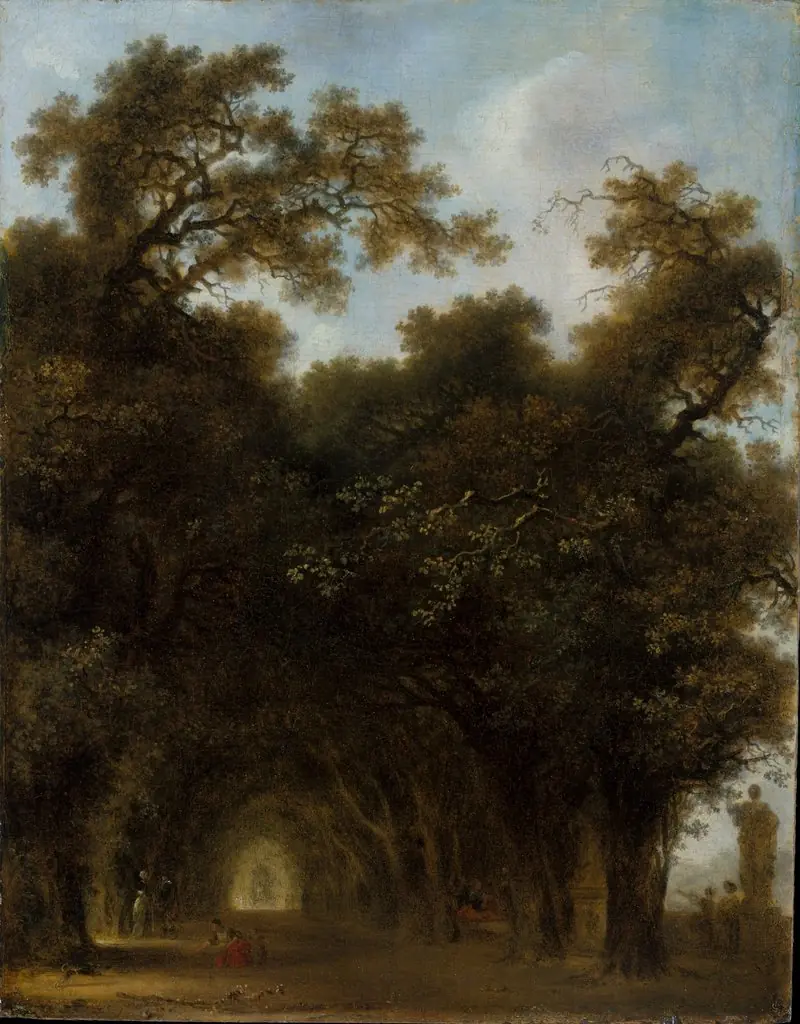

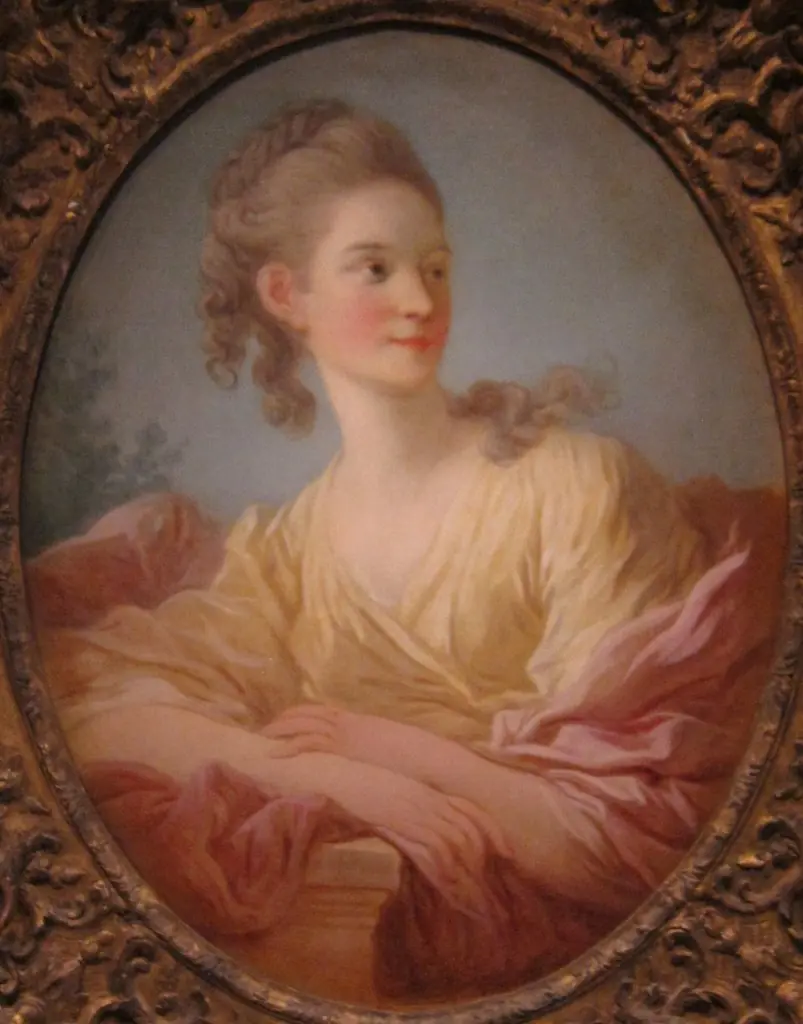
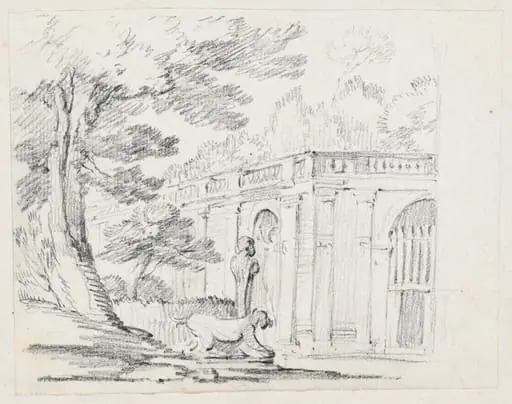 Loggia and Statuary in an Italian Garden
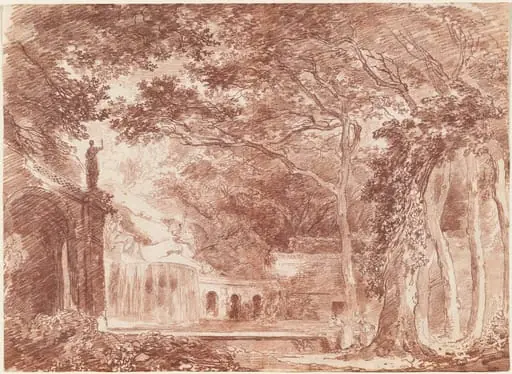 The Oval Fountain in the Gardens of the Villa d'Este, Tivoli
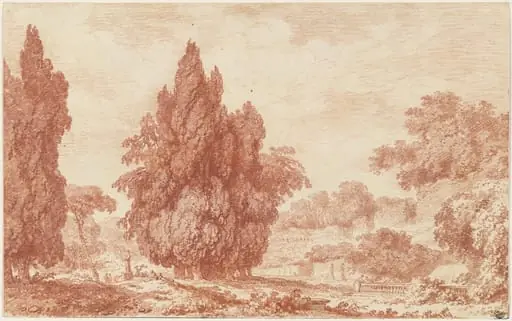 A Stand of Cypresses in an Italian Park
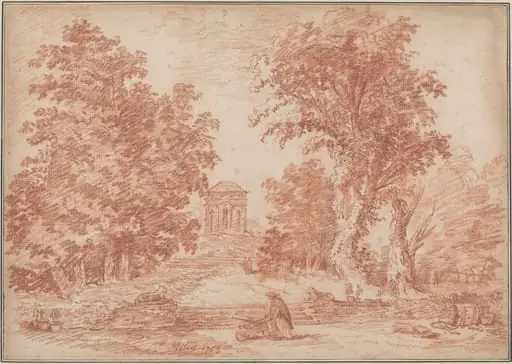 Italian Park with a Tempietto
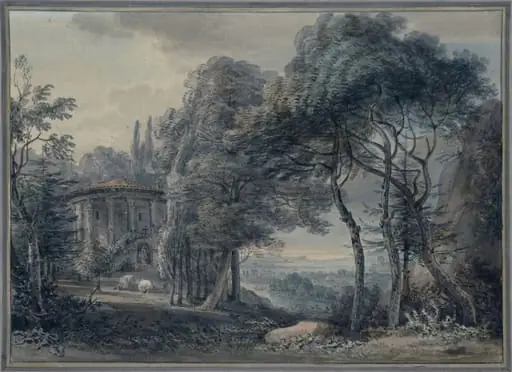 The Round Temple
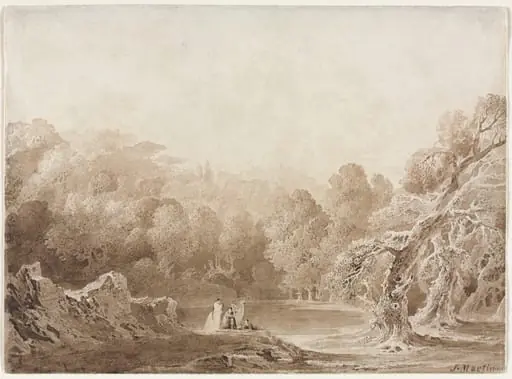 A Man Playing a Harp with other Figures beside a Lake
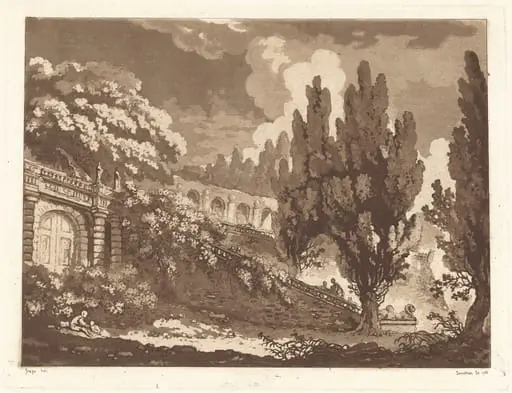 Stairway in an Italian Garden
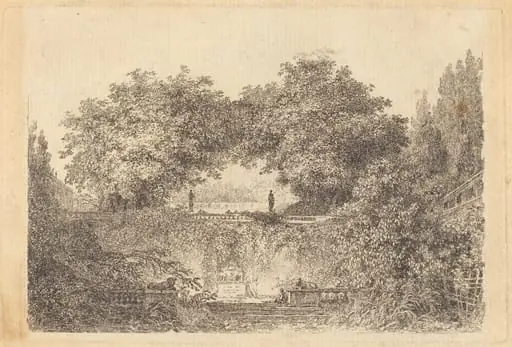 Le Petit Parc
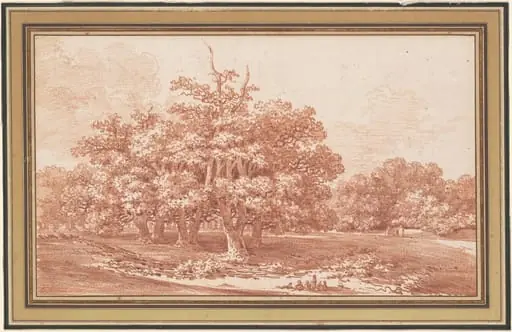 The Carrefour de l'Aiguille in the Forest of Fontainebleau
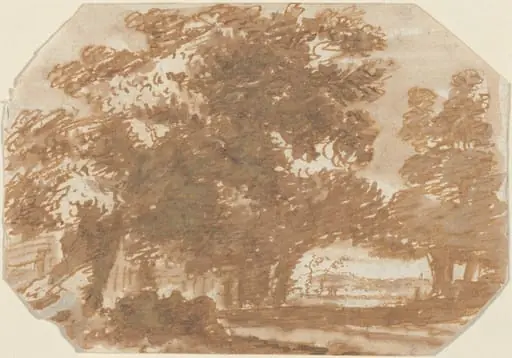 Grove of Trees