Artwork
The Carrefour de l'Aiguille in the Forest of Fontainebleau
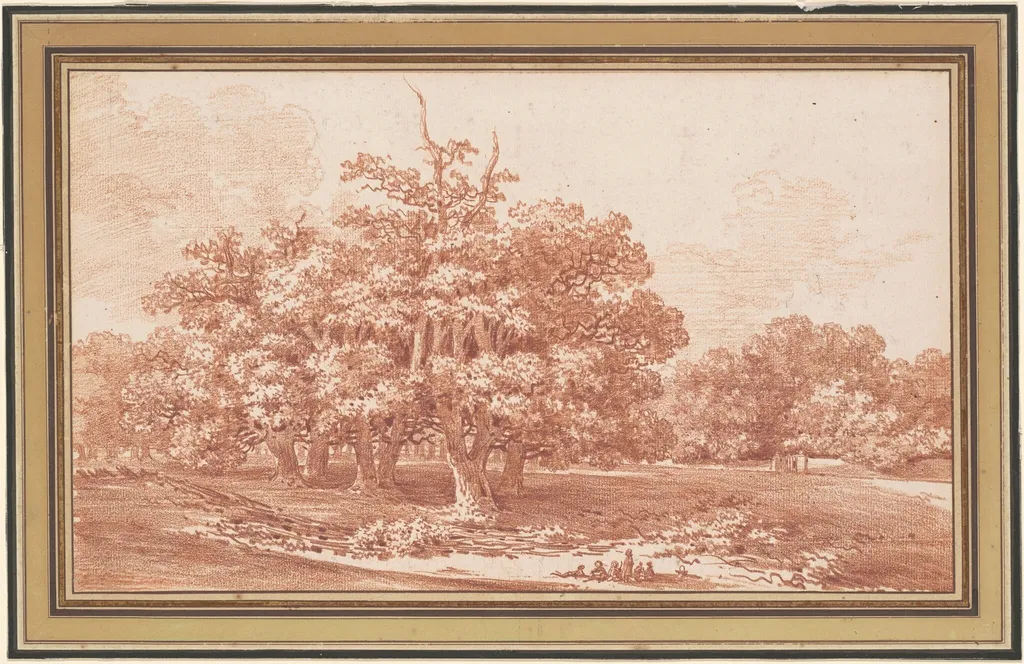
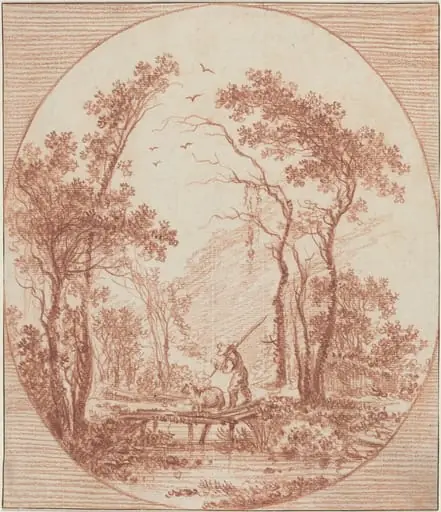
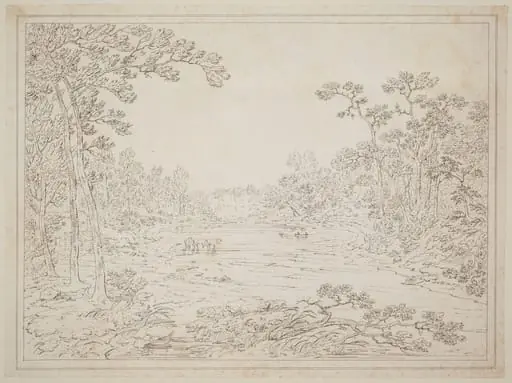
The Carrefour de l'Aiguille in the Forest of Fontainebleau is a chalk drawing by the Romanticist artist Jean-Baptiste Le Prince. It dates from 1770 and is held in the collection of the National Gallery of Art.
About this work
Overview
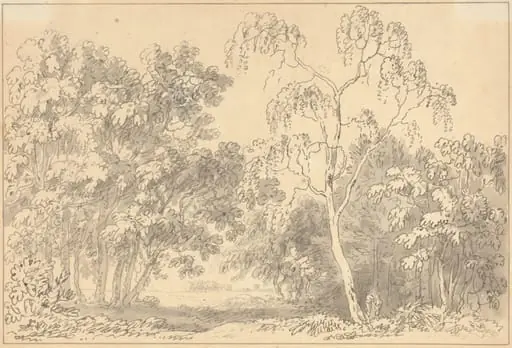
Jean-Baptiste Le Prince’s drawing titled *Carrefour de l’Aiguille in the Forest of Fontainebleau* dates from around 1770. Executed in red chalk on laid paper that has been mounted on an older support, the work measures a modest size typical of field sketches. It records a tranquil woodland clearing, emphasizing the interplay of light and shadow among the trees.
Subject & Meaning
The composition presents a small clearing where several mature trunks stand close together, their branches spreading in a tangled canopy. The forest floor is uneven, dotted with patches of grass and darker soil, suggesting a natural, unaltered landscape. The scene conveys a quiet, contemplative atmosphere, inviting the viewer to consider the subtle variations of light within a wooded environment.
Technique & Style
The loose, gestural strokes capture the texture of bark and foliage, reflecting the 18th‑century French drawing practice of quick, observational studies.
Le Prince employs a warm, reddish-brown chalk to render the forms, using strong contrasts of chiaroscuro to model volume. Darkened areas under the canopy approach near‑black tones, while illuminated patches remain light, creating a sense of depth. The loose, gestural strokes capture the texture of bark and foliage, reflecting the 18th‑century French drawing practice of quick, observational studies.
History & Provenance
Created circa 1770, the drawing reflects Le Prince’s interest in the Fontainebleau forest, a popular subject for artists of the period. The paper has been mounted on an older support, indicating later conservation or re‑use. Details of its ownership history are not recorded in the available sources, and it remains catalogued as a work on paper within the artist’s oeuvre.
Artist & collection


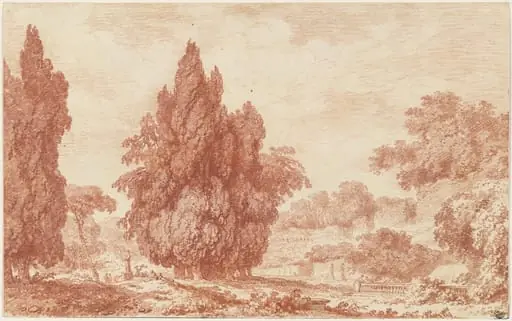 A Stand of Cypresses in an Italian Park
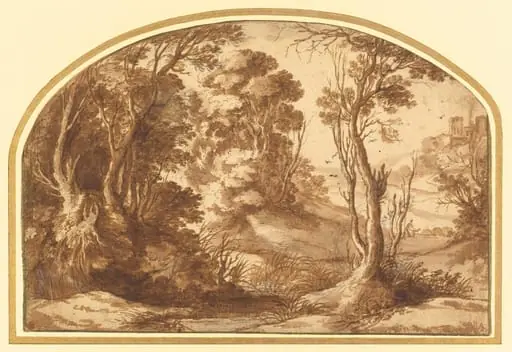 Pool at the Edge of a Wood
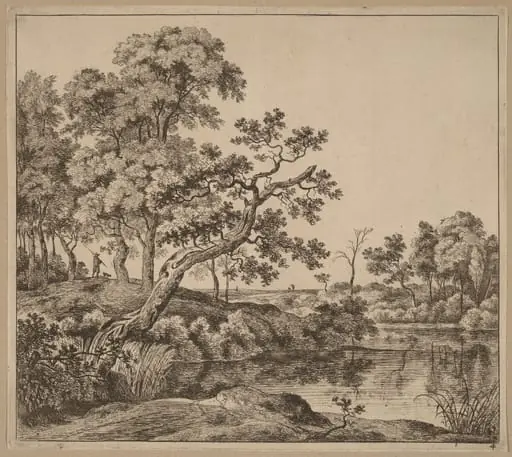 Landscape with a Bending Tree
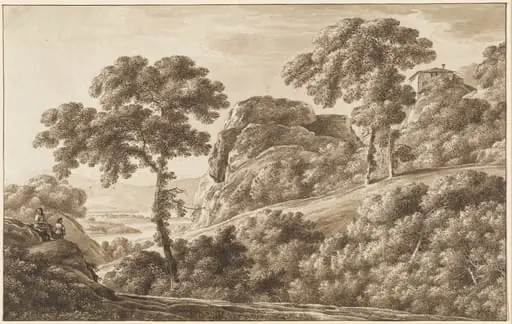 The Isar with Boulders on the Isarhohe
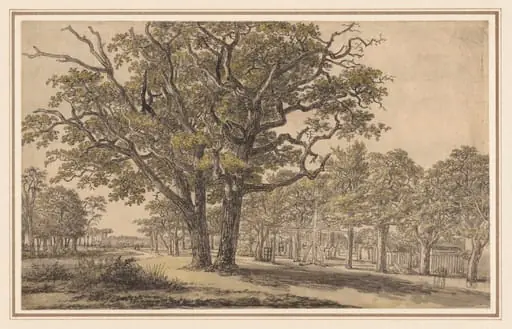 Landscape (recto)
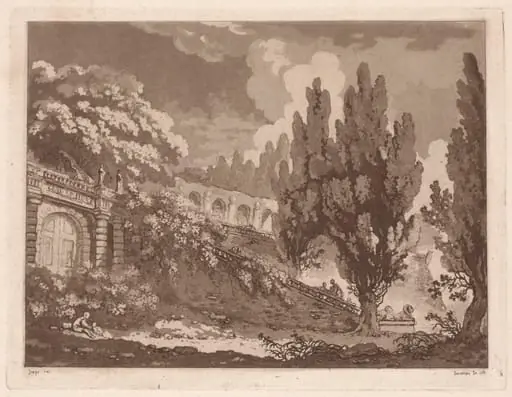 Stairs in an Italian Garden
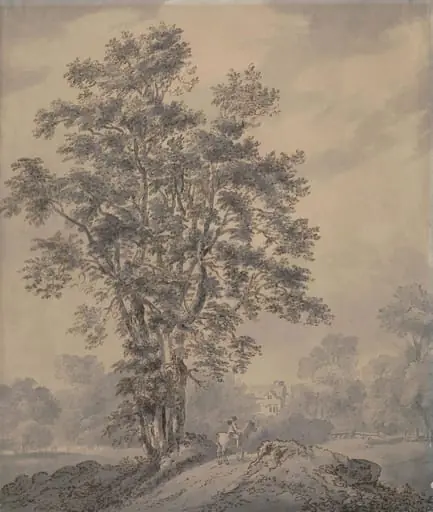 Landscape, with man on horseback
 Wooded Landscape
 Winding River
 Terrace and Garden of an Italian Villa
 Herdsman and Cows Crossing a River
 Pennsylvania Landscape