Artwork
Don Quixote about to Strike the Helmet
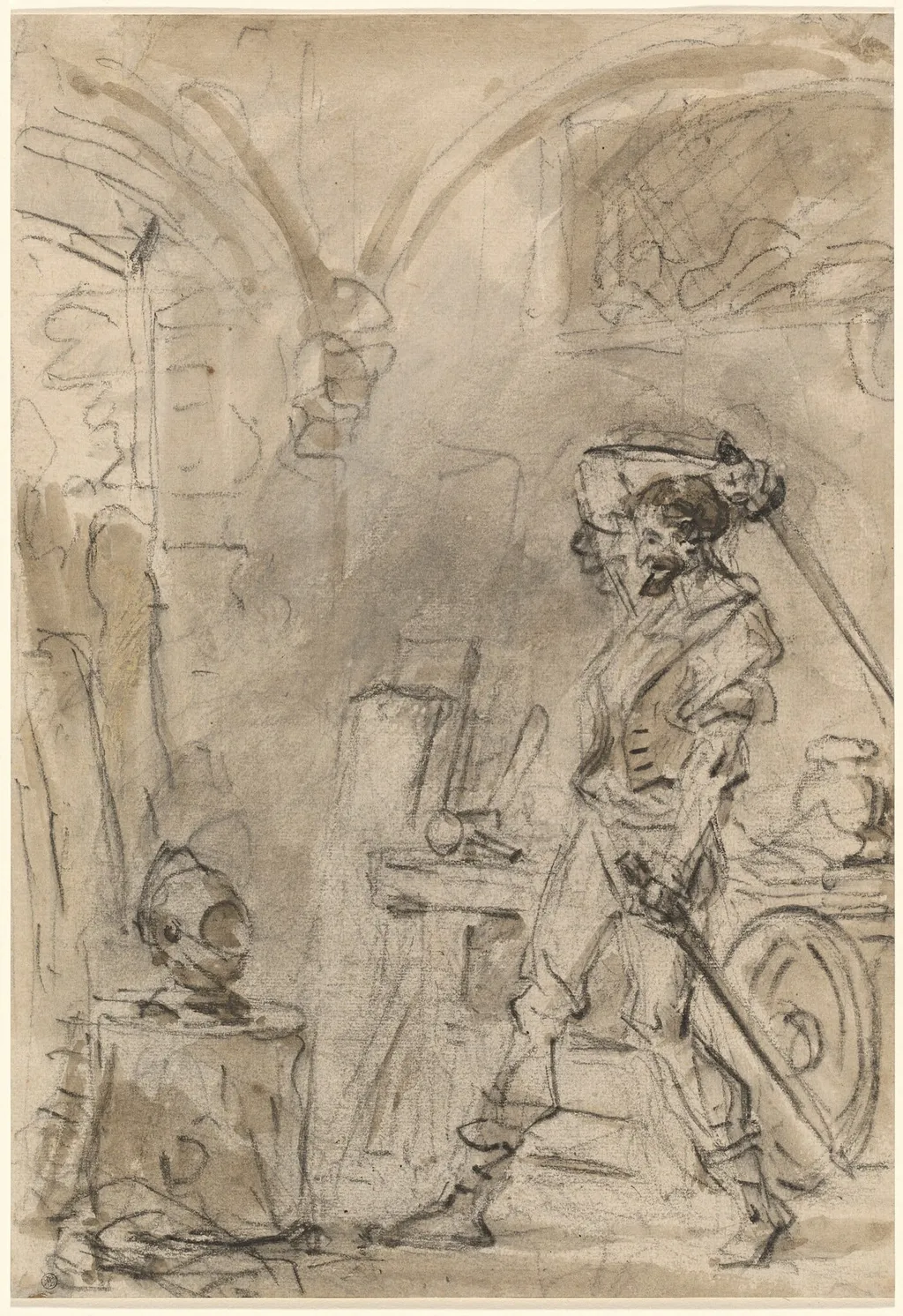
Don Quixote about to Strike the Helmet is a charcoal drawing by the Romanticist artist Jean Honoré Fragonard. It dates from 1784 and is held in the collection of the National Gallery of Art.
About this work
Overview
Executed on laid paper and later mounted on a support, the piece captures the titular character mid-motion, sword raised, as he prepares to strike a helmet.
Created around 1784, this drawing by Jean-Honoré Fragonard depicts a moment from Cervantes’s Don Quixote, rendered in brushwork with brown and gray washes over charcoal. Executed on laid paper and later mounted on a support, the piece captures the titular character mid-motion, sword raised, as he prepares to strike a helmet. The composition emphasizes movement and theatricality, typical of Fragonard’s late style.
Subject & Meaning
The scene illustrates Don Quixote’s delusional quest, in which he mistakes inanimate objects for enemies. Here, he targets a helmet—likely a barber’s basin—believing it to be a magical or armored prize. The gesture conveys his chivalric fervor, juxtaposed with the absurdity of his mission. Fragonard captures not just action, but the tragicomic essence of the character’s misplaced idealism.
Technique & Style
Fragonard employed swift, expressive brushstrokes and layered washes to suggest form and motion, while charcoal underdrawing provided structure. The warm, golden background contrasts with the cooler tones of the figure’s attire, heightening spatial depth and focus on the action. The medium’s fluidity allows for spontaneity, reinforcing the immediacy of the moment and the artist’s mastery of rapid sketching.
History & Provenance
The drawing was likely made during Fragonard’s later years, when he turned increasingly to literary and personal subjects after the decline of aristocratic patronage. It remained in private collections through the 19th and 20th centuries before entering a public museum. Its preservation on laid paper, later mounted, reflects 18th-century conservation practices common among collectors of drawings.
Context
In the 1780s, Fragonard moved away from Rococo frivolity toward more introspective themes, often drawing from literature. Cervantes’s Don Quixote, a symbol of fading chivalry and human folly, resonated with artists responding to the upheavals preceding the French Revolution. This drawing reflects a broader cultural fascination with idealism versus reality, and the artist’s own shifting artistic priorities.
Legacy
This work exemplifies Fragonard’s ability to convey narrative depth through economical means. Though less known than his oil paintings, such drawings influenced later artists interested in literary illustration and expressive line. Its survival offers insight into how 18th-century French artists engaged with literary culture beyond official commissions, preserving a quiet but significant chapter in his oeuvre.
Artist & collection

Artist
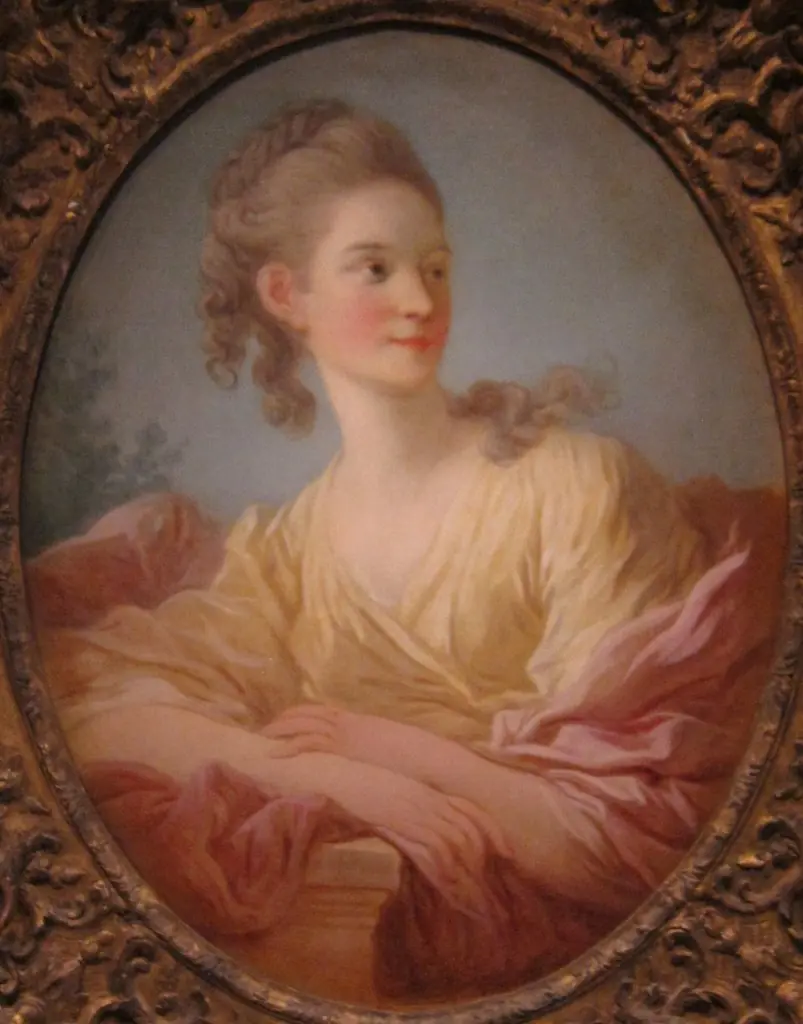
Jean-Honoré Fragonard was born on 5 April 1732 in Grasse, the son of a glover, and moved with his family to Paris in 1738.

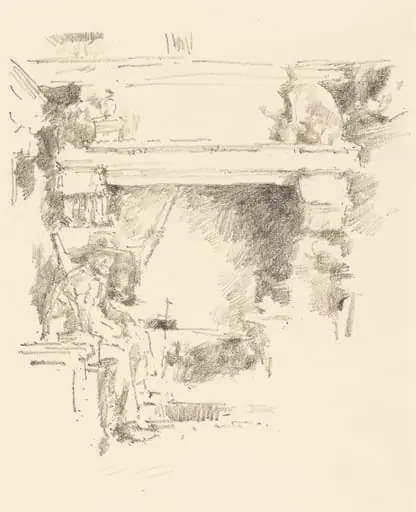 The Fireplace
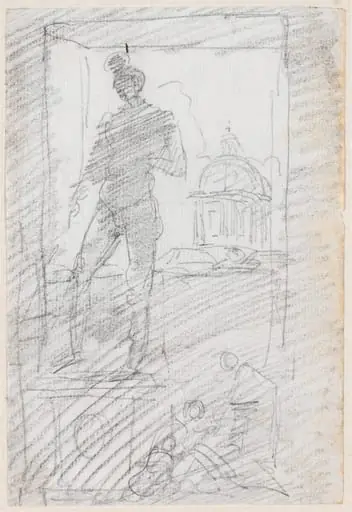 Statue of a Nude before a Window View
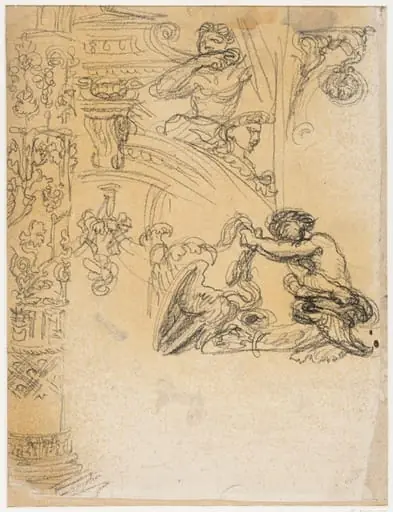 Studies by Alfred Stevens
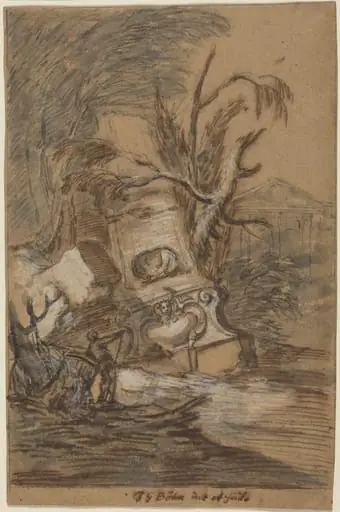 Capriccio with Antique Ruins
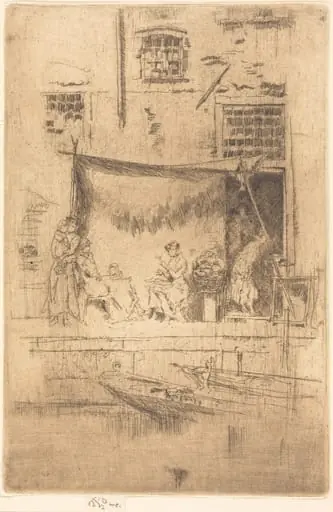 Fruit-Stall
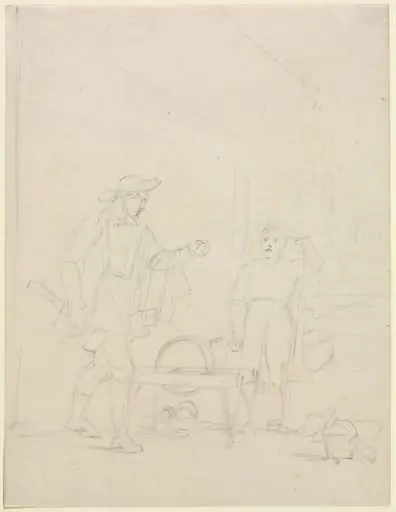 Who'll Turn the Grindstone?
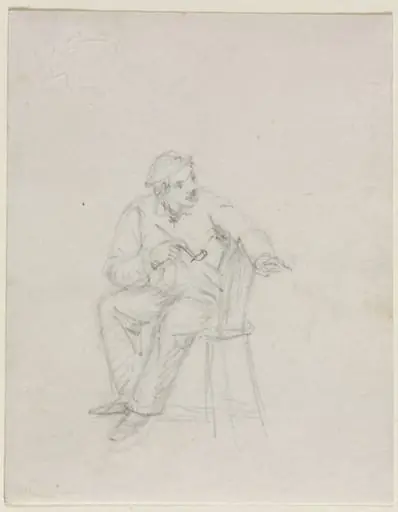 Man Smoking a Pipe
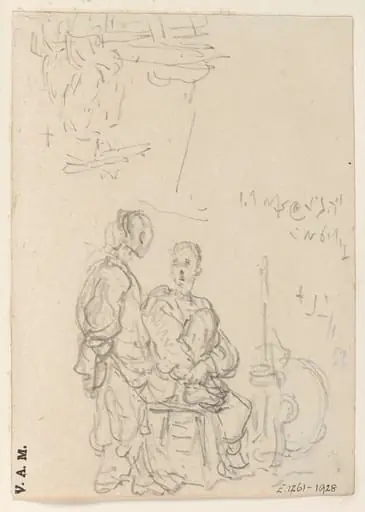 Two Chinese figures with barber's equipment
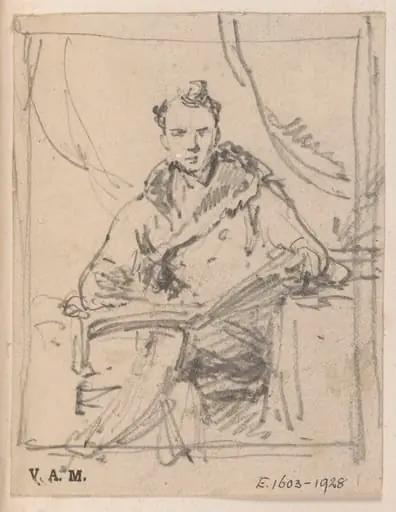 A Western man seated with a book on his knee
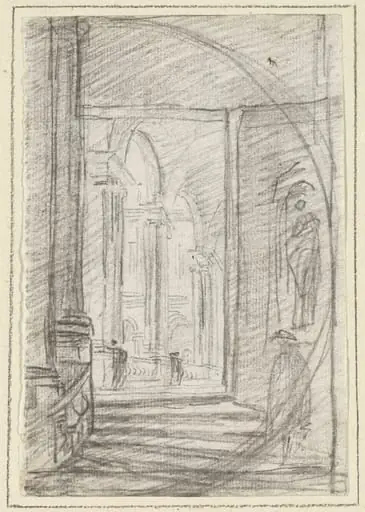 Interior of a Roman Palace
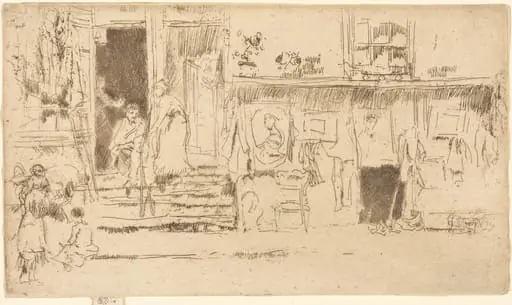 Old-Clothes Shop, No.II
![Father of the Artist [verso], by Paul Cezanne](https://artifactworldgallery.com/img/paul-cezanne--father-of-the-artist-verso--74e24a3aa4f42c1a-w320.webp) Father of the Artist [verso]
Father of the Artist [verso]