Artwork
The Armoire
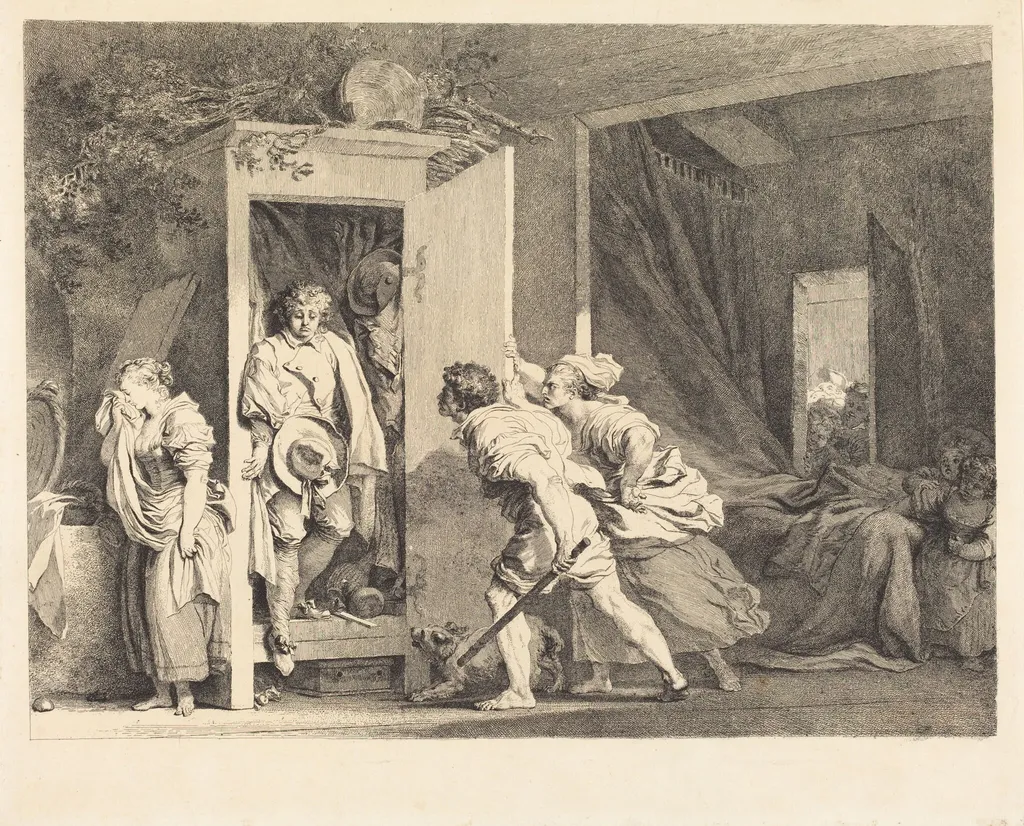
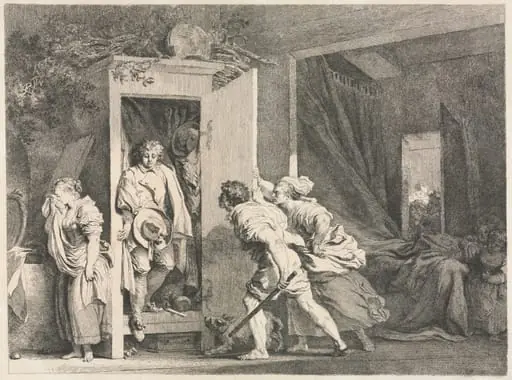
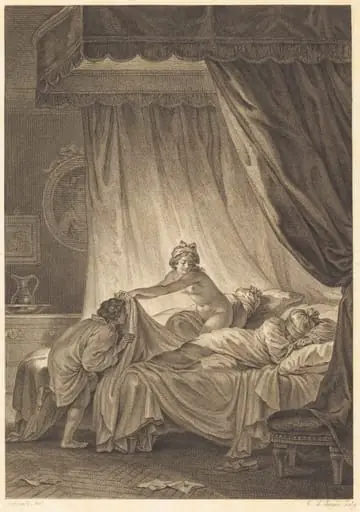
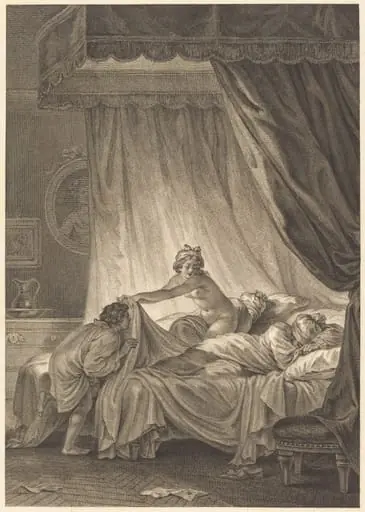
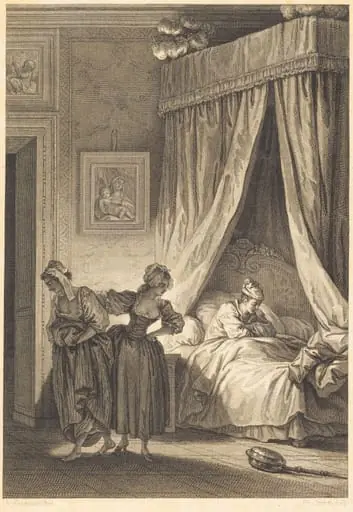
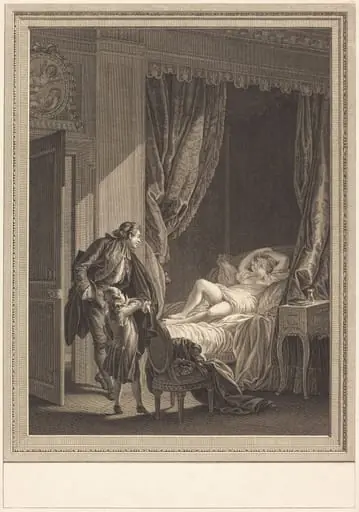
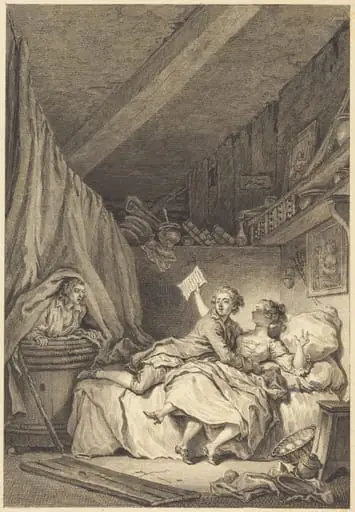
The Armoire is an ink print by the Romanticist artist Jean Honoré Fragonard. It dates from 1778 and is held in the collection of the National Gallery of Art.
About this work
Overview
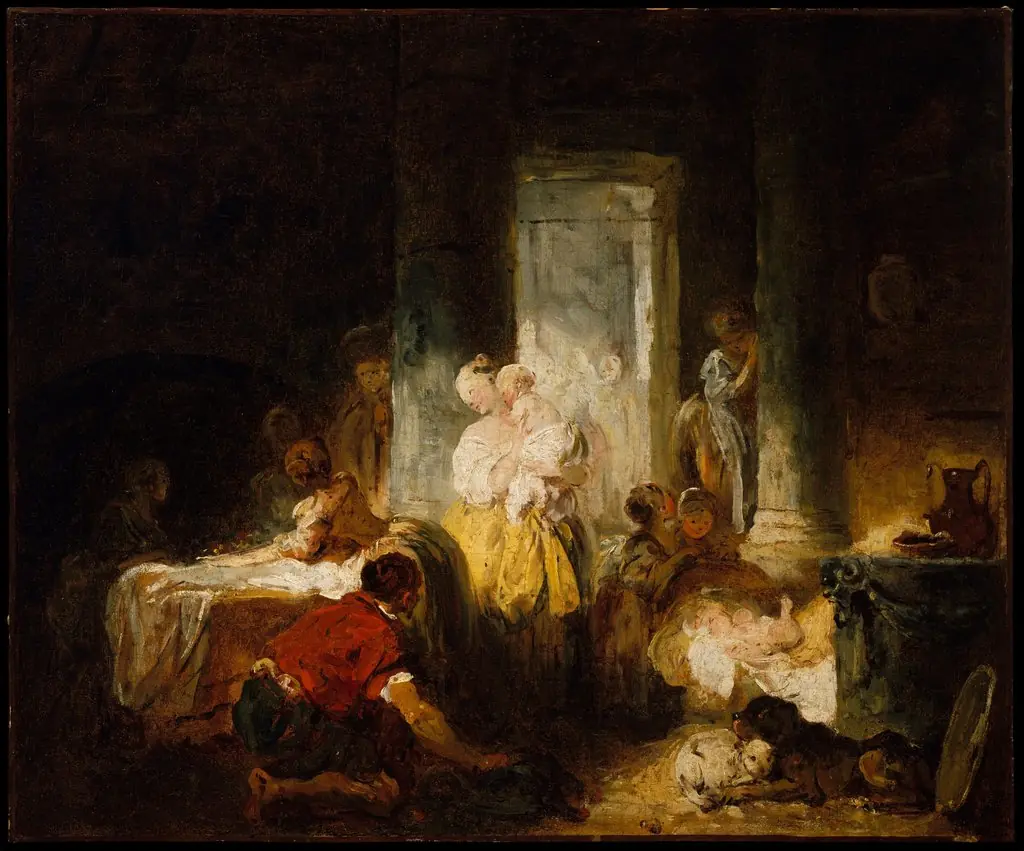
Jean‑Honoré Fragonard’s 1778 etching titled The Armoire presents a compact interior tableau. The composition is confined to a single room where several figures interact around an open wardrobe. Light and shadow delineate the space, while the delicate lines of the etching convey the textures of clothing and the subtle gestures of the participants.
Subject & Meaning
At the left, a woman in a flowing gown gazes downward, her hand poised near her face, suggesting contemplation or modesty. Emerging from the armoire, a man in a short coat and curled wig holds a fan, introducing an element of surprise. On the floor, a man and woman are entangled in drapery, their upward glances adding tension and narrative ambiguity to the scene.
Technique & Style
Fragonard employed the etching process, incising lines into a copper plate that were then inked and pressed onto paper. The work demonstrates his skillful use of hatching and cross‑hatching to model volume and suggest movement, particularly in the swirling fabrics. The contrast between deep shadows and fine, luminous lines creates a sense of depth within the confined interior.
History & Provenance
The Armoire was executed in 1778, during the later phase of Fragonard’s career when he explored genre subjects beyond his earlier Rococo mythological scenes. While specific ownership records are limited, the print has appeared in several 19th‑century catalogues of Fragonard’s work and is held in the collections of major European print museums.
Artist & collection

Artist
Jean-Honoré Fragonard was born on 5 April 1732 in Grasse, the son of a glover, and moved with his family to Paris in 1738.