Artwork
Joconde: Le depart
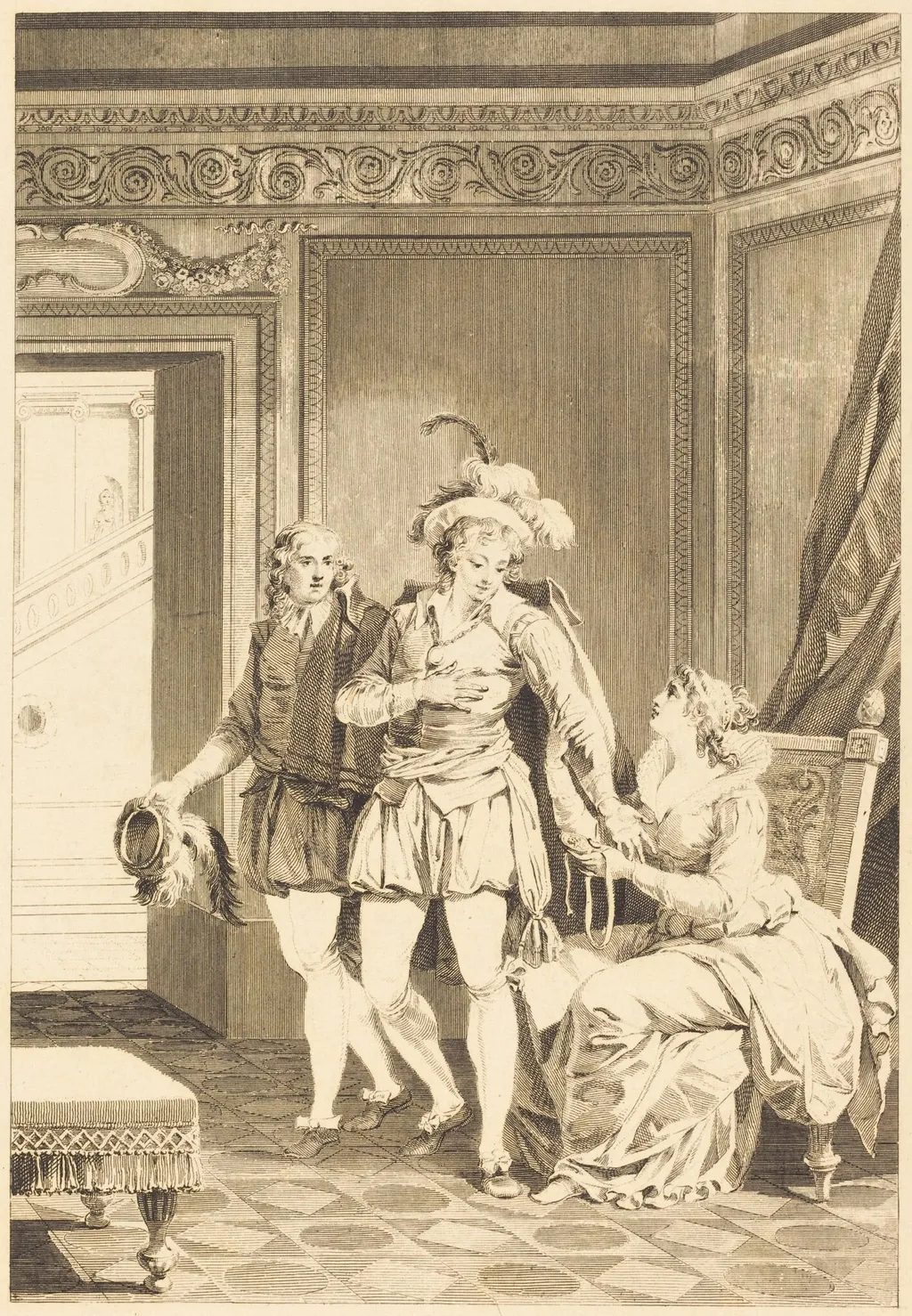
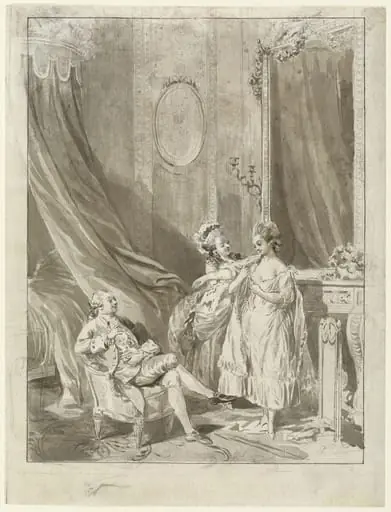
Joconde: Le depart is an ink print by the Baroque artist French 18th Century. It dates from 1750 and is held in the collection of the National Gallery of Art.
About this work
Overview
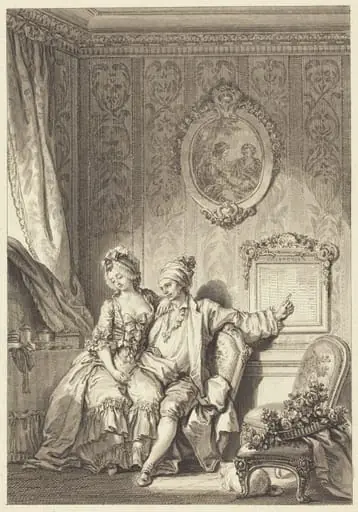
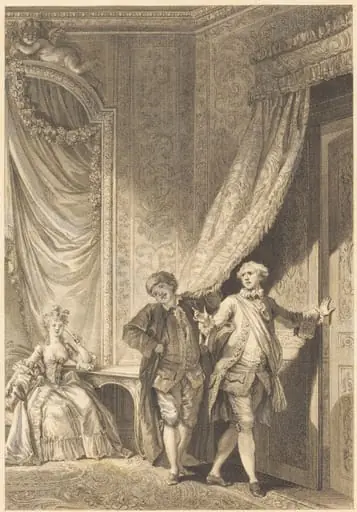
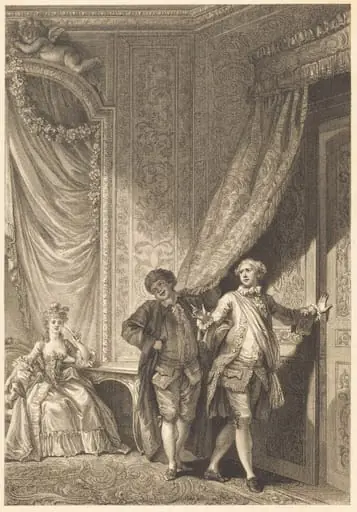
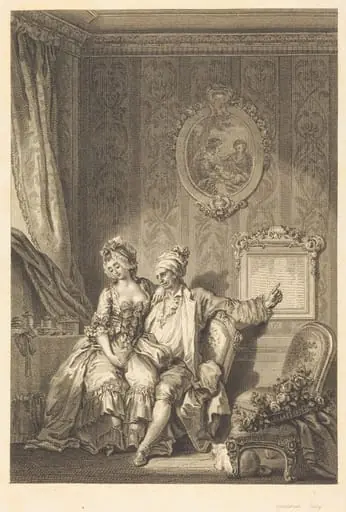
Joconde: Le depart is an etching that depicts an interior scene populated by three figures—a man in a powdered wig, another man in a loose shirt and feathered hat, and a seated woman holding a child—along with a dog and assorted furnishings. The composition is set within an elaborately paneled room, featuring tall doors, carved moldings, a patterned floor, and a modest table bearing a vase.
Subject & Meaning
The work captures a moment of departure or transition, suggested by the title, as the standing man rests his hand on the shoulder of his companion, perhaps offering reassurance. The seated woman, cradling a child, and the relaxed dog contribute a domestic atmosphere, while the surrounding opulent décor hints at a setting of wealth or aristocratic life.
Technique & Style
Created through the etching process, the artist employs fine lines and cross‑hatching to render the textures of fabrics, woodwork, and skin, achieving a subtle modelling of volume. The careful gradations of tone give the figures a three‑dimensional presence, while the intricate detailing of the room’s architecture demonstrates a controlled, disciplined hand typical of 18th‑century printmaking.
History & Provenance
The print is catalogued under the title Joconde: Le depart and is recorded in the French national collections database. No specific information about its original commission, date of execution, or subsequent ownership is provided, indicating that its provenance remains largely undocumented beyond its inclusion in the national inventory.
Artist & collection

Artist
This artist worked in late 18th-century France, making portrait paintings and etched prints.