Artwork
Le savetier
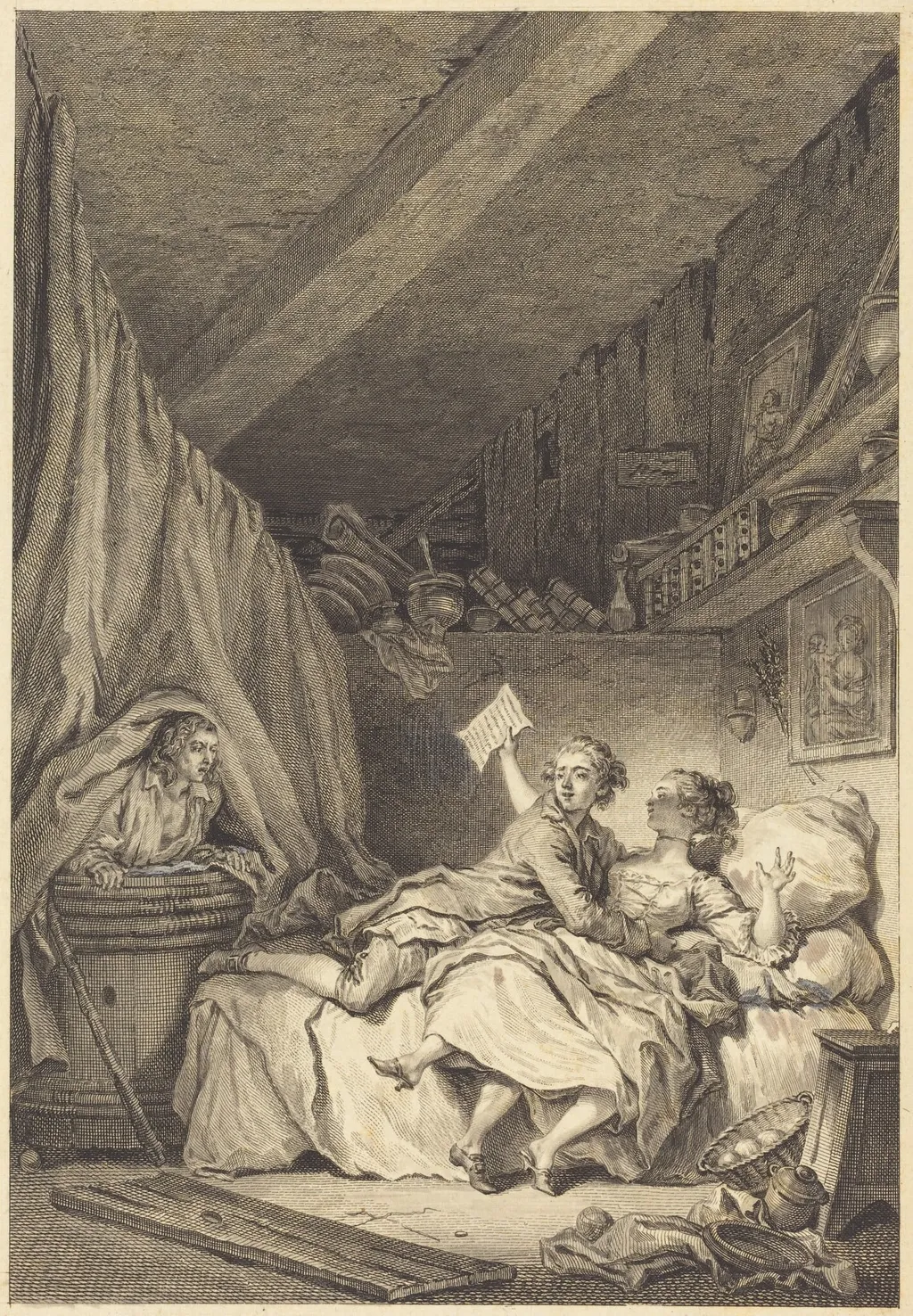
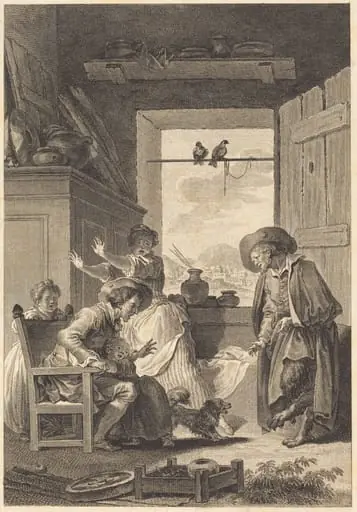
Le savetier is an ink print by the Baroque artist Jean Dambrun. It dates from 1774 and is held in the collection of the National Gallery of Art.
About this work
Overview
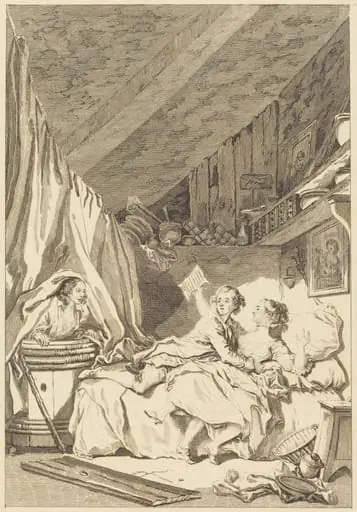
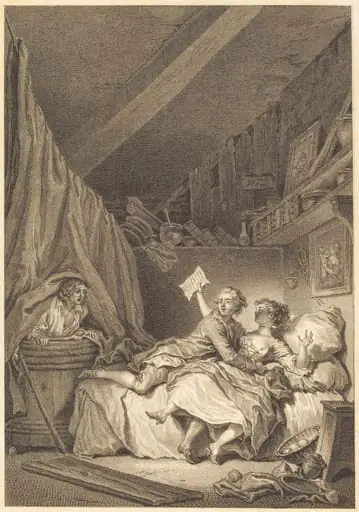
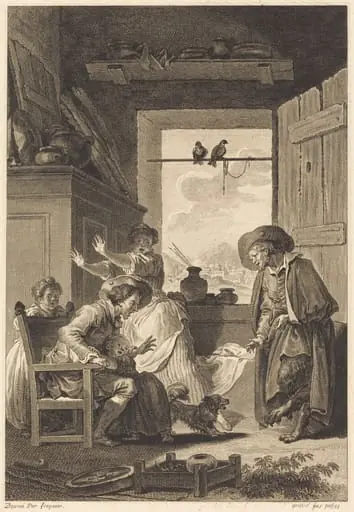
The space is crowded with assorted objects such as a mirror, basket, candle and assorted tools, creating a sense of lived‑in disorder.
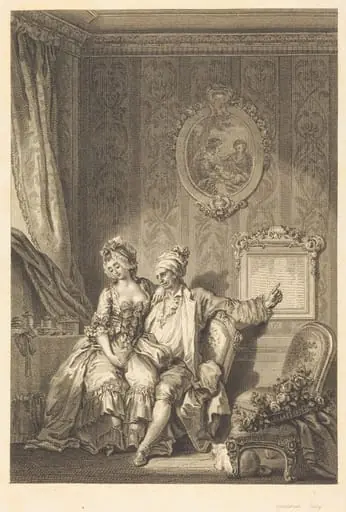
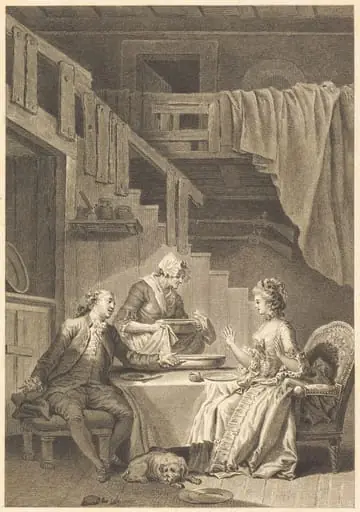
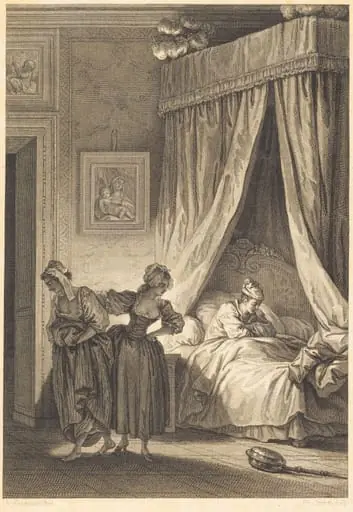
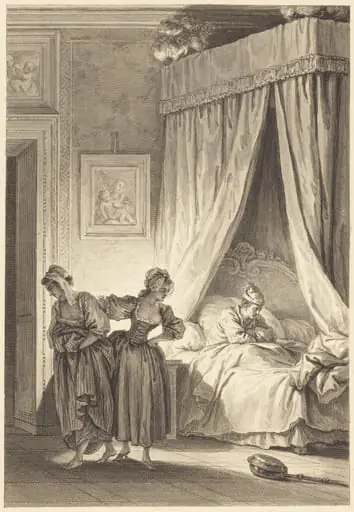
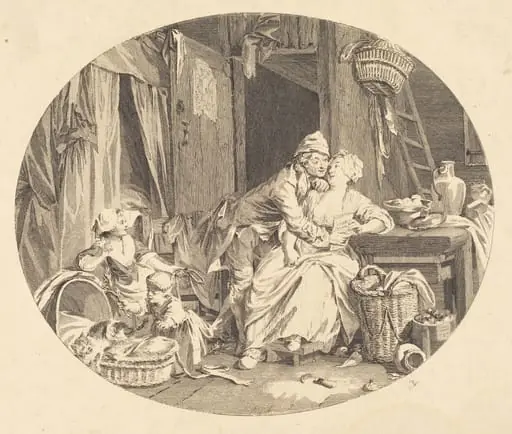
Jean Dambrun’s 1774 print, titled Le savetier, is executed as an etching and engraving enhanced with China ink. The work presents a compact interior scene populated by three figures—a seated adult wrapped in a blanket, a reclining figure holding a sheet of paper, and a child leaning forward. The space is crowded with assorted objects such as a mirror, basket, candle and assorted tools, creating a sense of lived‑in disorder.
Subject & Meaning
The composition captures a moment of domestic routine, suggesting the daily activities of a cobbler’s household. The interaction between the adult and child, together with the paper being examined, hints at a modest transaction or instruction, while the surrounding implements underscore the trade’s material reality. The overall mood conveys intimacy and the unembellished reality of working‑class life.
Technique & Style
Dambrun employed the combined processes of etching and engraving, then reinforced the image with touches of China ink to deepen shadows and define texture. Fine cross‑hatching and varied line weight generate a chiaroscuro effect that renders the cramped room both cozy and cluttered. The treatment aligns with late Baroque sensibilities that favored detailed observation of ordinary scenes over grandiose subjects.
History & Provenance
Created in 1774, Le savetier belongs to the later period of Dambrun’s printmaking career, a time when French engravers increasingly documented everyday life. The work has circulated among collections of 18th‑century prints and is referenced in catalogues of French genre prints, though specific ownership records prior to modern museum acquisition remain sparse.
Artist & collection