Artwork
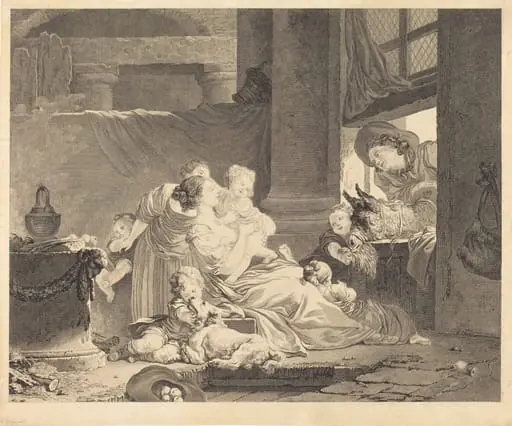
The Cupboard
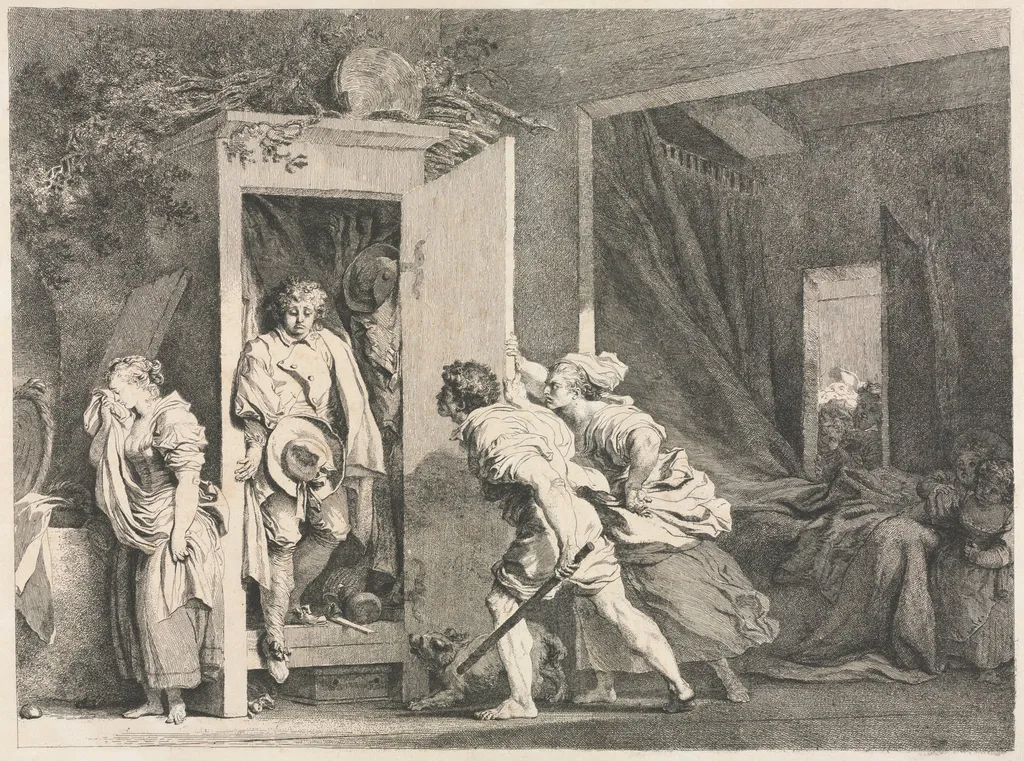
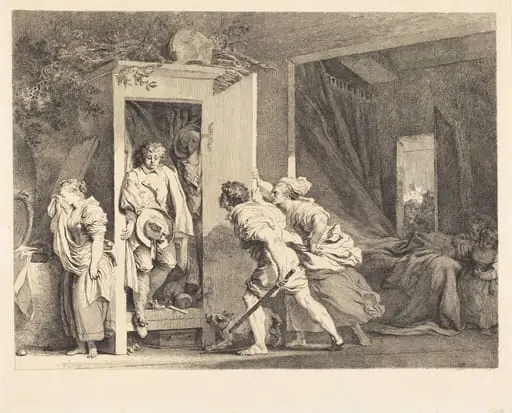
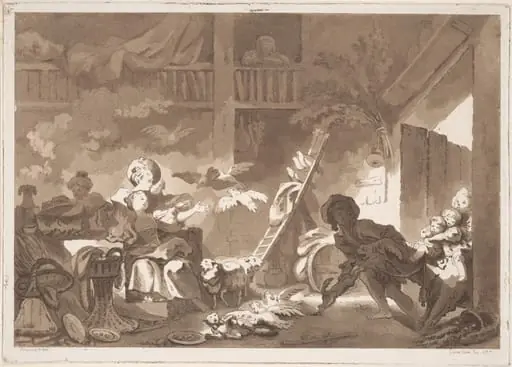
The Cupboard is a print by the Romanticist artist Jean Honoré Fragonard. It dates from 1778 and is held in the collection of the Cleveland Museum of Art.
About this work
Overview
This etching by Jean‑Honoré Fragonard captures a moment of domestic scandal: a young woman weeps as her lover, discovered hiding in a wardrobe, faces her irate parents. The composition is crowded with onlookers, including servants who peer from the background, adding a voyeuristic tone to the scene. The setting is an opulent yet untidy interior, suggesting a private chamber.
Subject & Meaning
The work plays on themes of love, shame, and the intrusion of societal norms.
The narrative depicts a clandestine romance interrupted, with the boy’s concealment in the cupboard symbolizing secrecy and the ensuing confrontation representing social disapproval. The girl's tears and the parents’ anger convey the emotional stakes, while the servants’ furtive glances hint at the public’s fascination with private transgressions. The work plays on themes of love, shame, and the intrusion of societal norms.
Technique & Style
Executed as an etching, the piece relies on fine line work and tonal contrasts to delineate figures and interior details. Fragonard employs a theatrical composition, arranging characters as if on a stage, and uses props—such as the misplaced hats and rumpled bedding—to reveal the narrative without dialogue. The light, fluid strokes recall the Rococo sensibility of his contemporary, François Boucher.
History & Provenance
Created for affluent patrons who favored humorous and intimate genre scenes, the print circulated among the French aristocracy in the late eighteenth century. It was reproduced in several editions, enhancing Fragonard’s reputation as a designer of witty, narrative prints. The work later entered museum collections, where it has been displayed as an example of Rococo printmaking.
Context
During the mid‑1700s, French art often explored private domestic episodes with a lighthearted, sometimes satirical tone. Fragonard’s etching aligns with this trend, reflecting the period’s fascination with love affairs and the moral ambiguities of the upper classes. The inclusion of servants as silent observers underscores the social hierarchy and the growing interest in everyday life as artistic subject matter.
Artist & collection

Artist
Jean-Honoré Fragonard was born on 5 April 1732 in Grasse, the son of a glover, and moved with his family to Paris in 1738.