Artwork
Assumption of the Virgin
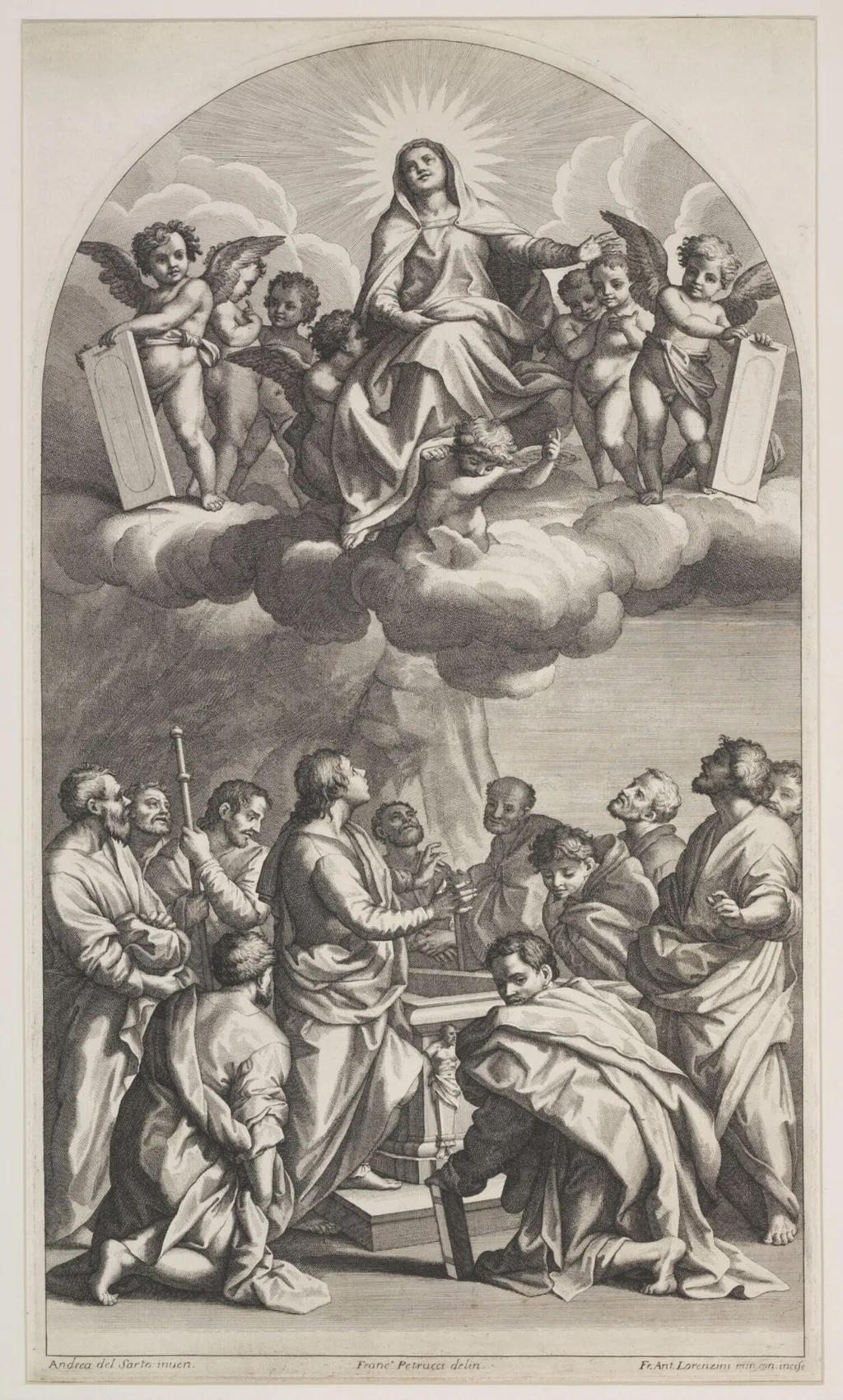
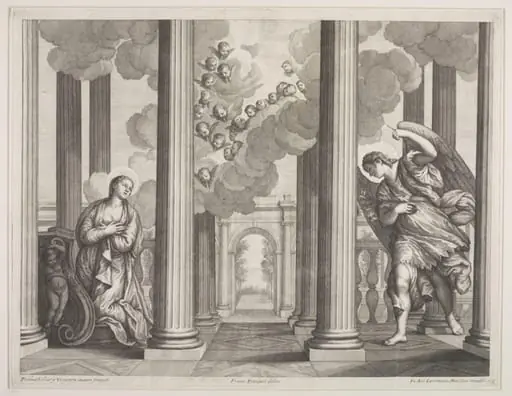
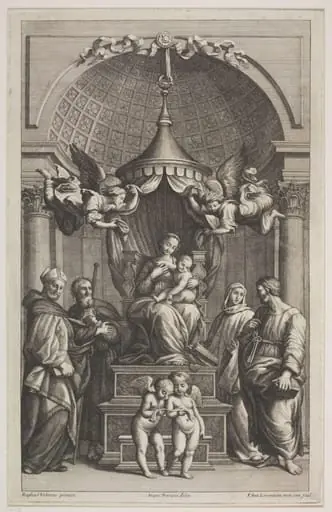
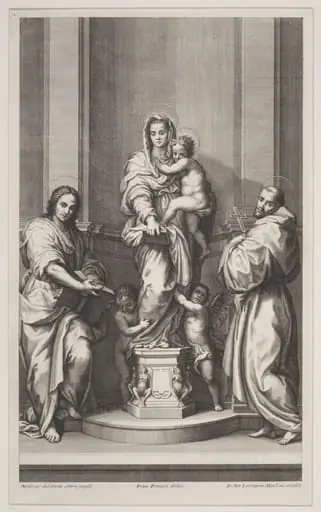
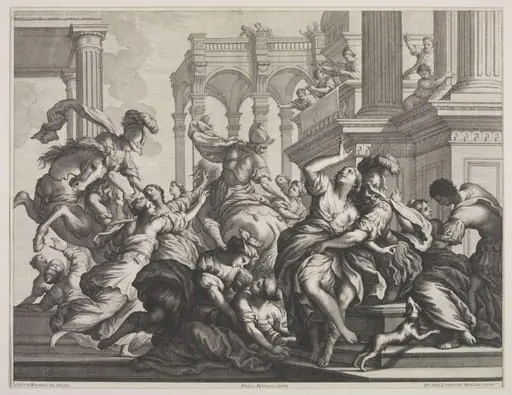
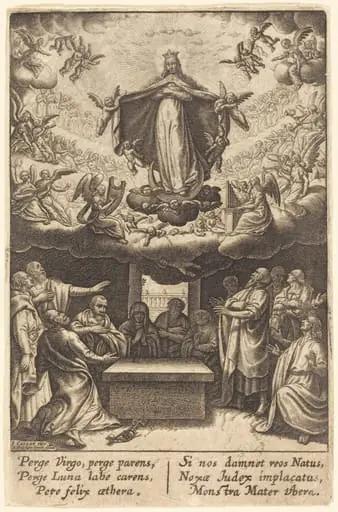
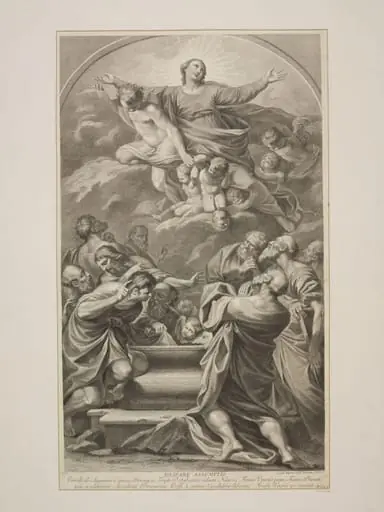
Assumption of the Virgin is a print by Giovanni Antonio Lorenzini. It dates from 1750 and is held in the collection of the Victoria and Albert Museum.
About this work
Overview
This 1750 print by Giovanni Antonio Lorenzini illustrates the Assumption of the Virgin, a subject drawn from Christian tradition.
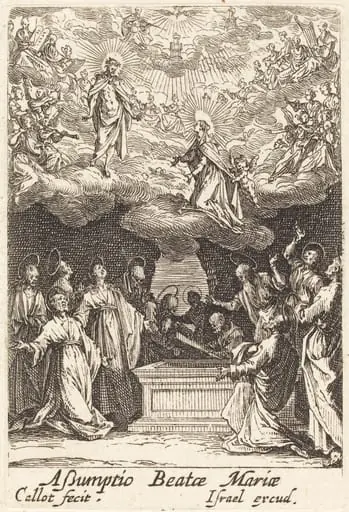
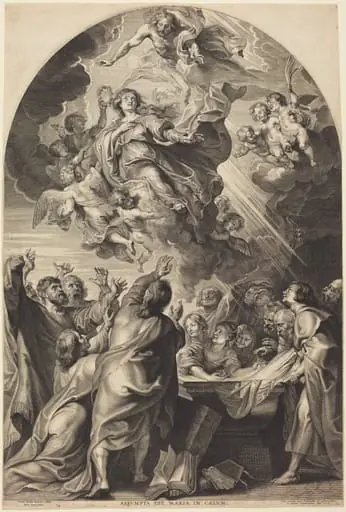
This 1750 print by Giovanni Antonio Lorenzini illustrates the Assumption of the Virgin, a subject drawn from Christian tradition. Rendered in ink on paper, it reproduces a composition originally painted by Andrea del Sarto, held in the Uffizi Gallery. The image captures the Virgin’s ascent to heaven, framed by celestial figures and earthly witnesses, executed with precise engraving techniques common in 18th-century reproductive prints.
Subject & Meaning
The Virgin Mary is shown rising above the Twelve Apostles, who gaze upward in reverence. Angels surround her, bearing symbols of her divine status—a crown and a cross—while she sits upon a throne-like form, clothed simply yet serenely. The scene conveys theological belief in her bodily assumption into heaven, emphasizing her unique role in salvation history through quiet solemnity rather than dramatic spectacle.
Technique & Style
Lorenzini employed chiaroscuro to model forms with dramatic light and shadow, enhancing volume and emotional focus. The Virgin and angels glow against a darkened background, their forms sharply defined by highlights on skin, fabric, and wings. The apostles below are rendered with softer contrasts, grounding the composition in earthly space. Fine, controlled lines define textures, reflecting the precision of engraving as a medium for translating painted compositions into print.
History & Provenance
The print is a reproductive work based on Andrea del Sarto’s altarpiece, commissioned for the Medici collection and displayed in the Uffizi. Lorenzini, active in Florence during the mid-18th century, specialized in translating Renaissance paintings into prints for collectors and religious institutions. This version was likely produced to disseminate the image beyond the confines of the gallery, serving devotional and educational purposes.
Context
In 18th-century Italy, reproductive prints played a vital role in preserving and circulating images of revered artworks. While original paintings remained accessible only to the elite, prints like this one reached broader audiences, including clergy and educated laypeople. The continued interest in del Sarto’s composition reflects enduring admiration for his harmonious style and emotional restraint within Counter-Reformation visual culture.
Legacy
Lorenzini’s print preserves a key Renaissance composition for later generations, offering insight into how artistic heritage was transmitted before photography. Though not an original creation, it functioned as a cultural artifact, sustaining the visual language of religious narrative. Its existence underscores the importance of printmaking in maintaining continuity between artistic periods and expanding access to sacred imagery.
Artist & collection
Artist
These prints show religious scenes and classical stories from the late 1600s to mid-1700s.