Artwork
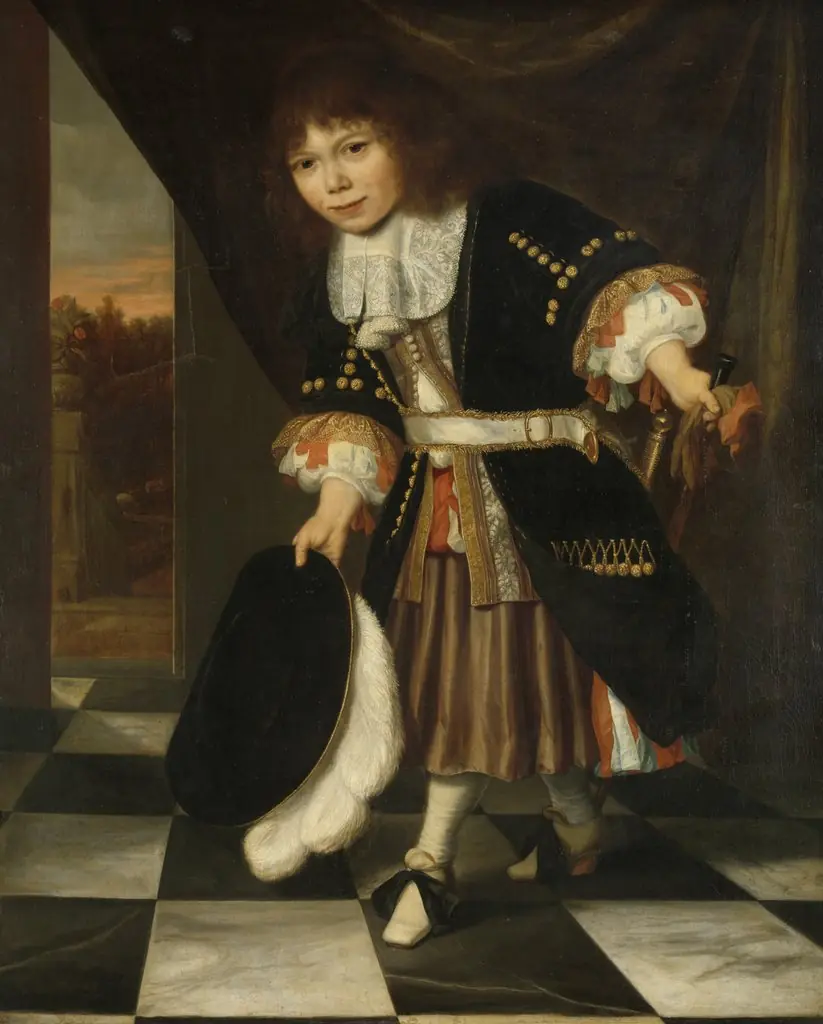
Portrait of a Boy, called The Young Son of Admiral van Nes (The Admiral's Son)
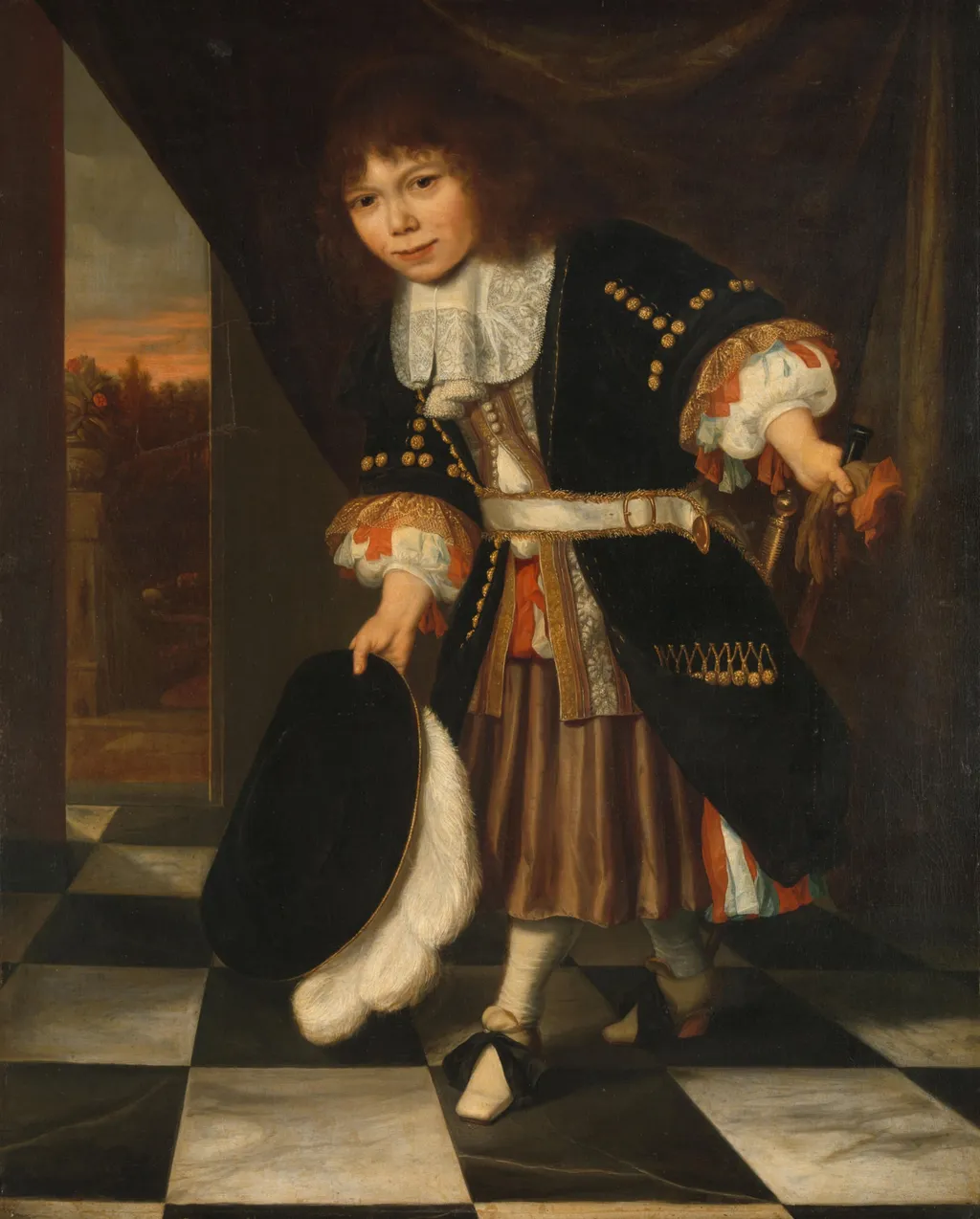
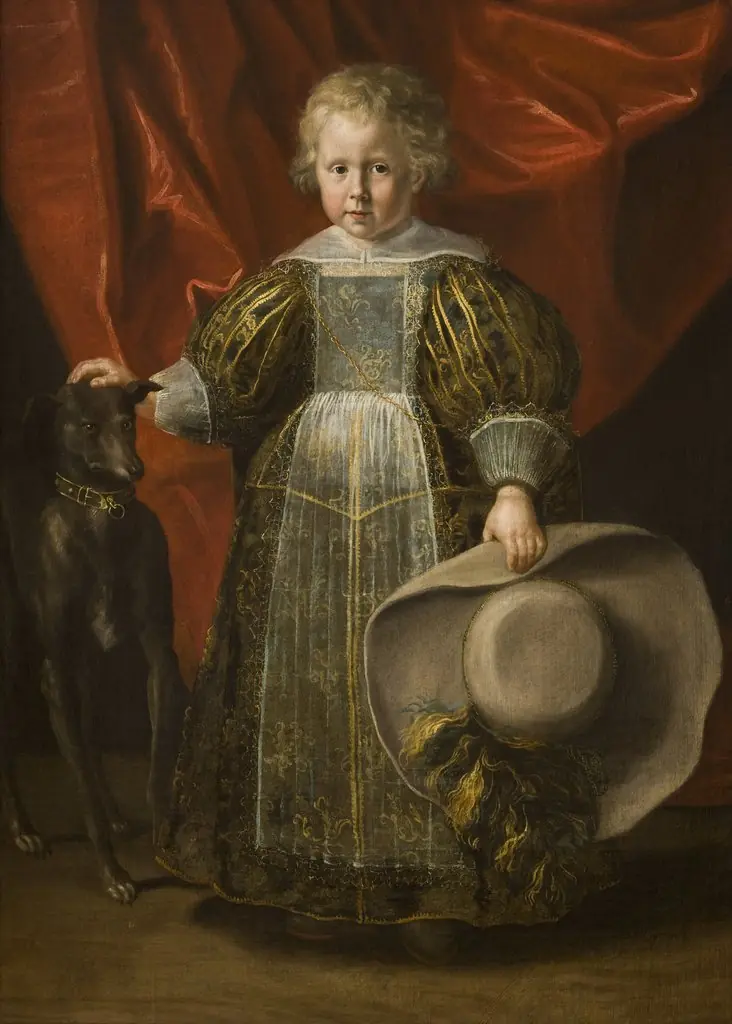
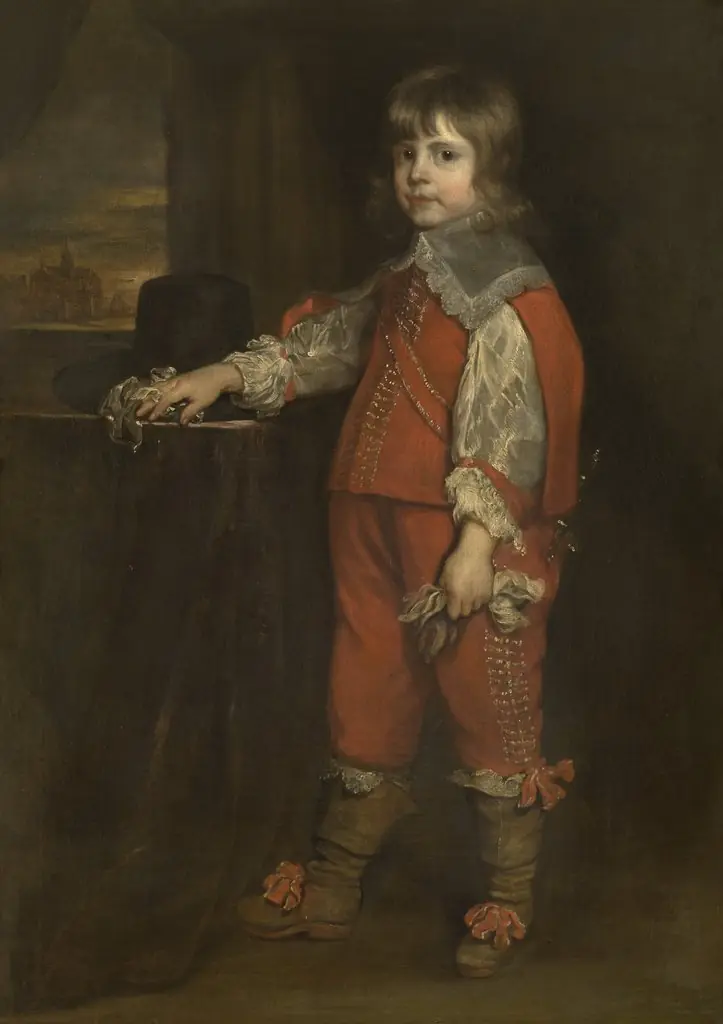
Portrait of a Boy, called The Young Son of Admiral van Nes (The Admiral's Son) is an unspecified painting by the Dutch Golden Age artist François Verwilt. It dates from 1669 and is held in the collection of the Rijksmuseum. This portrait depicts a young boy standing formally in a dark, tailored coat, holding a hat in one hand and gloves and a cane in the other.
About this work
Overview
This portrait depicts a young boy standing formally in a dark, tailored coat, holding a hat in one hand and gloves and a cane in the other.
This portrait depicts a young boy standing formally in a dark, tailored coat, holding a hat in one hand and gloves and a cane in the other. His posture suggests a deliberate bow, likely intended to convey refinement and social poise. The composition is tightly focused on the figure, with minimal background detail, emphasizing the subject’s attire and demeanor. The artist remains unidentified, though the work may stem from a studio environment rather than a master’s hand.
Subject & Meaning
The boy is believed to be the son of Admiral van Nes, portrayed not as a child at play but as a miniature gentleman. His formal attire and controlled gesture reflect the values of aristocratic upbringing—discipline, decorum, and visible status. The painting functions as a statement of family prestige, using the child’s image to project lineage and social standing rather than capturing personal character or emotion.
Technique & Style
The rendering of the boy’s clothing is precise, with careful attention to the sheen of his shoes and the texture of fabric. The brushwork is controlled and detailed in the foreground, yet the background is left largely undefined, directing all visual weight toward the figure. The face is rendered with a restrained, almost impassive expression, typical of formal portraiture of the period, prioritizing dignity over individuality.
History & Provenance
The painting entered the Rijksmuseum’s collection as part of a broader effort to document Dutch Golden Age portraiture. While its early ownership is documented through association with the van Nes family, the identity of the painter remains uncertain. It may have been produced by an assistant in a prominent studio, reflecting the common practice of workshop production for commissioned portraits of the elite.
Context
In mid-17th century Holland, portraits of children from affluent families were increasingly common, serving as symbols of domestic pride and social continuity. Unlike religious or mythological subjects, these images emphasized the virtues of upbringing and class. The plain backdrop and rigid pose align with conventions of civic portraiture, where clarity and status outweighed narrative or emotional depth.
Legacy
The portrait endures as a quiet example of how Dutch families used visual culture to assert their place in society. Though not attributed to a major artist, its craftsmanship and historical specificity offer insight into the norms of elite childhood representation. It remains a reference point for understanding the intersection of family identity and social performance in Dutch Golden Age art.
Artist & collection
Artist
Francois (Frans) Verwilt (c.1623 in Rotterdam - 8 August 1691 in Rotterdam) was as a Dutch Golden Age landscape painter.