Artwork
Limpiadora de cobres
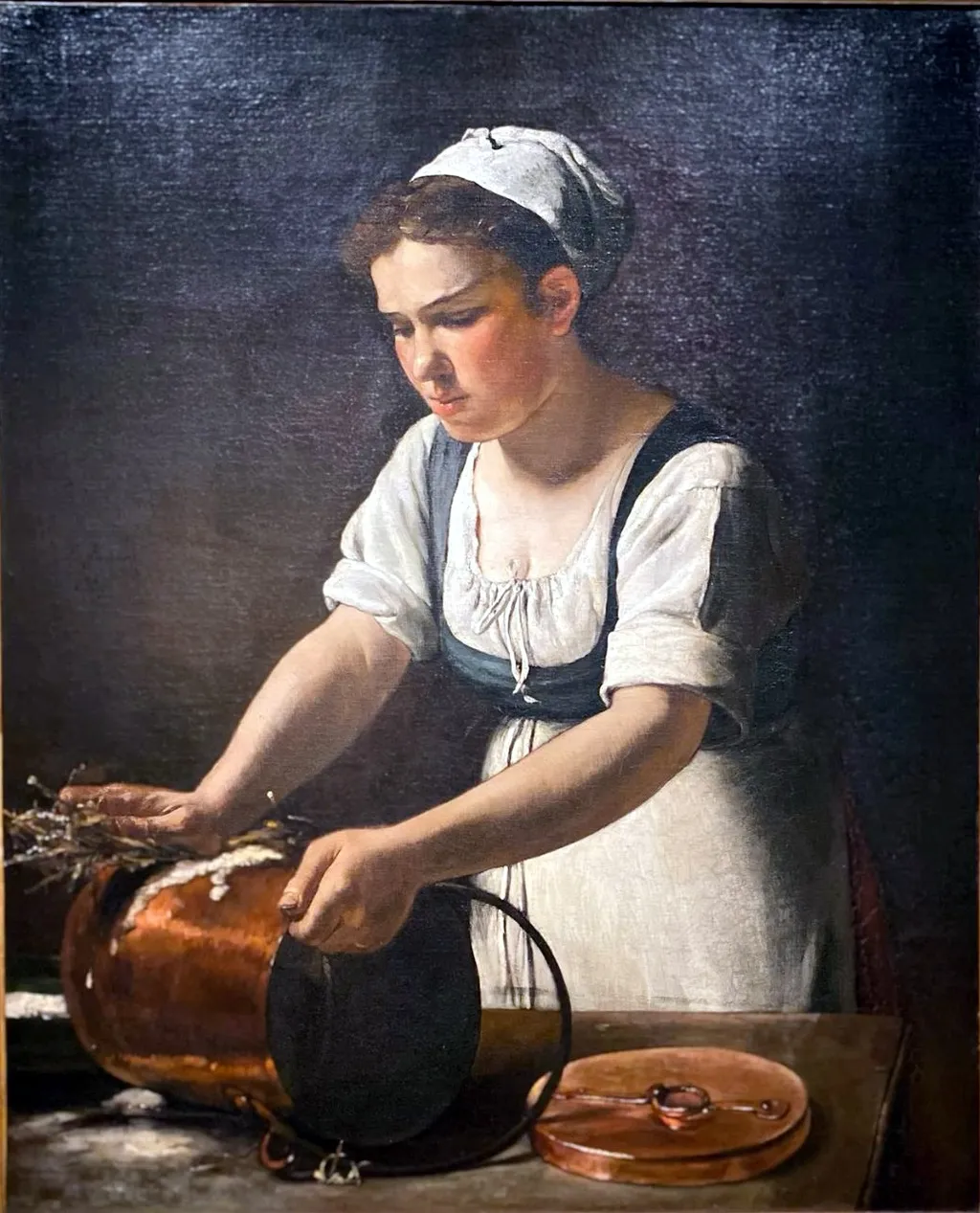
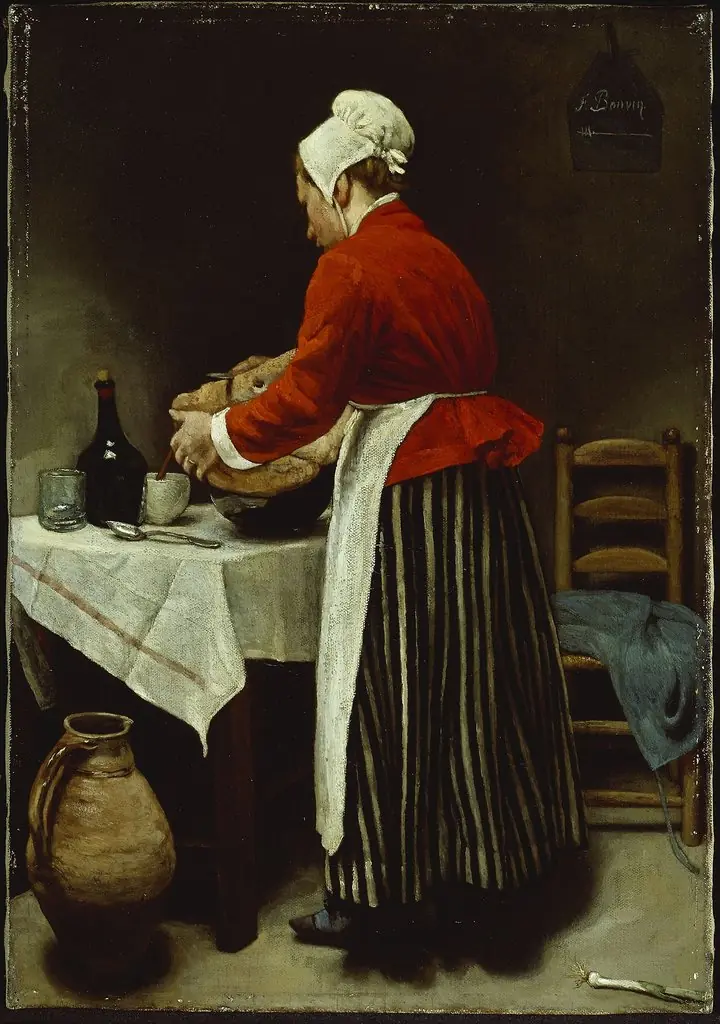
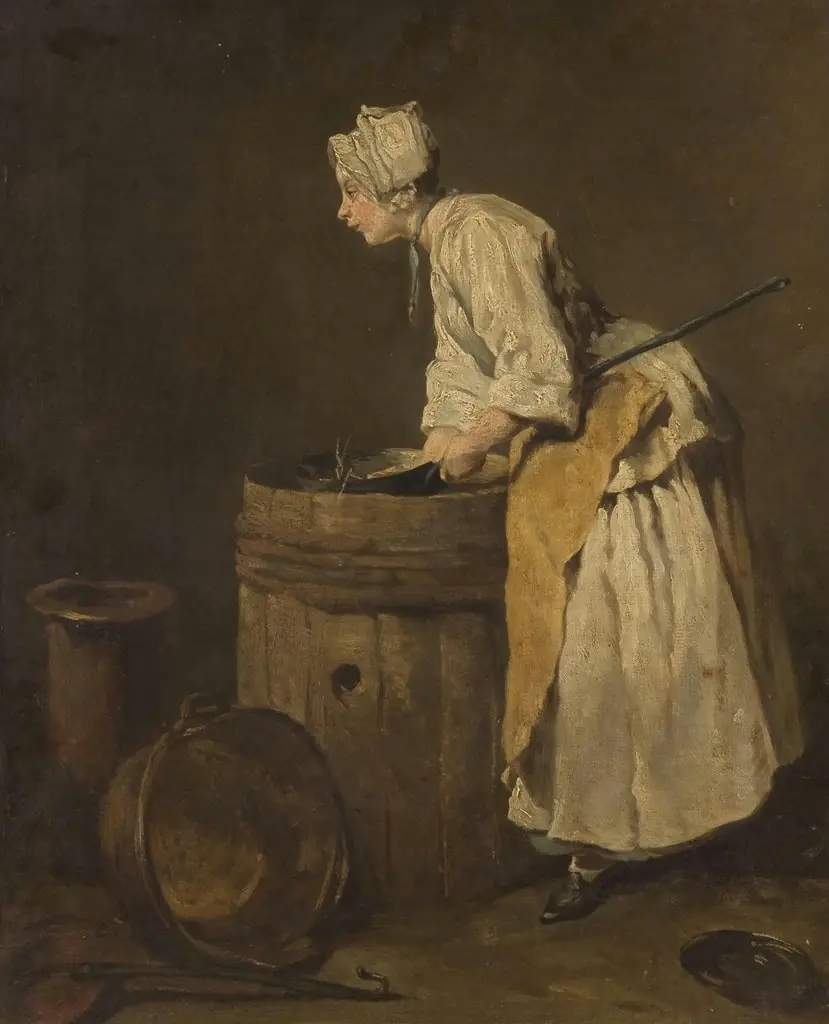
Limpiadora de cobres is an oil painting by the Realist artist François Bonvin. It dates from 1869 and is held in the collection of the National Museum of Fine Arts, Argentina.
About this work
Overview
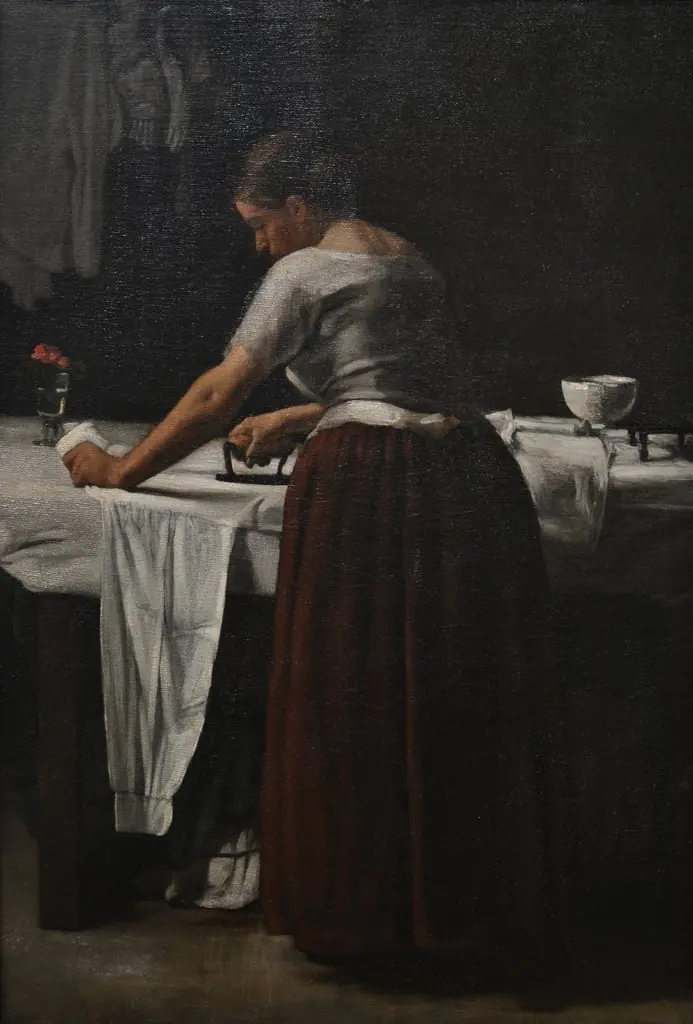
Painted in 1869 by François Bonvin, this oil work portrays a domestic laborer engaged in routine household tasks. The painting is part of the collection at the National Museum of Fine Arts in Buenos Aires. It reflects Bonvin’s interest in quiet, unidealized scenes of working-class life, rendered with subtle attention to texture and atmosphere rather than dramatic narrative.
Subject & Meaning
The figure is a young woman, dressed in a simple white dress and apron, holding a large copper pot with both hands. A smaller covered pot rests on the table beside her. Her face is softened, avoiding individual identification, which emphasizes the universality of her labor. The scene conveys dignity in mundane work, inviting contemplation rather than sentimentality.
Technique & Style
Bonvin employs chiaroscuro to model the forms of the pots and the woman’s figure, using directional light to carve volume from shadow. The dark background isolates the subject, heightening focus on the textures of metal and fabric. Brushwork is restrained, favoring tonal gradations over detail, reinforcing the painting’s quiet, intimate mood.
History & Provenance
Created during Bonvin’s mature period, the painting entered the collection of the National Museum of Fine Arts in Buenos Aires in the 20th century. Its journey from France to Argentina reflects broader patterns of European art acquisition by Latin American institutions during a time of cultural modernization.
Context
In mid-19th-century France, artists like Bonvin turned away from grand historical themes to depict ordinary laborers with empathy. This work aligns with the Realist movement’s emphasis on truthful representation, contrasting with academic ideals. Domestic interiors and service workers became subjects worthy of artistic attention, reflecting social changes in urban life.
Legacy
The painting contributes to a broader visual record of domestic labor in 19th-century Europe. While not widely exhibited outside Latin America, it remains a quiet example of how Realist painters elevated everyday routines into subjects of visual contemplation, influencing later generations interested in social realism.
Artist & collection


Museum
National Museum of Fine Arts, Argentina
Continue through works from the same source collection.