Artwork
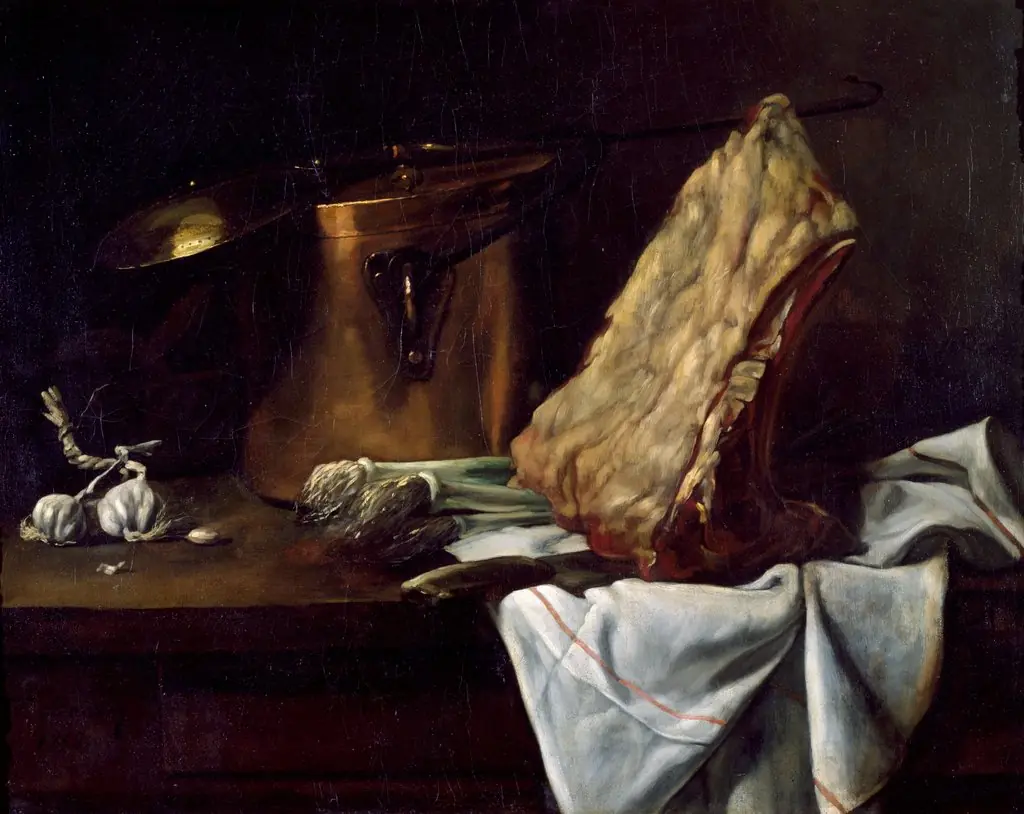
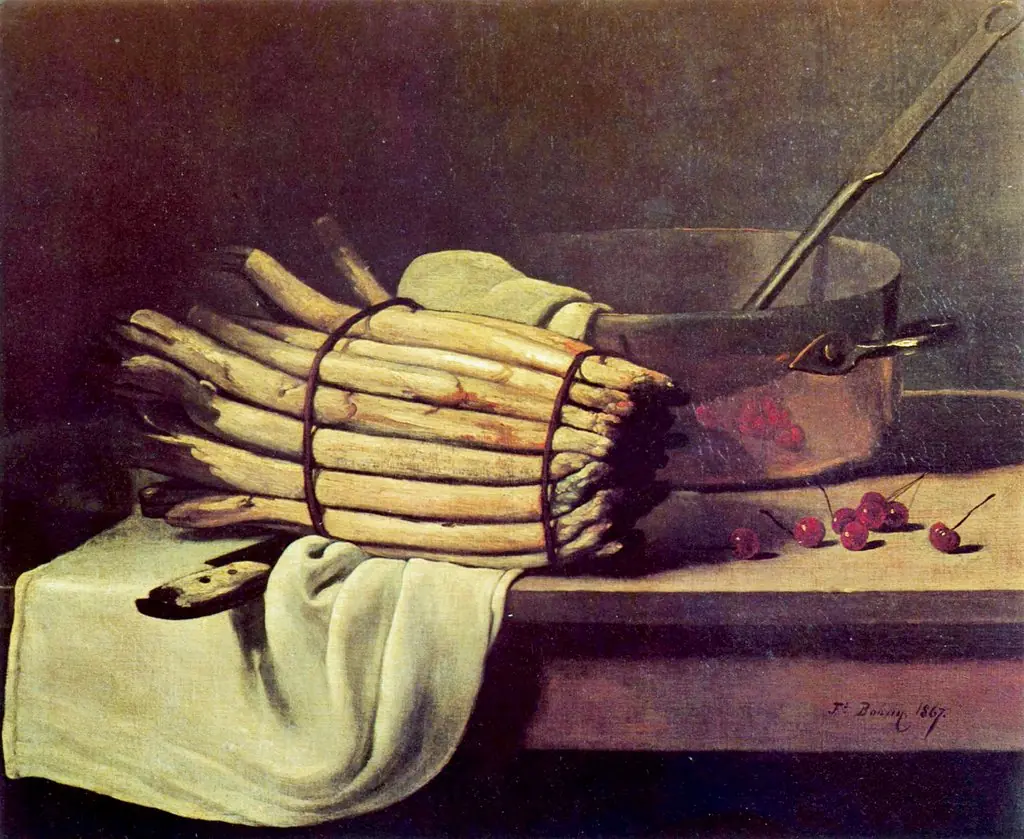
Still-life with Asparagus
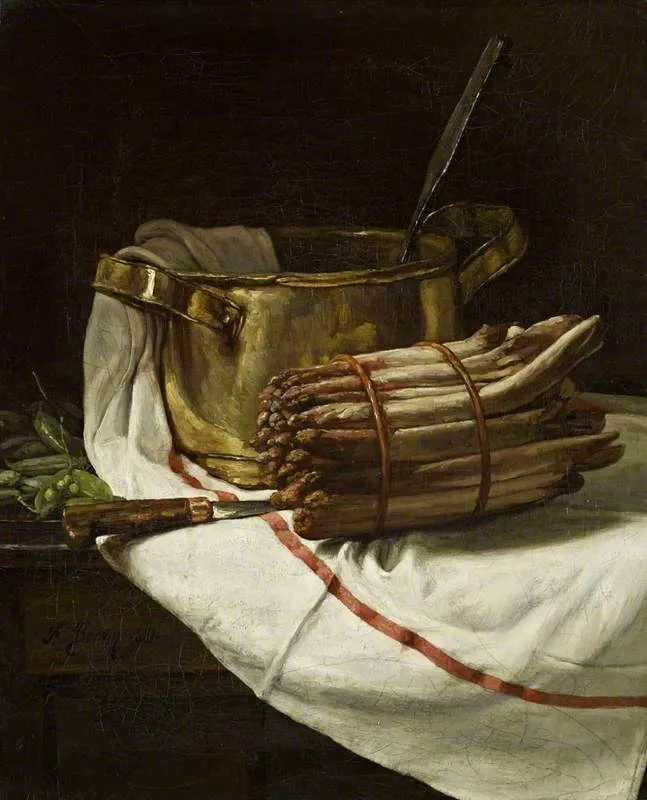
Still-life with Asparagus is an oil painting by the Post-Impressionist artist François Bonvin. It is held in the collection of the National Galleries Scotland.
About this work
Overview
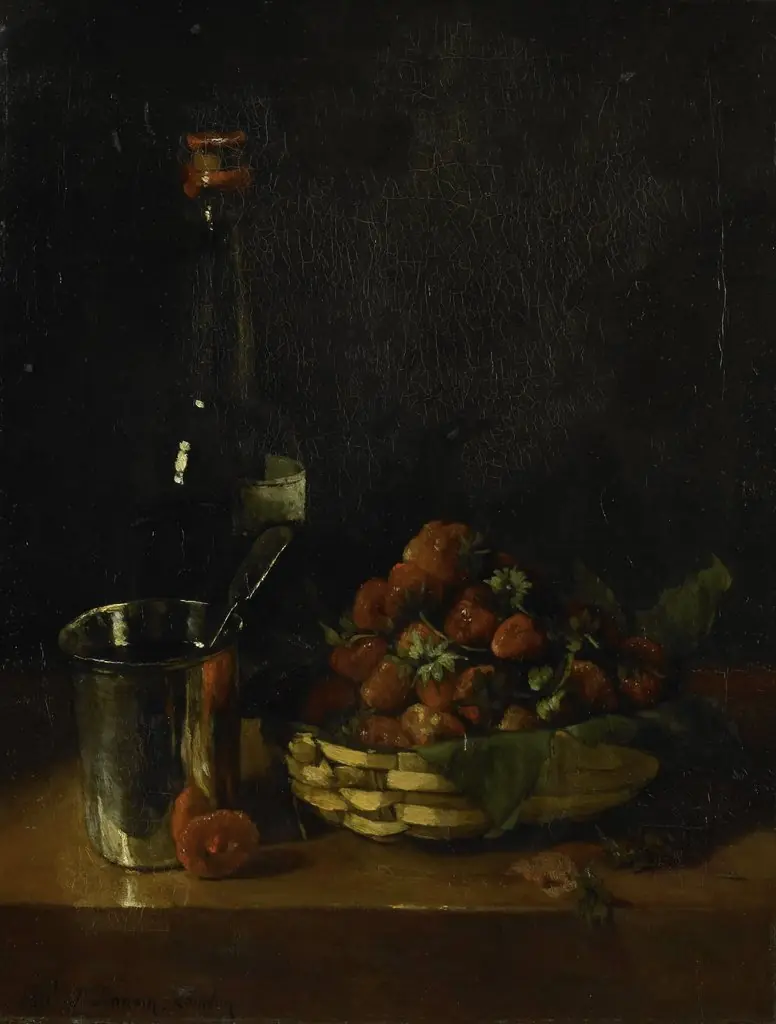
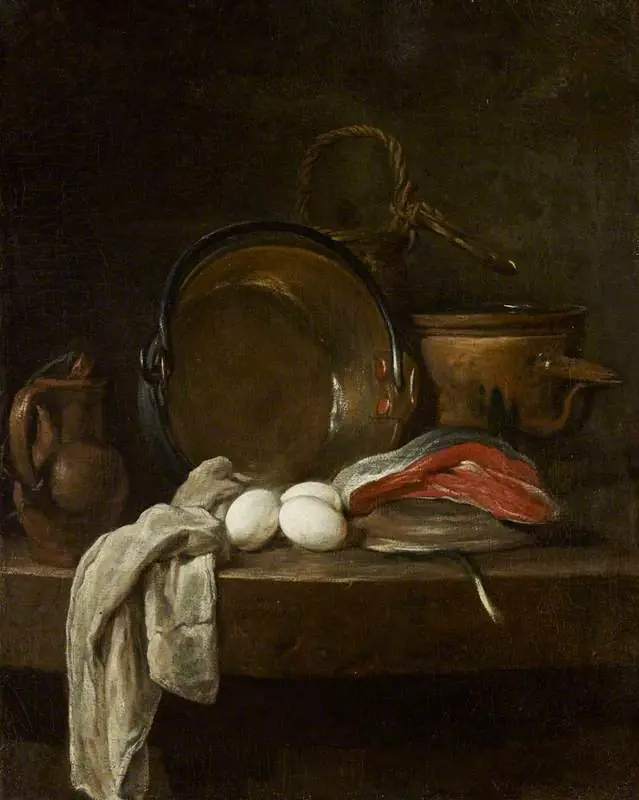
François Bonvin’s 1891 oil painting, *Still-life with Asparagus*, presents a modest arrangement of vegetables and kitchenware on a table. The composition centers on a bundled bunch of asparagus laid upon a white cloth marked with a red stripe, while a polished metal pot and a protruding spoon occupy the space behind. The work is part of the collection of the Scottish National Gallery.
Subject & Meaning
The painting focuses on everyday objects—a bundle of green asparagus, a gleaming pot, and a spoon—rendered with quiet dignity. By isolating these items against a dark backdrop, Bonvin invites contemplation of their material qualities and the simple pleasures of domestic life, emphasizing the inherent beauty of ordinary kitchen fare.
Technique & Style
A strong chiaroscuro contrast between the dark background and illuminated foreground heightens the three‑dimensional effect.
Executed in a realistic manner, the canvas displays meticulous attention to surface texture and color variation. The asparagus is rendered in layered greens, capturing both freshness and shadow, while the metal pot and spoon reflect bright highlights that suggest a polished sheen. A strong chiaroscuro contrast between the dark background and illuminated foreground heightens the three‑dimensional effect.
History & Provenance
Created in the final year of Bonvin’s life, the painting entered the Scottish National Gallery’s holdings in the early twentieth century, though the exact acquisition date is not recorded in the available sources. Its presence in a national collection underscores its relevance to the study of French still‑life traditions of the period.
Context
Bonvin’s still‑life aligns with a broader 19th‑century French interest in depicting modest, everyday subjects with academic precision. The use of chiaroscuro recalls the influence of earlier Dutch and Flemish masters, while the straightforward composition reflects the artist’s commitment to truthful representation without romantic embellishment.
Artist & collection