Artwork
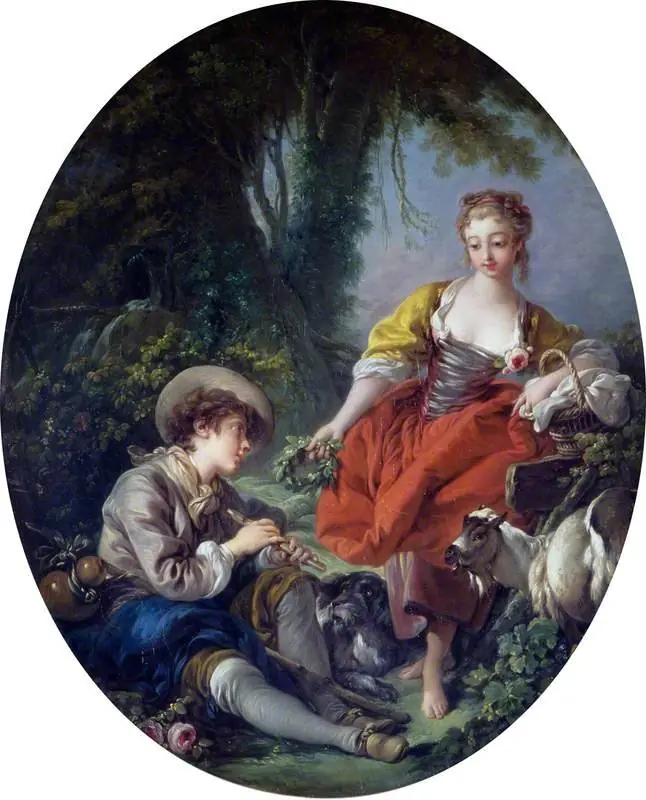
A Pastoral Scene ('L'Aimable Pastorale')
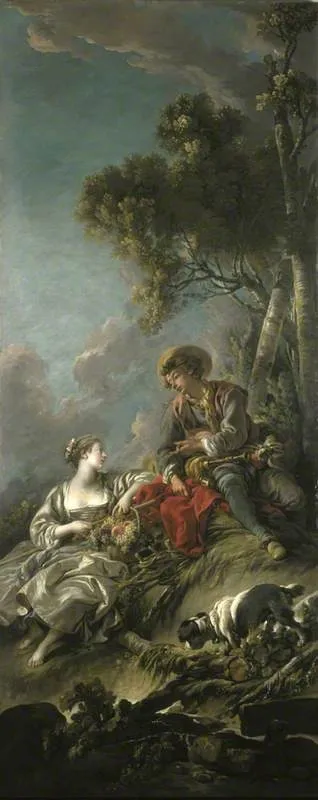
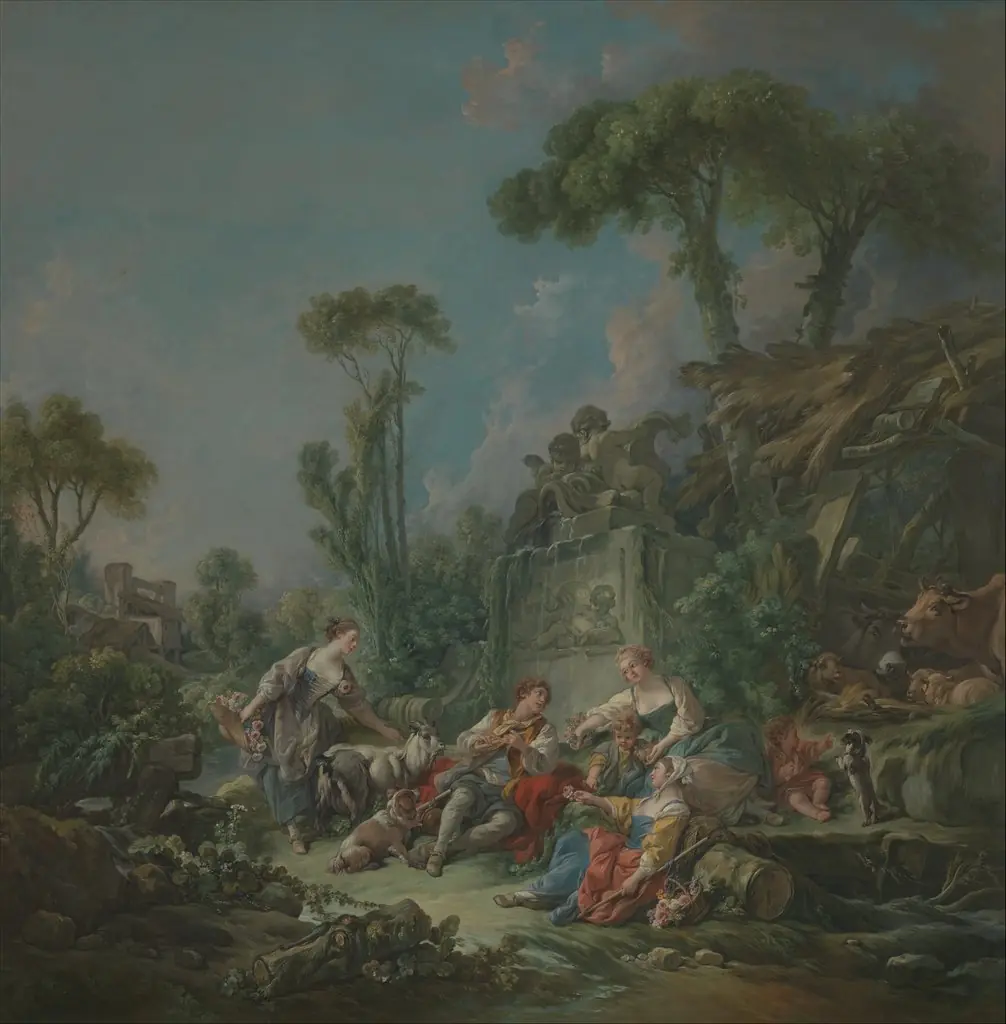
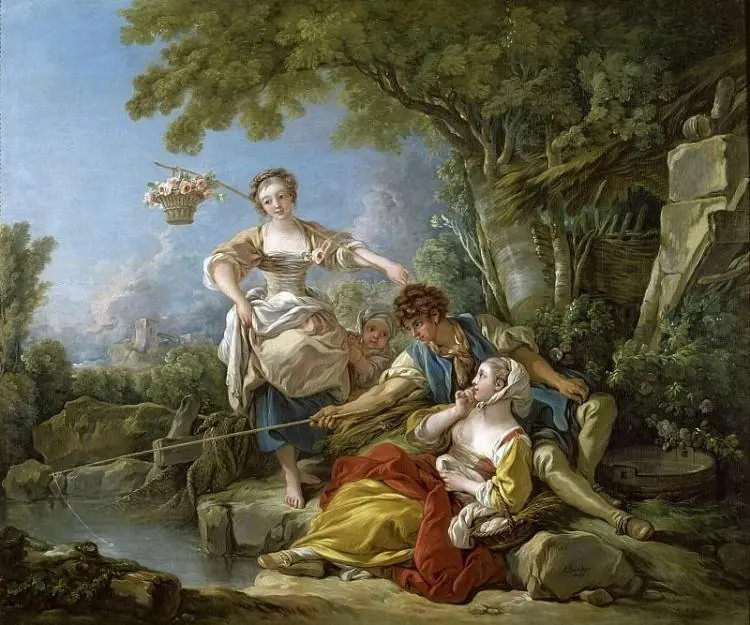
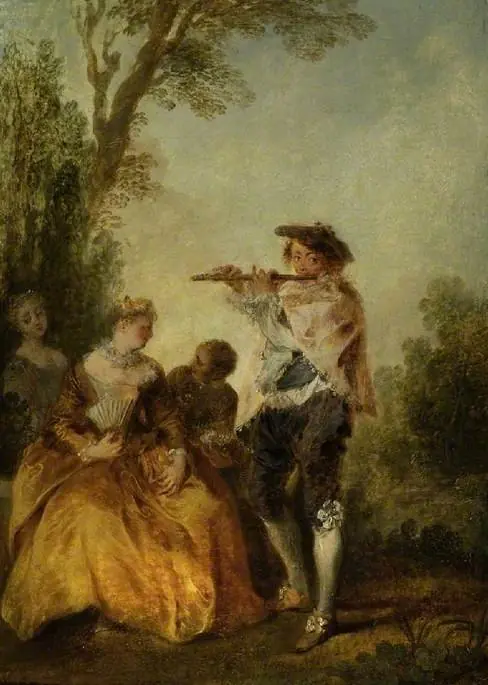
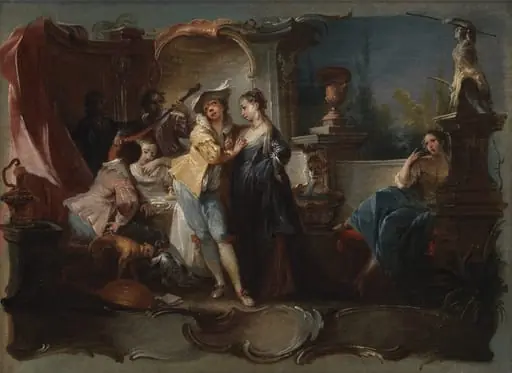
A Pastoral Scene ('L'Aimable Pastorale') is an oil painting by the Rococo painting artist François Boucher. It dates from 1762 and is held in the collection of the National Galleries Scotland.
About this work
Overview
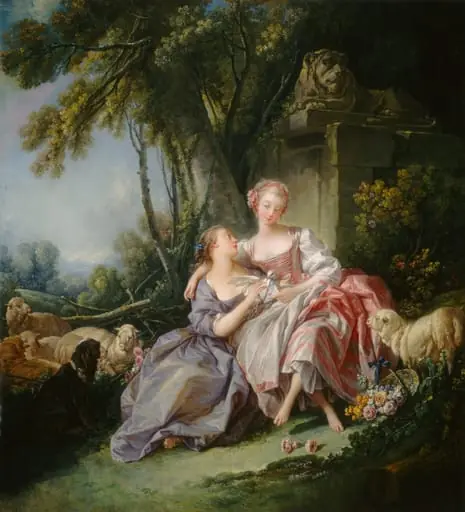
Painted in 1762 by François Boucher, this oil-on-canvas work depicts a quiet rural encounter between two figures. It resides in the Scottish National Gallery, part of a broader body of work in which Boucher explored idealized pastoral themes favored by 18th-century French aristocracy. The composition avoids dramatic action, instead emphasizing stillness and gentle interaction.
Subject & Meaning
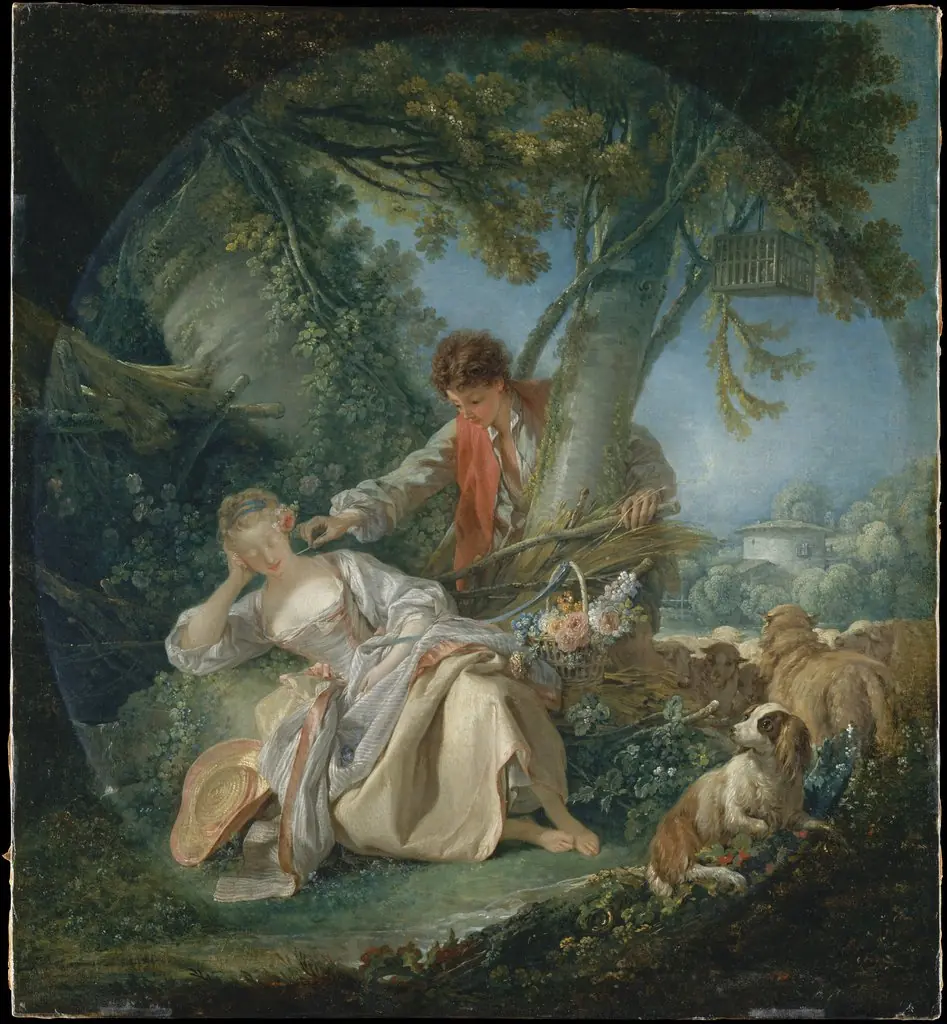
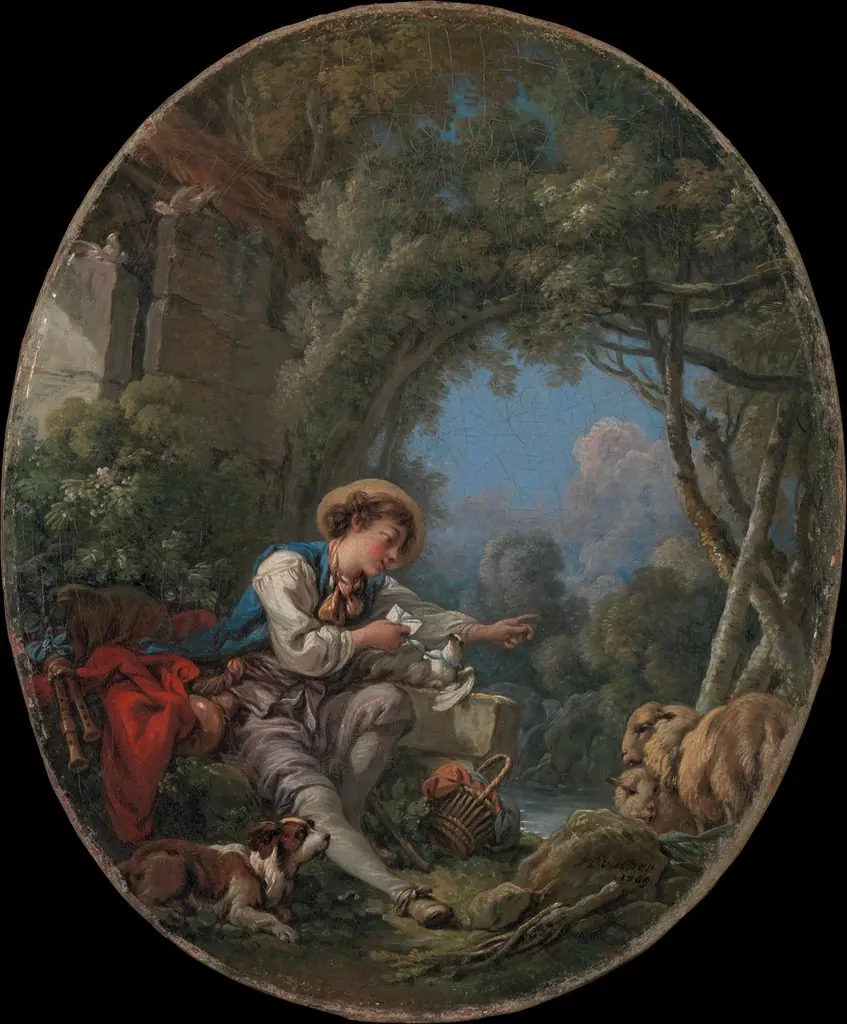
The scene portrays a man playing a flute while a woman, clad in a light gown, observes him with quiet attention. Their attire suggests a stylized rusticity rather than actual peasant life, aligning with the Rococo taste for refined idylls. The presence of a small dog adds domestic warmth, reinforcing an atmosphere of tranquil companionship, emblematic of an imagined, harmonious nature.
Technique & Style
Boucher employs soft brushwork and delicate tonal transitions to create a luminous, airy effect. Colors are muted yet harmonious, with pastel hues dominating the figures and landscape. Light falls evenly across the scene, minimizing strong contrasts; the focus is on texture and surface elegance rather than chiaroscuro, reflecting the Rococo preference for grace over dramatic intensity.
History & Provenance
Commissioned during the height of Boucher’s influence at the French court, the painting entered the Scottish National Gallery’s collection in the 19th century. Its journey from private French collections to public Scottish display reflects broader patterns of art acquisition during the Enlightenment, when British collectors sought works by leading continental artists.
Context
Created in the decade before the French Revolution, the painting embodies the escapist ideals of the French elite, who favored pastoral fantasy over social realism. Boucher’s depictions of leisurely lovers in nature catered to aristocratic tastes, offering an aesthetic refuge from the complexities of urban and political life.
Legacy
Though later criticized for its perceived frivolity, the work remains a representative example of Rococo sensibility. It continues to inform scholarly discussions on 18th-century visual culture, particularly regarding how art mediated ideals of love, nature, and social order. Its preservation in a national collection underscores its enduring role in art historical discourse.
Artist & collection

Artist
François Boucher was a French painter, draughtsman and etcher, who worked in the Rococo style.