Artwork
Mercurius en Argus
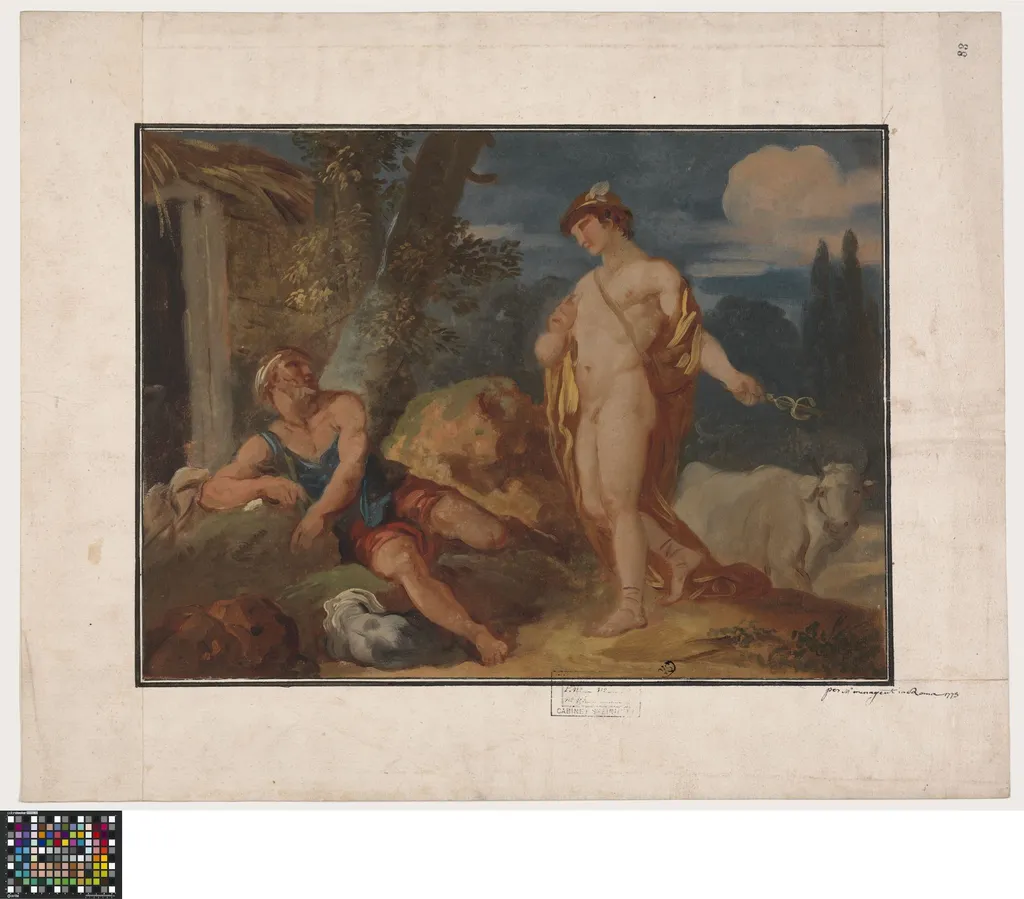
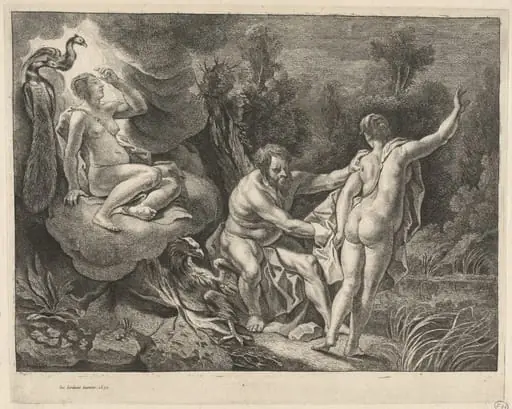
Mercurius en Argus is an oil painting by the Rococo painting artist François-Guillaume Ménageot. It dates from 1772 and is held in the collection of the Groeningemuseum.
About this work
Overview
Mercurius en Argus is a 1772 oil painting by French artist François-Guillaume Ménageot, associated with the Rococo movement. The work depicts a mythological scene featuring two male figures and a cow, set against a serene landscape.
Subject & Meaning
The painting illustrates a moment from mythology, identified by its title as involving Mercury (Mercurius) and Argus. The relaxed poses and surroundings suggest a portrayal of a quiet, possibly pre-narrative moment in the myth, emphasizing tranquility over drama.
Technique & Style
Characteristic of late Rococo, the painting employs soft, pastel colors and delicate brushwork, contributing to its calm atmosphere. The contrast between the draped and nude figures adds a touch of Rococo's emphasis on elegance and subtle sensuality.
History & Provenance
Created in 1772 by Ménageot, a Grand Prix de Rome winner and later a leader at the French Academy in Rome, the painting is now part of the Groeningemuseum's collection.
Context
As a pupil of François Boucher, Ménageot's work reflects the transitioning tastes from Rococo to Neoclassicism, though this piece firmly grounds itself in Rococo's thematic and stylistic preferences.
Legacy
While specific impact of *Mercurius en Argus* on the broader art historical canon is not prominently noted, it remains a representative example of late 18th-century French Rococo painting, offering insights into the period's artistic values.
Artist & collection
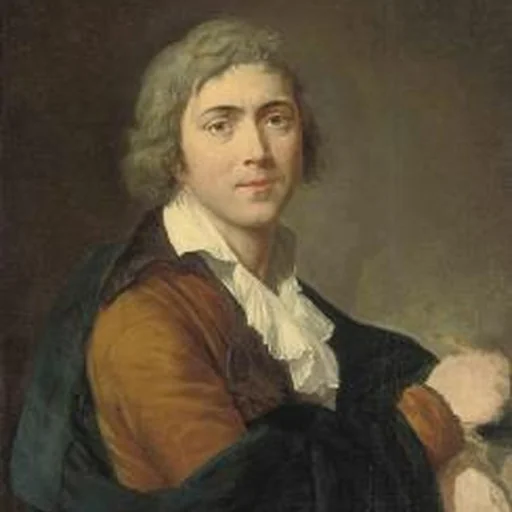
Artist
François-Guillaume Ménageot (1744–1816) was a French painter of religious and French historical scenes.