Artwork
Untitled
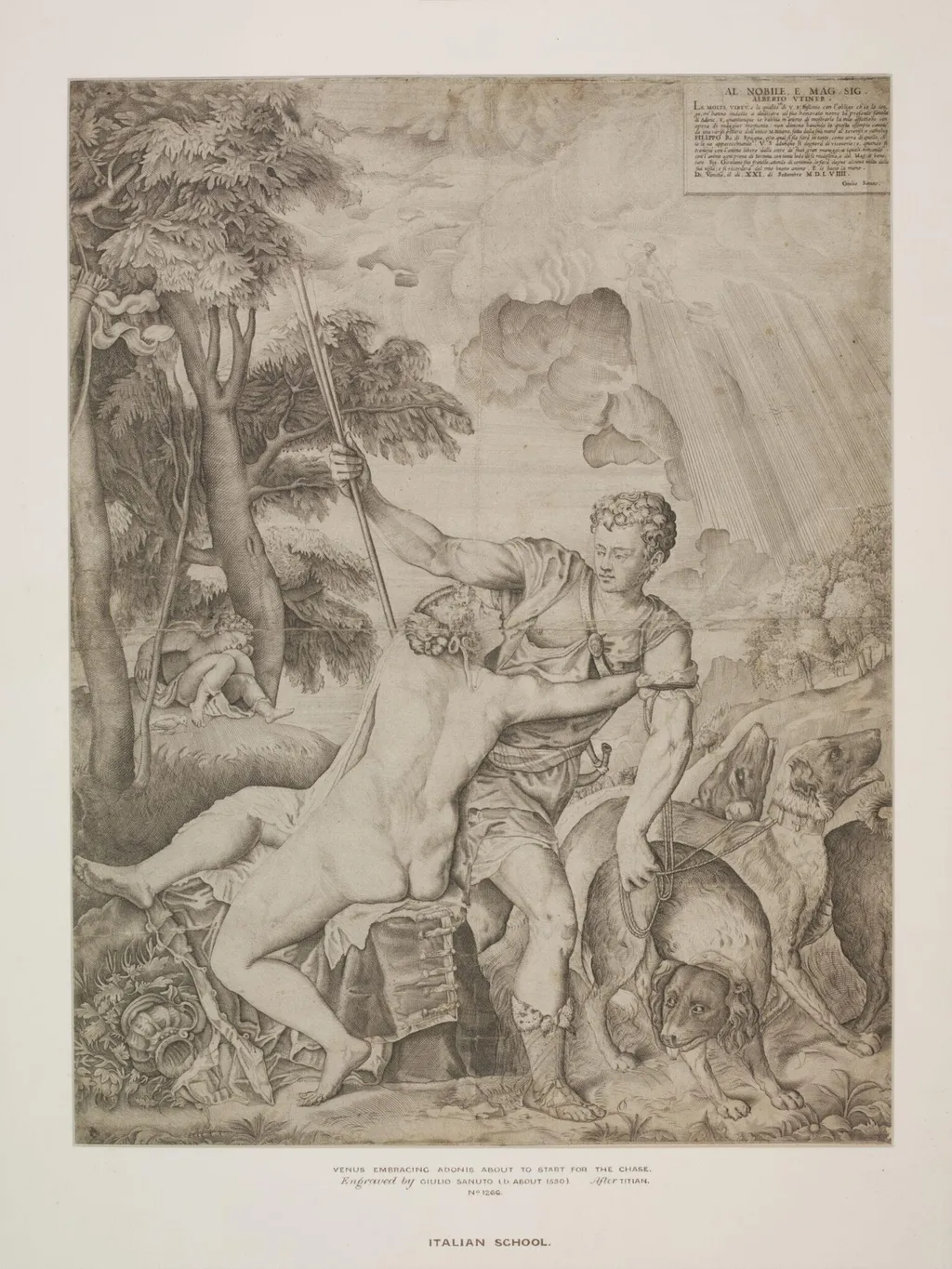
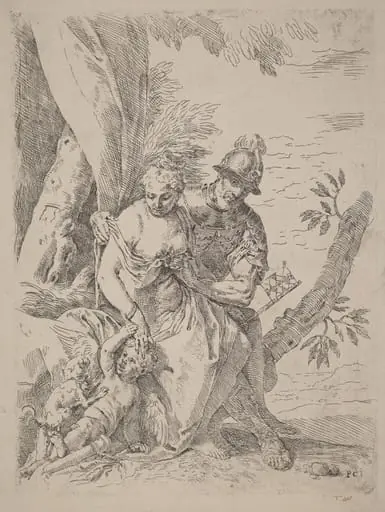
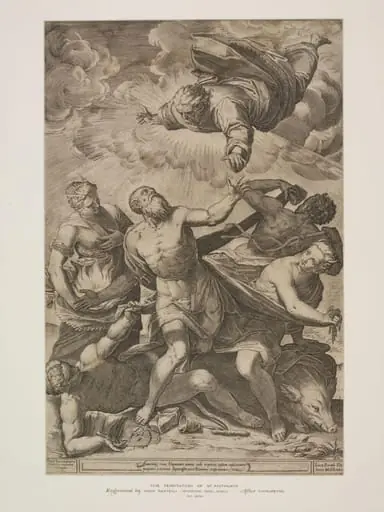
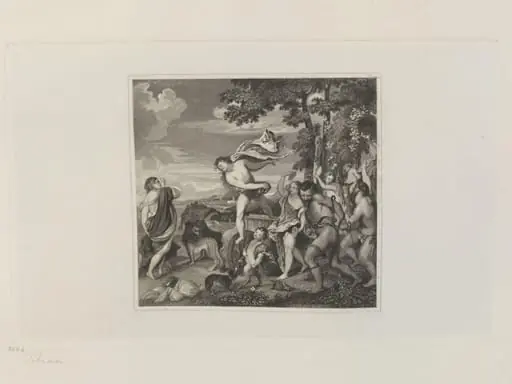
Untitled is a print by the Renaissance artist Giulo Sanuto. It dates from 1540 and is held in the collection of the Victoria and Albert Museum. This print on paper, attributed to Giulio Sanuto, illustrates a mythological scene drawn from Ovidian tradition.
About this work
Overview
This print on paper, attributed to Giulio Sanuto, illustrates a mythological scene drawn from Ovidian tradition.
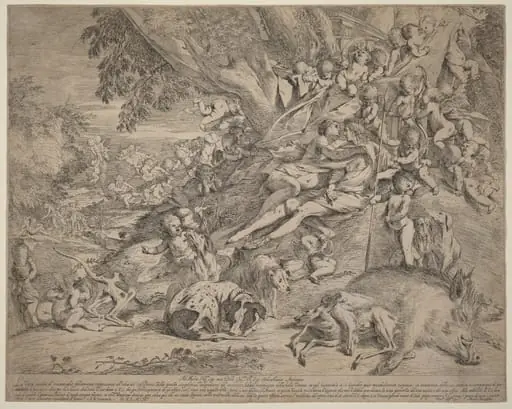
This print on paper, attributed to Giulio Sanuto, illustrates a mythological scene drawn from Ovidian tradition. Though labeled as depicting Venus embracing Adonis, the composition emphasizes movement rather than intimacy. The figures are engaged in preparatory action before a hunt, surrounded by hunting dogs and a slain boar. The work is a reproductive print, derived from a painting by Titian, and reflects the 16th-century practice of translating major compositions into graphic form for wider dissemination.
Subject & Meaning
The scene captures Adonis, the youthful hunter, moments before departing for the chase, while Venus, though present, does not physically embrace him. The wounded boar at their feet foreshadows his eventual fate, grounding the image in tragic myth. The absence of overt affection shifts focus from romantic sentiment to the inevitability of fate, a common theme in Renaissance interpretations of classical narratives. The figures’ postures and the surrounding symbols reinforce the tension between desire and mortality.
Technique & Style
Sanuto employed fine, precise engraving lines to render anatomical detail and natural textures. Musculature, foliage, and fur are meticulously defined, creating a sense of tactile realism. The dense background of trees and clouds provides depth without distraction, directing attention to the central figures. The linear clarity and controlled shading reflect the influence of Northern Renaissance printmaking traditions, even as the subject matter remains rooted in Italian Mannerist aesthetics.
History & Provenance
The print does not appear in Adam von Bartsch’s comprehensive catalog of European printmakers, suggesting limited circulation or later attribution. Its origin remains obscure, though stylistic analysis links it to Venetian workshops active in the mid-1500s. It likely served as a study piece or decorative item for collectors interested in classical themes. No documented ownership history predates the 19th century, and its survival appears to be due to its technical quality rather than fame.
Context
During the Renaissance, mythological subjects were frequently adapted into prints to satisfy elite demand for intellectual and aesthetic imagery. Titian’s original painting, now lost, was widely known through copies and engravings. Sanuto’s version aligns with a broader trend of translating high art into accessible formats, often prioritizing narrative clarity over emotional nuance. The print’s emphasis on action and detail reflects the period’s fascination with classical antiquity and the human form.
Legacy
Though not widely reproduced or studied, the print stands as an example of how Renaissance compositions were reinterpreted through printmaking. Its technical precision and adherence to classical themes offer insight into the transmission of artistic ideas beyond major centers. It contributes to understanding the role of reproductive prints in shaping visual culture, even when the original works faded from public view.
Artist & collection
Artist
A Venetian printmaker working between 1540 and 1580, Giulio Sanuto carved detailed city views and maps.