Artwork
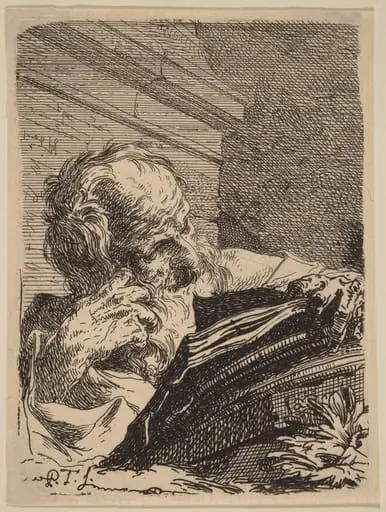
A Seated Elderly Man Asleep
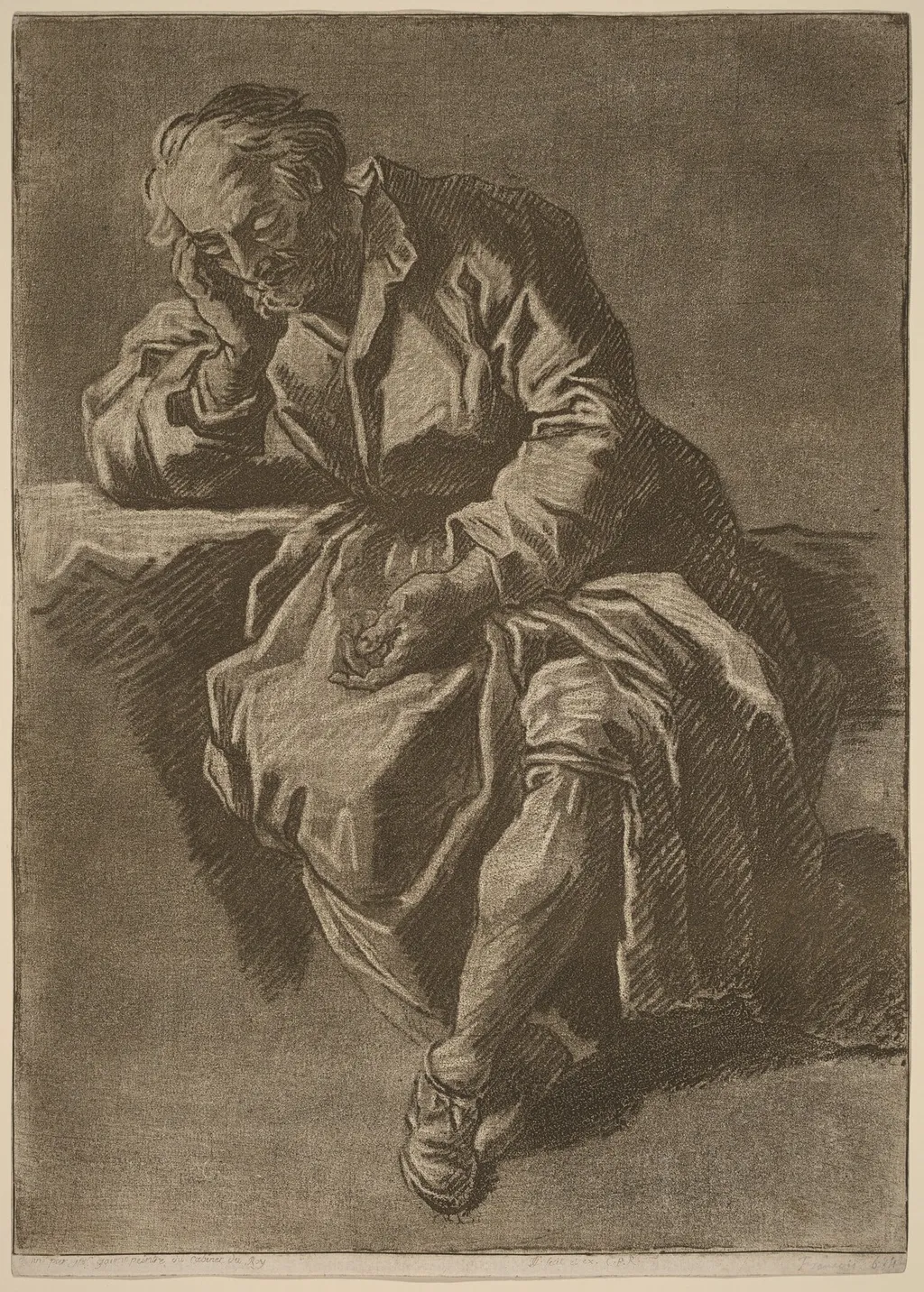
A Seated Elderly Man Asleep is a chalk print by the Romanticist artist Jean-Charles François. It dates from 1758 and is held in the collection of the National Gallery of Art.
About this work
Overview
Jean‑Charles François produced the print A Seated Elderly Man Asleep around 1758. Executed in a chalk‑manner style, the work combines soft‑ground etching with burnished areas and a textured ground that has been further worked with scraping and lavis. The image presents a solitary figure in a quiet, intimate setting, rendered in a manner that emphasizes the tactile qualities of the surface.
Subject & Meaning
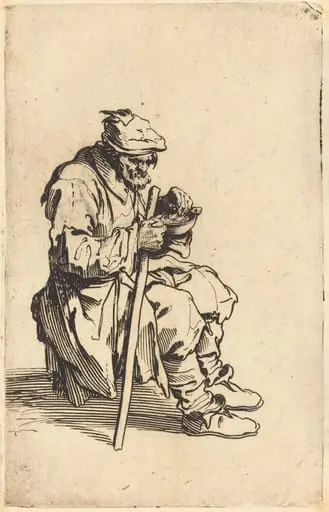
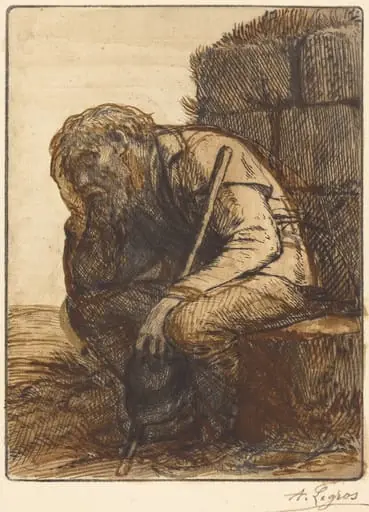
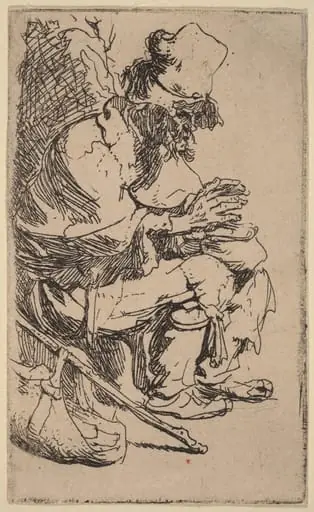
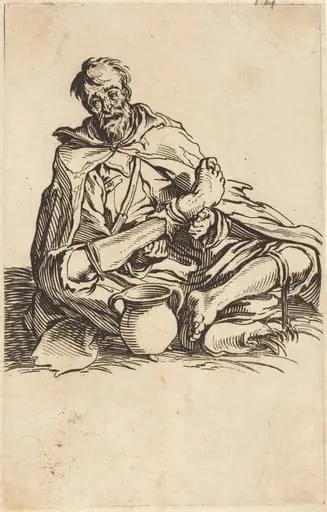
The composition depicts an aged man reclining on a low seat, his head tilted back as if in sleep. His loose robe falls over bent legs, creating a sense of vulnerability and fatigue. The relaxed posture and subdued expression suggest a moment of repose, inviting contemplation of age, mortality, and the everyday experiences of ordinary people.
Technique & Style
François employed a soft‑ground etching process, allowing the plate to retain a chalk‑like texture that he later enhanced by burnishing and selective scraping.
François employed a soft‑ground etching process, allowing the plate to retain a chalk‑like texture that he later enhanced by burnishing and selective scraping. Areas of smooth tone contrast with rough, scratched marks that simulate the wrinkles of skin and the weight of fabric. The use of lavis adds subtle washes, giving the print a sketch‑like, unfinished quality that foregrounds the artist’s hand.
History & Provenance
Created in the mid‑18th century, the print reflects François’s interest in experimental printmaking techniques. While specific ownership records are scarce, the work has been documented in several catalogues of French prints from the period, indicating its circulation among collectors of etchings and its inclusion in studies of the artist’s oeuvre.
Context
During the 1750s, French printmakers explored the expressive potential of etching beyond strict line work, incorporating tonal effects and textural variation. François’s approach aligns with this trend, blending traditional engraving with softer, more painterly methods that anticipate later developments in chiaroscuro and atmospheric printmaking.
Own this work as a print
Artist & collection