Artwork
Moses draws water from the Rock
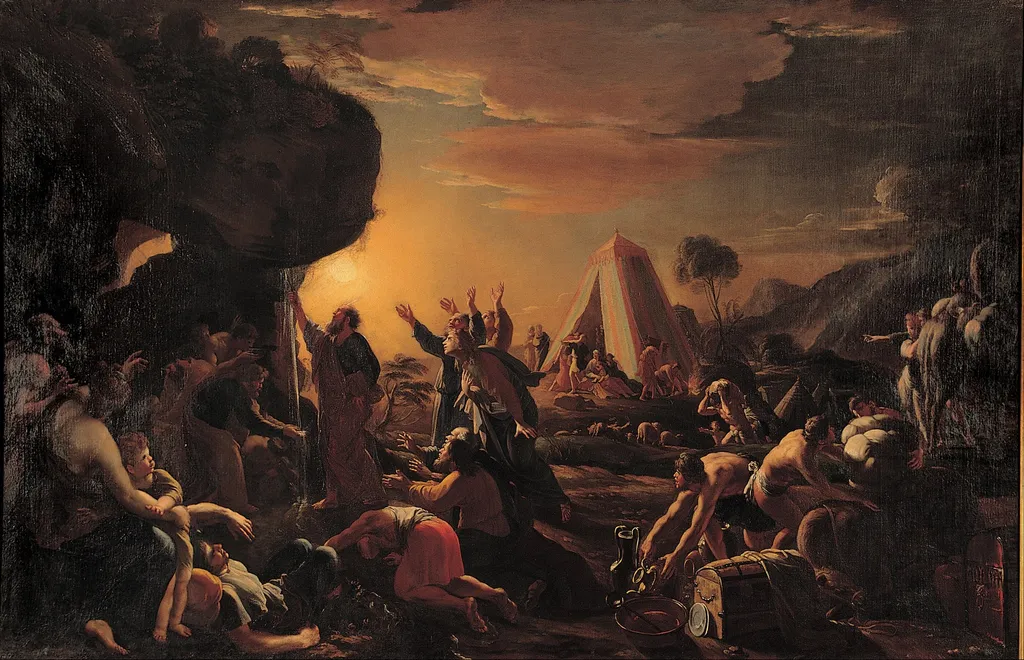
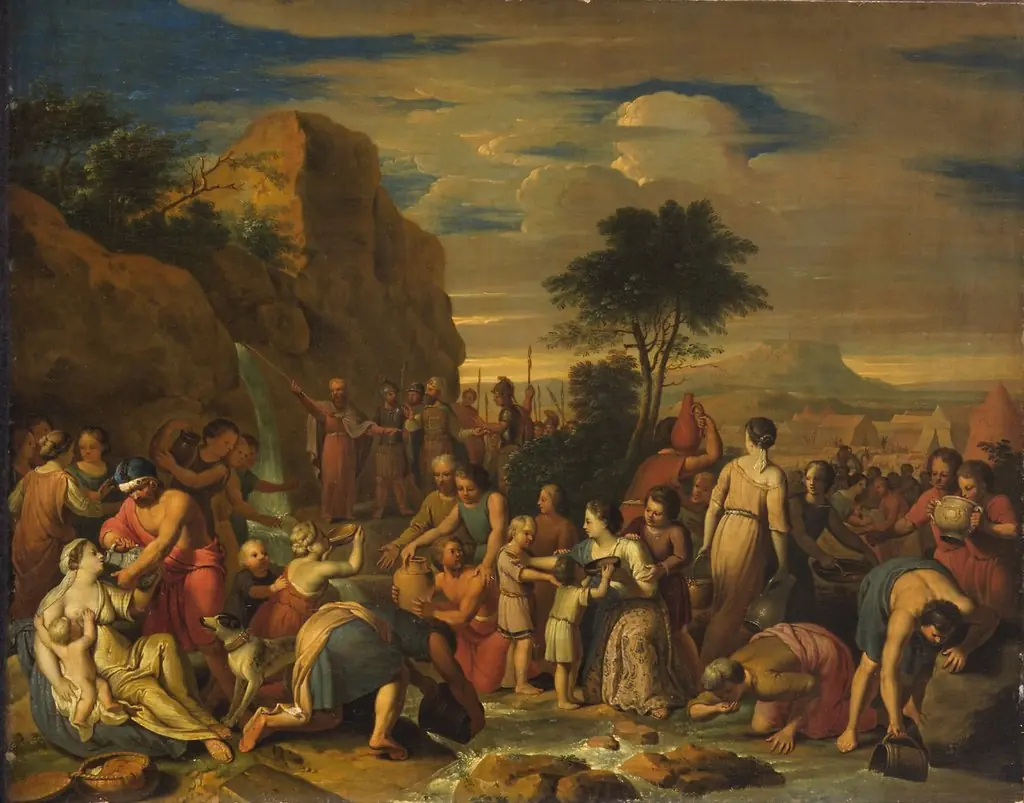
Moses draws water from the Rock is an oil painting by the Early Baroque Italian artist François Perrier. It dates from 1642 and is held in the collection of the Capitoline Museums.
About this work
Overview
Executed in the Baroque idiom, the painting reflects Perrier’s engagement with Roman decorative traditions, which he helped transmit to France.
Painted in 1642 by French artist François Perrier, this oil-on-canvas work illustrates the biblical moment when Moses strikes a rock to produce water for the Israelites. Executed in the Baroque idiom, the painting reflects Perrier’s engagement with Roman decorative traditions, which he helped transmit to France. It resides today in the Capitoline Museums in Rome, where it stands as a testament to cross-cultural artistic exchange in the mid-17th century.
Subject & Meaning
The scene captures the moment from Exodus when Moses, commanded by God, strikes a rock to bring forth water for the thirsty Israelites. The composition centers on Moses, his arm raised in action, face turned heavenward, while the surrounding figures react with varied expressions of desperation and hope. The narrative emphasizes divine intervention through human agency, a theme common in Counter-Reformation religious art, where faith and obedience are visually reinforced.
Technique & Style
Perrier employs chiaroscuro to heighten the drama, contrasting deep shadows with sharply lit figures to guide the viewer’s focus toward Moses. The figures are arranged dynamically, their postures conveying urgency and fatigue. Brushwork is fluid yet controlled, with attention to anatomical tension and drapery. The rocky terrain and atmospheric sky suggest a vast, arid landscape, enhancing the sense of isolation and divine deliverance.
History & Provenance
Commissioned during Perrier’s time in Rome, the painting entered the Capitoline collection in the 17th century, likely through ecclesiastical or noble patronage. Perrier’s reputation as a printmaker of antique sculptures may have influenced the classical restraint in the figures’ poses. The work remained in Roman collections through subsequent centuries, preserving its connection to the city’s artistic milieu despite its French creator.
Context
Perrier worked in Rome during a period when French artists were increasingly drawn to the grandeur of Roman Baroque style. His exposure to artists like Pietro da Cortona shaped his approach to monumental composition and emotional intensity. This painting aligns with broader trends in Counter-Reformation art, where biblical narratives were rendered with theatrical clarity to inspire devotion and reinforce doctrinal authority.
Legacy
Though not widely reproduced, the painting exemplifies how French artists absorbed and adapted Italian Baroque conventions. Perrier’s prints of antiquities had a more lasting influence on later generations, but this work remains a key example of early Baroque religious painting in Rome, illustrating the transnational flow of artistic ideas in the 17th century.
Own this work as a print
Artist & collection
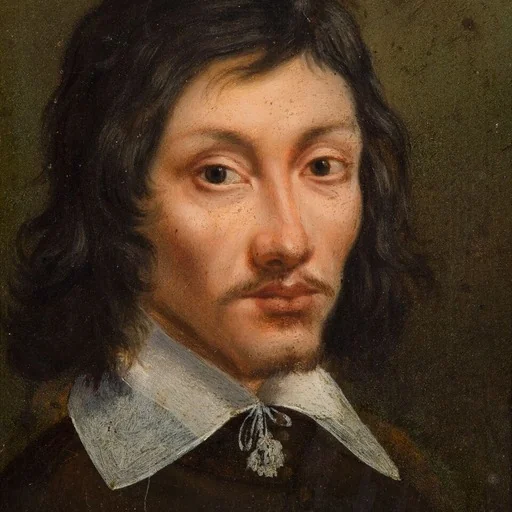
Artist
François Perrier (French pronunciation: ; 1590–1650) was a French painter, draftsman, and printmaker.

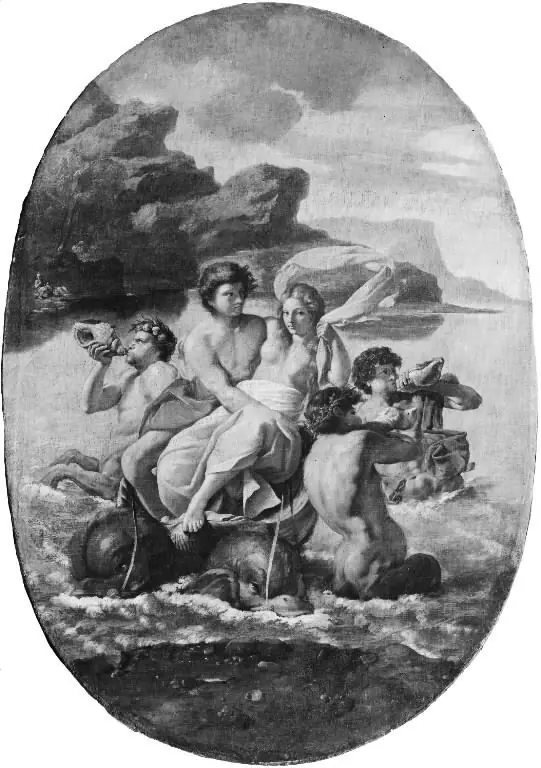 Acis and Galathea
![The Farnese Hercules, seen from behind [plate 4], by François Perrier](https://artifactworldgallery.com/img/francois-perrier--the-farnese-hercules-seen-from-behind-plate-4--075576b9459929be-w320.webp) The Farnese Hercules, seen from behind [plate 4]
The Farnese Hercules, seen from behind [plate 4]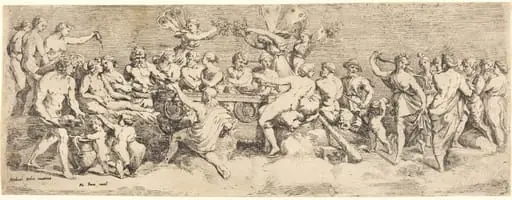 The Wedding Feast of Cupid and Psyche
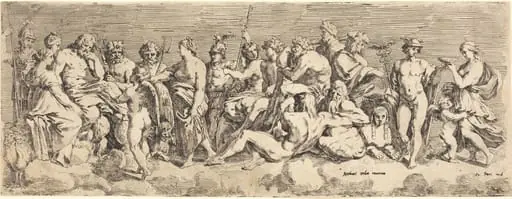 The Admission of Psyche to Olympia
![A Nude Fighting Man, side view, turned to left [plate 27], by François Perrier](https://artifactworldgallery.com/img/francois-perrier--a-nude-fighting-man-side-view-turned-to-left-plate-27--39122f796b85b2fb-w320.webp) A Nude Fighting Man, side view, turned to left [plate 27]
A Nude Fighting Man, side view, turned to left [plate 27]![The Borghese Gladiator, front view [plate 26], by François Perrier](https://artifactworldgallery.com/img/francois-perrier--the-borghese-gladiator-front-view-plate-26--5b649a5fe8c2f305-w320.webp) The Borghese Gladiator, front view [plate 26]
The Borghese Gladiator, front view [plate 26]![The Farnese Hercules, three-quarter view turned to left [plate 3], by François Perrier](https://artifactworldgallery.com/img/francois-perrier--the-farnese-hercules-three-quarter-view-turned-to-left-plate--b0564bebaad016fa-w320.webp) The Farnese Hercules, three-quarter view turned to left [plate 3]
The Farnese Hercules, three-quarter view turned to left [plate 3]![The Medici Wrestlers, side view, turned to left [plate 36], by François Perrier](https://artifactworldgallery.com/img/francois-perrier--the-medici-wrestlers-side-view-turned-to-left-plate-36--c50b05437f8744ca-w320.webp) The Medici Wrestlers, side view, turned to left [plate 36]
The Medici Wrestlers, side view, turned to left [plate 36]