Artwork
Tympanum, Abbey Porch, Malmesbury
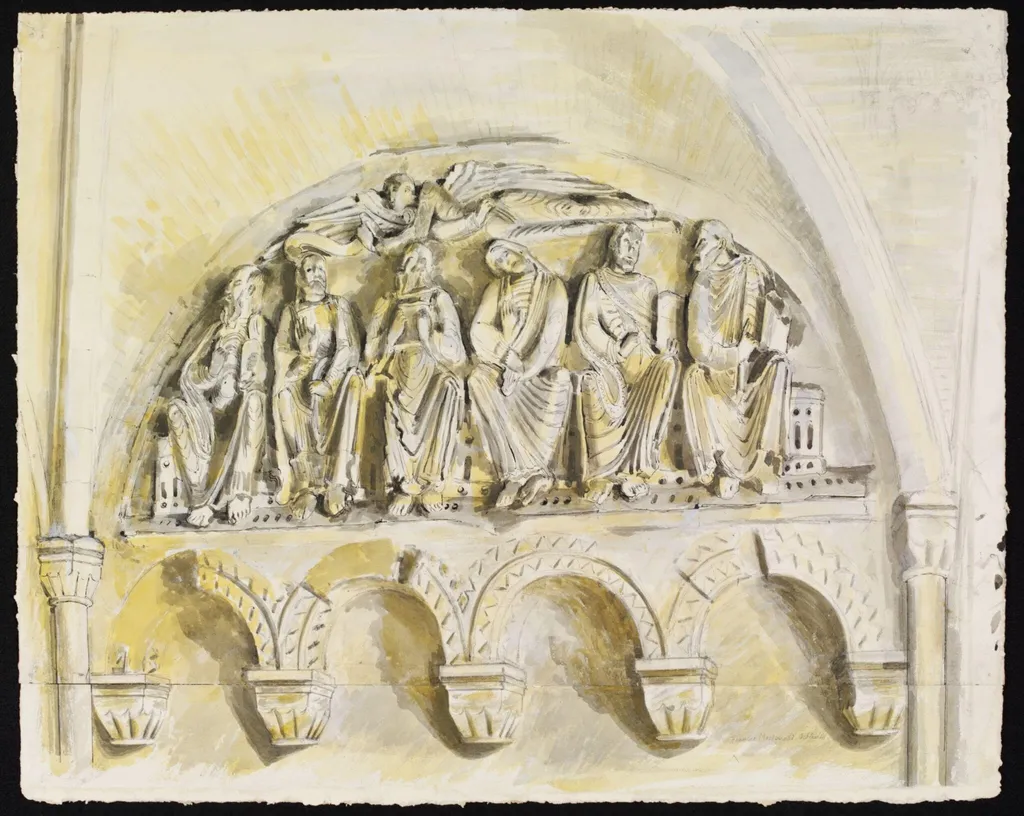
Tympanum, Abbey Porch, Malmesbury is a watercolor work on paper by the Arts and Crafts movement artist Frances Macdonald. It is held in the collection of the Victoria and Albert Museum.
About this work
Overview
Created in 1941, this watercolour by Frances Macdonald captures the tympanum of the Abbey Porch at Malmesbury as part of the Recording Britain project.
Created in 1941, this watercolour by Frances Macdonald captures the tympanum of the Abbey Porch at Malmesbury as part of the Recording Britain project. The initiative, supported by the Pilgrim Trust and directed by Sir Kenneth Clark, sought to preserve visual records of Britain’s architectural heritage amid wartime threats. Macdonald’s work contributes to this effort by focusing on a medieval stone carving, rendered in delicate watercolour and pencil.
Subject & Meaning
The composition centers on a semi-circular tympanum carved with slender, upright figures in long robes, their postures formal and aligned. They hold scrolls or books, suggesting religious or scholarly roles. Below, three rounded arches and a row of columns frame the entrance, echoing the structure of a monastic portal. The scene evokes contemplation and continuity, emphasizing sacred architecture as a vessel of enduring cultural memory.
Technique & Style
Macdonald employed light pencil lines to outline forms and subtle watercolour washes to suggest texture and shadow. The rendering is restrained, avoiding heavy detail in favor of suggestive precision. The figures are simplified yet distinct, their arrangement echoing the rhythm of carved stone. The technique reflects a documentary intent—accurate, quiet, and attentive to architectural proportion rather than dramatic effect.
History & Provenance
The work was produced during the Recording Britain project, which commissioned artists to document sites at risk from bombing or urban change. Macdonald’s watercolour entered the collection of the Victoria and Albert Museum, where it remains part of a larger archive of wartime visual records. Its preservation underscores the project’s success in safeguarding ephemeral visual evidence of Britain’s architectural past.
Context
Malmesbury Abbey’s porch, dating to the 12th century, was one of many medieval structures whose survival was uncertain during the Second World War. The Recording Britain initiative responded to fears of cultural loss, prioritizing sites with historical significance over aesthetic fame. Macdonald’s focus on this tympanum aligns with the project’s mission to record the quiet, often overlooked elements of England’s ecclesiastical heritage.
Legacy
The watercolour endures as a quiet testament to the Recording Britain project’s archival purpose. It does not seek to elevate the subject but to preserve its form with fidelity. Today, it serves as both a historical record and a reminder of how wartime anxiety shaped efforts to conserve national identity through art, offering insight into how heritage was perceived during a time of upheaval.
Artist & collection
Artist
Frances Macdonald MacNair (24 August 1873 – 12 December 1921) was a Scottish artist whose design work was a prominent feature of the Modern Style (British Art Nouveau style) during the 1890s.

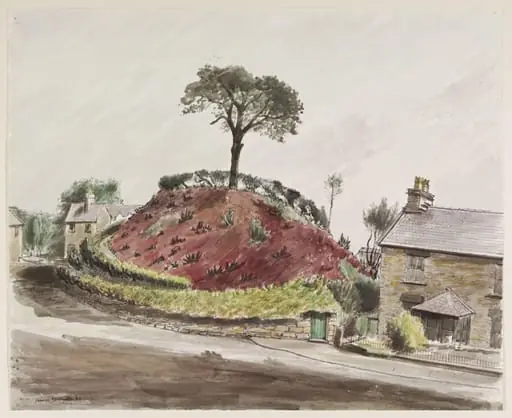 Tomen-y-Bala (Ancient Roman mound at Bala) Merionethshire
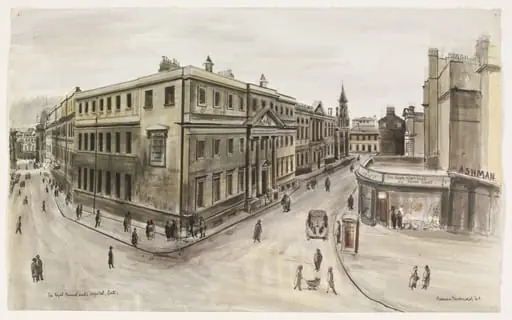 The Royal Mineral Water Hospital, Bath
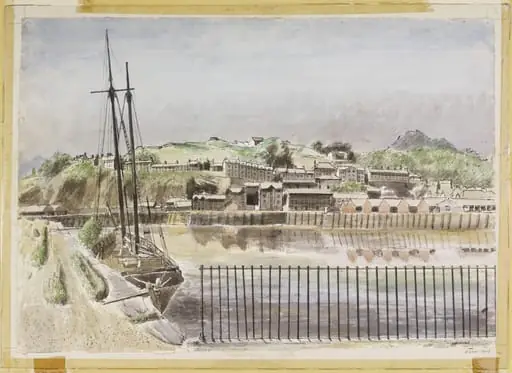 Old Wharves, Portmadoc, Caernarvonshire.
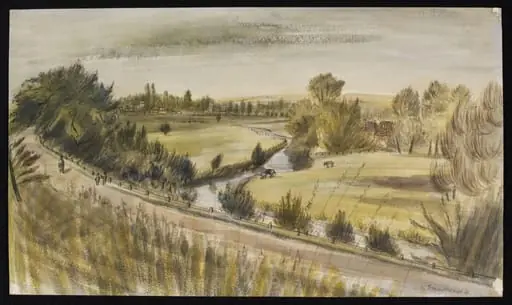 View near Enford
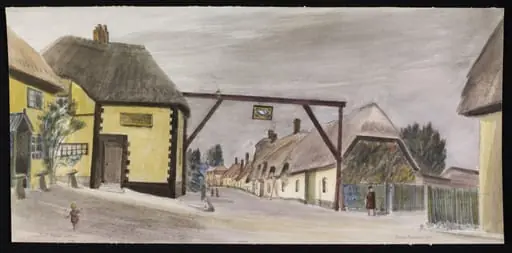 Longstreet, Enford
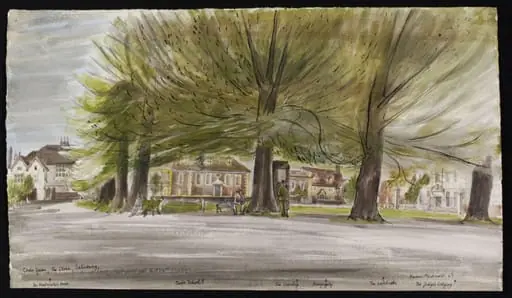 Choir Green, The Close, Salisbury
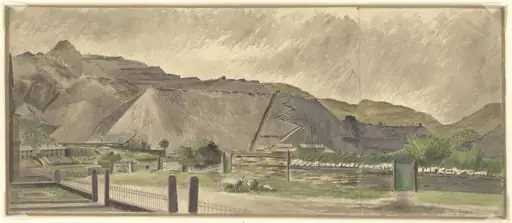 The Oakley Slate Quarry at Blaenau Festiniog, Merionethshire
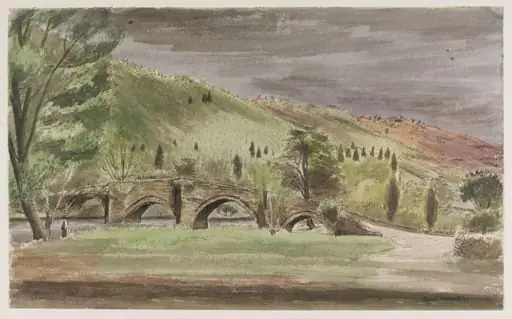 Pont dol Rhiw Gelen (Bridge over the Goedel designed by Inigo Jones), Merionethshire
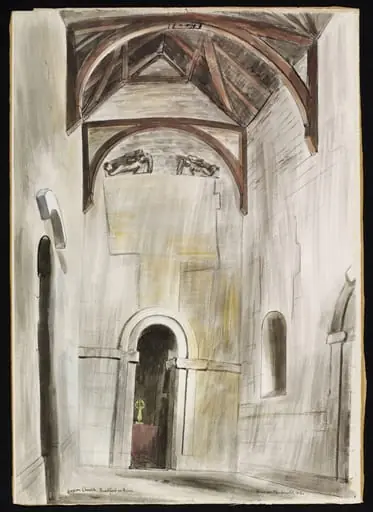 Saxon Church, Bradford-on-Avon
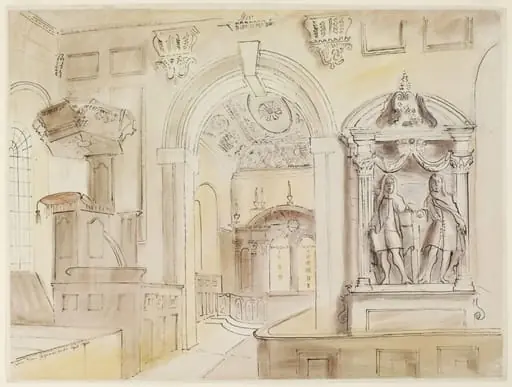 Interior of St. Peter's Church, Gayhurst
 Untitled
 Sedilia, piscinas, screens and stallwork
 Topographical drawing
 Udkast til freskerne i Viborg Domkirke. Søndre korsarms vægge
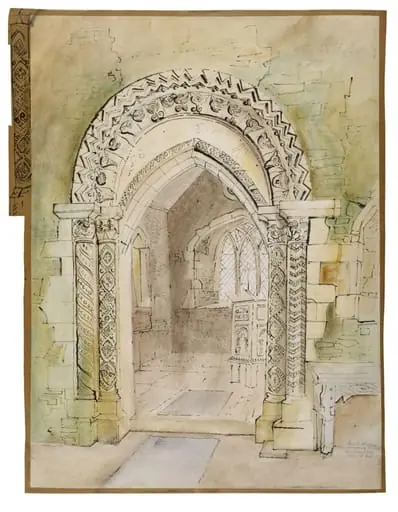 Chancel Arch, St. Peter's, Stanton Low, Buckinghamshire
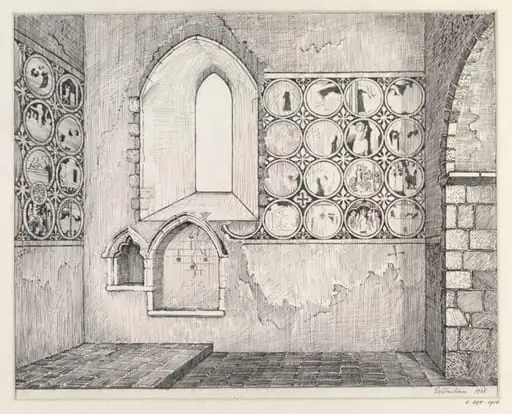 Untitled
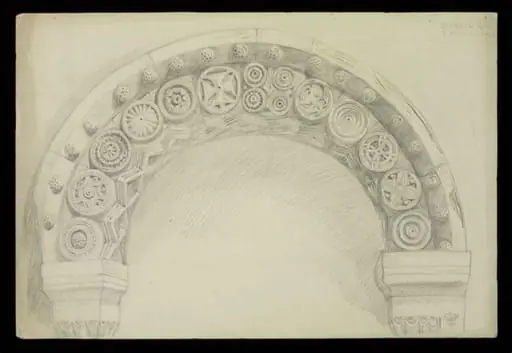 Untitled
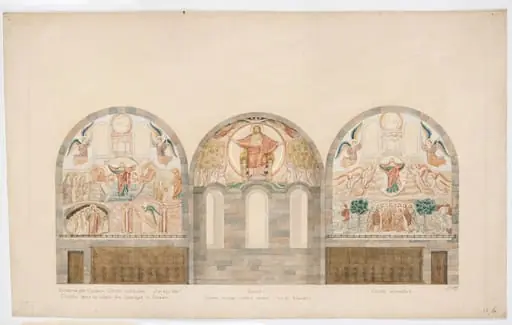 Udkast til freskerne i Viborg Domkirke. Koret
 Untitled
 The Abbey, Malmesbury