Artwork
Moses Striking the Rock
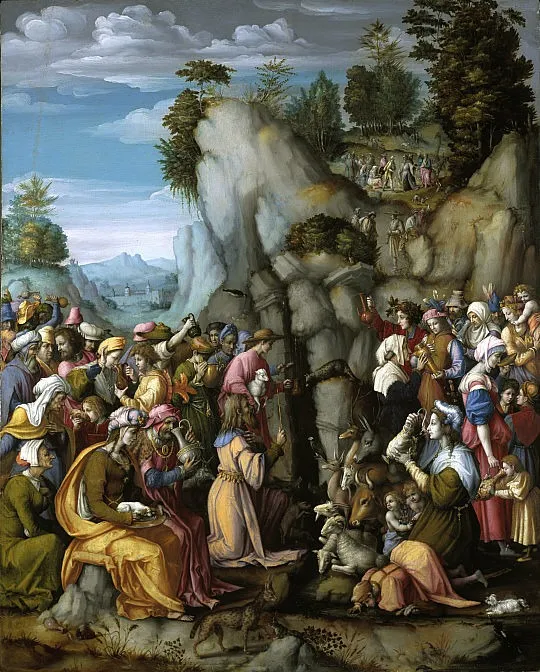
Moses Striking the Rock is an unspecified painting by the Early Baroque Italian artist Francesco Bacchiacca. It dates from 1525 and is held in the collection of the National Galleries Scotland.
About this work
Overview
The painting is now part of the Scottish National Gallery’s collection, where it remains a notable example of early 16th-century Italian religious painting.
Painted in 1525 by Francesco d’Ubertino Verdi, known as Bacchiacca, this work depicts a moment from the Book of Exodus in which Moses brings water from a rock to sustain the Israelites. A Florentine artist associated with the Mannerist tradition, Bacchiacca infused the scene with intricate detail and a heightened sense of narrative. The painting is now part of the Scottish National Gallery’s collection, where it remains a notable example of early 16th-century Italian religious painting.
Subject & Meaning
The scene illustrates Moses, positioned centrally on a rocky outcrop, striking the stone to produce water for the thirsty Israelites. Surrounding him, a diverse assembly of figures—men, women, and children—react with awe and gratitude. A woman in yellow cradles a lamb at the foreground’s edge, symbolizing innocence and sustenance, while a kneeling man in red directs his gaze upward, emphasizing reverence. The composition frames divine intervention as both physical and spiritual, grounding the miracle in human emotion.
Technique & Style
Bacchiacca employs refined brushwork and a rich palette to render textures of fabric, stone, and skin with precision. Figures are elongated and arranged in a carefully balanced, almost theatrical formation, characteristic of Mannerism. The use of light around Moses suggests divine presence without overt halos, while the distant landscape and cloud-streaked sky provide depth. The scene’s complexity reflects a deliberate move away from naturalism toward stylized expression.
History & Provenance
Created in Florence during the height of Mannerist experimentation, the painting entered the Scottish National Gallery’s collection in the 19th century. Its journey from Italy to Scotland remains undocumented in detail, though its preservation suggests it was valued by collectors interested in Renaissance religious art. No major alterations or restorations are recorded, and the work retains much of its original surface and coloration.
Context
Bacchiacca worked in a Florence where artistic innovation often blended classical themes with courtly elegance. While contemporaries like Pontormo explored emotional intensity, Bacchiacca favored narrative clarity and decorative richness. This painting reflects the period’s interest in biblical stories as vehicles for moral and visual instruction, tailored to elite patrons who appreciated both theological depth and artistic sophistication.
Legacy
Though not widely replicated or influential in the broader trajectory of Baroque art, the painting exemplifies the transitional phase between High Renaissance naturalism and Mannerist stylization. It preserves the quiet dignity of Florentine religious painting at a time when artistic priorities were shifting. Today, it stands as a testament to the nuanced storytelling possible within a restrained, yet elaborate, visual language.
Artist & collection
Artist
Francesco d'Ubertino Verdi, called Bachiacca (say "bah ki ah cka"). He is also known as Francesco Ubertini, il Bacchiacca (1494–1557). He was an Italian painter of the Renaissance whose work is characteristic of the…

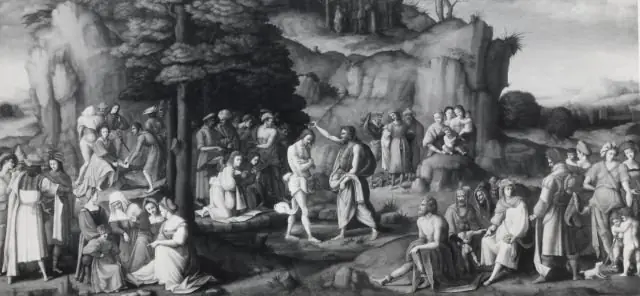
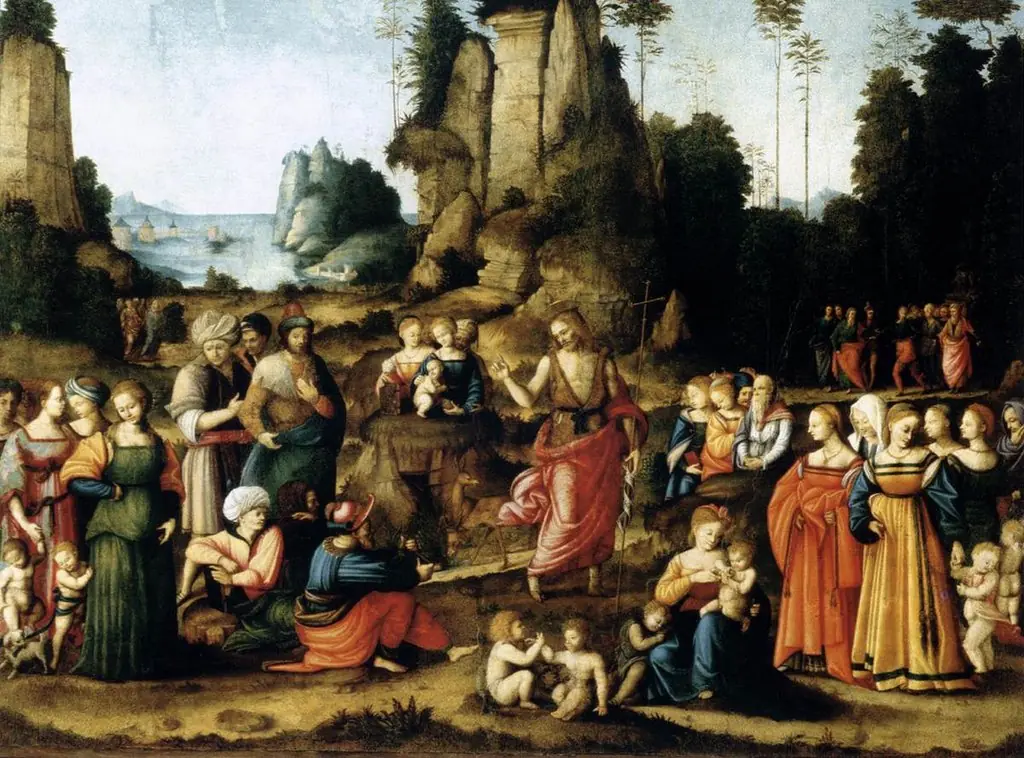 The Preaching of Saint John the Baptist
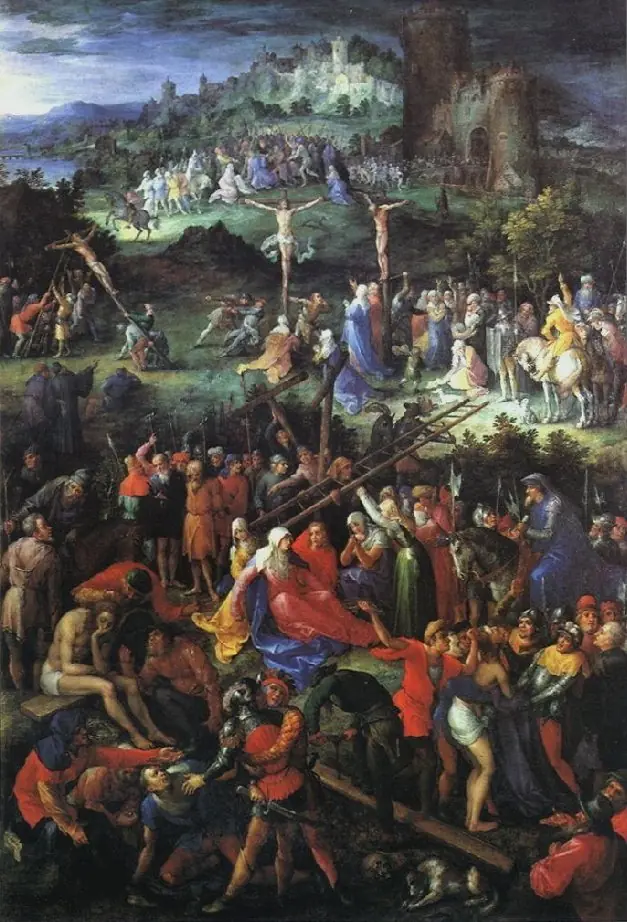 Large Calvary
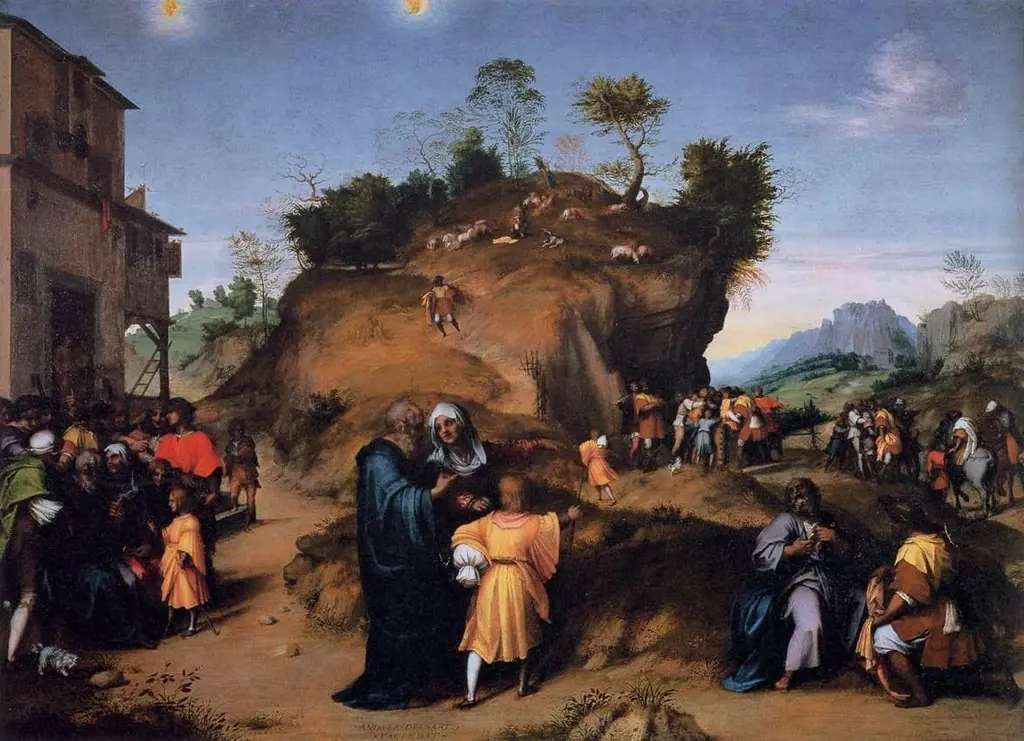 Stories of Joseph
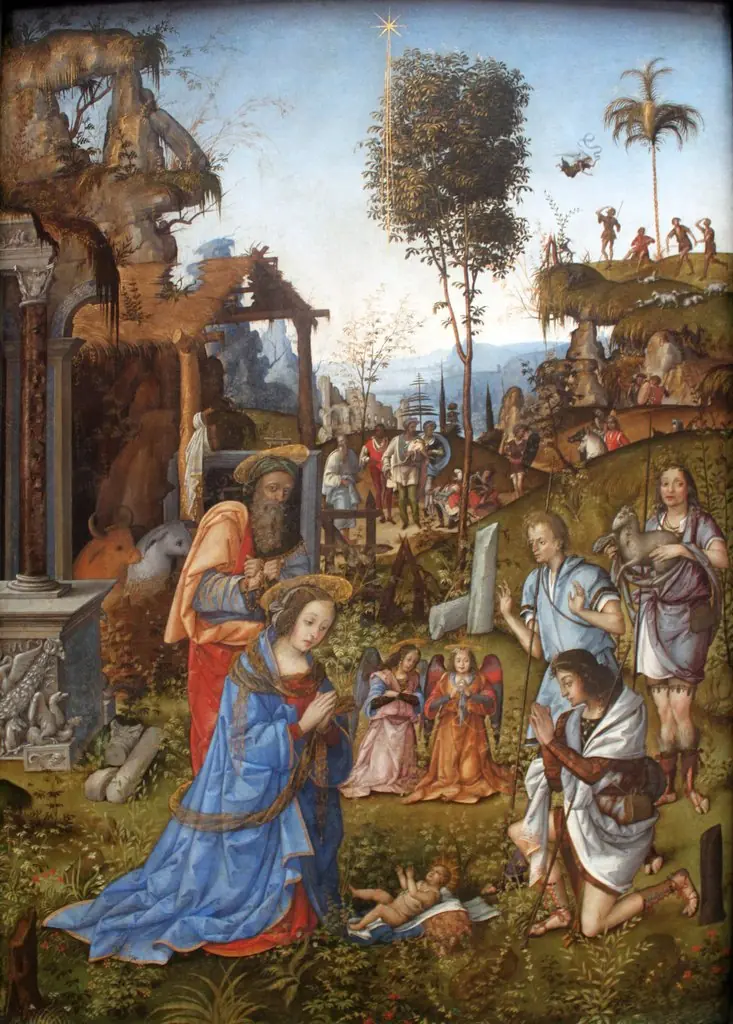 The Adoration of the Shepherds
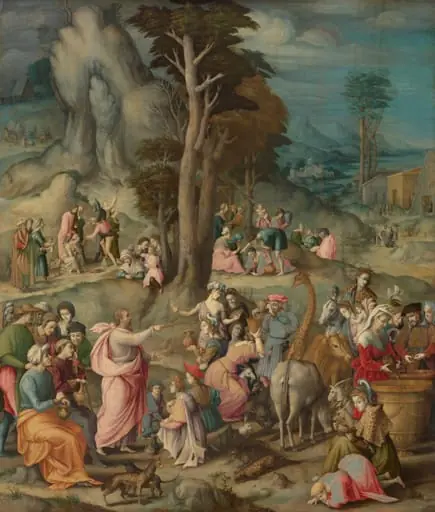 The Gathering of Manna
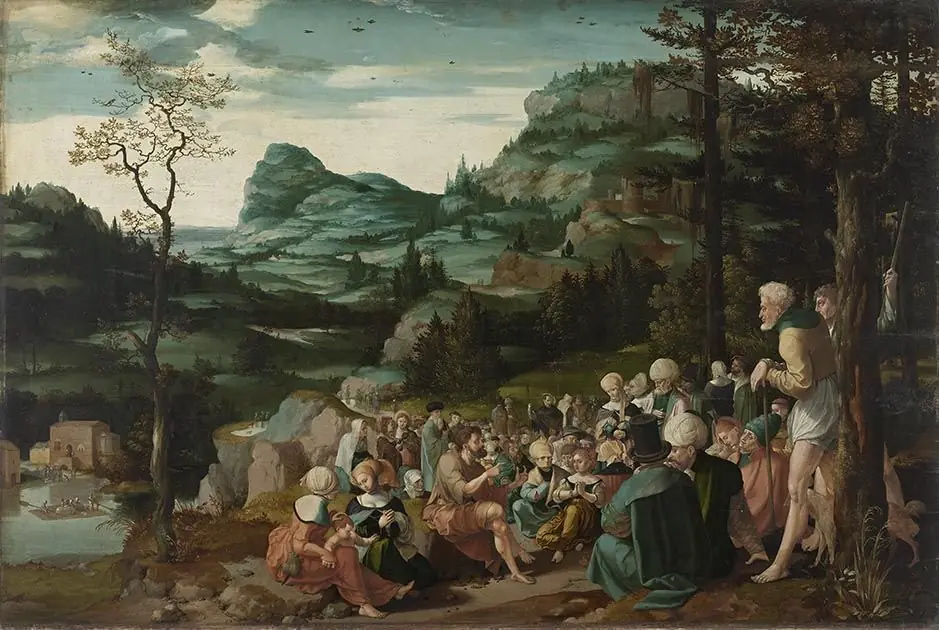 St. John the Baptist Preaching
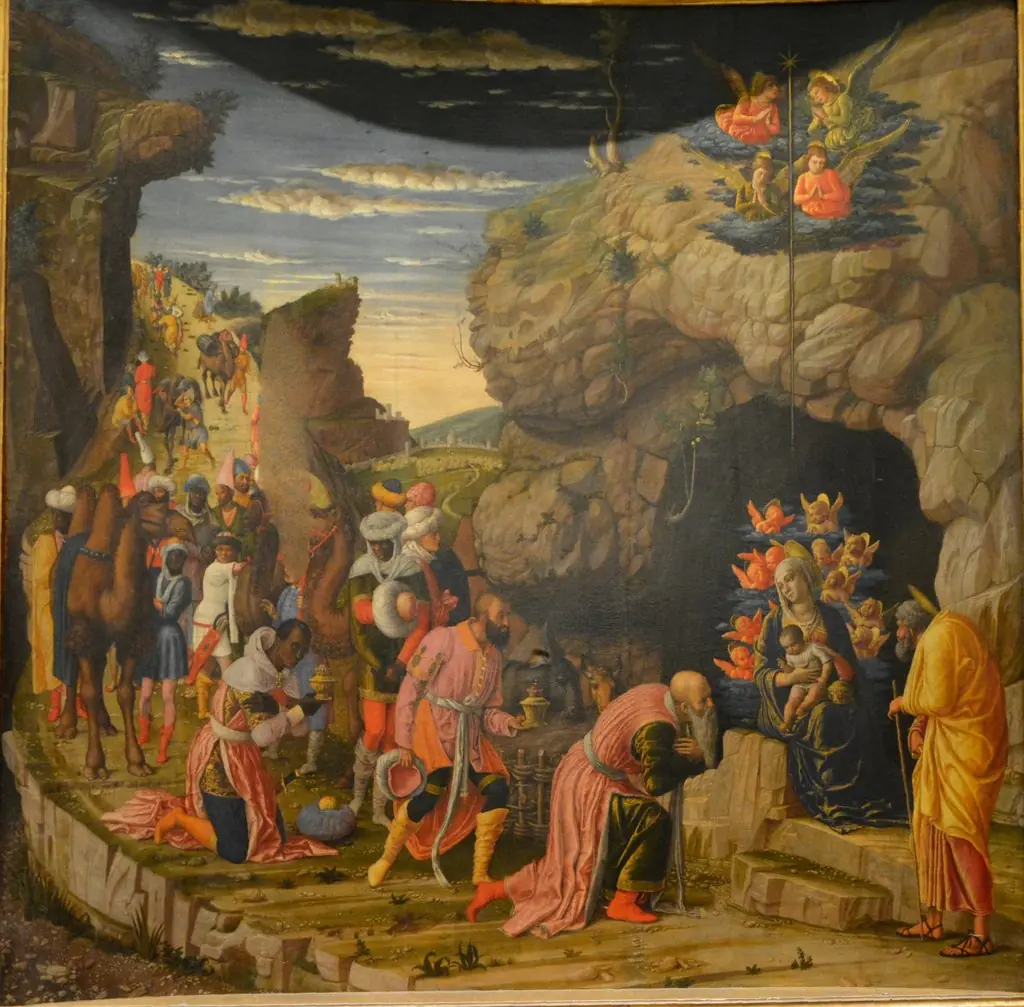 Adoration of the Magi
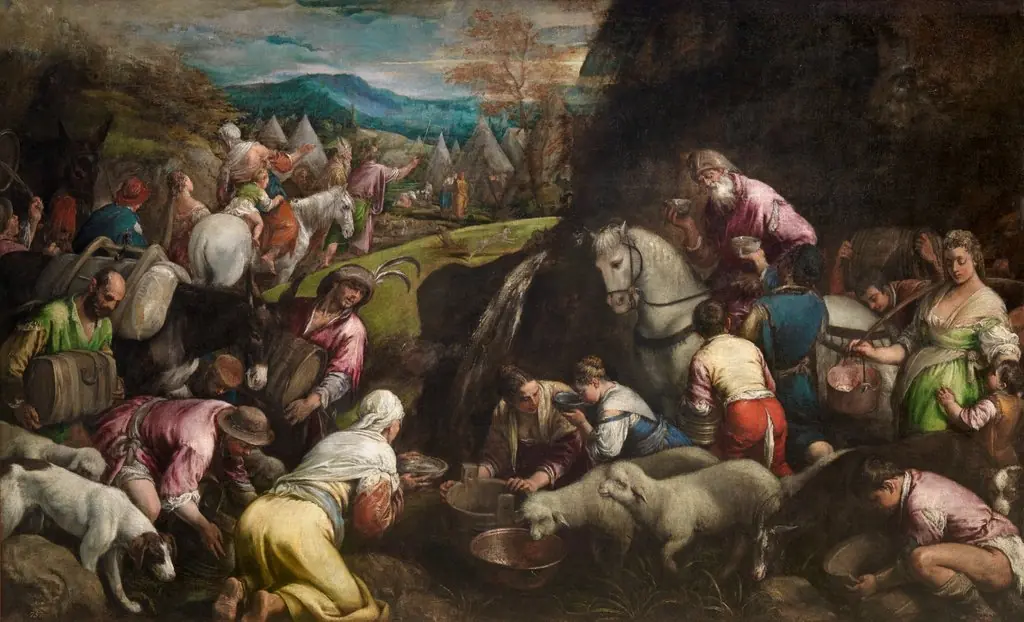 The Israelites drinking the miraculous Water
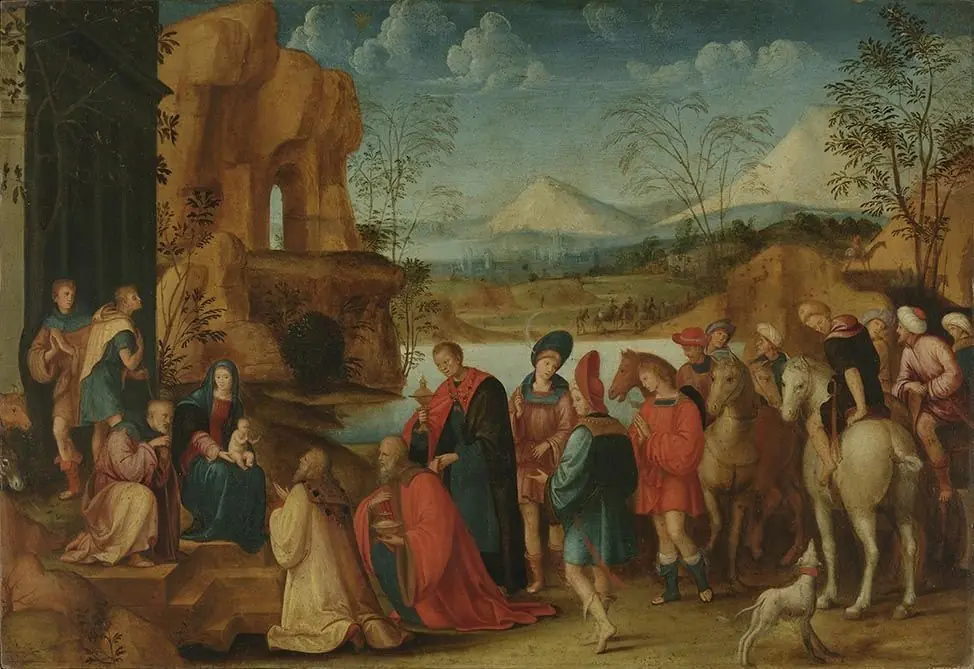 Anbetung der Könige
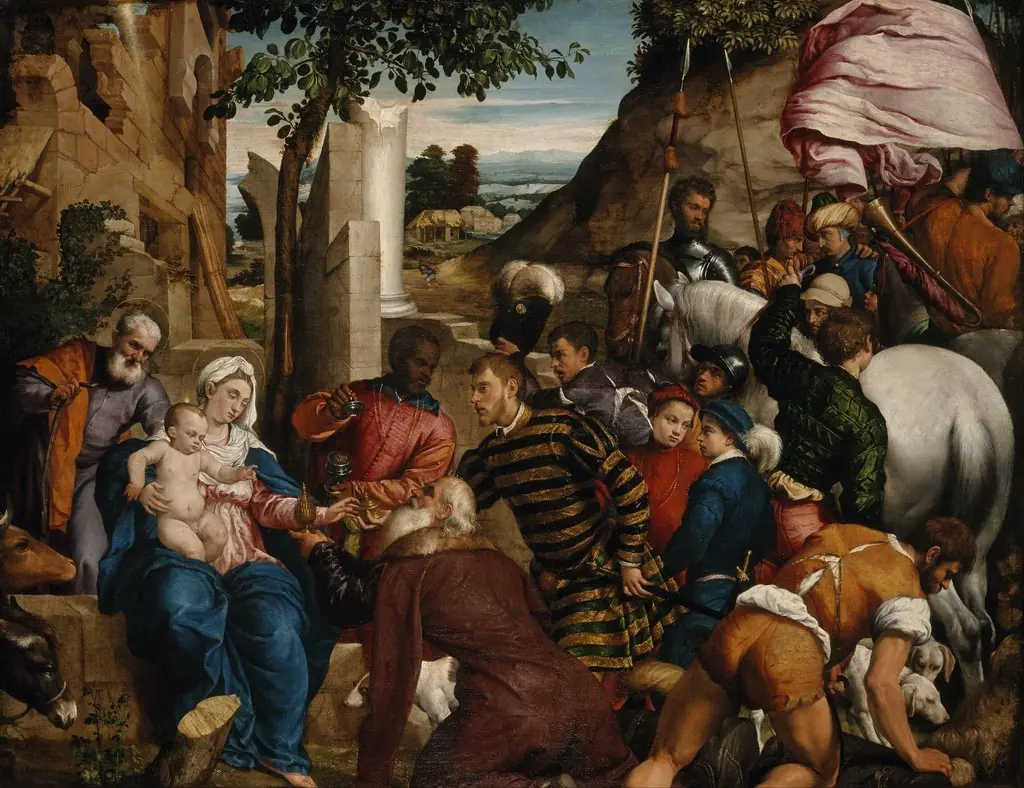 The Adoration of the Kings
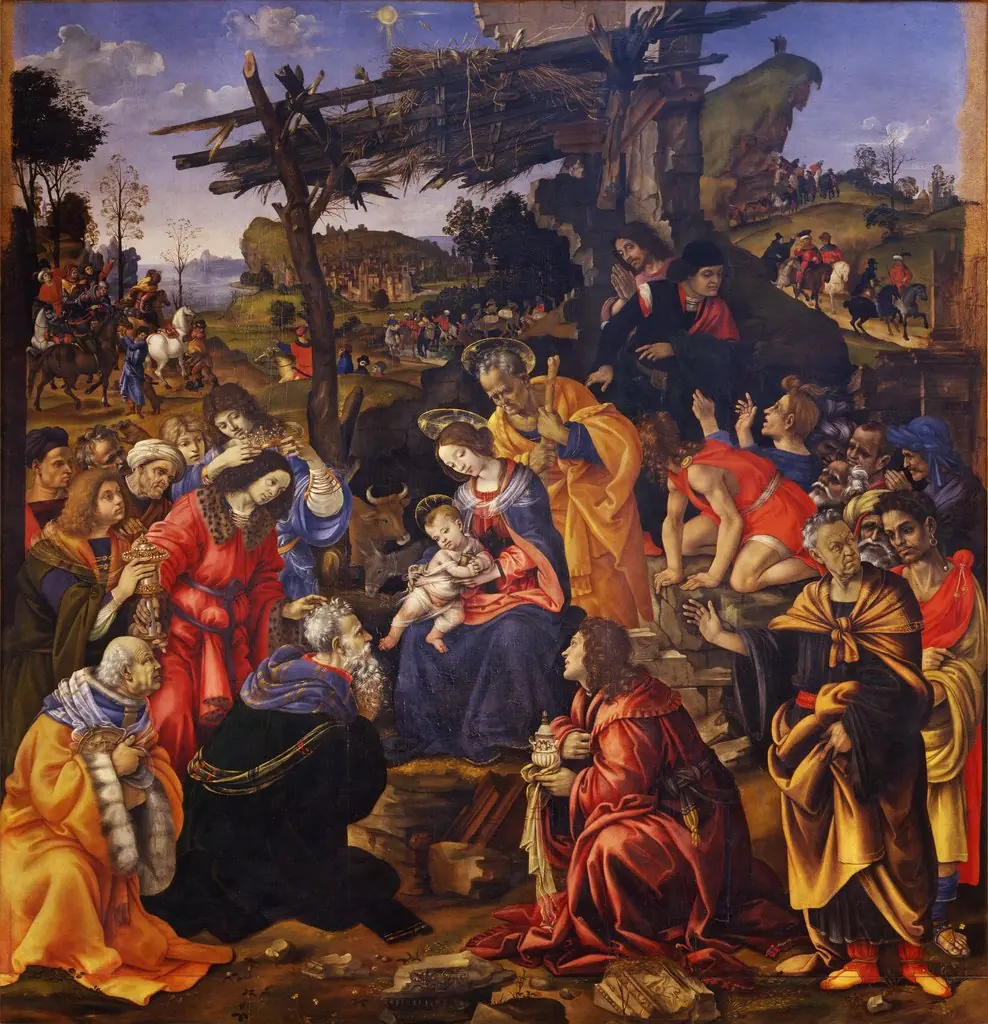 Adoration of the Magi
 Communion of the Apostles