Artwork
September (Libra)
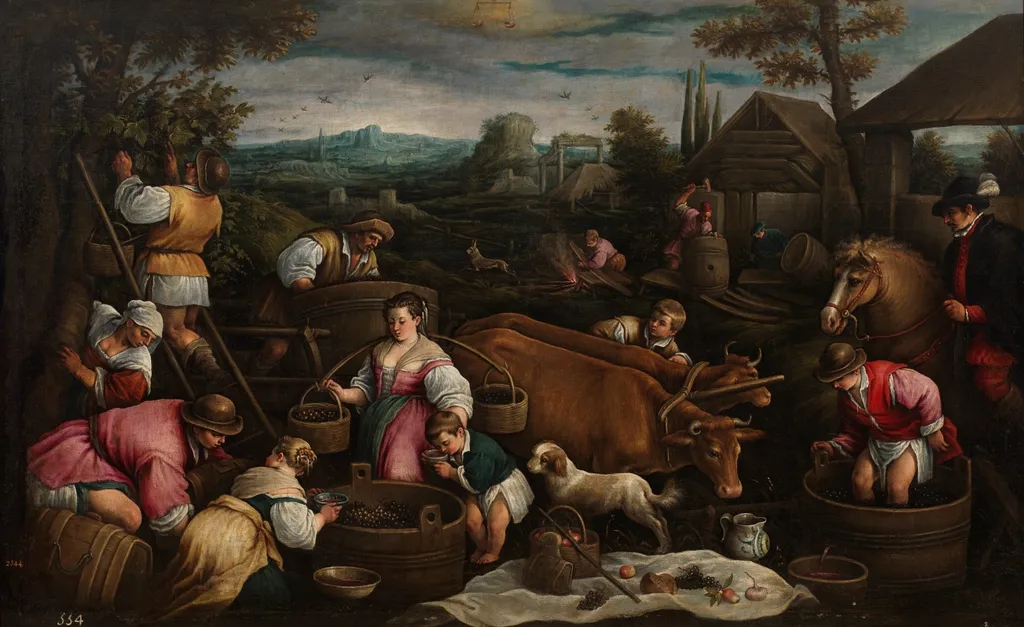
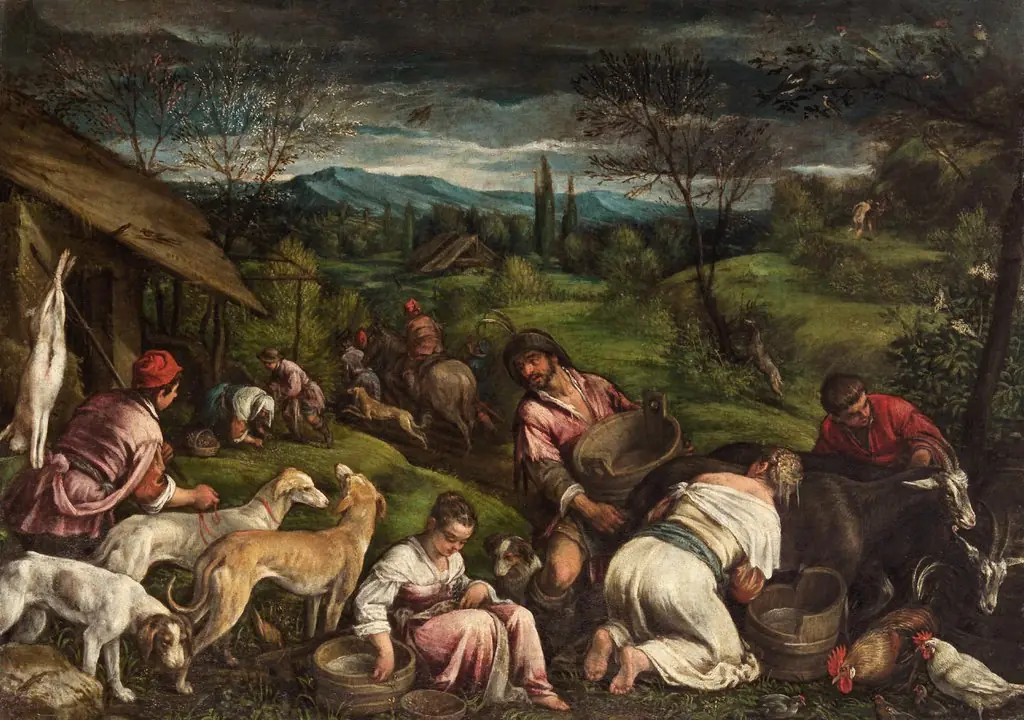
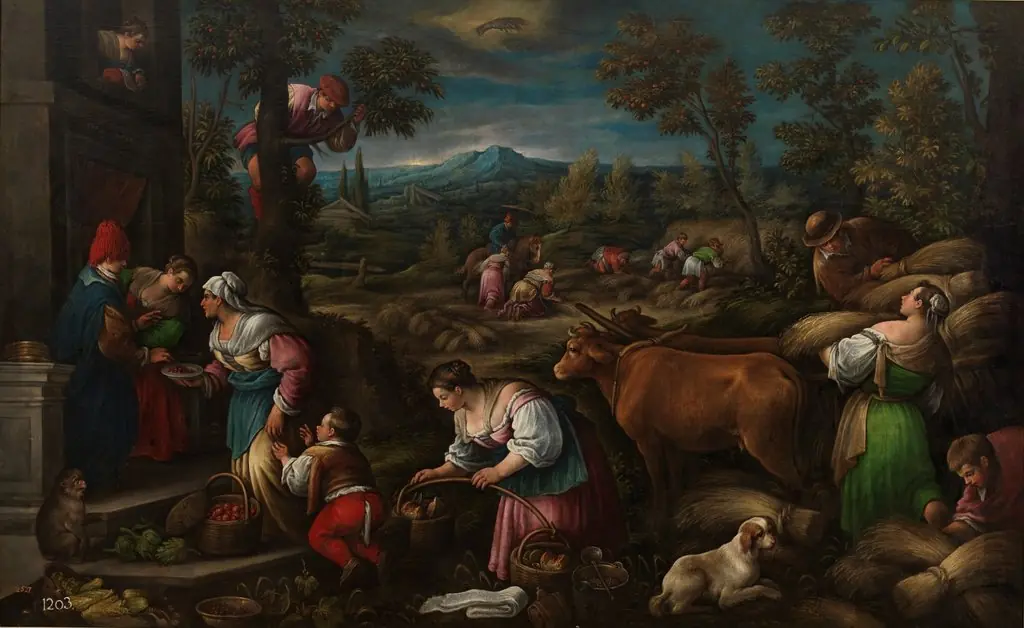
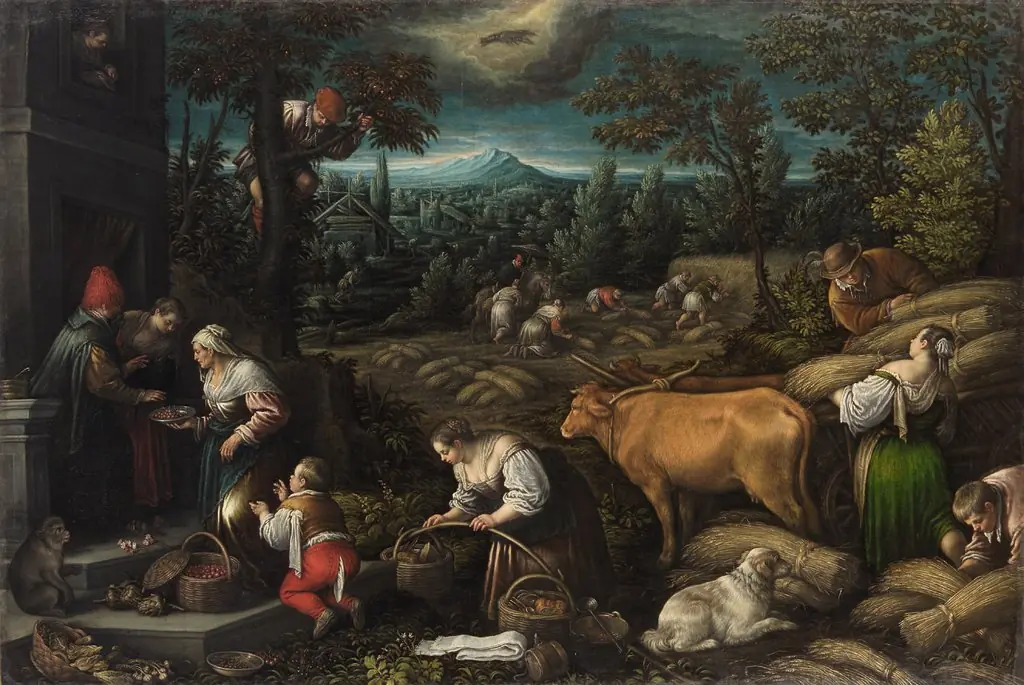
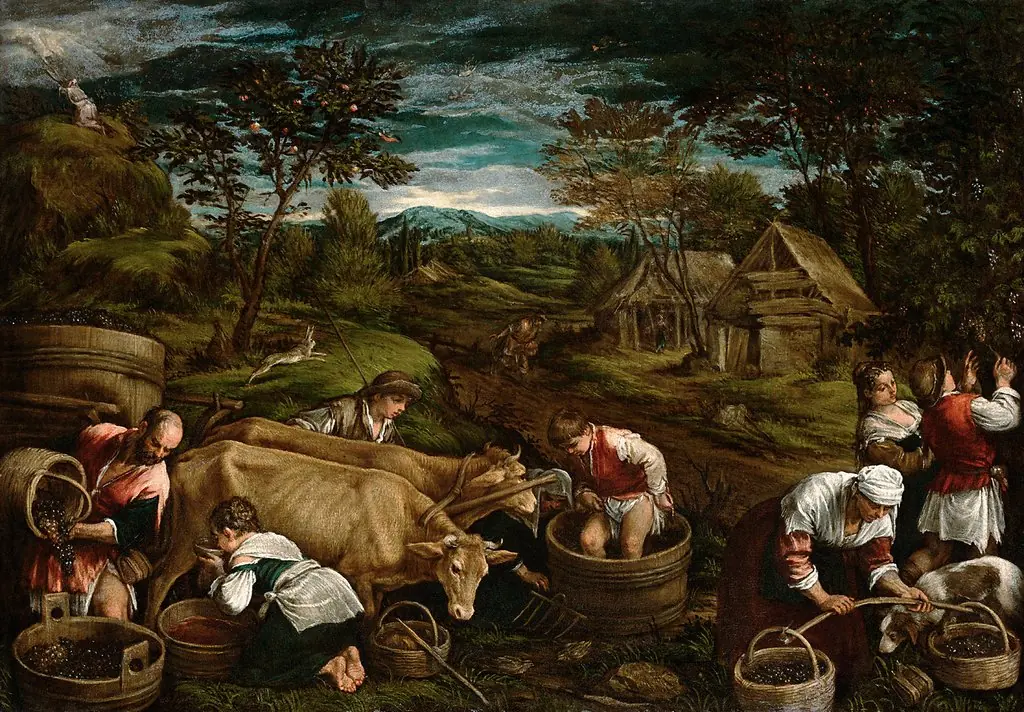
September (Libra) is an oil painting by the Early Baroque Italian artist Francesco Bassano the Younger. It dates from 1601 and is held in the collection of the Museo del Prado.
About this work
Overview
As the eldest son of Jacopo Bassano, Francesco was trained in the family’s Veneto workshop and later operated a branch in Venice.
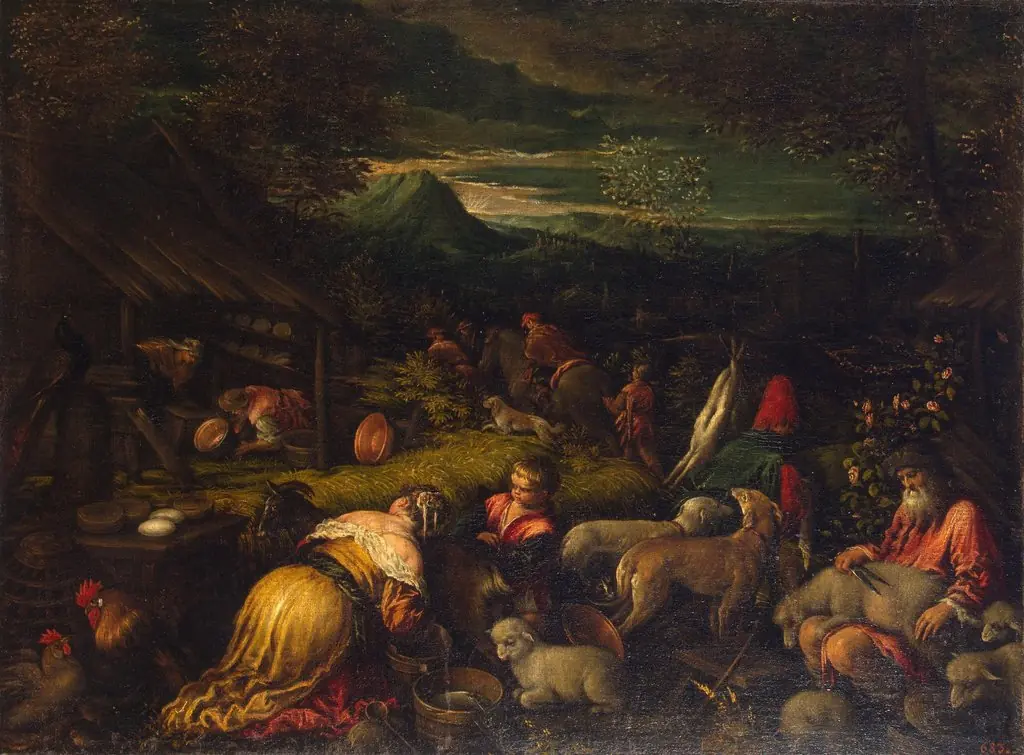
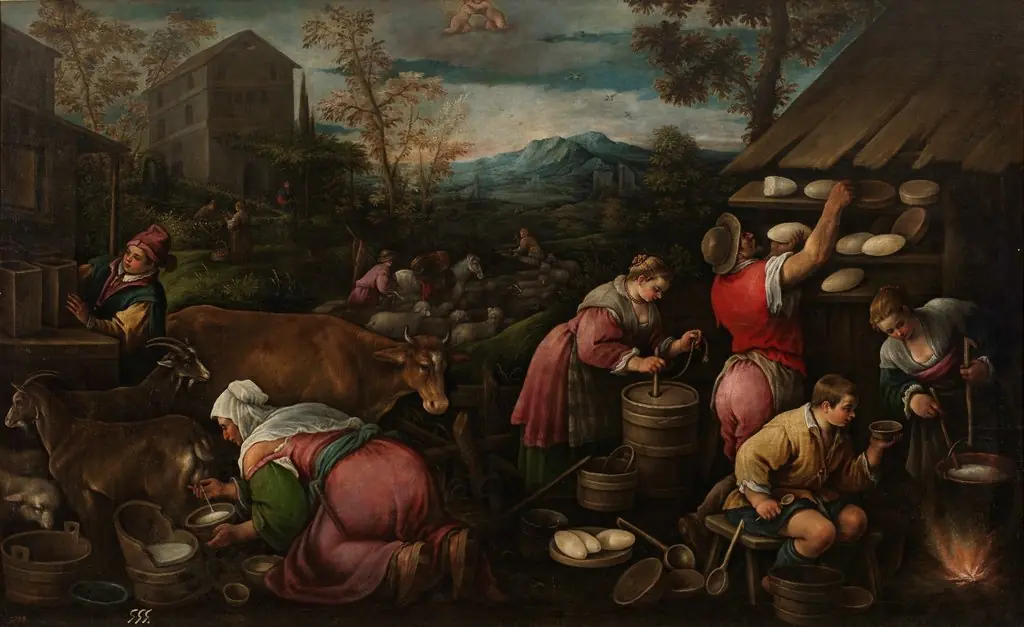
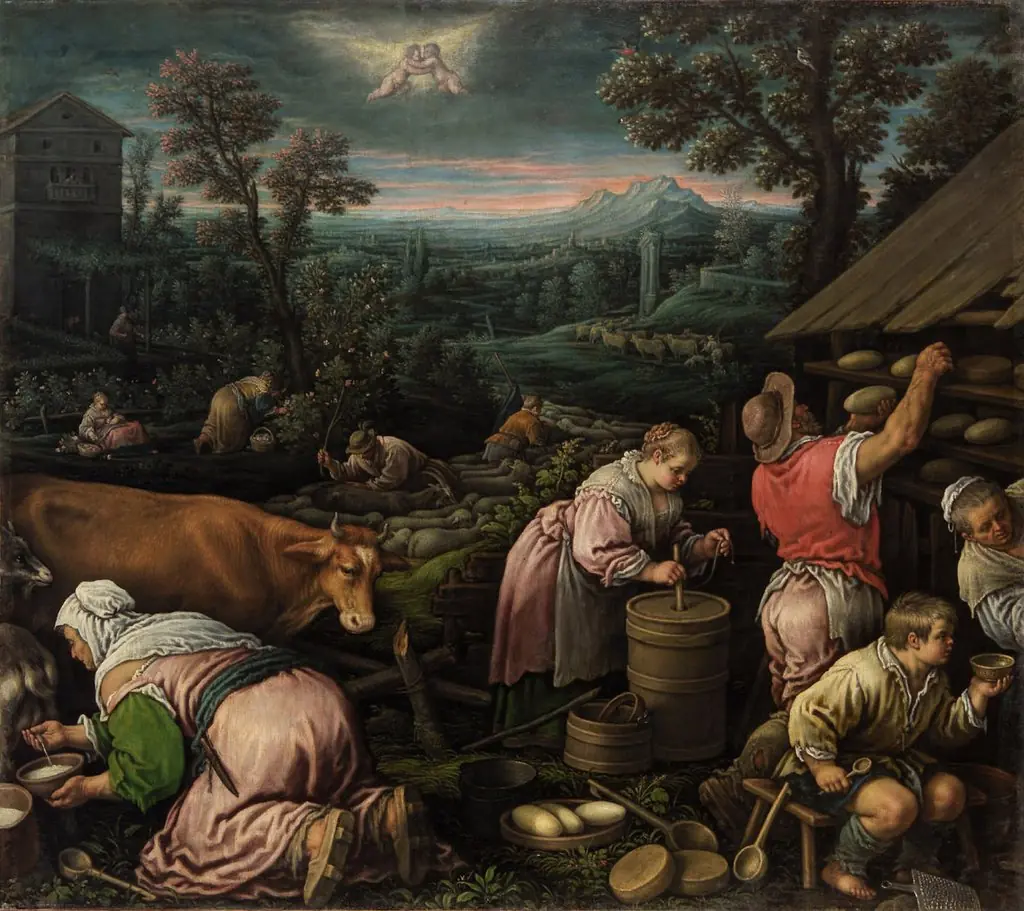
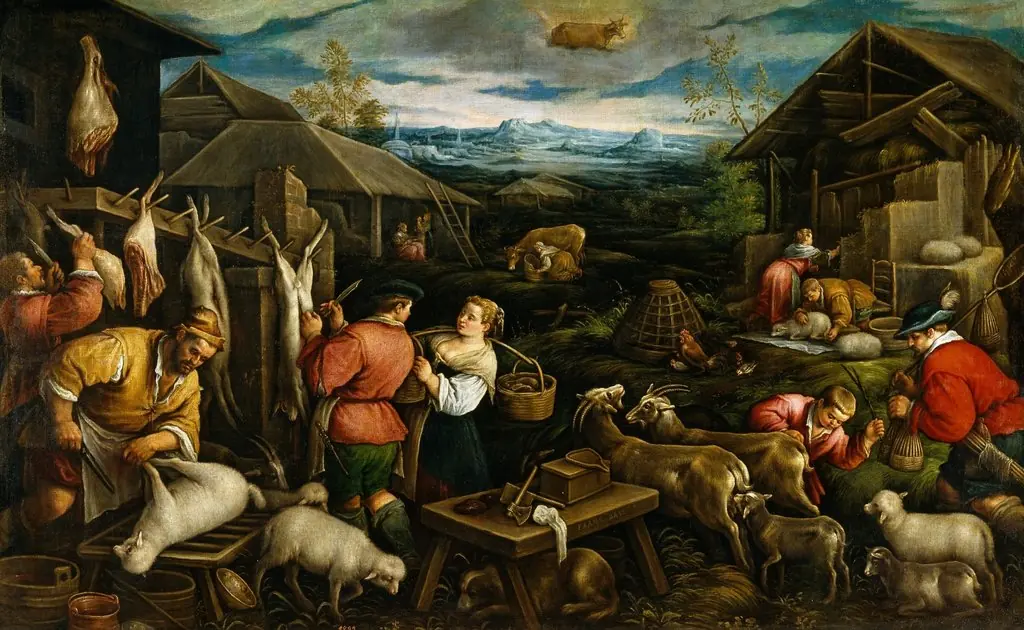
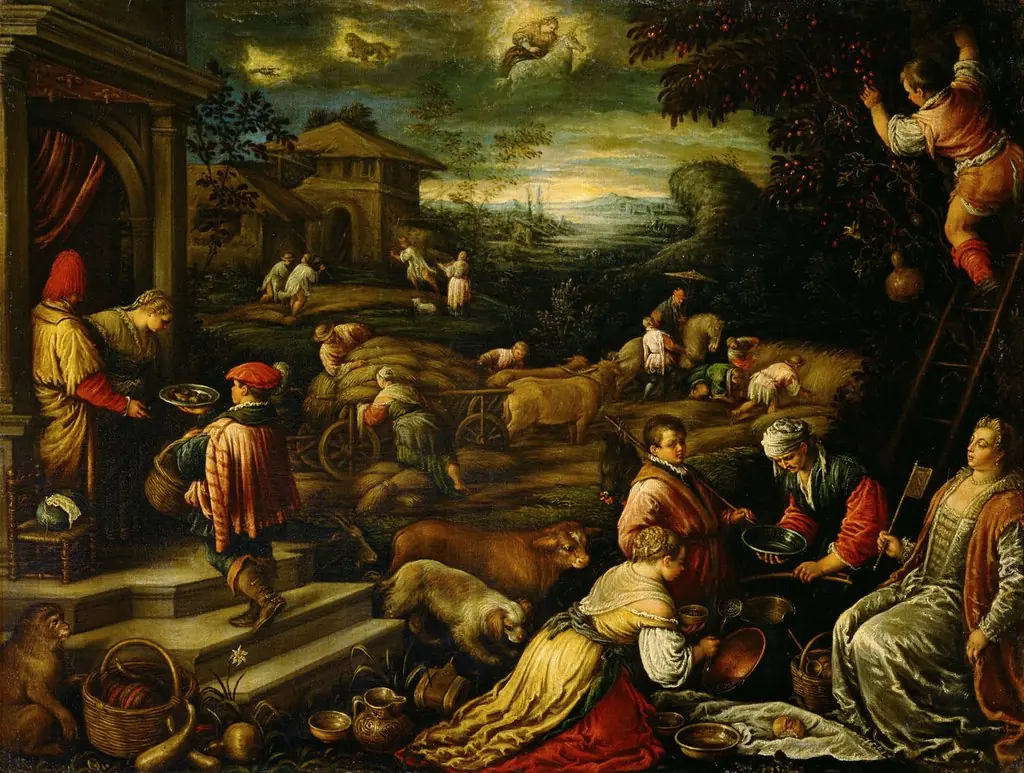
Painted in 1601 by Francesco Bassano the Younger, *September (Libra)* is an oil-on-canvas work from the early Baroque era. As the eldest son of Jacopo Bassano, Francesco was trained in the family’s Veneto workshop and later operated a branch in Venice. The painting is part of a series depicting the months of the year and is now held in the Museo del Prado, Madrid, where it remains one of the few surviving examples of his seasonal compositions.
Subject & Meaning
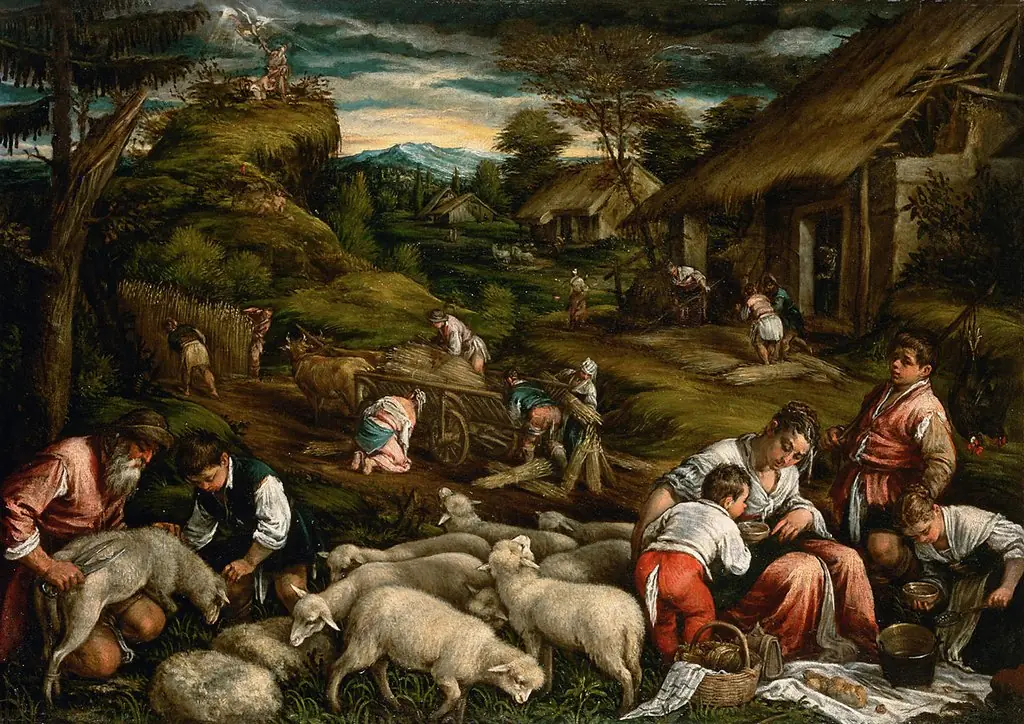
The scene captures the grape harvest in late summer, aligning with the astrological sign of Libra. A mixed group of laborers—men, women, and children—gather among vine-laden trellises, their movements suggesting coordinated effort rather than choreographed ritual. The inclusion of a distant village and scattered trees situates the activity within a lived rural landscape, emphasizing seasonal labor as a communal, cyclical rhythm rather than an idealized pastoral fantasy.
Technique & Style
Bassano employed rich, varied pigments to render the deep purples of ripened grapes, the greens of foliage, and the blues of the sky with naturalistic precision. Brushwork is lively but controlled, conveying texture in fabric, bark, and fruit without overt theatricality. The composition avoids central focus, instead distributing figures across the canvas to mimic the organic spread of fieldwork, a departure from formal Renaissance symmetry.
History & Provenance
Created in the final years of the 16th century, the painting entered the Spanish royal collection before being transferred to the Museo del Prado in the 19th century. Its survival is notable, as many of Bassano’s seasonal works were lost or dispersed. Documentation links it to the Bassano family workshop’s output, though its exact commission remains unrecorded, suggesting it may have been produced for private or civic patronage in northern Italy.
Context
Francesco Bassano worked during a period when Venetian artists increasingly turned to genre scenes and rural life, influenced by Northern European prints and the growing interest in everyday labor. Unlike his father’s religious subjects, Francesco’s seasonal cycles reflect a shift toward secular, observational painting. *September (Libra)* fits within a broader trend in early 17th-century Italy of depicting agricultural cycles as both practical record and subtle social commentary.
Legacy
Though less celebrated than his father’s oeuvre, Francesco Bassano’s seasonal paintings, including *September (Libra)*, offer insight into the transition from Mannerist idealism to Baroque naturalism in northern Italy. The work’s unembellished depiction of rural labor influenced later genre painters in the Veneto and contributed to the development of landscape-infused narrative painting in the 17th century.
Artist & collection
Artist
Francesco Bassano the Younger (Italian: Francesco Bassano il Giovane; 26 January 1549 – 4 July 1592), also called Francesco Giambattista da Ponte or Francesco da Ponte the Younger, was an Italian painter of the Renaissance period.