Artwork
Apollo killing Python (Ovid, Metamorphoses, I, 438ff.)
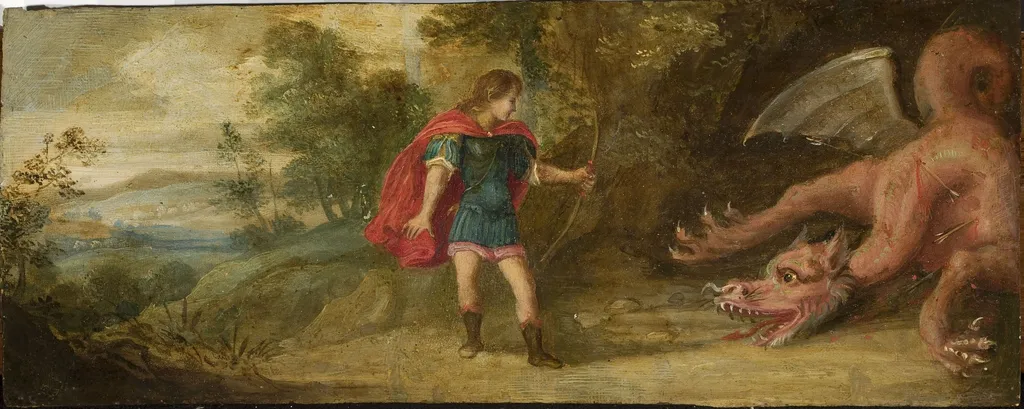
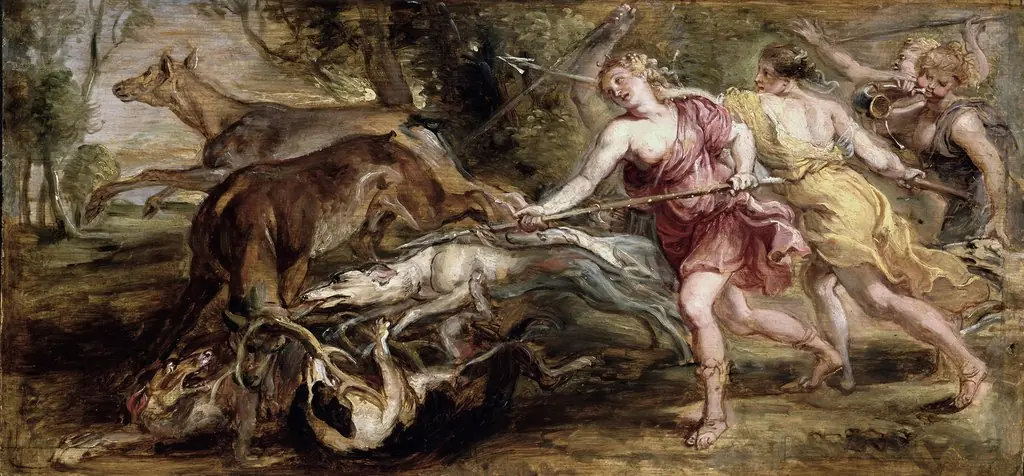
Apollo killing Python (Ovid, Metamorphoses, I, 438ff.) is an unspecified painting by the Flemish Baroque painting artist Unknown. It dates from 1625 and is held in the collection of the National Museum in Warsaw. This painting depicts a moment from Ovid’s Metamorphoses in which Apollo slays the serpent Python.
About this work
Overview
The scene is rendered with a focus on the confrontation between the god and the chthonic creature, set against a muted natural landscape.
This painting depicts a moment from Ovid’s Metamorphoses in which Apollo slays the serpent Python. The scene is rendered with a focus on the confrontation between the god and the chthonic creature, set against a muted natural landscape. The figures are positioned along a dirt path, emphasizing the tension of the moment. The composition avoids dramatic flourish, instead grounding the myth in a quiet, earthly setting.
Subject & Meaning
The painting illustrates Apollo’s victory over Python, a serpent guarding the oracle at Delphi. In myth, this act establishes Apollo’s dominion over the site and symbolizes the triumph of order over chaos. The winged, toothed serpent suggests ancient, primal power, while Apollo’s poised stance and weaponry reflect divine authority. The scene is not one of violence, but of inevitable, fated resolution.
Technique & Style
The artist employs a restrained palette dominated by gray skies and earth tones, contrasting with the vivid pink of the serpent and Apollo’s red cape. The figures are rendered with clear outlines and minimal modeling, suggesting a preference for clarity over realism. Brushwork is controlled, with attention to the texture of the snake’s scales and the folds of fabric, reinforcing narrative legibility over atmospheric depth.
History & Provenance
The painting’s origins are undocumented in public records, and no known artist or date is associated with it. It appears to be a 19th-century interpretation of classical myth, likely created for private or academic audiences. Its style aligns with neoclassical revival trends, though it lacks the grandeur typical of official commissions from the period.
Context
During the 18th and 19th centuries, Ovid’s Metamorphoses remained a key source for European artists seeking classical themes. This painting reflects a broader interest in mythological narratives that emphasized moral or cosmic order. Unlike grand public murals, this work suggests a more intimate engagement with the text, possibly intended for study or personal contemplation.
Legacy
Though not widely exhibited or reproduced, the painting contributes to a continuum of visual interpretations of Apollo’s myth. Its quiet tone and focus on symbolic contrast distinguish it from more theatrical renditions. It stands as an example of how classical stories were reimagined in private collections, preserving narrative clarity over monumental expression.
Artist & collection

 Domestic Scene
 Giacomo and Cardinal Marco, investing Andrea, Abbot of San Zeno, with his Benefice
 The Nymph of Fontainebleau
 Portrait of a Woman
 Madonna and Child with Saints in the Enclosed Garden
 Venus and Minerva
 Family Group of Four on Sofa
 Wall painting from Room H of the Villa of P. Fannius Synistor at Boscoreale
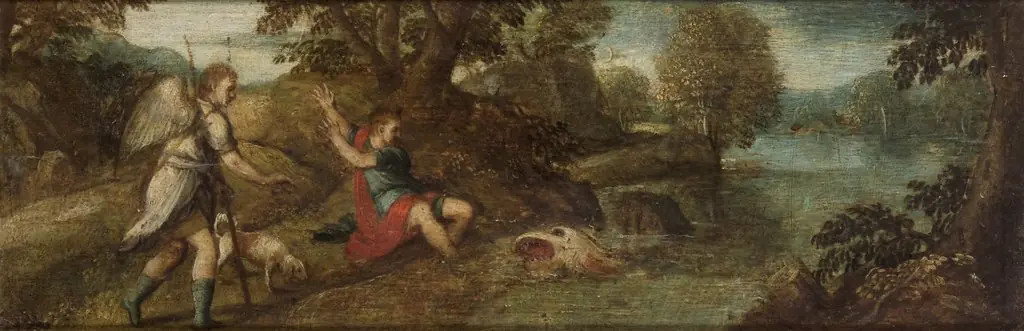 Tobias is threatened by the fish
 Überführung der Bundeslade durch David; der Tod des Usa
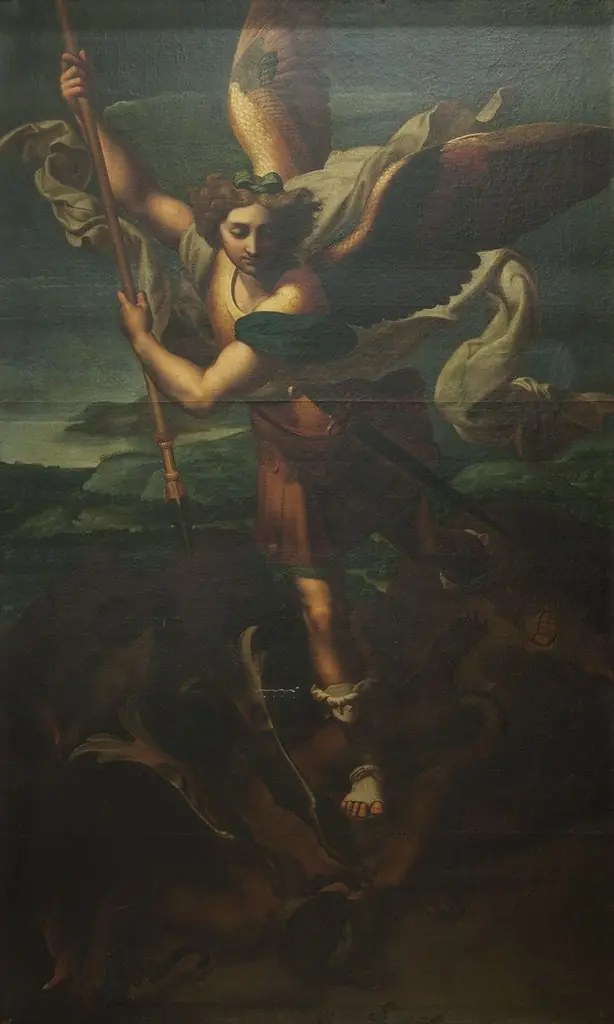 Der Erzengel Michael (Kopie nach)
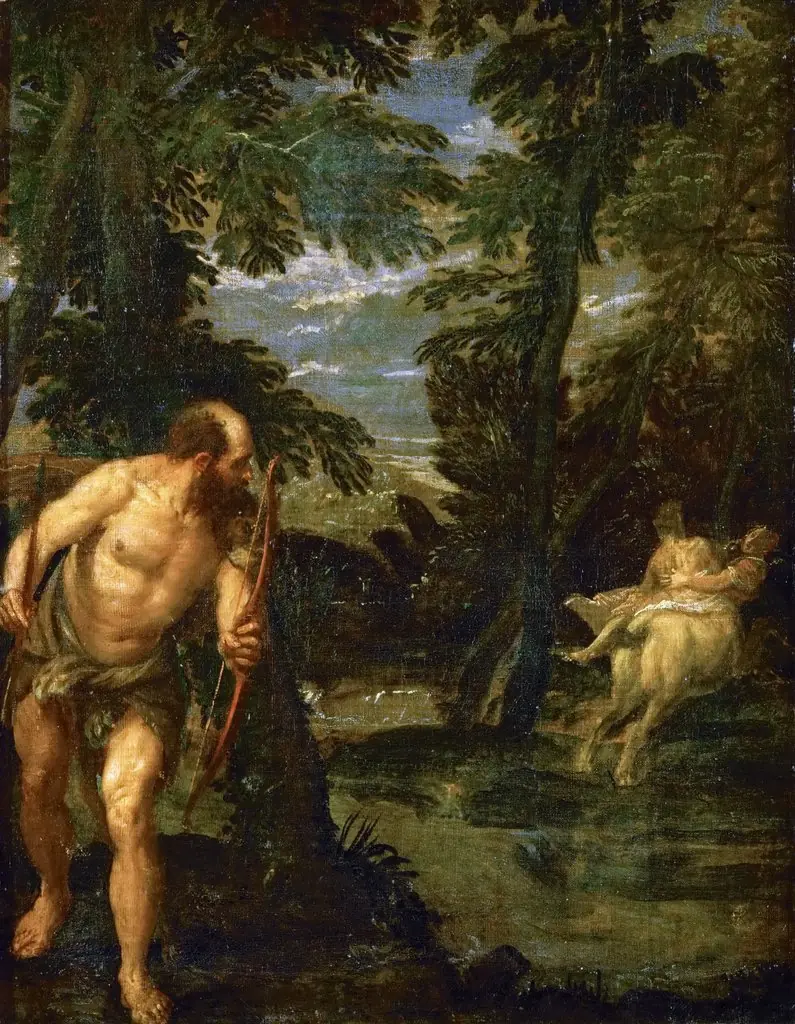 Hercules, Deianira and the Centaur Nessus
 Saint George Fighting the Dragon
 St George
 Don Quixote and the Dead Mule
 Tobias und der Erzengel Raphael auf Wanderschaft
 Hercules and the Stymphalian birds
 Diana and her Nymphs Hunting