Artwork
Saint John the Evangelist
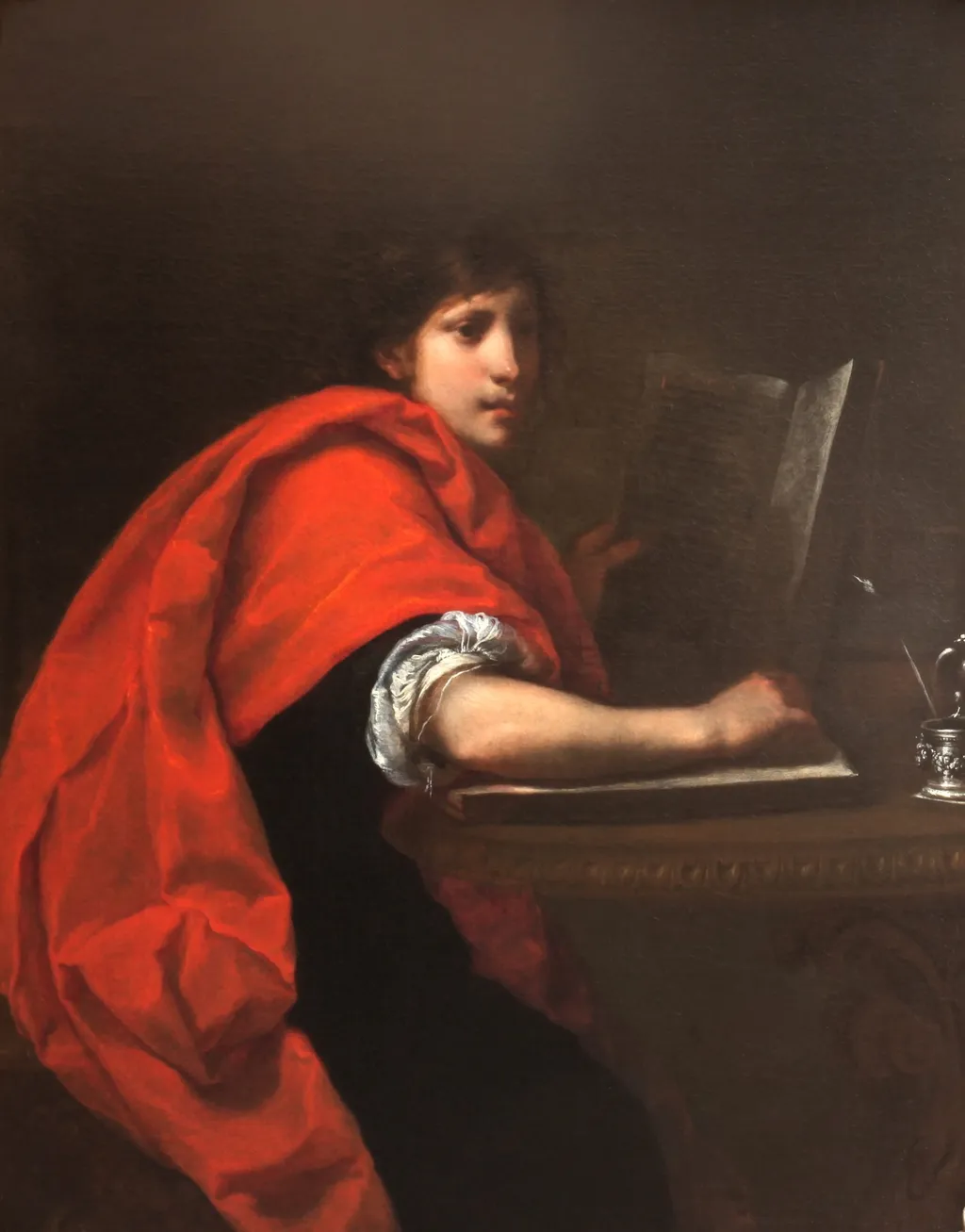
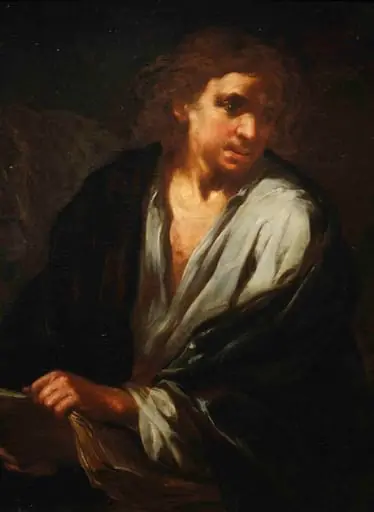
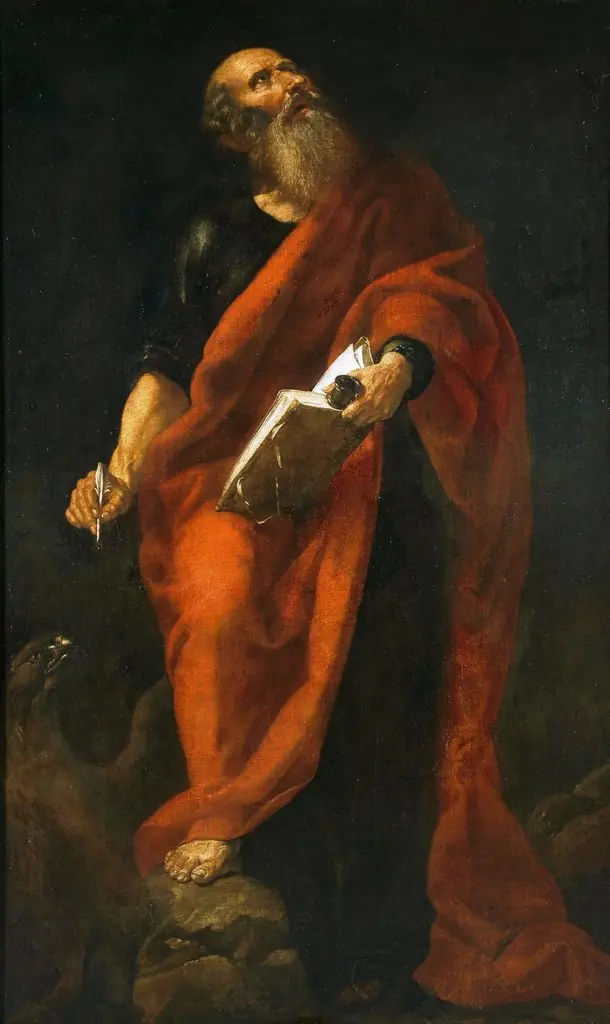
Saint John the Evangelist is an oil painting by the Early Baroque Italian artist Francesco Furini. It dates from 1635 and is held in the collection of the Museum of Fine Arts of Lyon.
About this work
Overview
Francesco Furini’s oil painting Saint John the Evangelist dates from 1635–1636 and has been part of the Museum of Fine Arts in Lyon’s collection since 1987. The work portrays a solitary figure in a red robe seated at a wooden desk, his gaze turned to the right as he studies an open book.
Subject & Meaning
The sitter is identified as the apostle John, traditionally associated with theological writing. The open volume and the contemplative pose suggest a moment of scriptural reflection, emphasizing the saint’s role as a transmitter of divine revelation.
Technique & Style
Furini adopts a dramatic chiaroscuro, borrowing the stark light‑dark contrast popularized by Caravaggio. A single light source illuminates the red garment and the white shirt beneath, while the surrounding darkness recedes, giving the figure a three‑dimensional presence.
History & Provenance
The painting was commissioned by Furini’s patron, the Marquess Vitelli. It shares the same facial model used for Furini’s Apollo the Archer (now at Columbia University) and several of his female allegorical figures, indicating a recurring studio sitter.
Context
Created in the mid‑1630s, the work reflects the Baroque fascination with emotional intensity and theatrical lighting. Furini’s adaptation of Caravaggesque methods places him within a broader Italian movement that sought to fuse realism with spiritual narrative.
Legacy
Since its acquisition by the Lyon museum, Saint John the Evangelist has contributed to scholarly reassessments of Furini’s oeuvre, highlighting his ability to merge devotional subject matter with the dramatic visual language of his contemporaries.
Own this work as a print
Artist & collection
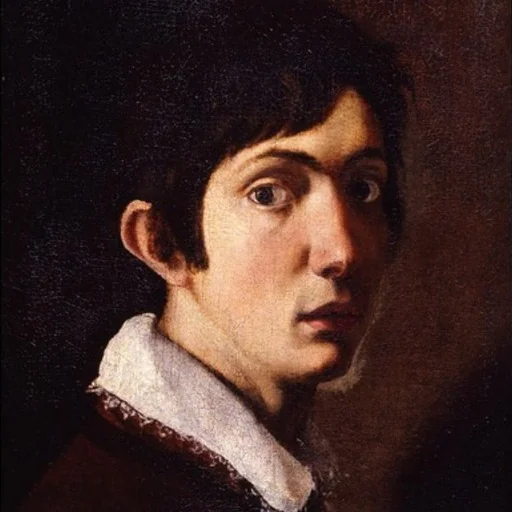
Artist
Francesco Furini ( 10 apr. 1603 – 19 August 1646) was an Italian Baroque painter, poet and priest. He was a leading painter in Florence in the second quarter of the 17th century and also worked in Rome. He was noted for…