Artwork
Mary Magdalene
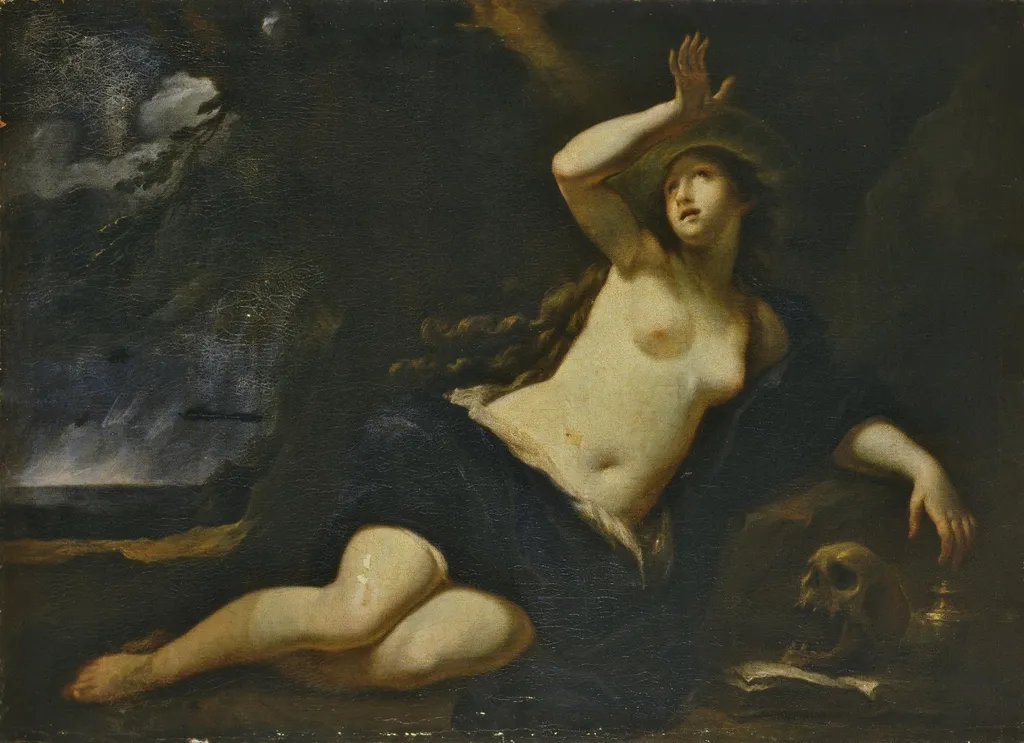
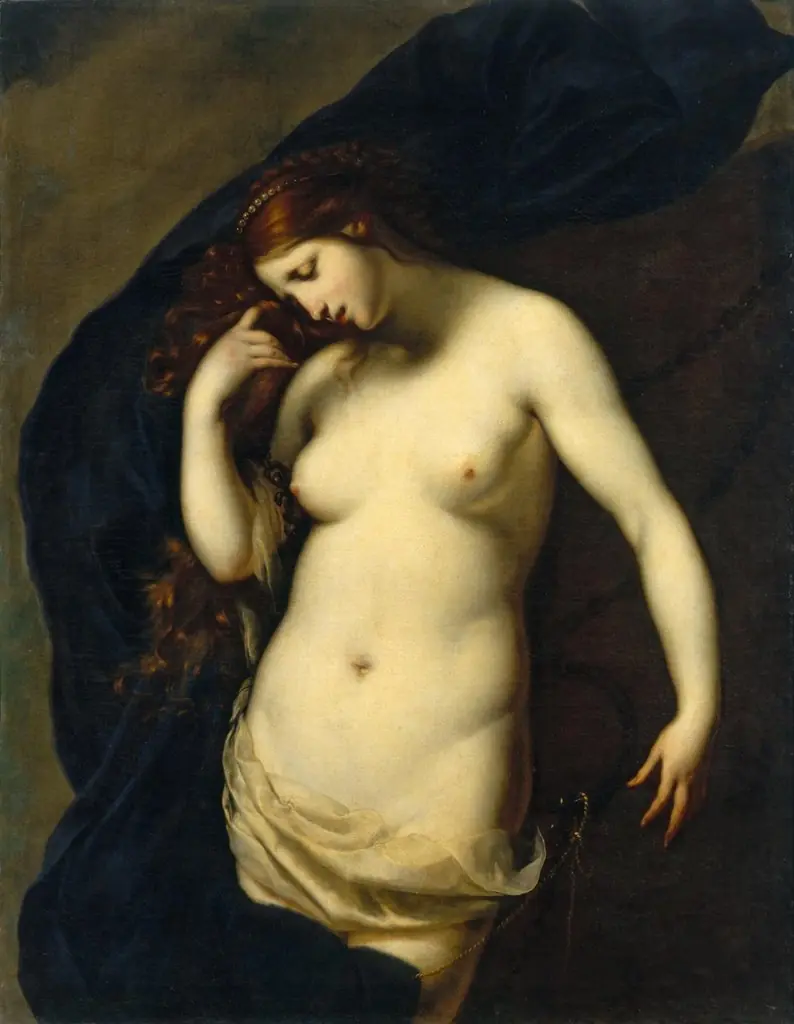
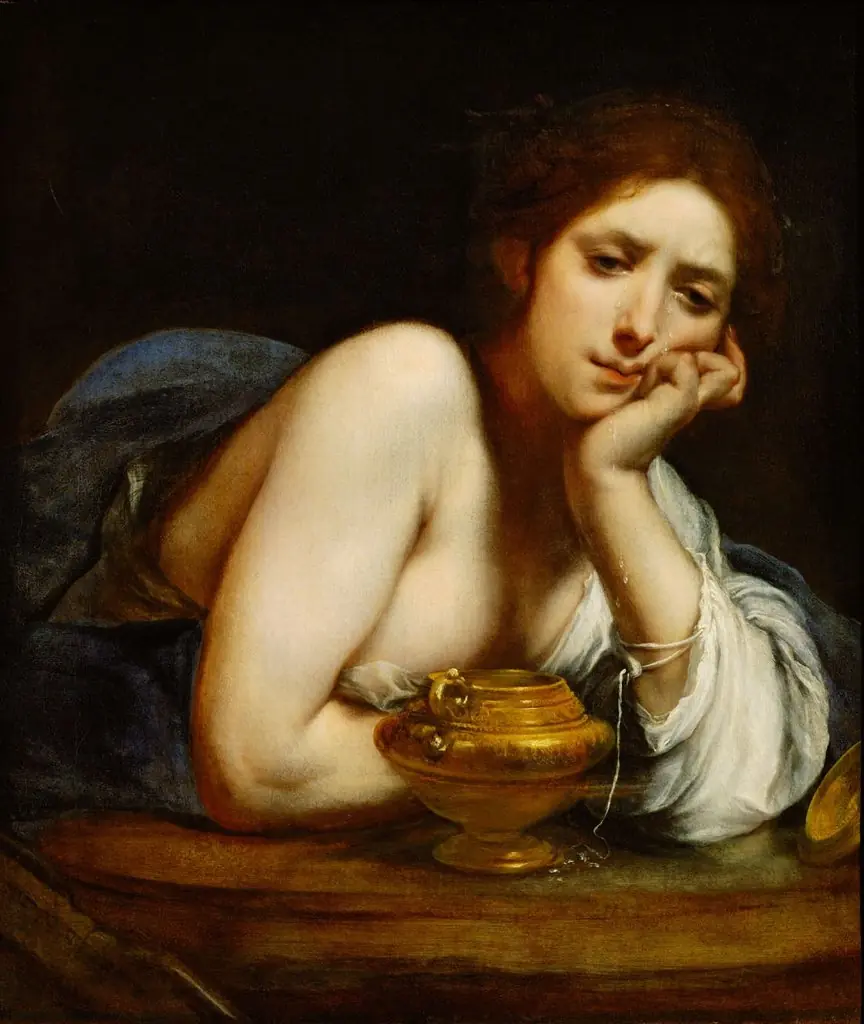
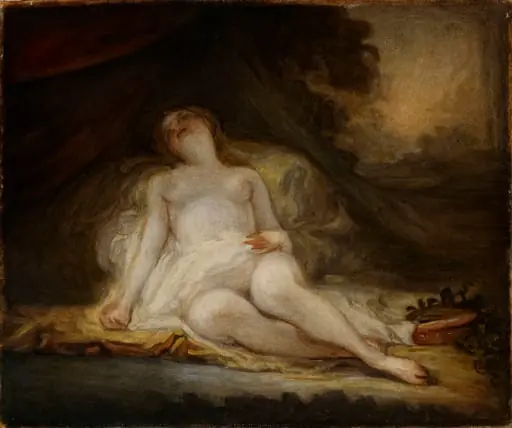
Mary Magdalene is an oil painting by the Early Baroque Italian artist Francesco Furini. It dates from 1642 and is held in the collection of the Hermitage Museum.
About this work
Overview
Mary Magdalene is a 1642 oil painting by Francesco Furini, an Italian Baroque artist known for blending religious and secular themes with a sensual sfumato style. The work is part of the State Hermitage Museum's collection.
Subject & Meaning
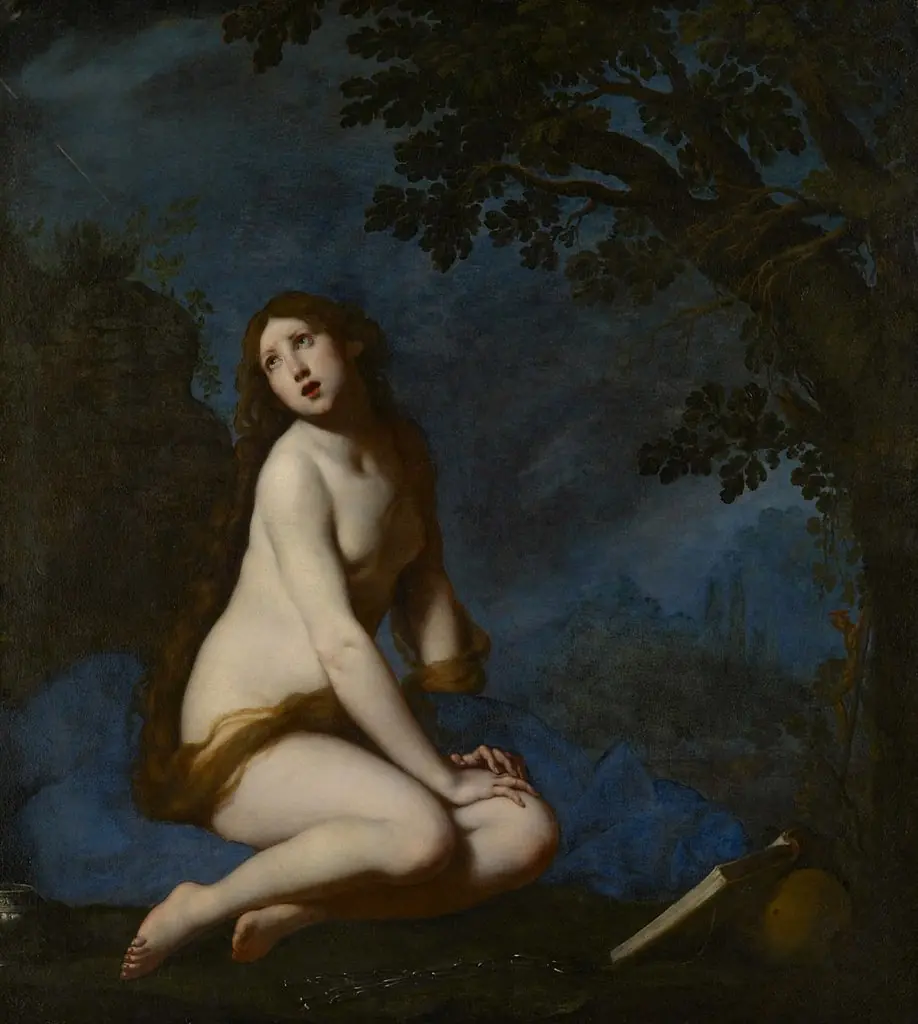
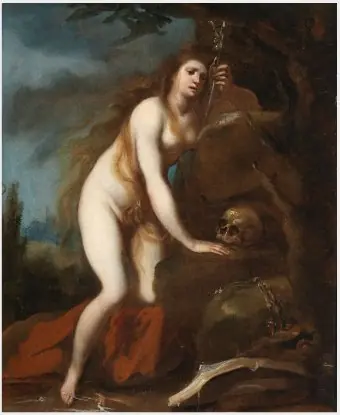
The painting portrays Mary Magdalene in a contemplative, somber pose, seated on the ground with a skull, symbolizing repentance and mortality. Her upward gaze and exposed torso may convey spiritual transformation and vulnerability.
Technique & Style
Furini employs chiaroscuro to create depth and emphasize the figure, characteristic of early Baroque Italian art. The interplay of light and shadow through the dark, cloudy background enhances the emotional intensity of the scene.
History & Provenance
Created in 1642 during Furini's prominence in 17th-century Florence, the painting is now held in the State Hermitage Museum's collection, reflecting its enduring value within Baroque art.
Context
As a Baroque piece, it reflects the era's dramatic lighting and emotional depth. Furini's dual role as priest and artist may have influenced the work's balance of sensuality and religious devotion.
Legacy
While specific influence is not detailed, the painting represents Furini's contribution to Baroque art, notably its fusion of religious themes with sensual, expressive qualities.
Own this work as a print
Artist & collection
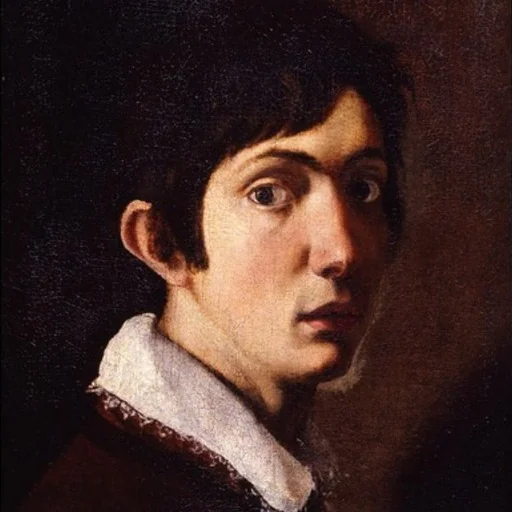
Artist
Francesco Furini ( 10 apr. 1603 – 19 August 1646) was an Italian Baroque painter, poet and priest. He was a leading painter in Florence in the second quarter of the 17th century and also worked in Rome. He was noted for…