Artwork
Der Heilige Rochus
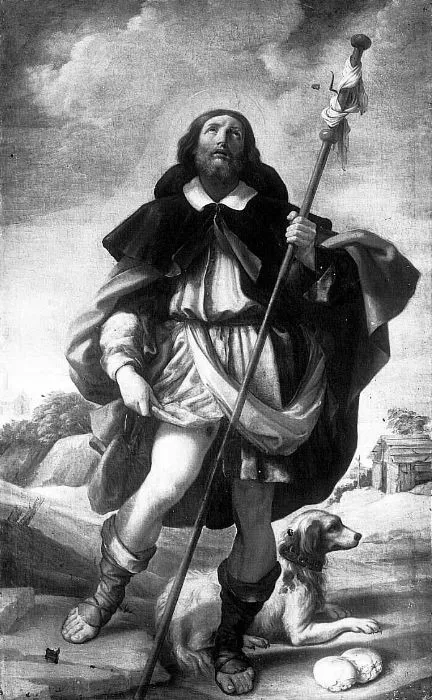
Der Heilige Rochus is a paint painting by the Early Baroque Italian artist Francesco Gessi. It dates from 1634 and is held in the collection of the Gemäldegalerie Berlin.
About this work
Overview
Francesco Gessi’s 1634 oil painting titled Der Heilige Rochus is part of the collection of the Gemäldegalerie in Berlin. Executed in the early Baroque period, the work presents a solitary figure rendered in a modest palette, set against a modestly detailed landscape.
Subject & Meaning
The central figure is a bearded man with long hair, clothed in a dark cloak over a white shirt and short trousers. He holds a staff in his right hand, a traditional attribute of Saint Roch, a pilgrim saint associated with protection against plague. A small dog rests at his left foot, an emblem commonly linked to the saint’s legend.
Technique & Style
Gessi employs a restrained chiaroscuro, using contrasts of light and shadow to model the saint’s form and give depth to the surrounding foliage. The brushwork is smooth in the figure’s features, while the landscape background shows looser, more atmospheric strokes that suggest distant trees and buildings.
History & Provenance
Created in 1634, the painting entered the Gemäldegalerie’s holdings in the 20th century, though earlier ownership records are sparse. Its presence in a major German museum reflects the broader interest in Italian Baroque religious works collected by European institutions.
Context
During the 1630s, Gessi, a pupil of Guido Reni, produced several devotional images for churches and private patrons. Depictions of Saint Roch were particularly popular amid recurring plague outbreaks, serving both as intercessory icons and moral exemplars of piety and compassion.
Artist & collection

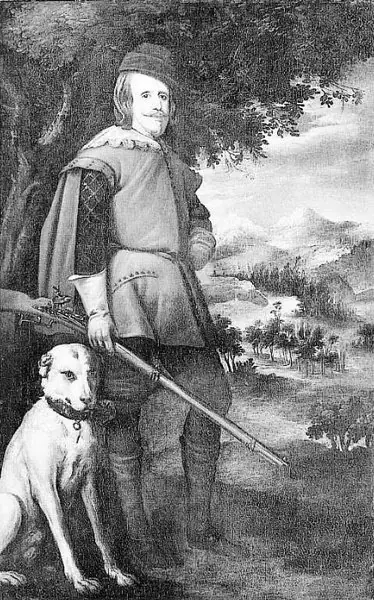 Philipp IV., König von Spanien (1605-1665), im Jagdanzug
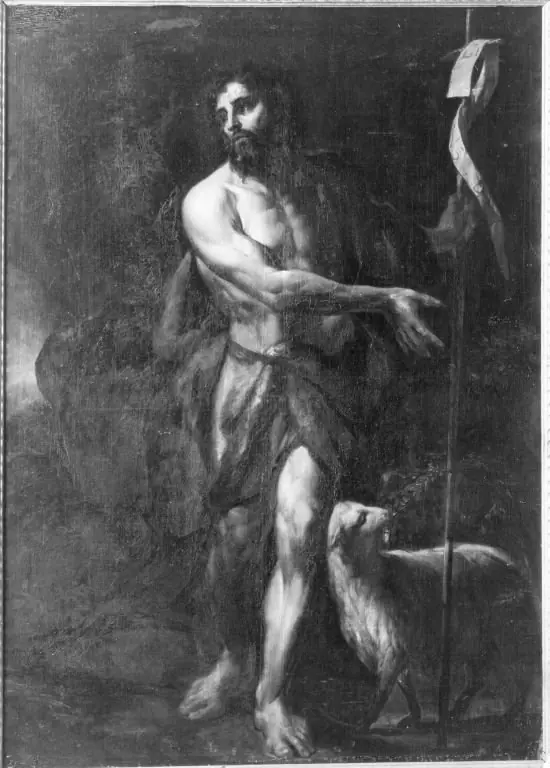 Johannes der Täufer
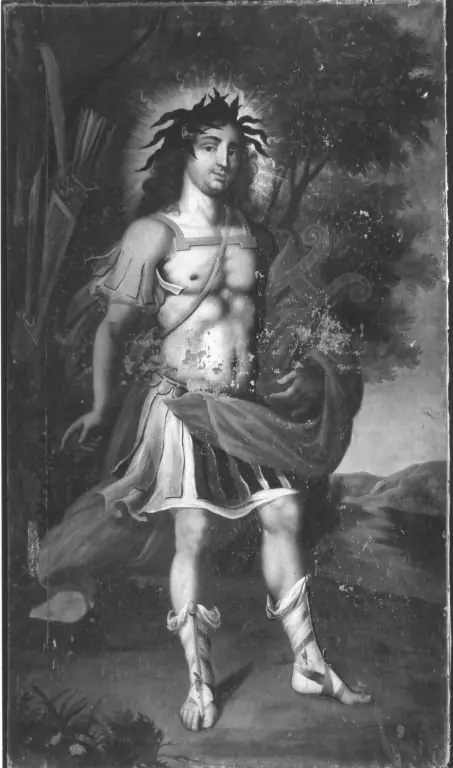 Phoebus Apollo, God of the Arts
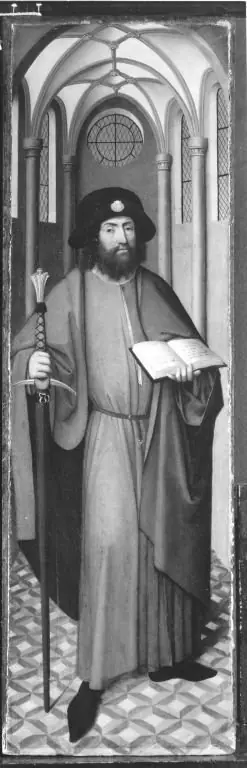 Saint James the Great
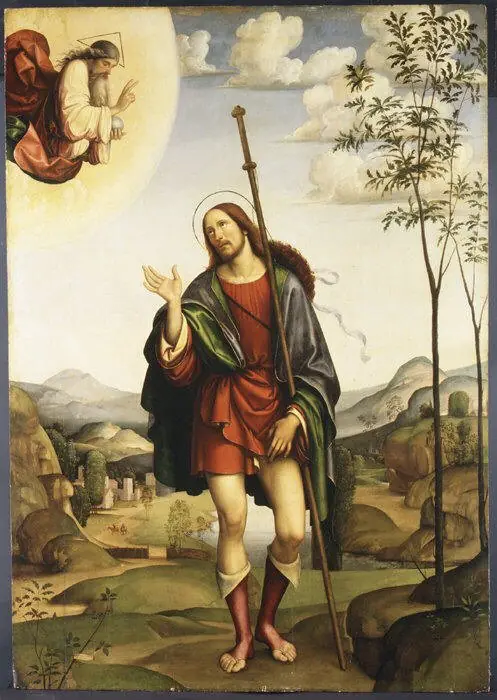 Saint Roch
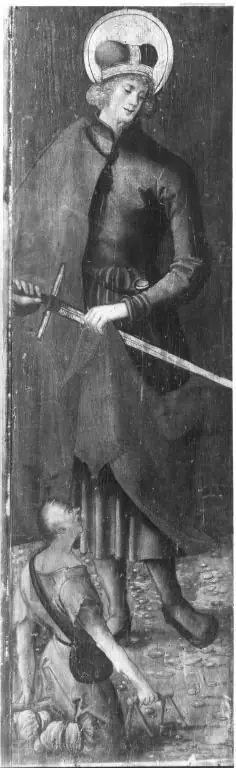 Der hl. Martin Rückseite: Hl. Stephanus(?)
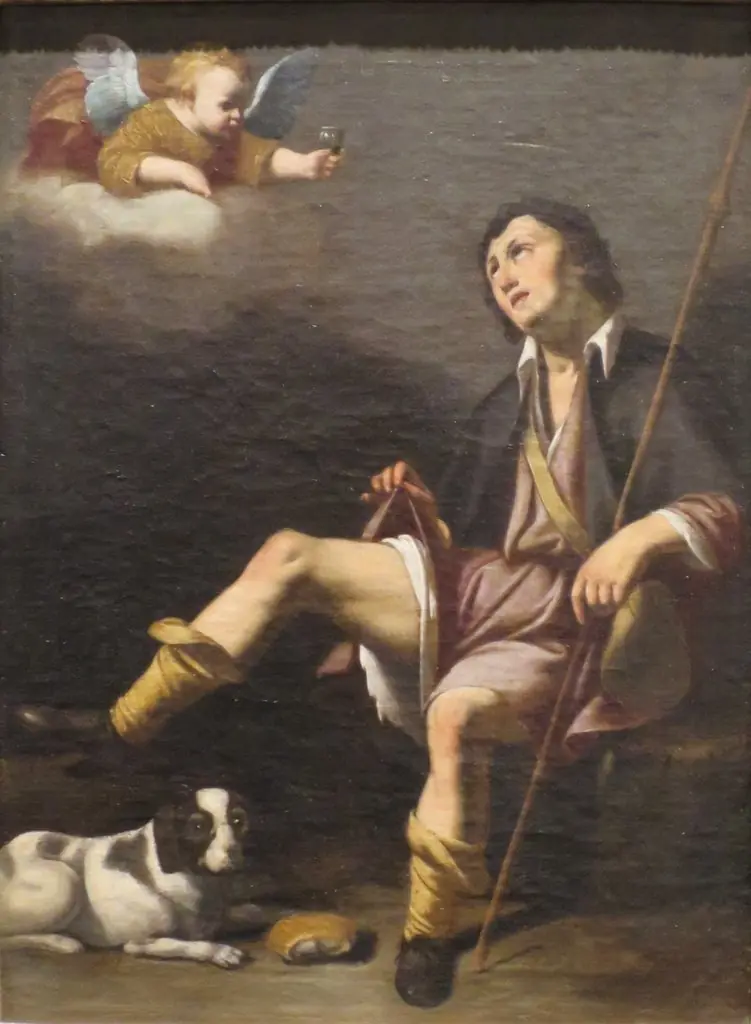 Saint Roch and the Angel
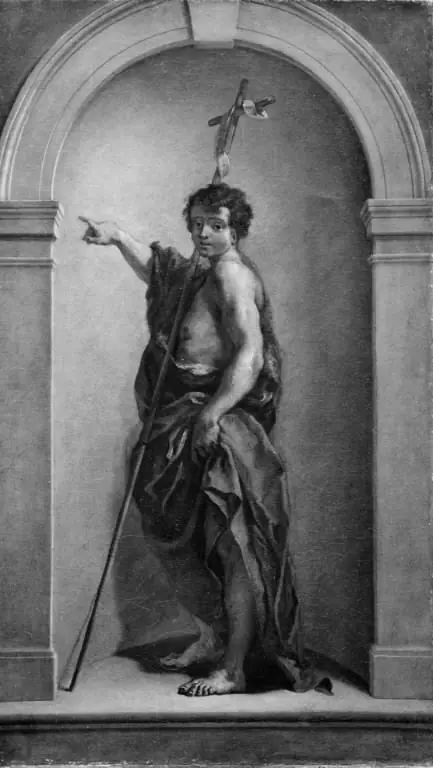 St John the Baptist
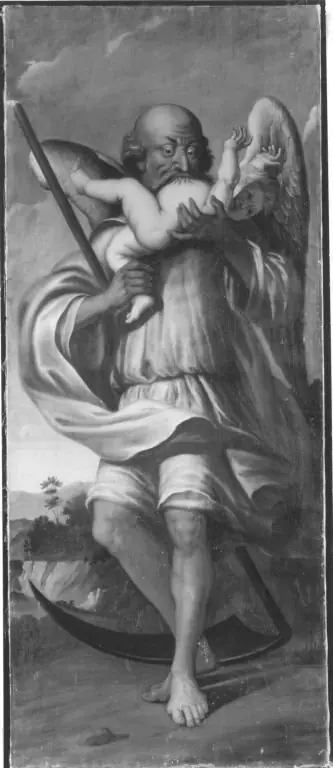 Saturn. the God of Time, devouring his own child
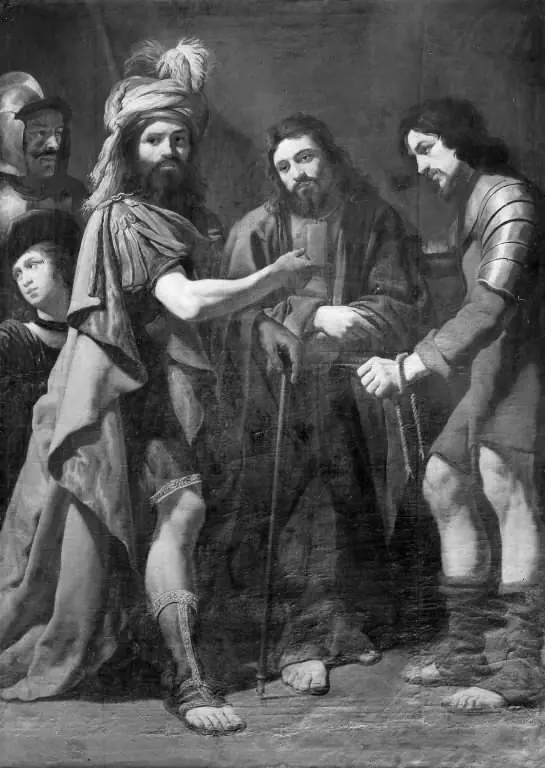 Christ before Pilate
 Saint Francis of Assisi
 Johannes der Täufer mit Lamm