Artwork
Saturn. the God of Time, devouring his own child
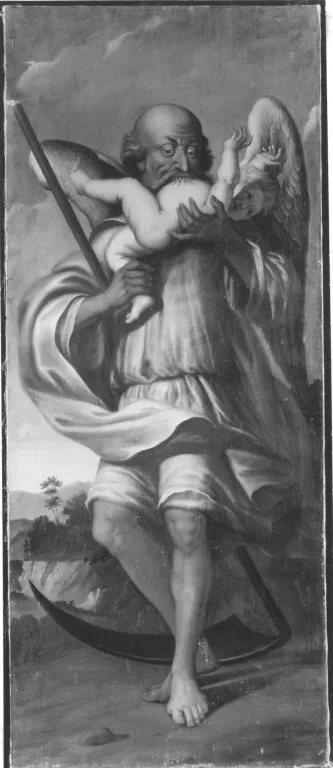
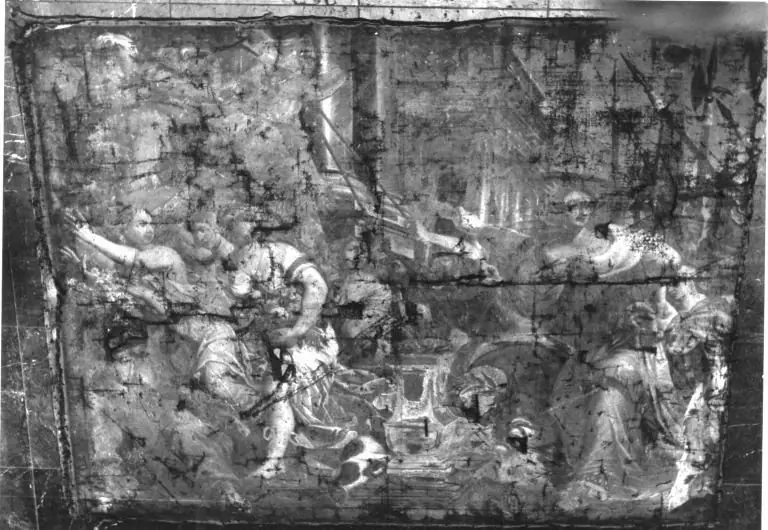
Saturn. the God of Time, devouring his own child is an oil painting by the Early Baroque Italian artist Jacob Potma. It dates from 1647 and is held in the collection of the Bavarian State Painting Collections.
About this work
Overview
The painting resides in the Alte Pinakothek in Munich, where it stands as a rare example of Dutch Baroque engagement with classical mythological themes.
Painted in 1647 by Jacob Potma, this oil work portrays the mythological figure Saturn consuming one of his offspring. The scene is rendered with intense emotional gravity and a restrained palette, anchored by the central figures against a shadowed backdrop. The painting resides in the Alte Pinakothek in Munich, where it stands as a rare example of Dutch Baroque engagement with classical mythological themes.
Subject & Meaning
The subject draws from Roman mythology, in which Saturn, fearing his children would overthrow him, devoured each at birth. Here, the act is not depicted as violent spectacle but as a moment of sorrowful inevitability. The child’s gaze upward and the father’s pained expression suggest internal conflict, transforming the myth into a meditation on fate, paternal dread, and the passage of time.
Technique & Style
Potma employs chiaroscuro to isolate the figures against a deep, muted background, heightening their emotional weight. The flowing drapery of Saturn’s robe contrasts with the fragile form of the infant, emphasizing vulnerability. Brushwork is controlled yet expressive, with subtle modeling of flesh and fabric that enhances the scene’s psychological tension without overt dramatization.
History & Provenance
Commissioned during the Dutch Golden Age, the painting entered the Bavarian royal collection by the late 17th century and has remained in the Alte Pinakothek since its founding. Its attribution to Potma, a lesser-known artist of the period, suggests it may have been a private commission reflecting intellectual interest in classical allegory rather than public display.
Context
While Italian and Flemish artists frequently depicted Saturn’s myth, Dutch painters of the era typically favored genre or landscape subjects. Potma’s choice to engage with this dark myth reflects a niche interest in moral allegory and the philosophical weight of time — themes resonant in a society increasingly shaped by commerce, science, and Calvinist introspection.
Legacy
The painting remains a quiet but potent example of how Dutch artists adapted classical narratives to explore inner turmoil. Though not widely reproduced or studied, it contributes to a broader understanding of Baroque visual culture beyond its more celebrated counterparts, offering insight into the psychological depth sought in mythological subjects during the 17th century.
Artist & collection