Artwork
A Night Procession in the Piazza San Marco
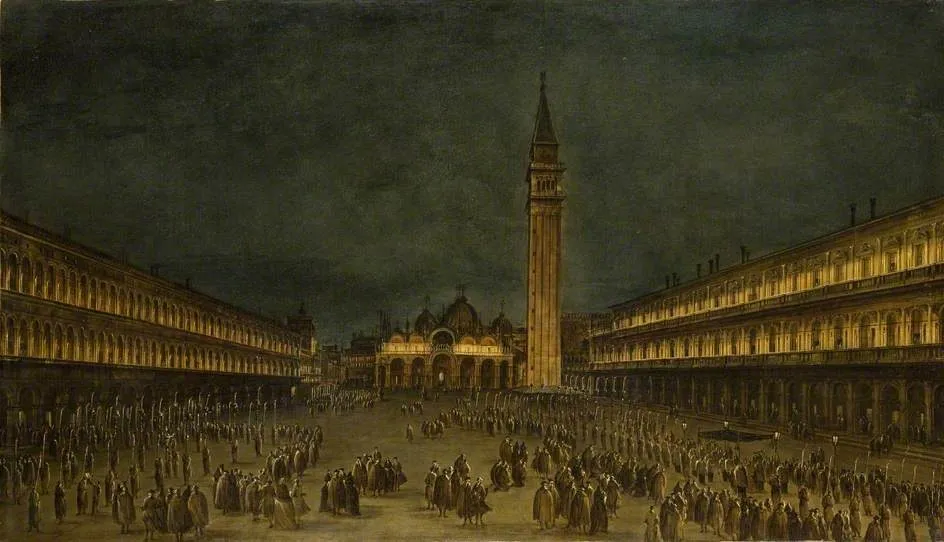
A Night Procession in the Piazza San Marco is an oil painting by the Rococo painting artist Francesco Guardi. It dates from 1755 and is held in the collection of the Ashmolean Museum.
About this work
Overview
The painting exemplifies his mature style, marked by loose brushwork and a sensitivity to light, moving away from the precision of earlier vedute traditions.
Painted in 1755, this oil on canvas work by Francesco Guardi captures a nocturnal gathering in Venice’s Piazza San Marco. Guardi, a member of the Venetian nobility and a key figure in the later Venetian School, turned from religious subjects to urban scenes during this period. The painting exemplifies his mature style, marked by loose brushwork and a sensitivity to light, moving away from the precision of earlier vedute traditions.
Subject & Meaning
The scene portrays a ceremonial procession at night, with figures moving through the square under the glow of lanterns and illuminated architecture. Though the exact event is undocumented, the gathering suggests a civic or religious ritual common in Venetian life. The composition emphasizes collective movement and quiet spectacle, reflecting the city’s ceremonial culture without overt narrative detail.
Technique & Style
Guardi employs a fluid, almost impressionistic brush technique to suggest form and motion rather than define it. Light emerges from windows, torches, and lanterns, casting sharp contrasts against the deep indigo sky and shadowed facades. This use of chiaroscuro enhances depth and atmosphere, prioritizing mood over architectural accuracy. The paint is applied with visible, rapid strokes, giving the scene a sense of fleeting immediacy.
History & Provenance
Created during Guardi’s most productive phase as a vedutista, the painting emerged after his collaboration with his brother Gian Antonio on religious commissions. It entered private collections in Italy before being acquired by a major European museum in the 19th century. Its survival through centuries of political change in Venice underscores its enduring status as a record of the city’s nocturnal rituals.
Context
In mid-18th century Venice, the city’s political power had waned, but its ceremonial life remained vibrant. Guardi’s night scenes responded to a growing interest in atmospheric views among collectors, particularly from Northern Europe. Unlike the grand, orderly vistas of Canaletto, Guardi’s works conveyed the intimate, transient character of Venetian life, aligning with Rococo sensibilities that favored emotion and light over rigid structure.
Legacy
Guardi’s expressive handling of light and movement influenced later artists seeking to capture urban ambiance over topographical precision. His nocturnal vedute helped shift the genre from documentary record to poetic evocation. While less celebrated in his lifetime than Canaletto, Guardi’s atmospheric approach gained renewed appreciation in the 19th and 20th centuries as modern viewers valued emotional resonance over formal clarity.
Artist & collection
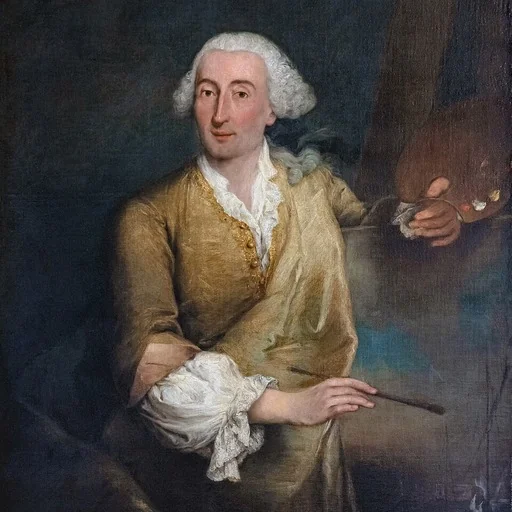
Artist
Francesco Lazzaro Guardi (Italian pronunciation: ; 5 October 1712 – 1 January 1793) was an Italian painter, nobleman, and a member of the Venetian School.

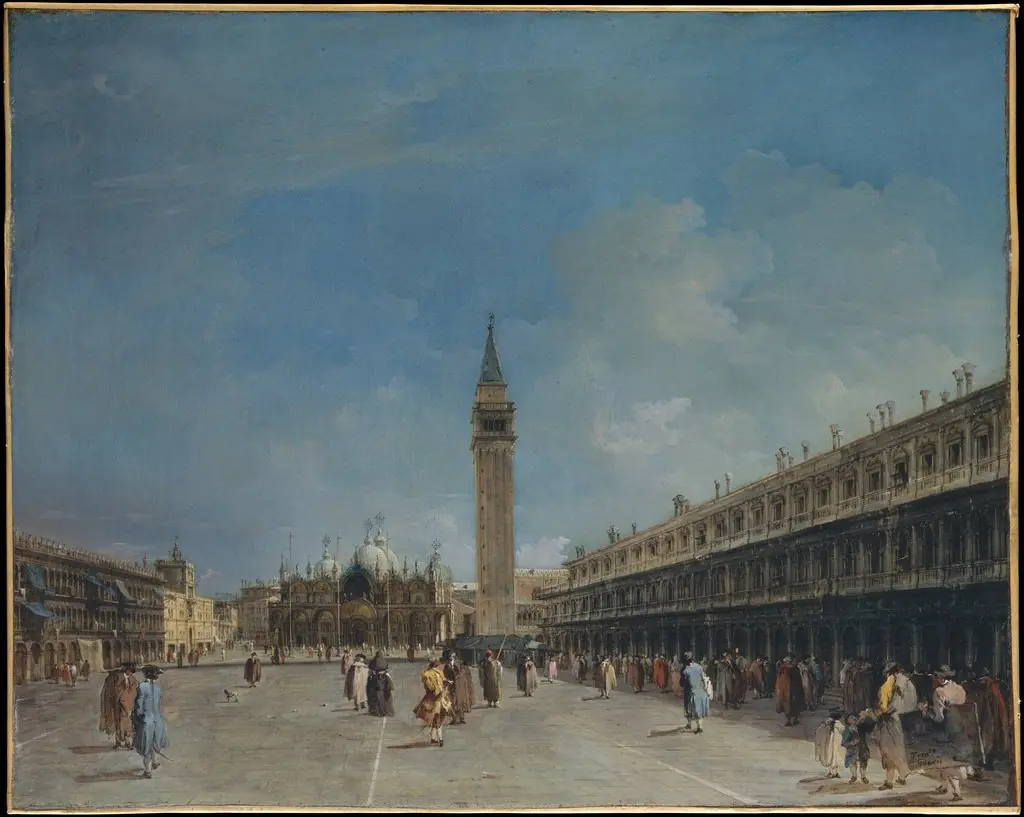
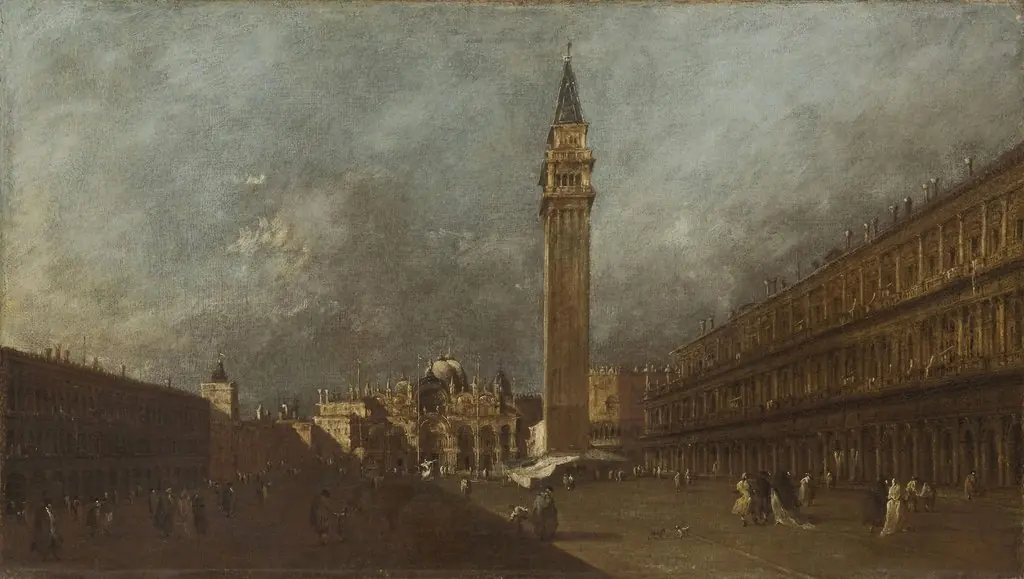 Piazza San Marco
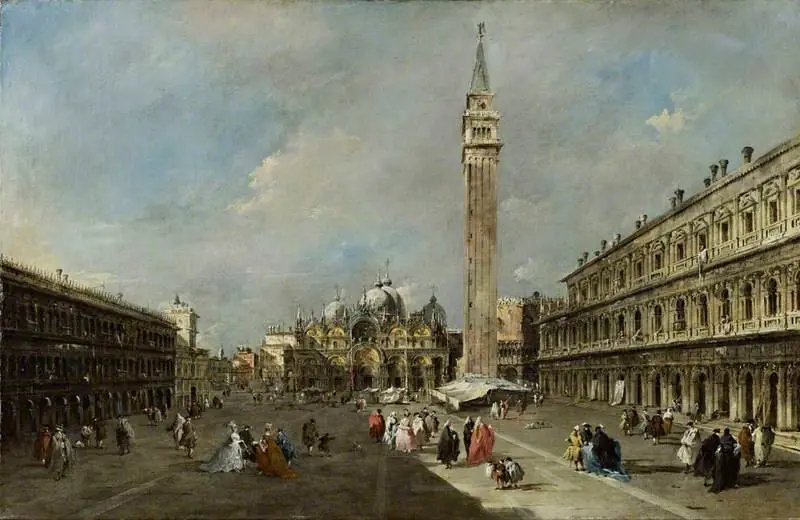 The Piazza San Marco, Venice
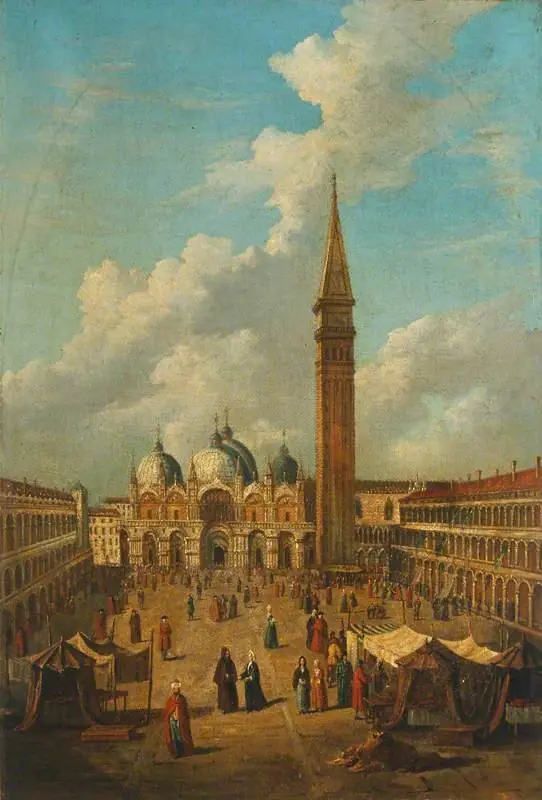 Piazza San Marco, Venice
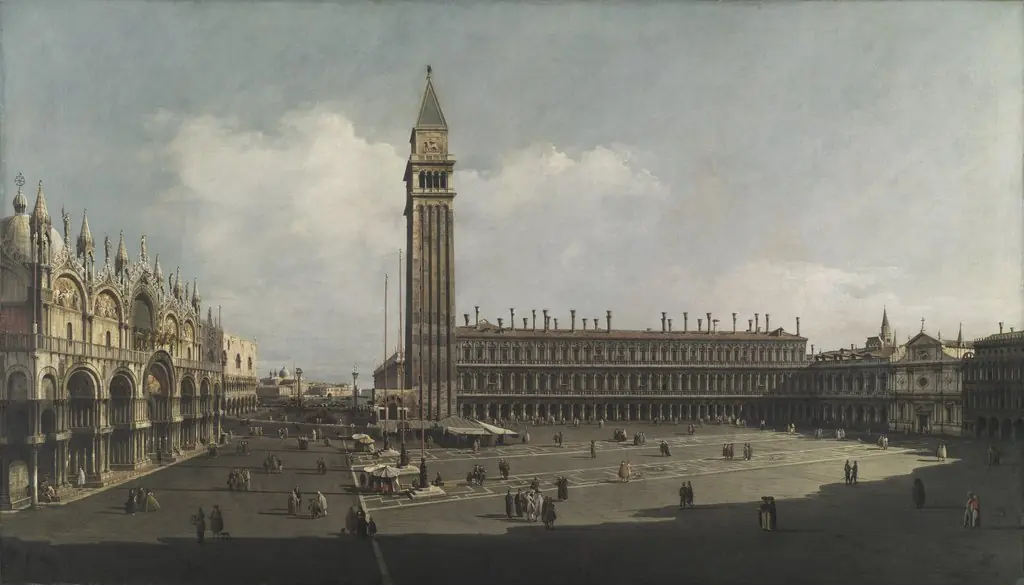 Piazza San Marco, Venice
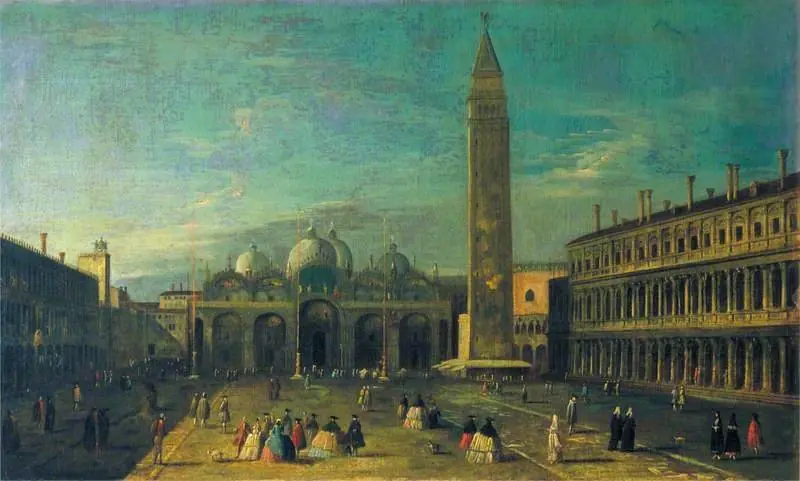 Venice: Piazza San Marco, Looking towards the Basilica
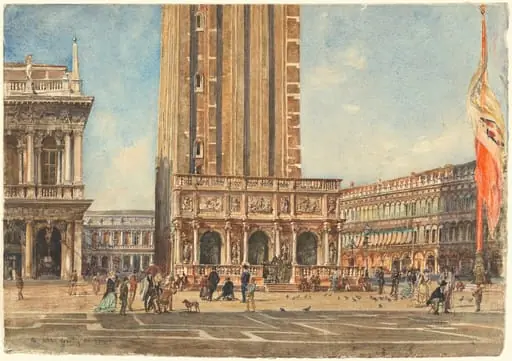 The Piazza San Marco
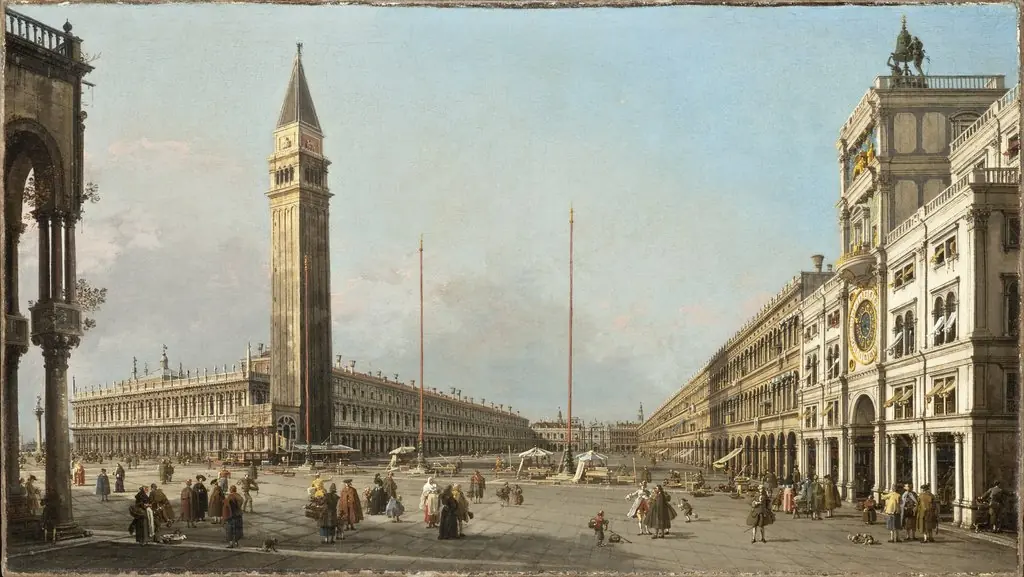 Piazza San Marco Looking South and West
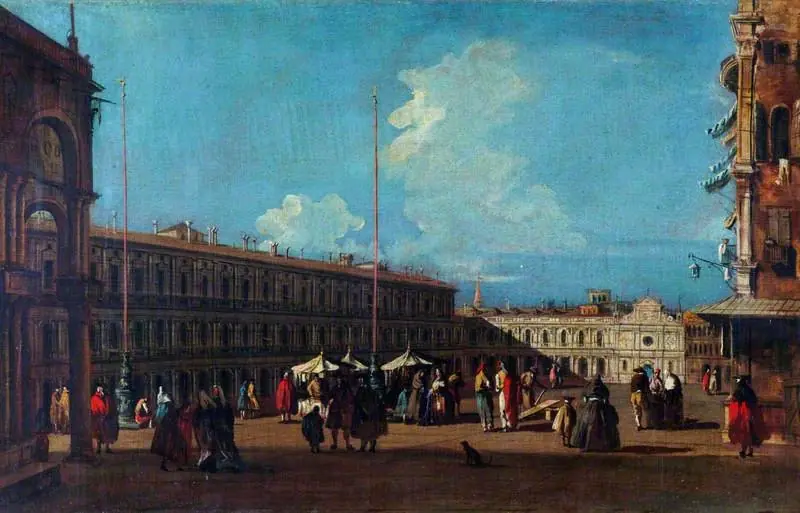 Venice: The Piazza San Marco Looking West
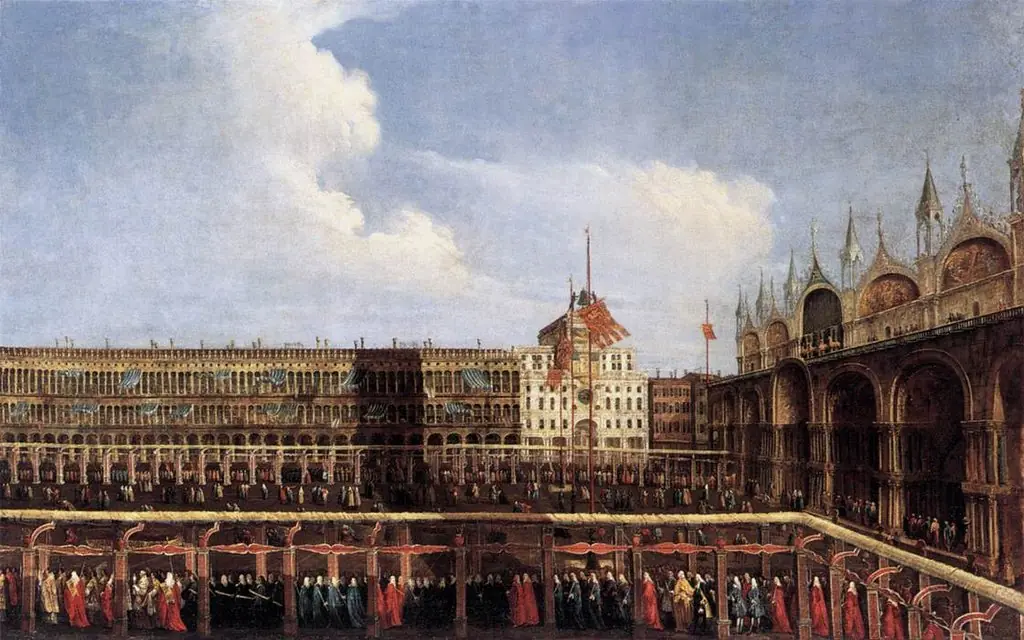 Feast of Corpus Christi Procession, Piazza di San Marco
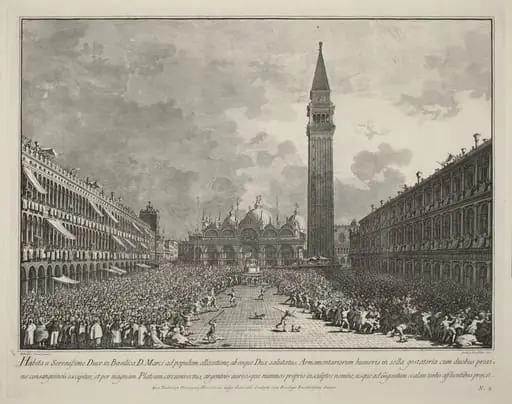 The Doge Carried around the Piazza San Marco