Artwork
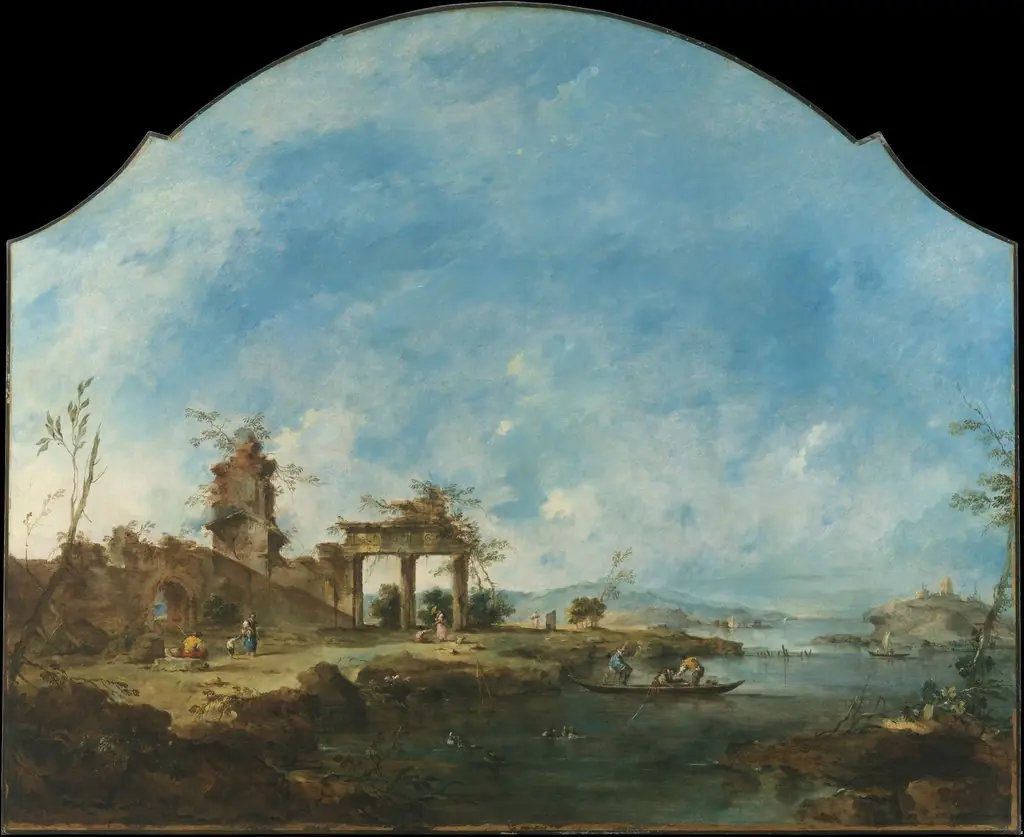
Capriccio: An Archway
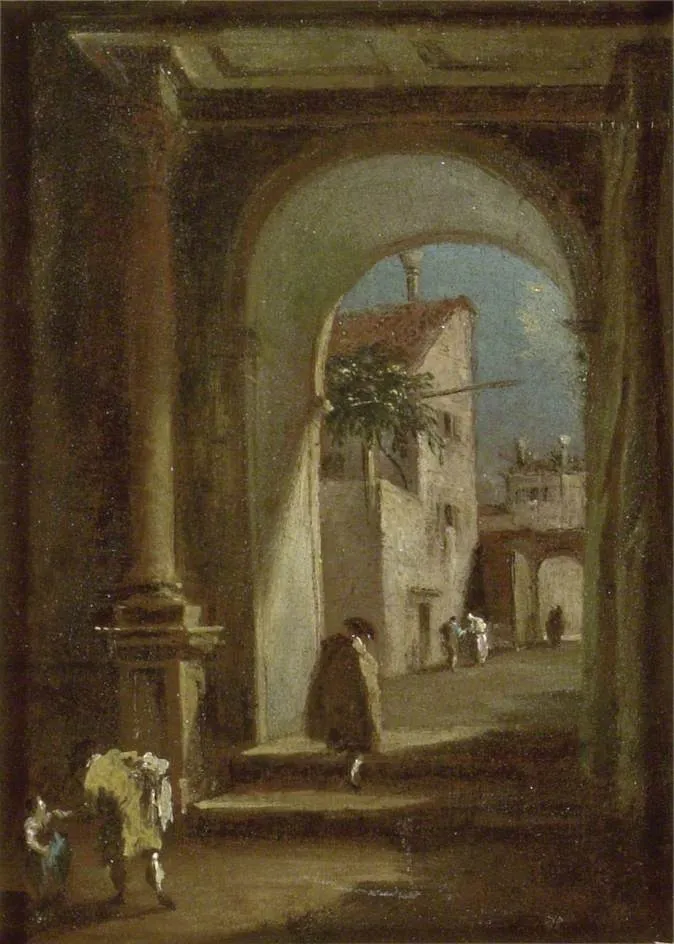
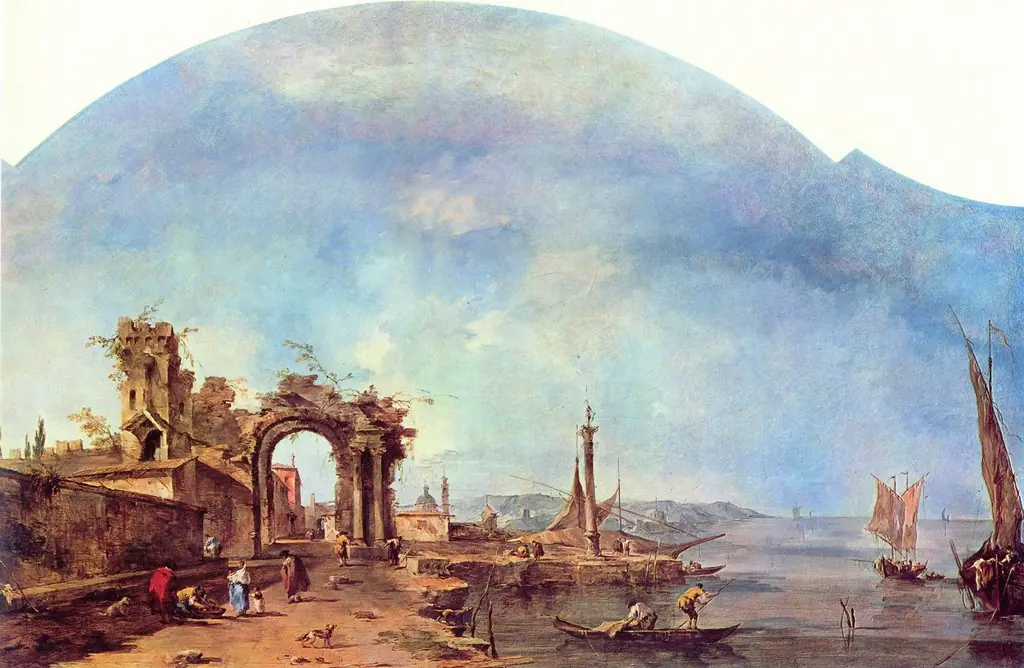
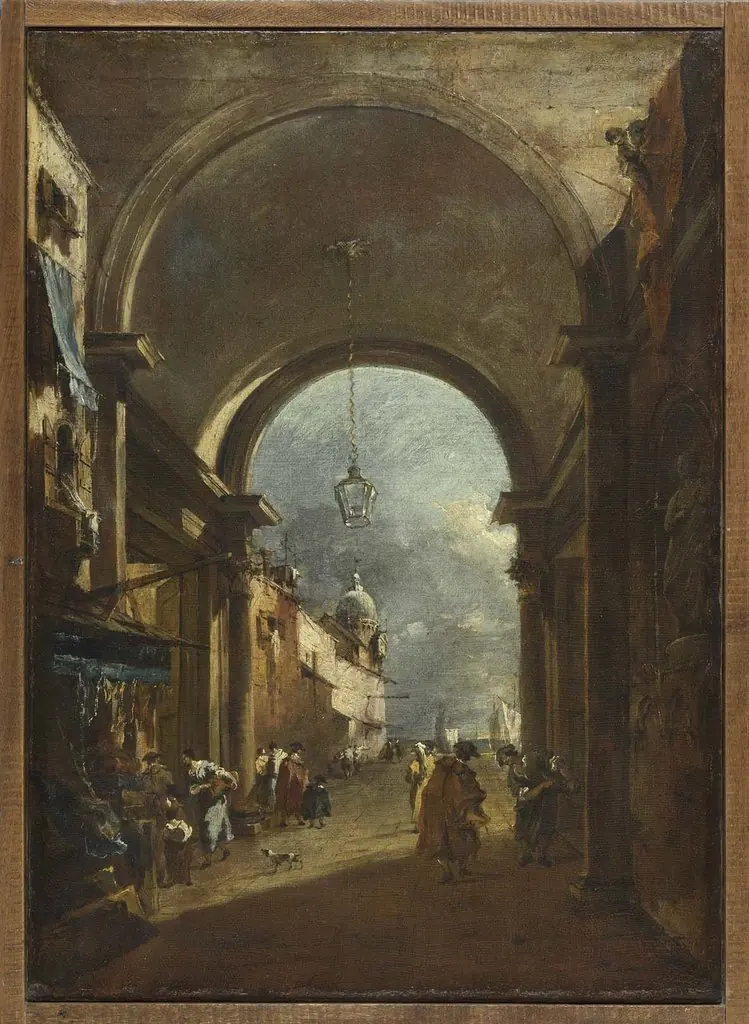
Capriccio: An Archway is an oil painting by Francesco Guardi. It dates from 1762 and is held in the collection of the Ashmolean Museum.
About this work
Overview
Painted around 1762, *Capriccio: An Archway* is an oil on canvas work by Francesco Guardi, a Venetian artist known for his atmospheric landscapes.
Painted around 1762, *Capriccio: An Archway* is an oil on canvas work by Francesco Guardi, a Venetian artist known for his atmospheric landscapes. Unlike precise topographical views, this piece blends real and imagined architecture into a poetic composition. Guardi, who turned from religious subjects to vedute after his brother’s death, used this period to develop a looser, more evocative style distinct from contemporaries like Canaletto.
Subject & Meaning
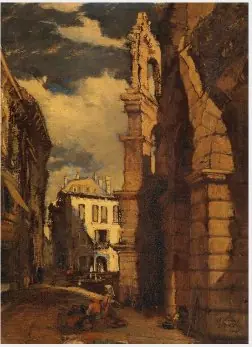
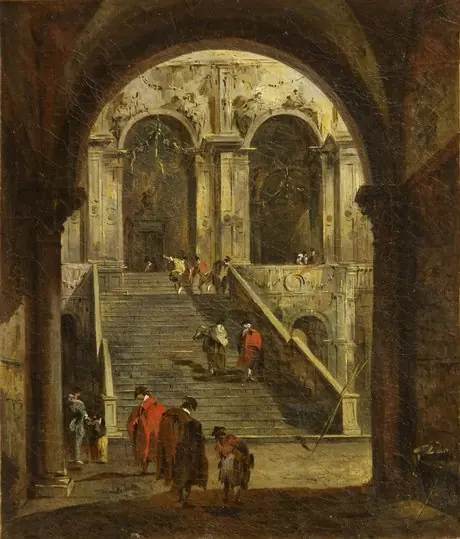
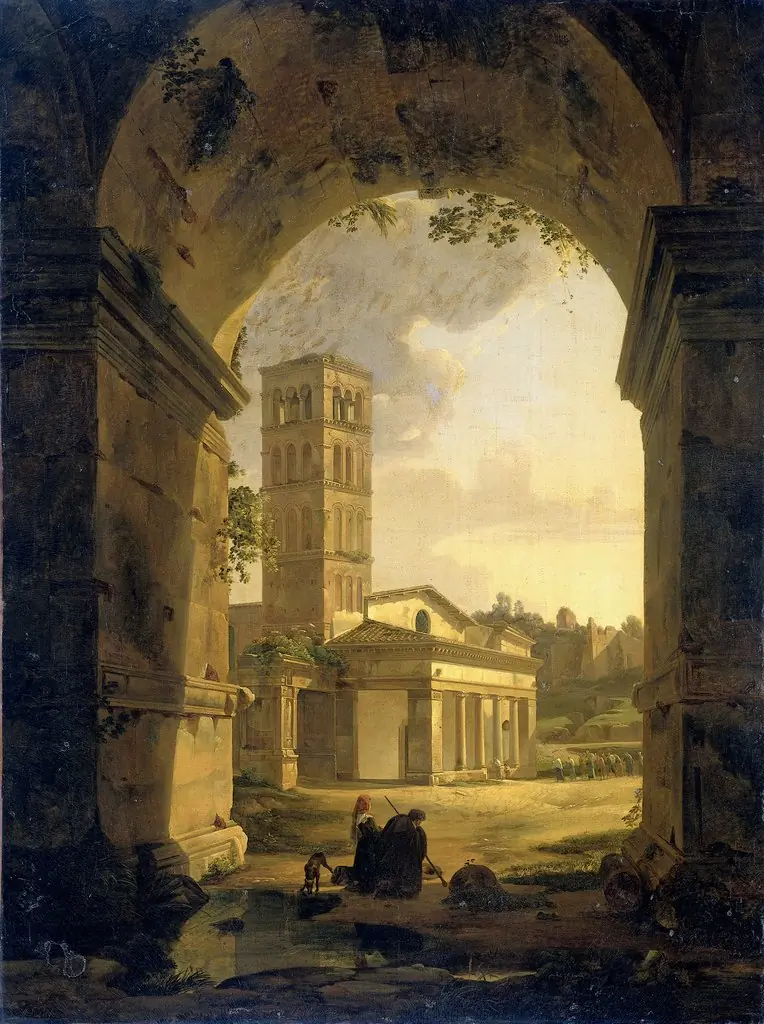
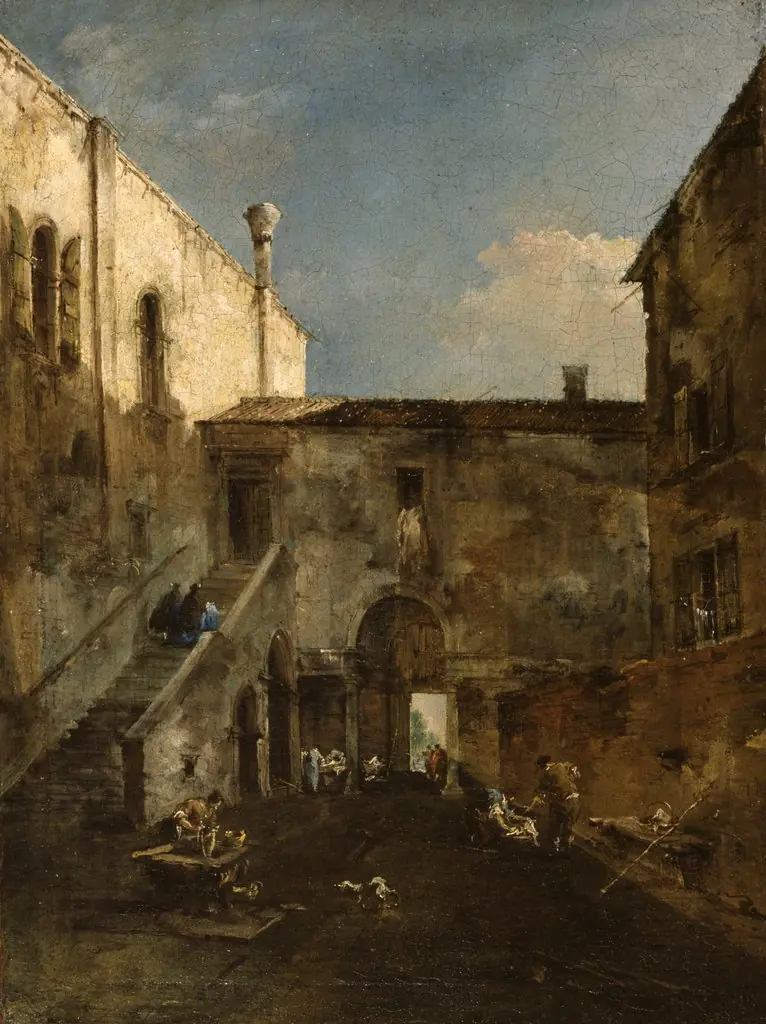
The painting presents a fictional architectural scene centered on a monumental stone archway framing a tall, red-roofed structure. Figures in period dress move subtly through the space, suggesting daily life without narrative focus. The composition invites contemplation rather than documentation, blending real Venetian motifs with invented elements to evoke mood over accuracy, characteristic of the capriccio tradition.
Technique & Style
Guardi employed a fluid, expressive brushwork that emphasizes light and texture over detail. Chiaroscuro enhances the three-dimensionality of the arch and building, with sharp contrasts between sunlit stone and shadowed recesses. The sky and distant structures are rendered with loose, almost impressionistic strokes, creating atmospheric depth. This technique prioritizes emotional resonance over architectural precision, marking a shift from the rigid clarity of earlier vedute.
History & Provenance
Created shortly after the death of Guardi’s brother and collaborator Gian Antonio in 1760, this work belongs to a phase where Francesco fully developed his individual voice. While specific early ownership records are sparse, the painting aligns with a broader trend among 18th-century collectors who favored evocative, poetic views of Venice over literal depictions. It reflects Guardi’s growing reputation in artistic circles of the time.
Context
In mid-18th century Venice, tourism and the Grand Tour fueled demand for views of the city. While Canaletto offered precise, orderly scenes, Guardi responded with more subjective interpretations. His capriccios merged real landmarks with imaginative arrangements, catering to viewers seeking romanticized, emotionally charged impressions of Venice rather than topographical records.
Legacy
Guardi’s approach influenced later generations of landscape painters who valued mood and brushwork over topographical fidelity. His capriccios helped redefine the genre, shifting focus from documentation to interpretation. Though less celebrated in his lifetime than Canaletto, his expressive style gained renewed appreciation in the 19th and 20th centuries for its lyrical quality and anticipatory brush techniques.
Artist & collection
Artist
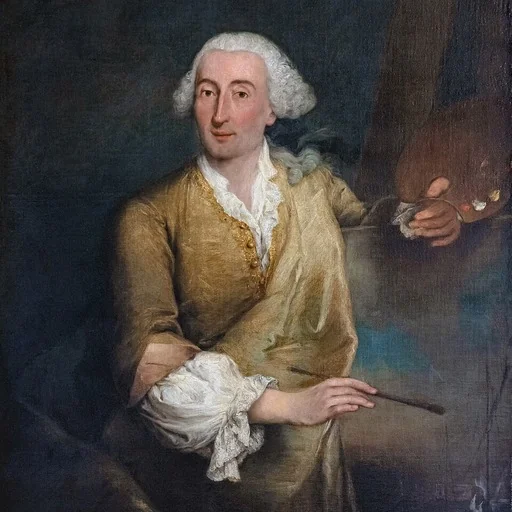
Francesco Lazzaro Guardi (Italian pronunciation: ; 5 October 1712 – 1 January 1793) was an Italian painter, nobleman, and a member of the Venetian School.