Artwork
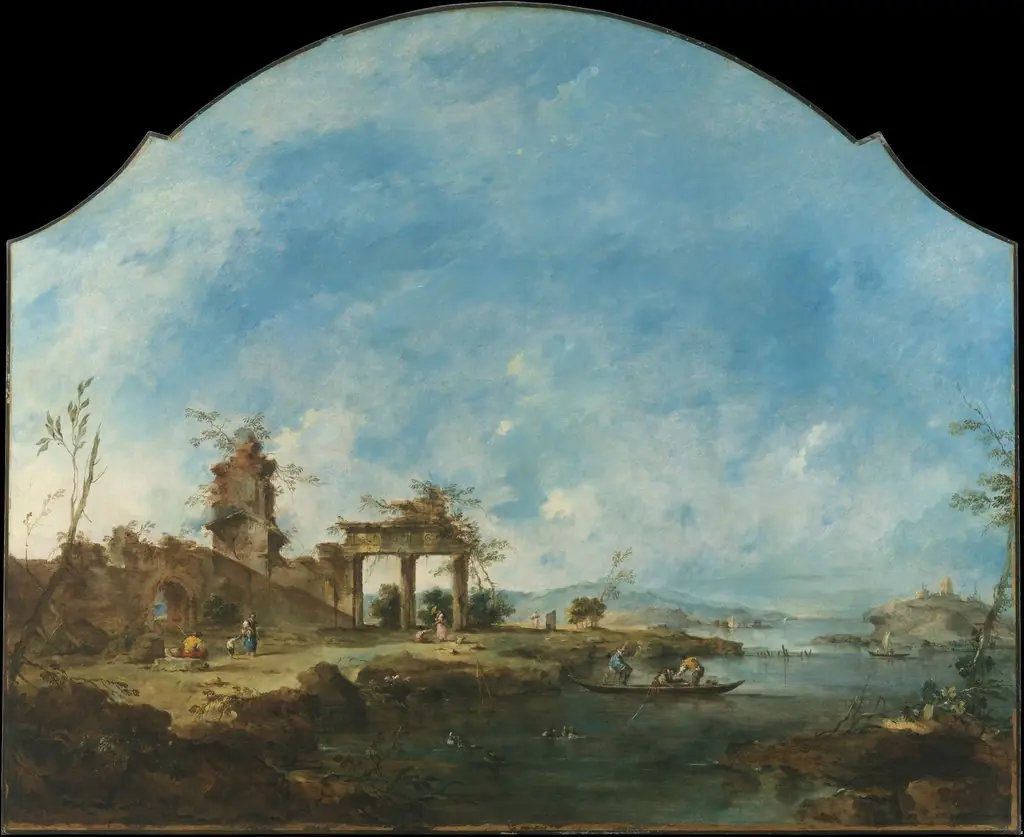
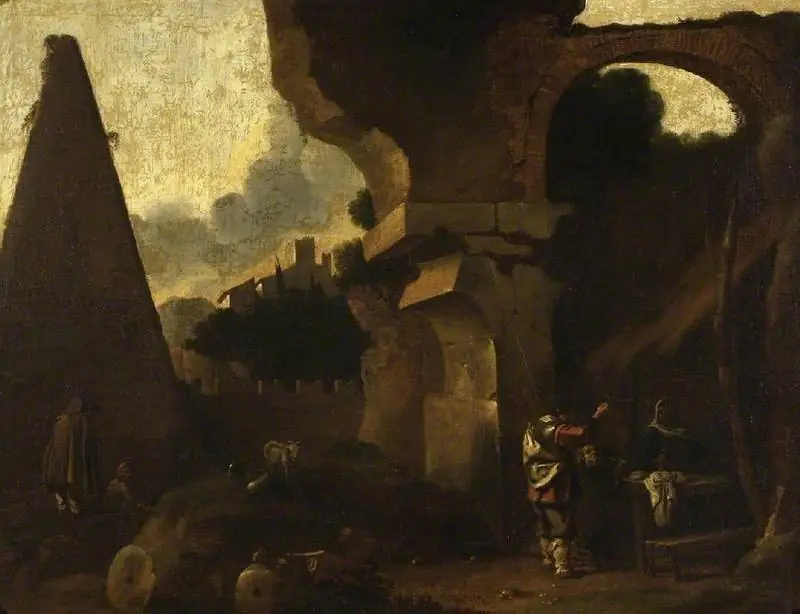
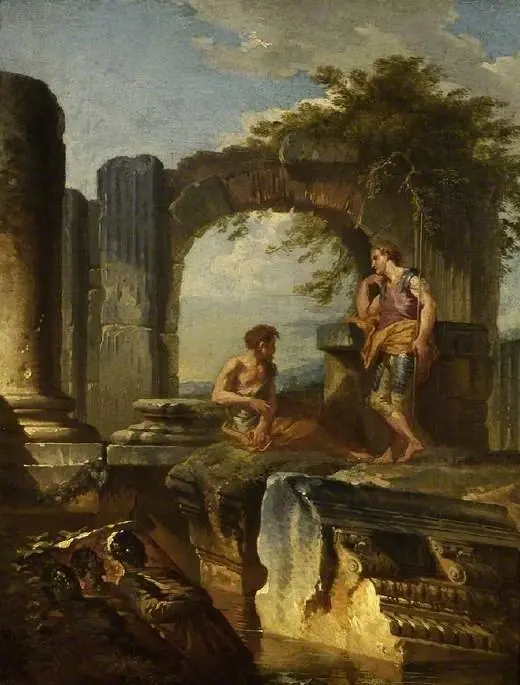
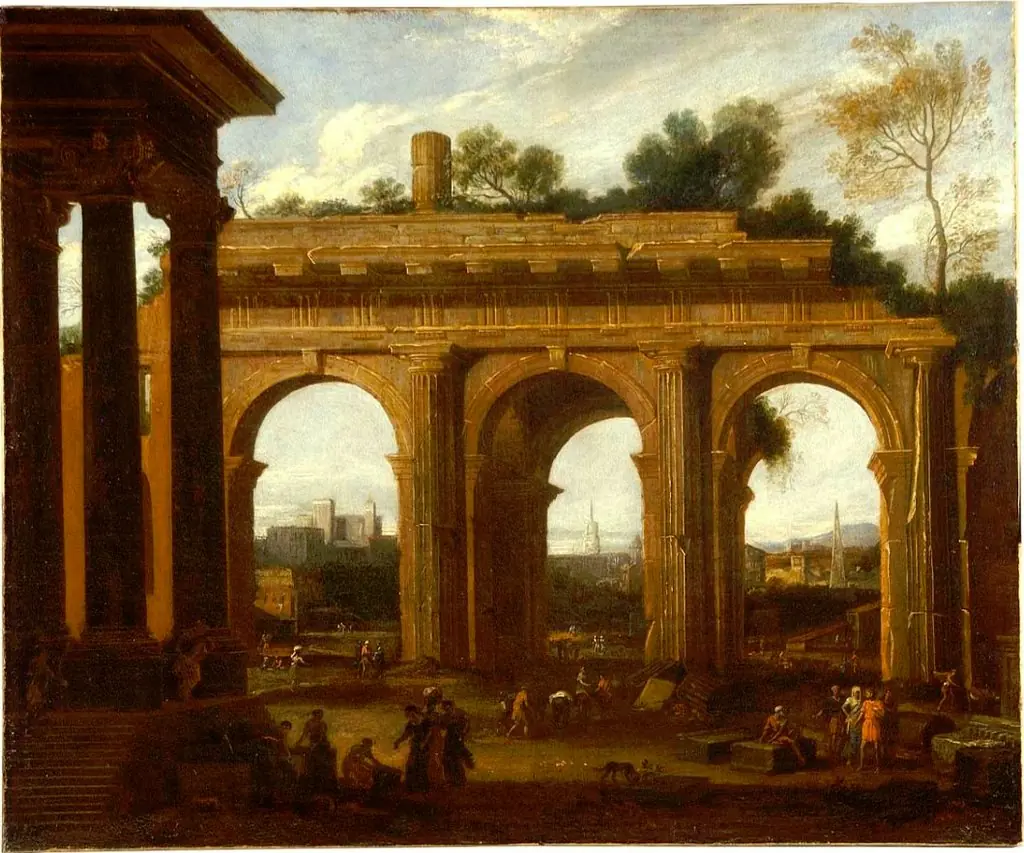
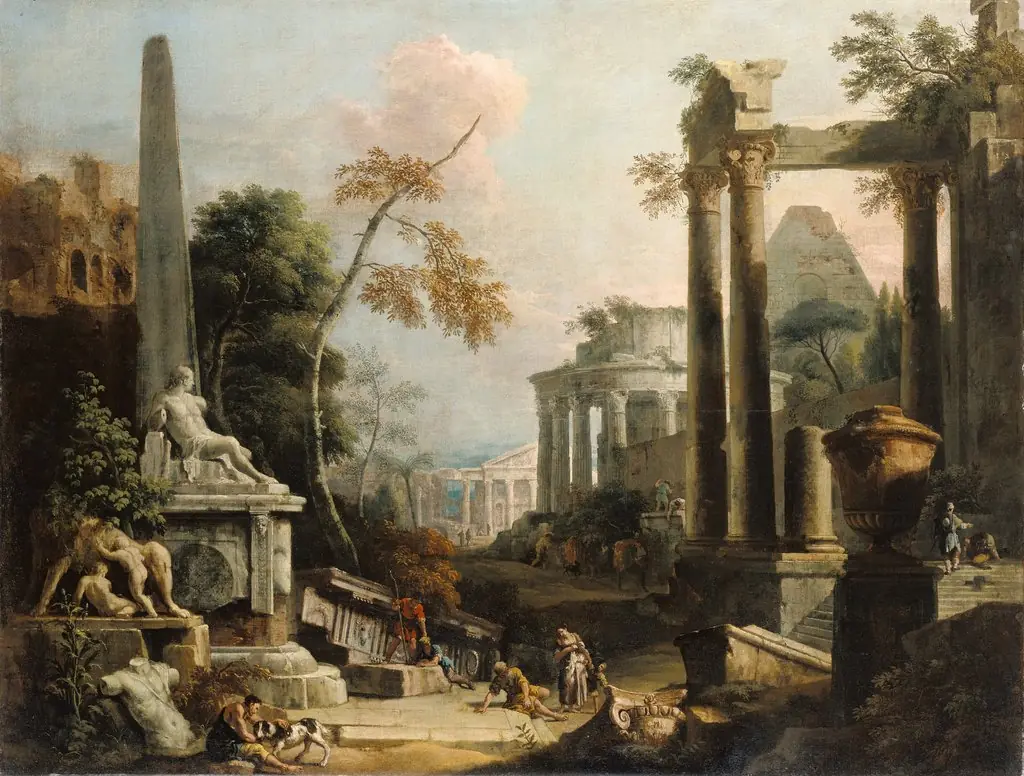
Capriccio with Ruins and Figures
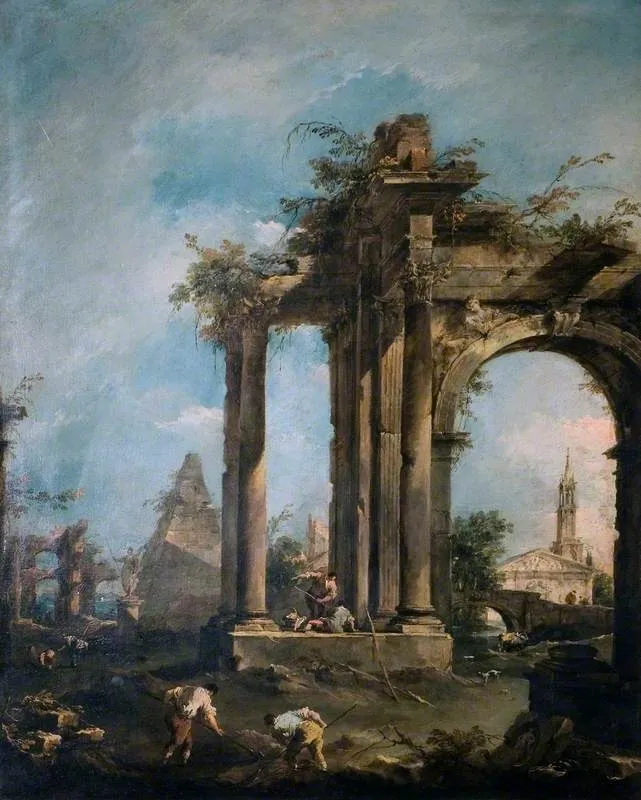
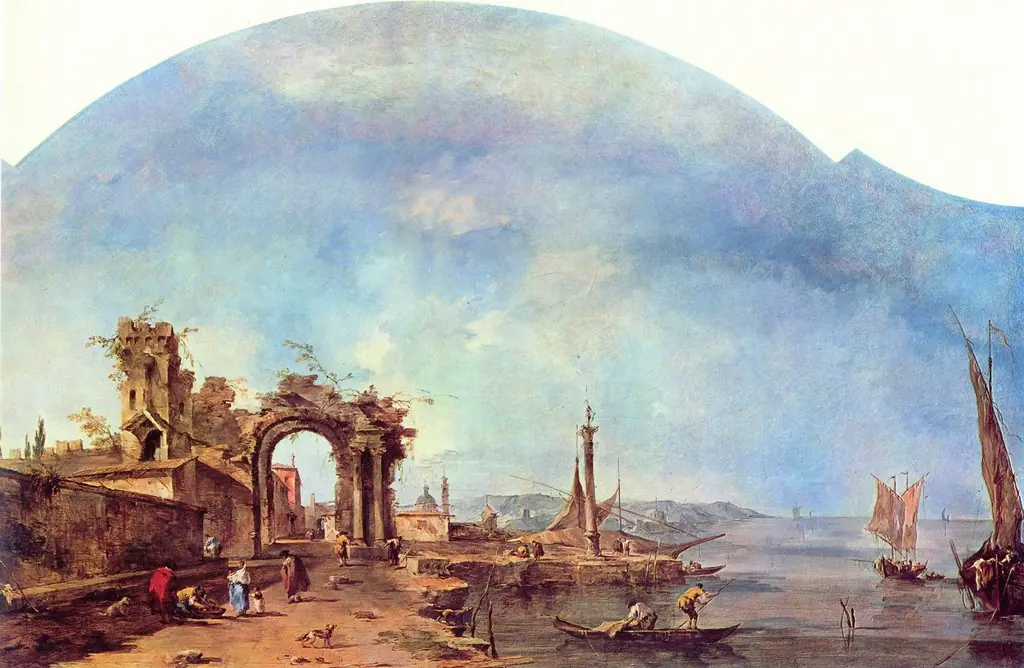
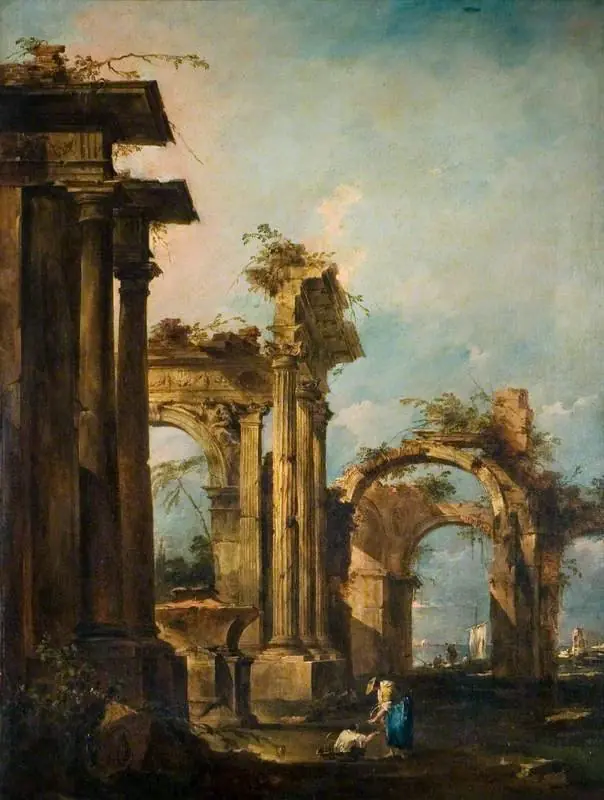
Capriccio with Ruins and Figures is an oil painting by the Rococo painting artist Francesco Guardi. It dates from 1765 and is held in the collection of the Victoria and Albert Museum.
About this work
Overview
It resides in the Victoria and Albert Museum’s collection, representing a shift in Venetian painting toward atmospheric expression over rigid topography.
Painted in 1765 by Francesco Guardi, this oil on canvas work is a capriccio—an imaginative fusion of architectural elements and human activity. Guardi, a Venetian artist of noble lineage, moved from religious commissions toward vedute and fantastical landscapes after 1760. The piece exemplifies his mature style, blending observed detail with poetic invention. It resides in the Victoria and Albert Museum’s collection, representing a shift in Venetian painting toward atmospheric expression over rigid topography.
Subject & Meaning
The scene presents a dreamlike ruin landscape populated by modestly dressed figures engaged in quiet, everyday tasks. Ancient stone columns and arches, overgrown with vegetation, suggest the passage of time and the quiet reclamation of nature. The figures—laborers, travelers, observers—lack theatricality, grounding the fantasy in ordinary life. The composition evokes contemplation rather than narrative, inviting reflection on decay, memory, and the persistence of human presence amid ruins.
Technique & Style
Guardi employs loose, fluid brushwork to suggest form rather than define it, a hallmark of his later period. The sky, rendered in soft washes of blue and white, dissolves into the hazy distance, while the ruins are suggested with quick, textured strokes. Color is muted, favoring earth tones and pale stone against the luminous sky. This approach abandons the precision of earlier vedute for a more impressionistic sensitivity to light and atmosphere, aligning with Rococo’s emotional subtlety.
History & Provenance
Created in 1765, the painting emerged during Guardi’s transition from collaborative religious works to independent landscape compositions. It was likely produced for private collectors drawn to Venice’s romanticized past. The work entered the Victoria and Albert Museum’s collection in the 19th century, possibly through a British patron’s acquisition during the Grand Tour era. Its preservation reflects growing 19th-century interest in Venetian vedute as cultural artifacts rather than mere topographical records.
Context
In mid-18th-century Venice, the decline of the Republic coincided with a surge in capricci—architectural fantasies that blended real and imagined ruins. These works catered to foreign travelers seeking evocative souvenirs of a fading city. Guardi’s paintings diverged from the precise views of Canaletto, offering instead lyrical, emotionally resonant scenes. This piece reflects a broader cultural turn toward melancholy and introspection, as Venice’s political power waned and its artistic identity became more nostalgic.
Legacy
Guardi’s capricci influenced later Romantic painters who valued mood over accuracy. His expressive brushwork prefigured 19th-century landscape traditions, particularly in how atmosphere and light could convey emotion. Though less celebrated in his time than Canaletto, Guardi’s approach to ruins and human scale offered a quieter, more personal vision of history. Today, this painting stands as a quiet testament to the poetic potential of architectural decay in art.
Artist & collection
Artist
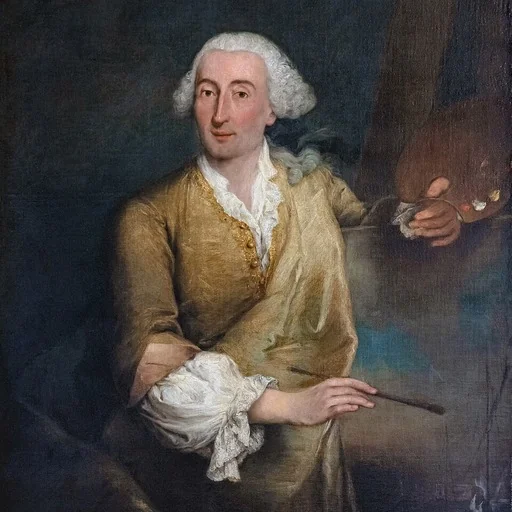
Francesco Lazzaro Guardi (Italian pronunciation: ; 5 October 1712 – 1 January 1793) was an Italian painter, nobleman, and a member of the Venetian School.