Artwork
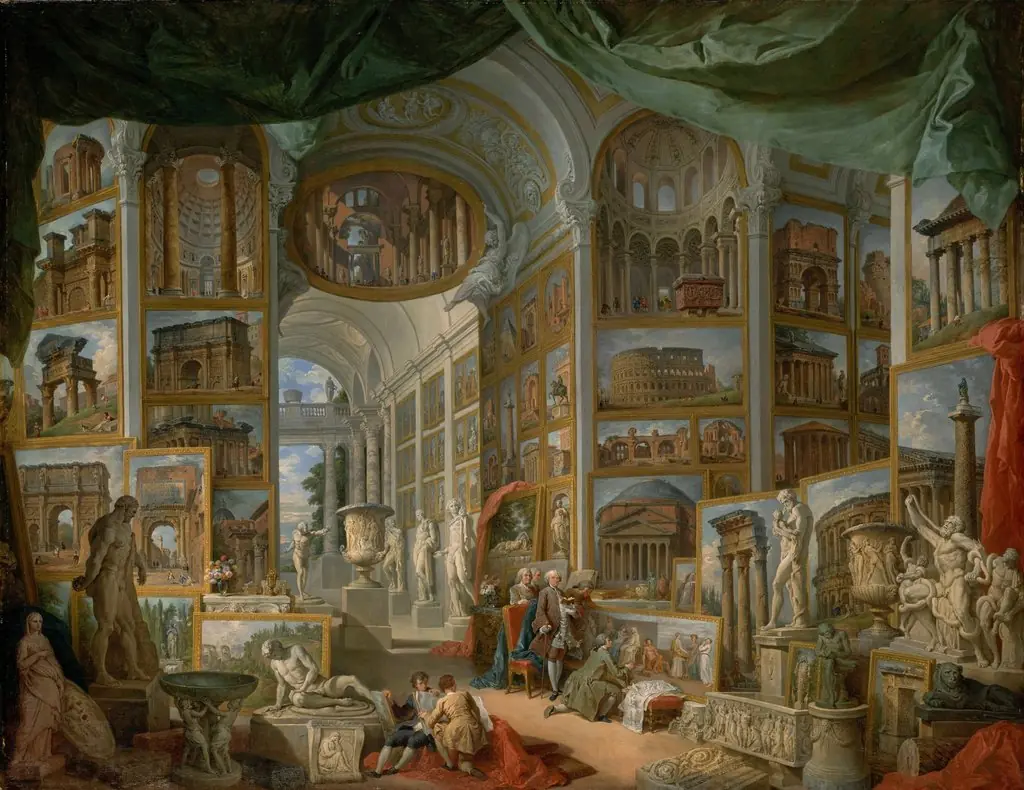
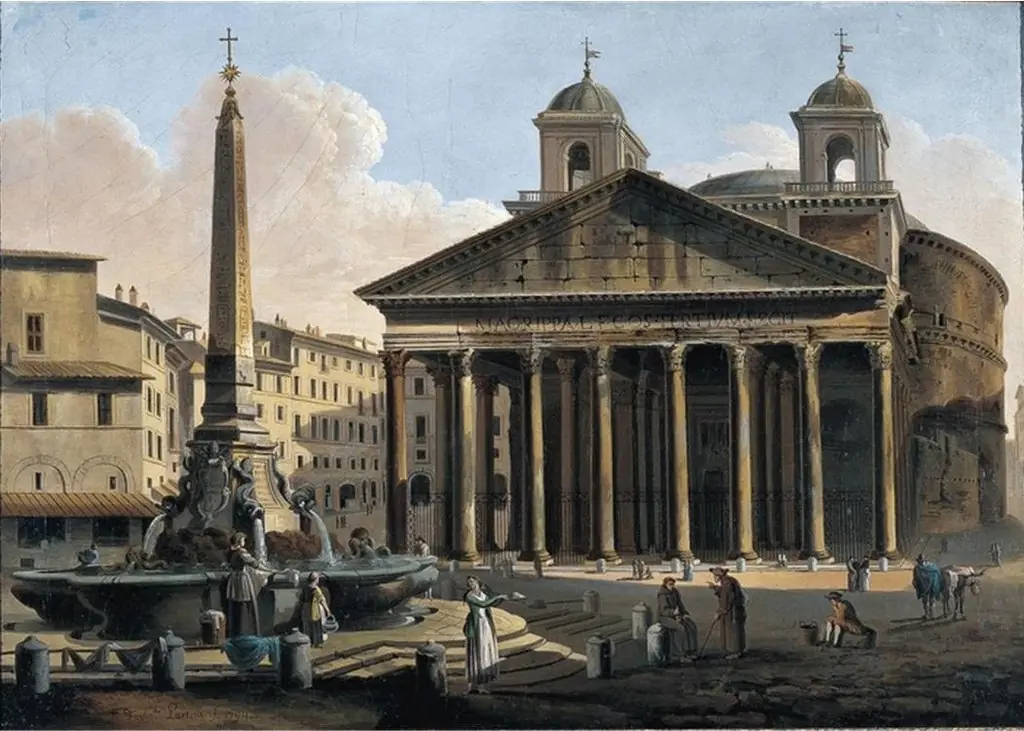
Capriccio of Roman Ruins with the Pantheon
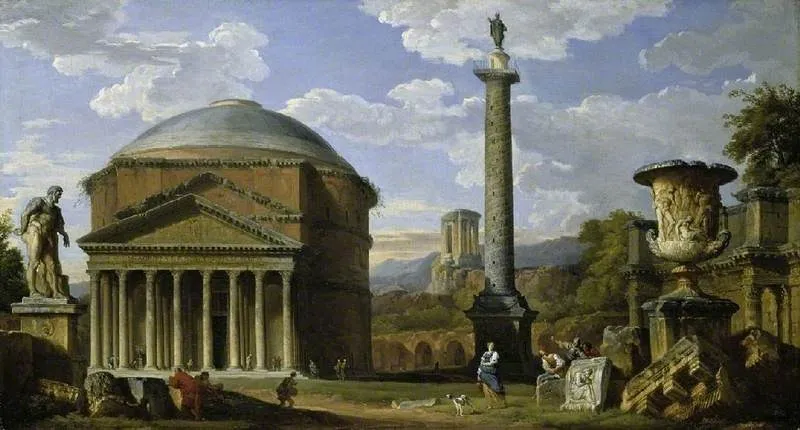
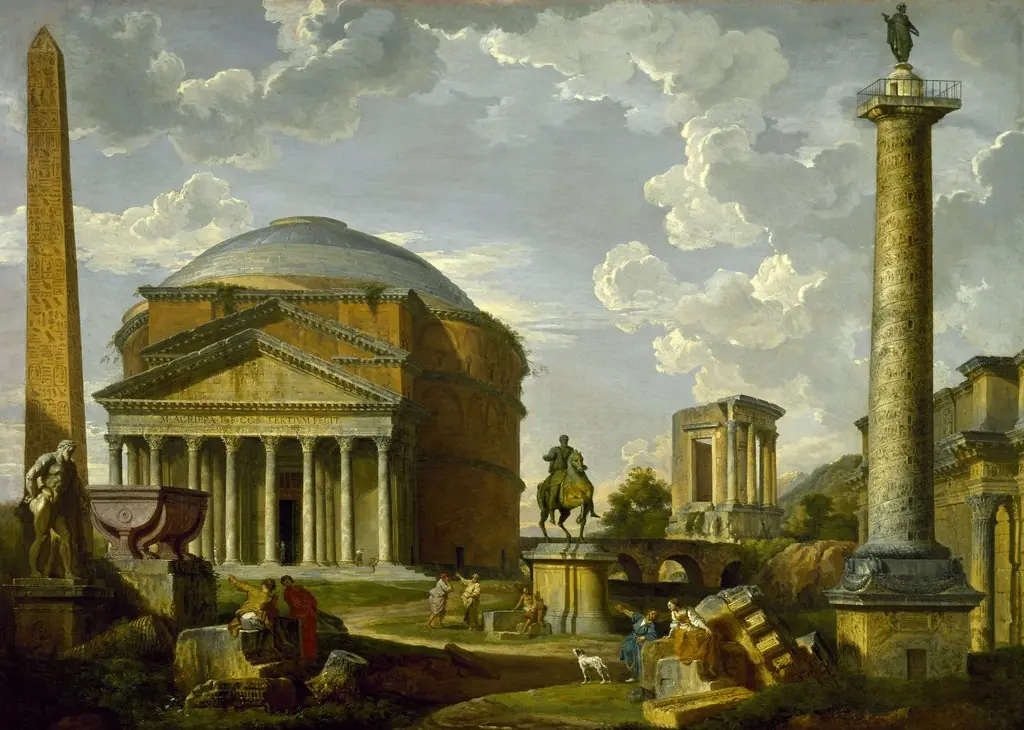
Capriccio of Roman Ruins with the Pantheon is an oil painting by Giovanni Paolo Panini. It dates from 1737 and is held in the collection of the Fitzwilliam Museum.
About this work
Overview
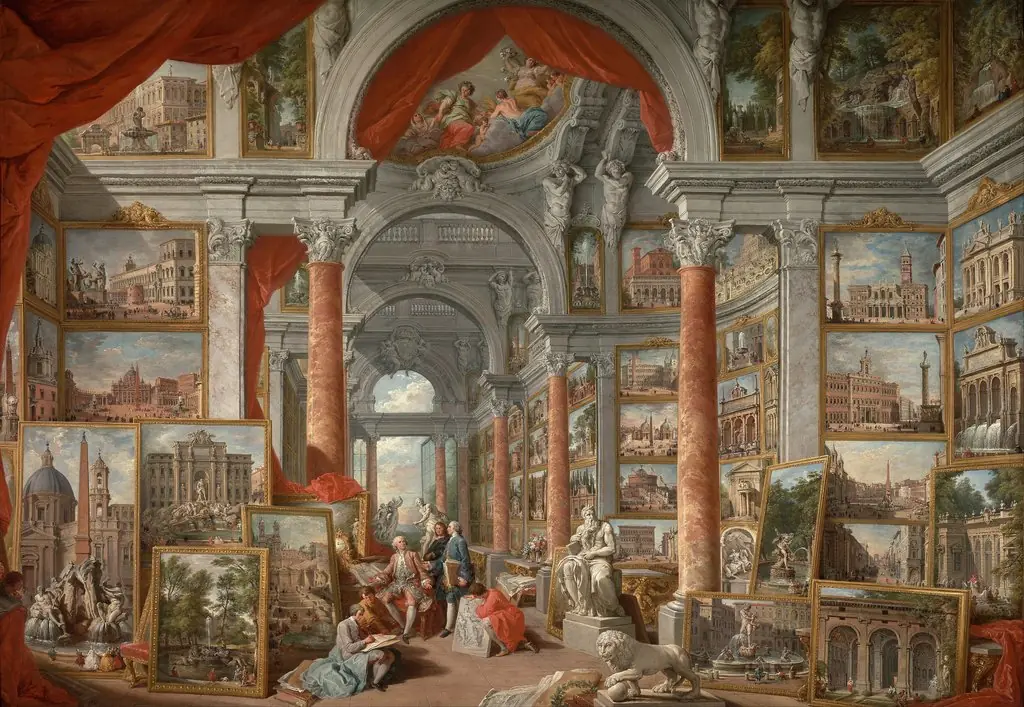
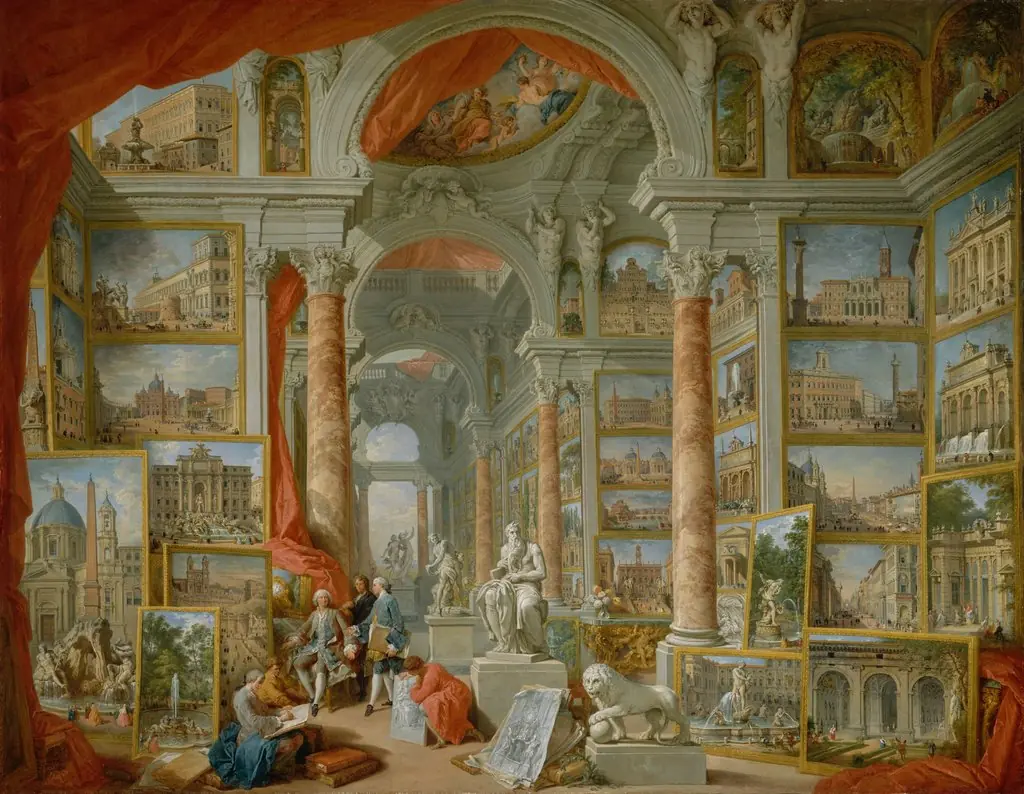
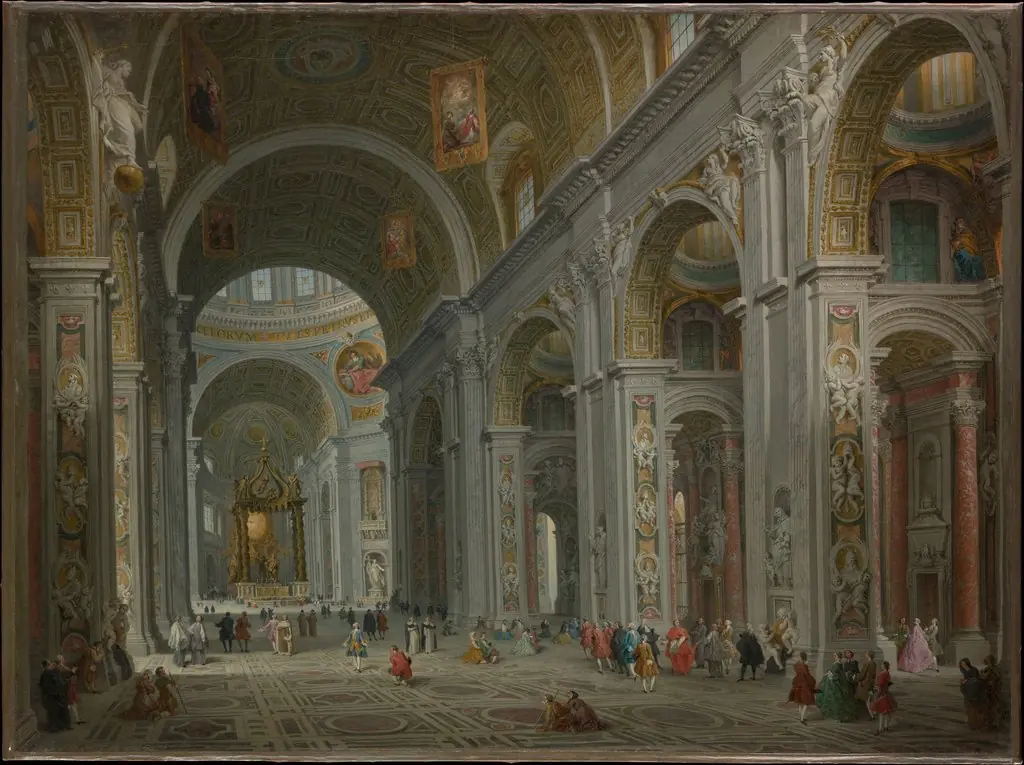
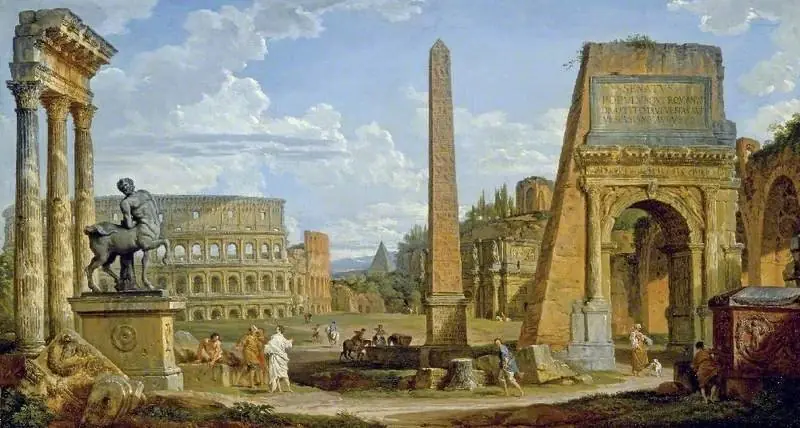
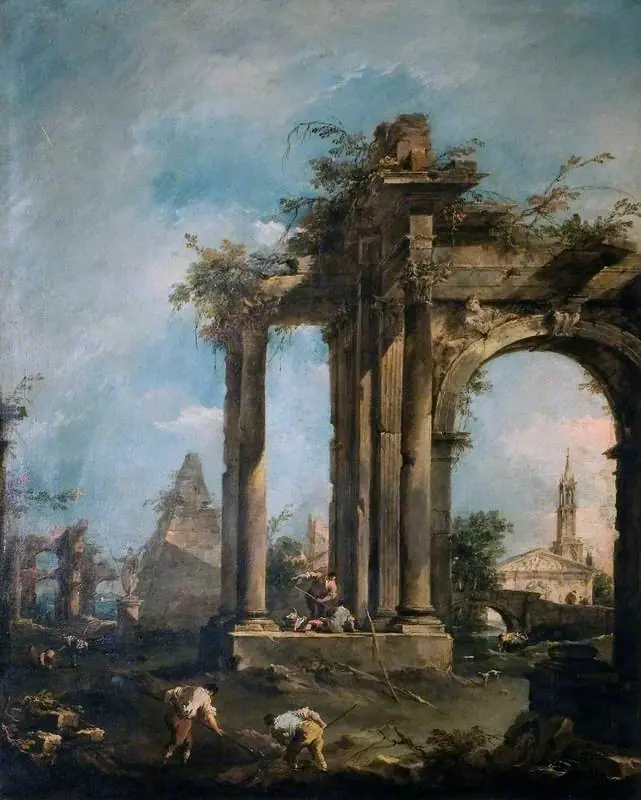
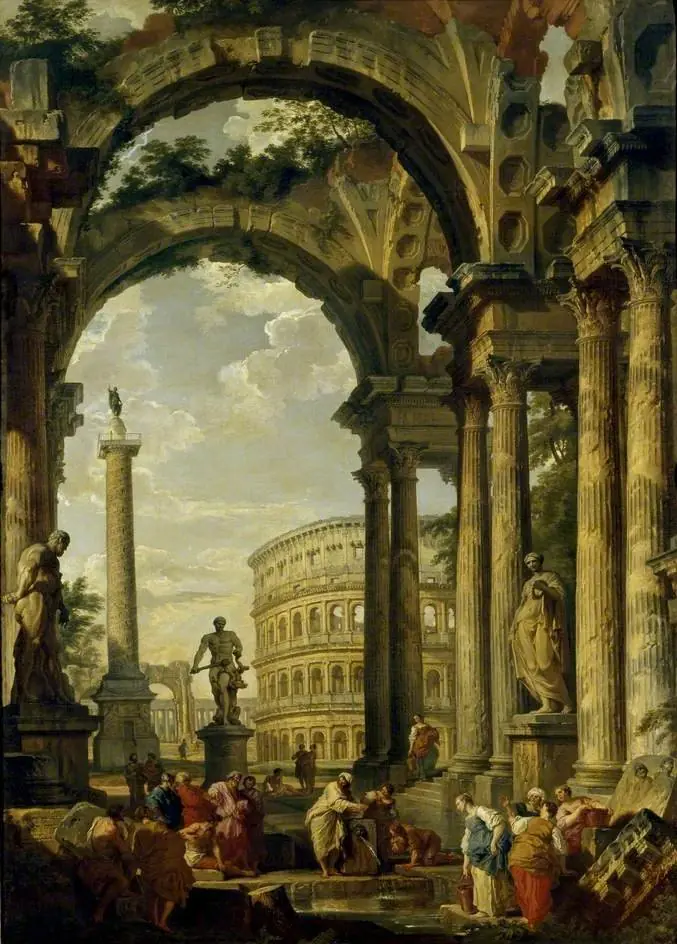
Giovanni Paolo Panini's 1737 oil painting, Capriccio of Roman Ruins with the Pantheon, is a landscape that combines real and imagined elements of ancient Rome.
Subject & Meaning
The painting depicts a classical scene with the Pantheon in the background, surrounded by scattered ruins and figures. The juxtaposition of actual and fanciful architectural elements reflects Panini's interest in Rome's classical heritage.
Technique & Style
Panini's use of chiaroscuro creates depth in the scene, while a warm, earthy color palette dominates the composition. The artist's detailed rendering of architectural elements is characteristic of the vedutisti, or view painters, a group with which Panini was associated.
History & Provenance
The painting is now held in the collection of the Fitzwilliam Museum, having been created by Panini, an Italian Baroque painter and architect active in Rome.
Artist & collection
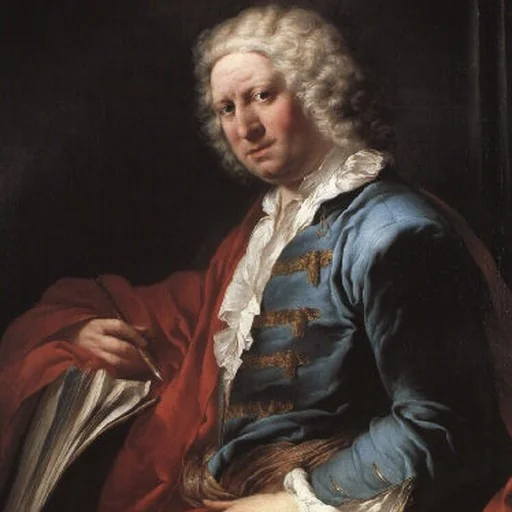
Artist
Giovanni Paolo, also known as Gian Paolo Panini or Pannini (17 June 1691 – 21 October 1765), was an Italian Baroque painter and architect who worked in Rome and is primarily known as one of the vedutisti ("view painters").