Artwork
Pope Pius VI Descending the Throne to Take Leave of the Doge in the Hall of SS. Giovanni e Paolo, 1782
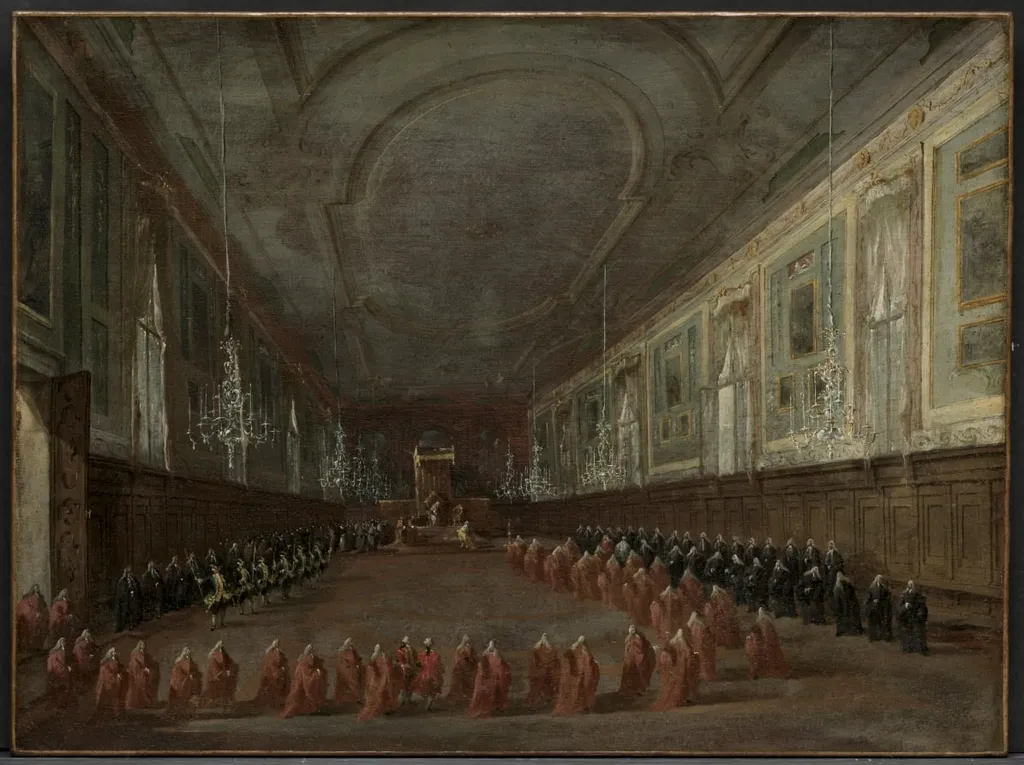
Pope Pius VI Descending the Throne to Take Leave of the Doge in the Hall of SS. Giovanni e Paolo, 1782 is an unspecified painting by the Rococo painting artist Francesco Guardi. It dates from 1783 and is held in the collection of the Cleveland Museum of Art. Painted in 1782, this work captures a ceremonial moment during Pope Pius VI’s visit to Venice.
About this work
Overview
Painted in 1782, this work captures a ceremonial moment during Pope Pius VI’s visit to Venice. It portrays the pontiff stepping down from his throne in the Basilica of Santi Giovanni e Paolo, preparing to bid farewell to the Doge. The scene is one of several documenting the papal visit, rendered with attention to protocol and spatial grandeur.
Subject & Meaning
The painting records the formal ritual of the Doge receiving the pope’s blessing before his departure. The Doge, clad in gold and white, leads a procession of senators in red robes, symbolizing Venetian civic authority. The pope’s descent from the throne signifies the transition from sacred authority to respectful departure, emphasizing the diplomatic nature of the encounter.
Technique & Style
The composition employs clear spatial organization and precise architectural detail to convey the scale of the basilica’s interior. Figures are arranged in orderly ranks, reflecting ceremonial hierarchy. While not using sfumato, the artist relies on controlled lighting and muted tones to enhance the solemnity of the occasion, avoiding theatrical exaggeration.
History & Provenance
Commissioned to document Pope Pius VI’s 1775–1776 visit to Venice, the painting belongs to a series commissioned by the Venetian Senate. It was created shortly after the event, likely by a local artist familiar with courtly rituals. The work remained in Venice, preserved as a record of papal-state relations during the late 18th century.
Context
The visit occurred amid shifting political dynamics in Europe, as the Papal States sought to maintain influence amid rising secular powers. Venice, though diminished, still upheld its ceremonial traditions. This scene reflects the enduring importance of ritual in diplomatic relations, where symbolic gestures carried weight beyond political outcomes.
Legacy
The painting serves as a historical document of ecclesiastical and civic protocol in late Enlightenment Venice. Though not widely exhibited today, it remains a valuable record of how religious and state authorities visually negotiated power through ritual. Its value lies in its fidelity to detail rather than artistic innovation.
Artist & collection
Artist
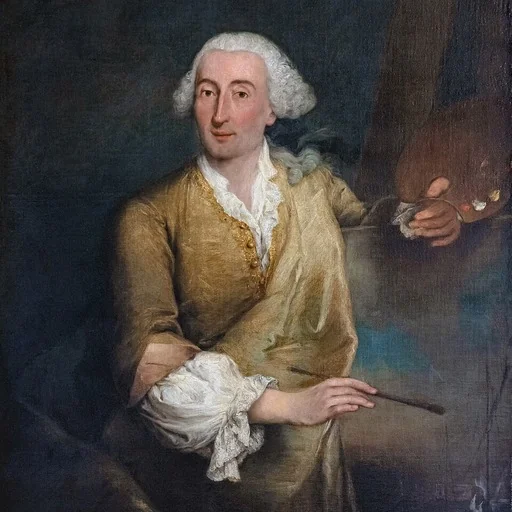
Francesco Lazzaro Guardi (Italian pronunciation: ; 5 October 1712 – 1 January 1793) was an Italian painter, nobleman, and a member of the Venetian School.

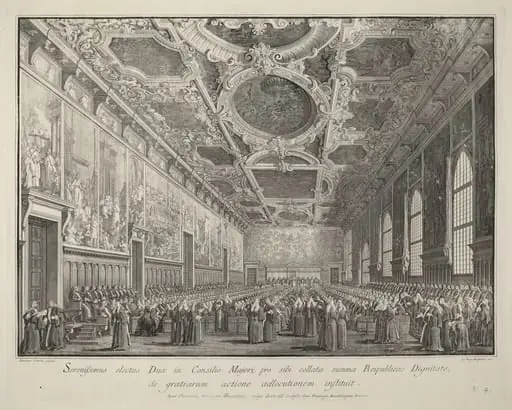 The Doge Returns Thanks in the Sala del Consiglio Maggior
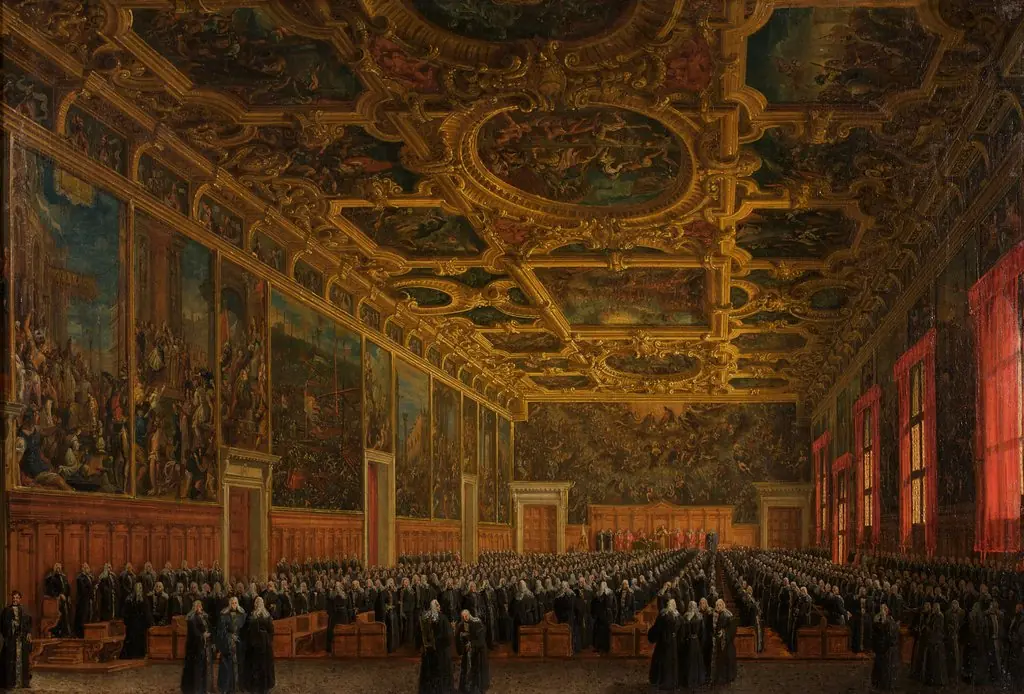 Doge Morosini Receives the Command Staff
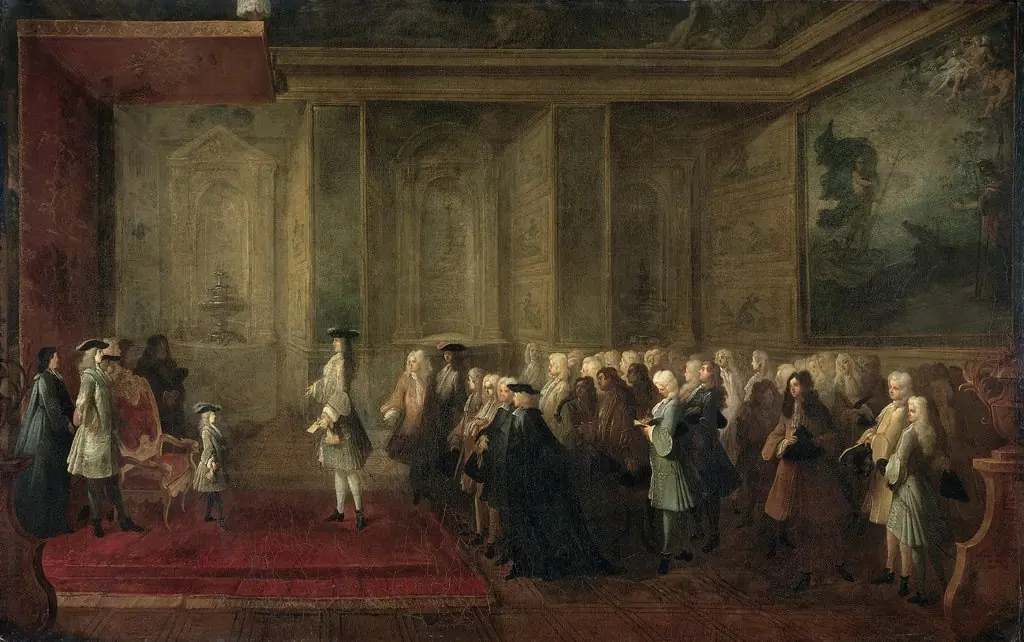 Reception of the Dutch ambassador Cornelis Hop by the French king Louis XV, 24 July 1724
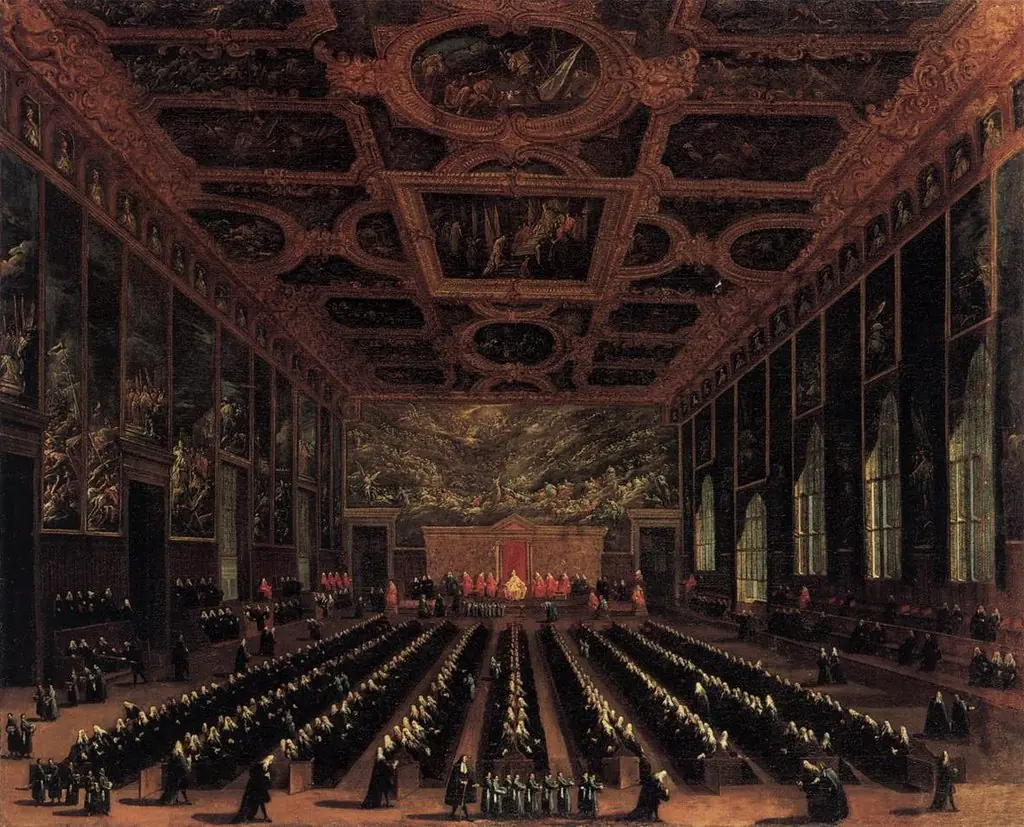 Die Sala del Maggior Consiglio im Dogenpalast
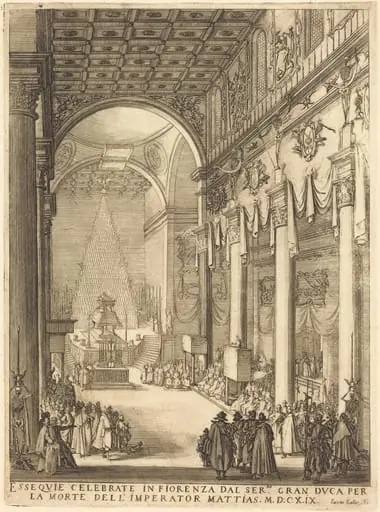 The Catafalque of the Emperor Mathias
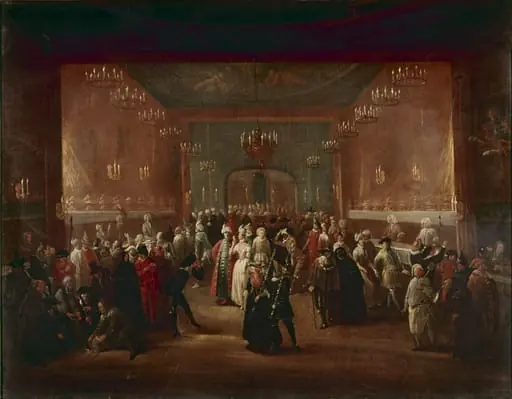 A Masquerade at the King's Theatre, Haymarket
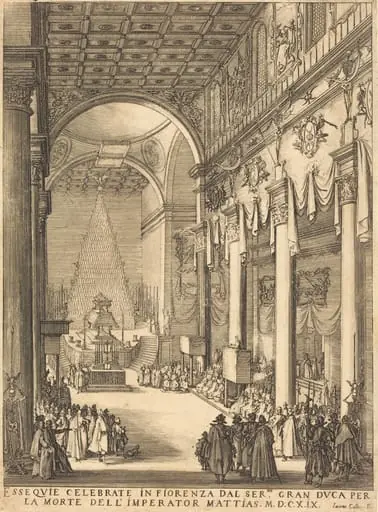 The Catafalque of the Emperor Mathias
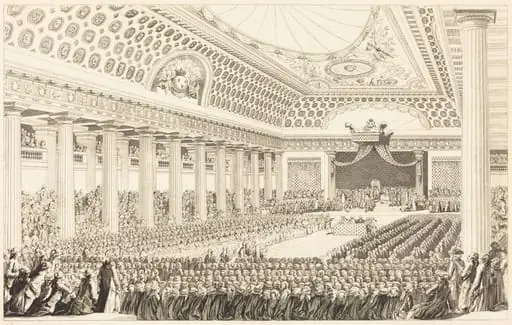 Ouverture des Etats-Généraux à Versailles, le 5 mars 1789