Artwork
The Doge Returns Thanks in the Sala del Consiglio Maggior
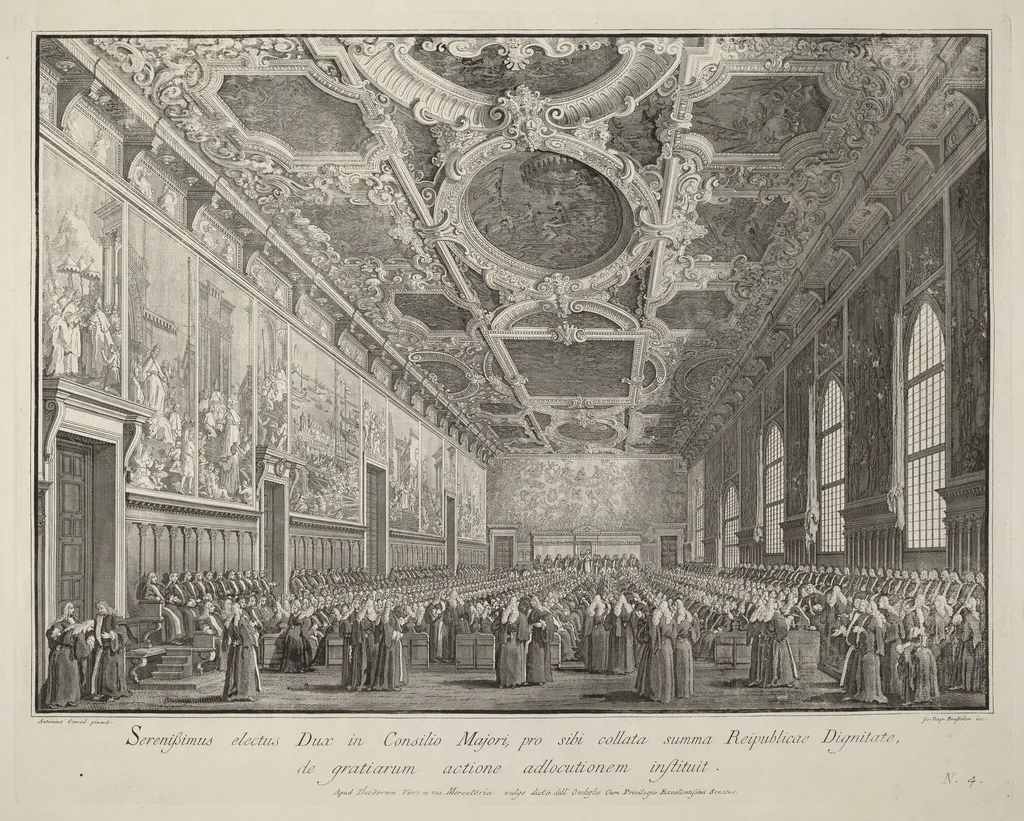
The Doge Returns Thanks in the Sala del Consiglio Maggior is an ink print by the Romanticist artist Giovanni Battista Brustolon. It dates from 1764 and is held in the collection of the National Gallery of Art.
About this work
Overview
Created in 1764 by Giovanni Battista Brustolon, this print captures a ceremonial moment in Venice’s Doge’s Palace. Executed in etching and engraving on laid paper, it documents a formal act of gratitude by the Doge before the Great Council. The scene is rendered with precise line work, emphasizing architectural grandeur and the ritualized behavior of Venetian elites.
Subject & Meaning
The image depicts the Doge, elevated on a platform, receiving public acknowledgment from members of the Great Council. Figures in formal attire, some holding scrolls or insignia, surround him, reinforcing the political and ceremonial weight of the occasion. The composition underscores the institutional authority of Venice’s ruling class and the performative nature of governance in the Republic.
Technique & Style
Brustolon employed fine etching and engraving to render intricate details of the Sala del Consiglio Maggiore’s ornate ceiling, wall carvings, and arched windows. The use of cross-hatching and delicate linework conveys texture and depth, while the orderly arrangement of figures reflects the disciplined aesthetic of 18th-century Venetian draftsmanship, rooted in documentary rather than expressive intent.
History & Provenance
The print was made during a period when Venice maintained its ceremonial traditions despite political decline. Likely produced for diplomatic or archival purposes, it may have been distributed among foreign dignitaries or collected by patrons interested in Venetian state rituals. Its survival suggests it was valued as a record of institutional continuity.
Context
This work belongs to a tradition of Venetian civic portraiture and architectural documentation, distinct from the emotional intensity of Romanticism. It reflects the Republic’s enduring emphasis on protocol and visual representation of power, even as its political influence waned. Similar prints were used to affirm Venice’s identity as a stable, ancient republic.
Legacy
Brustolon’s print remains a key visual source for understanding the rituals of Venetian governance in the late 18th century. It contributes to scholarly studies of civic ceremony and print culture in pre-Napoleonic Italy. Though not widely exhibited today, it endures in institutional collections as a precise artifact of state formality.
Artist & collection


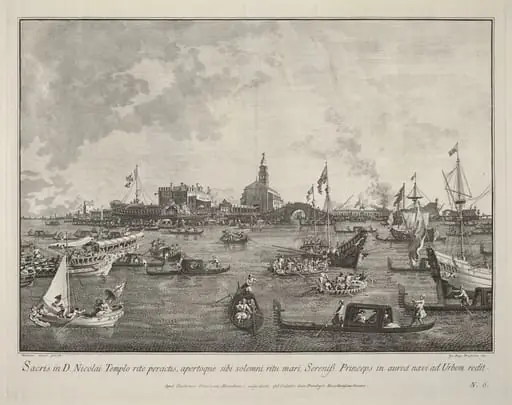 The Doge in the Bucintoro Leaving San Nicolò di Lido
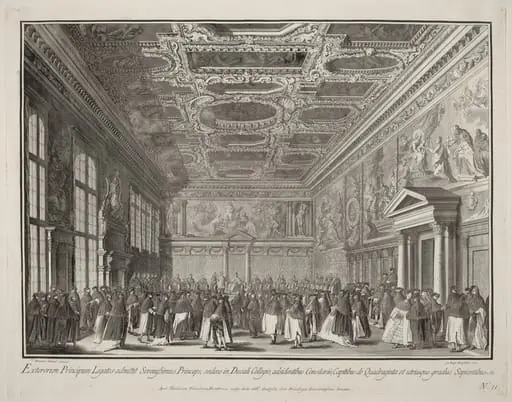 Reception by the Doge of Foreign Ambassadors in the Sala del Collegio
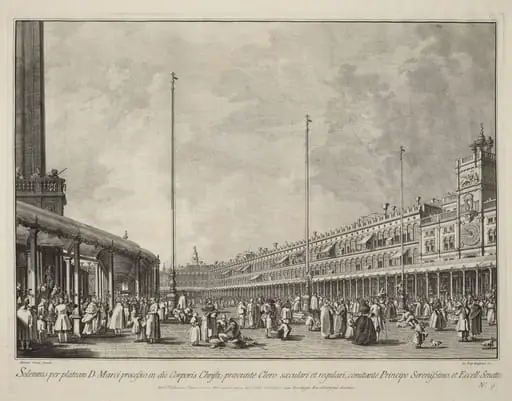 Procession on Corpus Christi Day in the Piazza San Marco
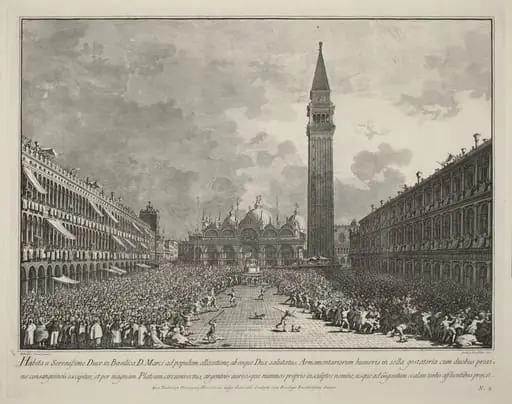 The Doge Carried around the Piazza San Marco
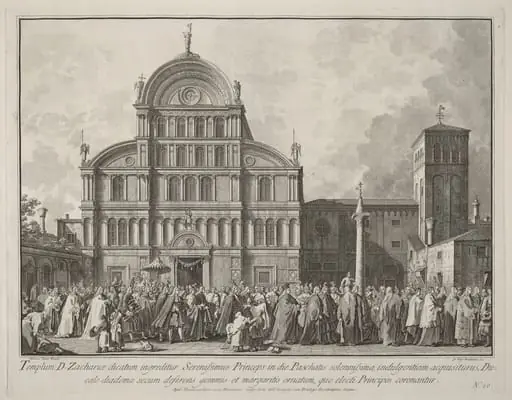 Visit of the Doge to San Zaccaria on Easter Day
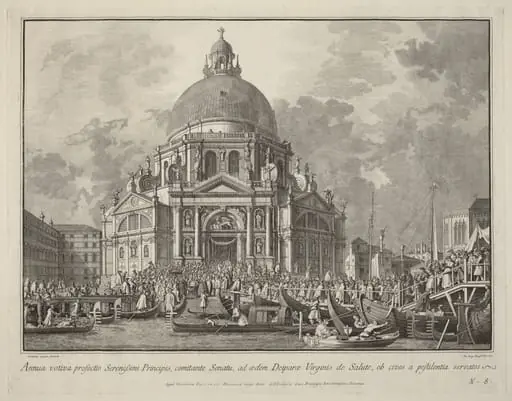 Annual Visit of the Doge to Santa Maria della Salute
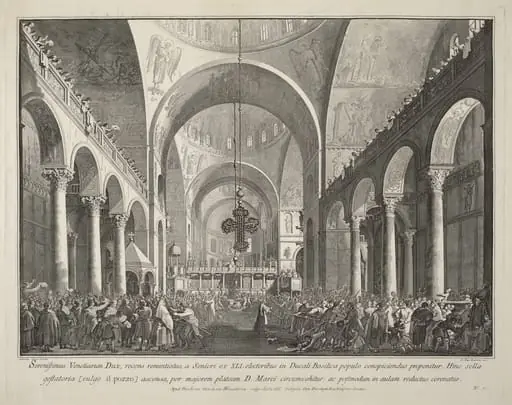 The Newly Elected Doge Presented to the People in San Marco
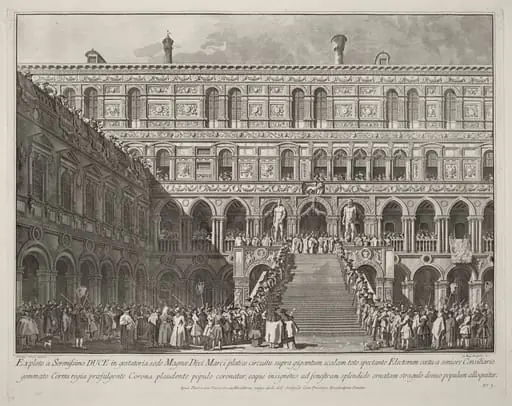 The Doge Crowned on the Scala dei Giganti of the Ducal Palace