Artwork
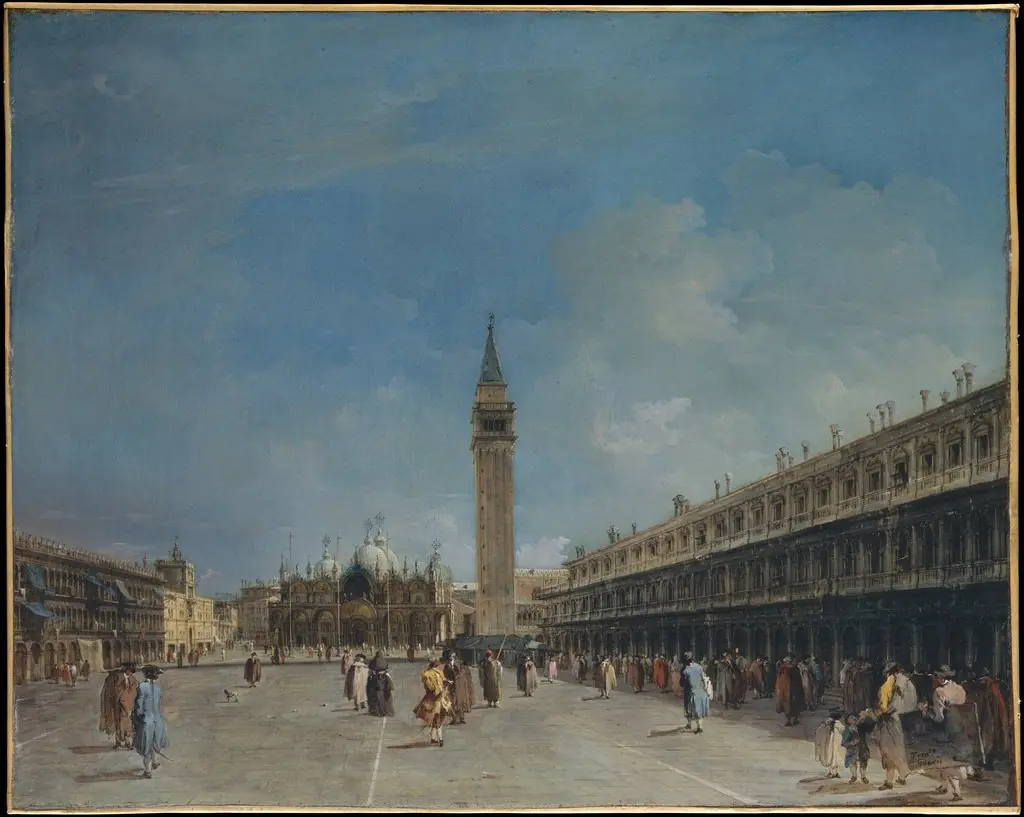
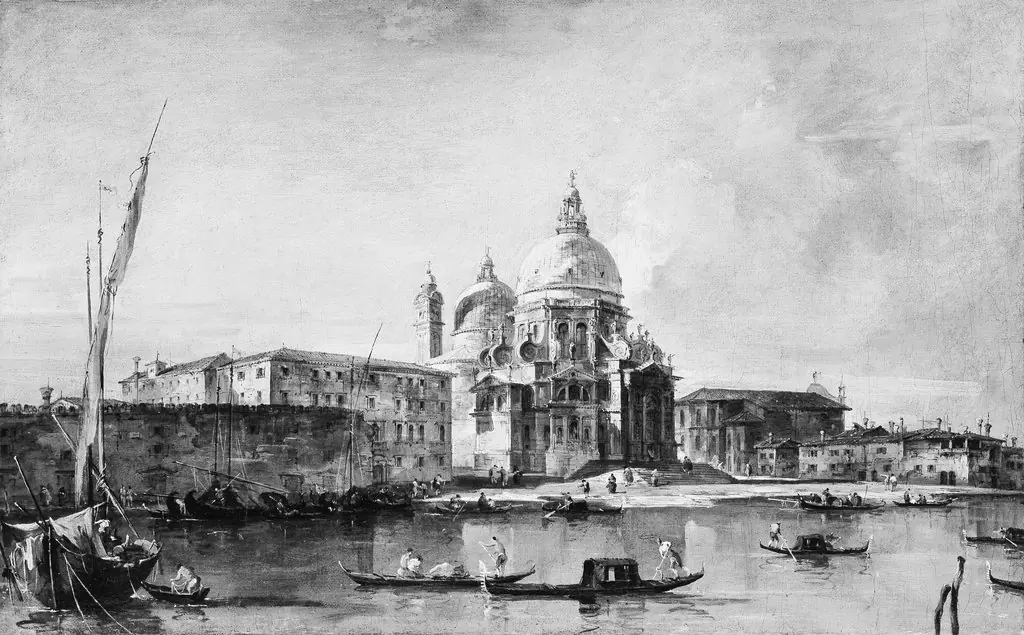
Piazzetta of S. Marco, Venice
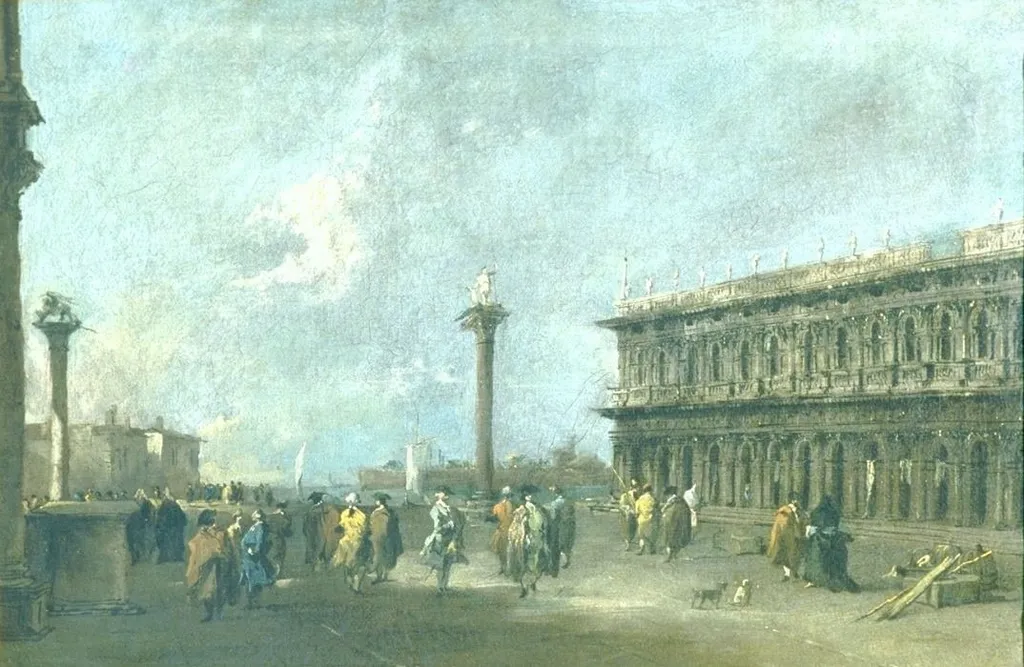
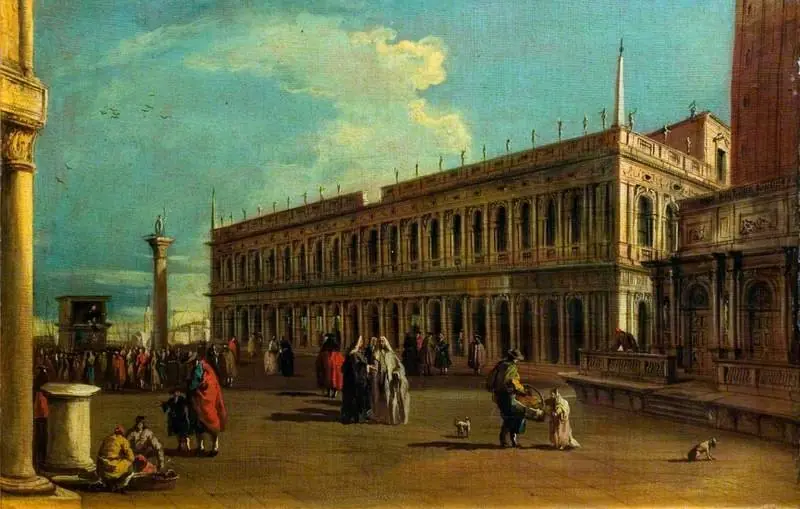
Piazzetta of S. Marco, Venice is an oil painting by the Rococo painting artist Francesco Guardi. It dates from 1750 and is held in the collection of the Gemäldegalerie Berlin.
About this work
Overview
The painting exemplifies the Venetian veduta tradition, emphasizing the city’s public spaces with attention to light, movement, and architectural presence.
Painted around 1750 by Francesco Guardi, this oil-on-canvas work captures the Piazzetta di San Marco in Venice. Guardi, a member of Venice’s artistic elite, turned from religious commissions to urban scenes in the mid-18th century. The painting exemplifies the Venetian veduta tradition, emphasizing the city’s public spaces with attention to light, movement, and architectural presence. It resides today in the Gemäldegalerie, Berlin.
Subject & Meaning
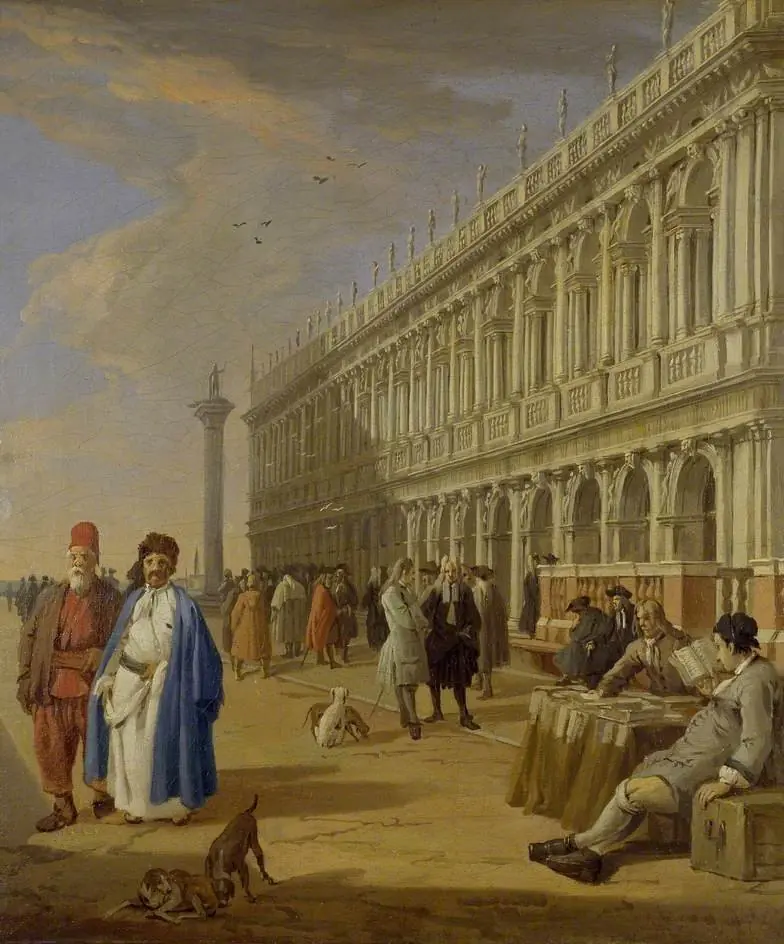
The scene portrays the Piazzetta as a living public forum, populated by figures of varied social standing—merchants, nobles, laborers, and riders—interacting amid the city’s enduring monuments. The composition suggests Venice as a place of ritual and daily commerce, where architecture frames human activity. The absence of overt narrative invites contemplation of civic life rather than storytelling.
Technique & Style
Guardi employed loose, fluid brushwork to suggest texture and motion, contrasting with the rigid geometry of the buildings. Colors are subdued—grays, browns, and soft blues—enhancing the atmospheric haze typical of Venetian light. Detail is rendered with precision in key elements like columns and costumes, while the crowd dissolves into suggestive strokes, creating a balance between clarity and impression.
History & Provenance
Created before Guardi fully embraced vedute as his primary focus, this work reflects his transitional phase. It entered the Gemäldegalerie Berlin’s collection in the 19th century, likely through acquisition from a European private collection. Its survival through centuries of political and cultural change underscores its value as a document of Venetian urban identity during the Republic’s later years.
Context
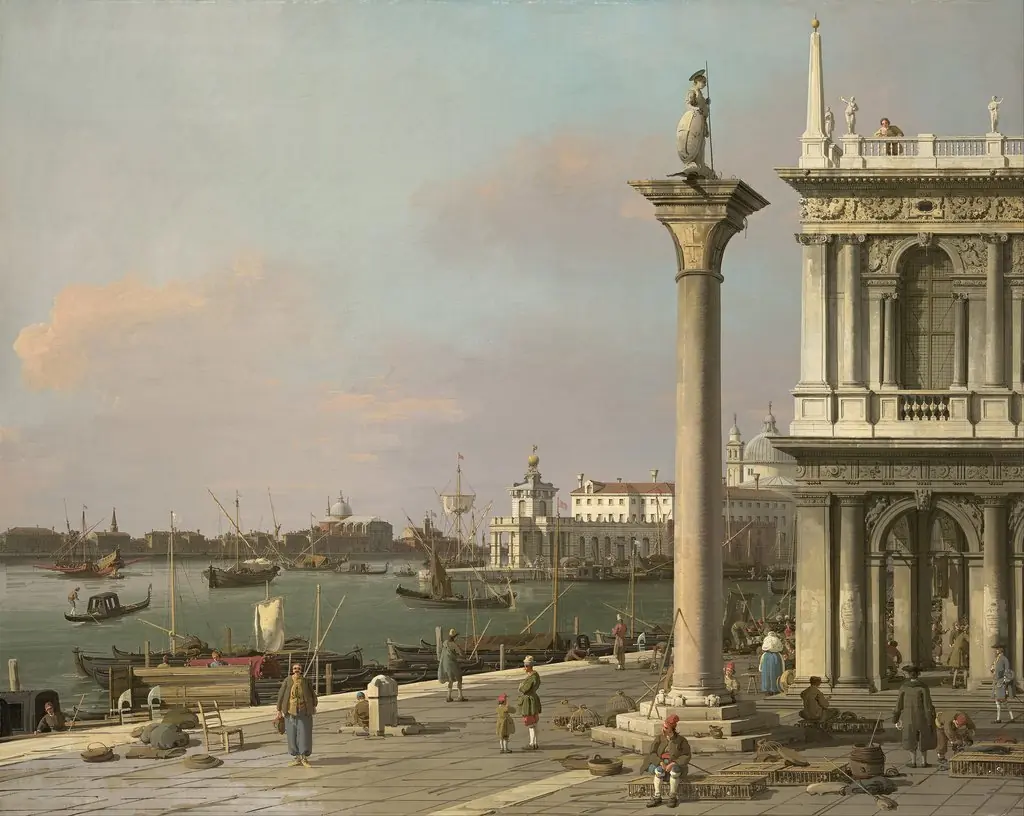
In mid-18th-century Venice, vedute paintings catered to both local pride and foreign tourists seeking souvenirs of the city’s grandeur. Guardi’s approach differed from Canaletto’s precision; his works emphasized mood over topographical accuracy. This painting reflects a Venice still vibrant yet subtly aware of its declining political power, rendered with quiet reverence rather than spectacle.
Legacy
Guardi’s atmospheric vedute influenced later landscape and impressionist painters through their emphasis on transient light and spontaneous composition. While less celebrated in his time than contemporaries, his work is now recognized for its emotional resonance and subtle critique of urban permanence. This painting remains a quiet testament to Venice’s layered social fabric in the age of its slow transformation.
Artist & collection

Artist
Francesco Lazzaro Guardi (Italian pronunciation: ; 5 October 1712 – 1 January 1793) was an Italian painter, nobleman, and a member of the Venetian School.