Artwork
The Piazzetta, Venice
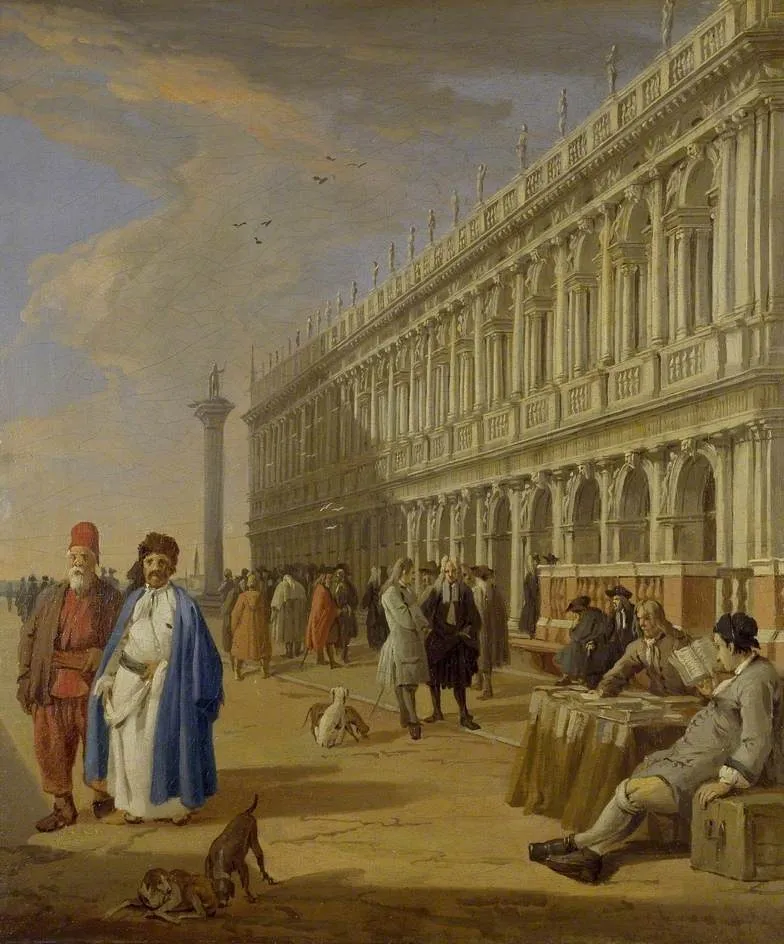
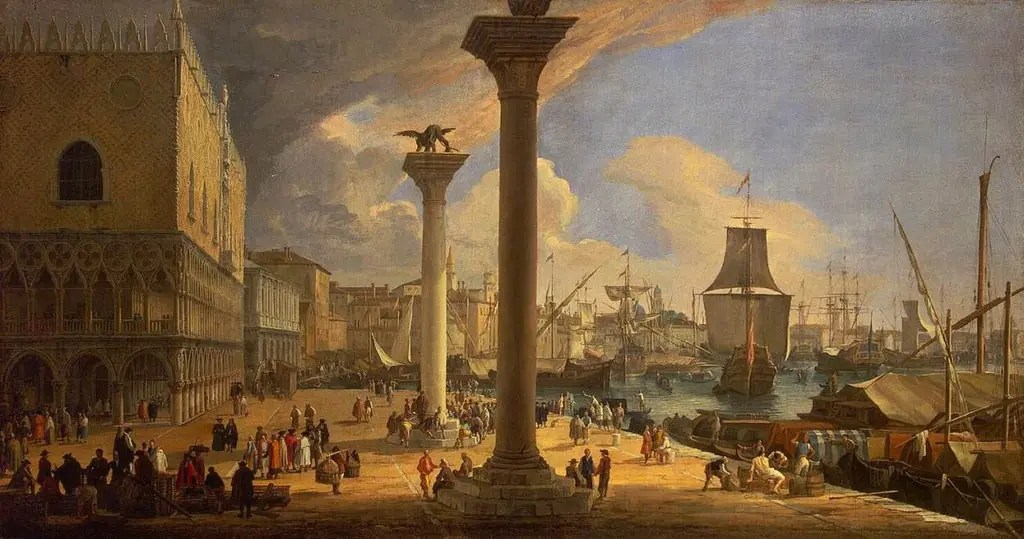
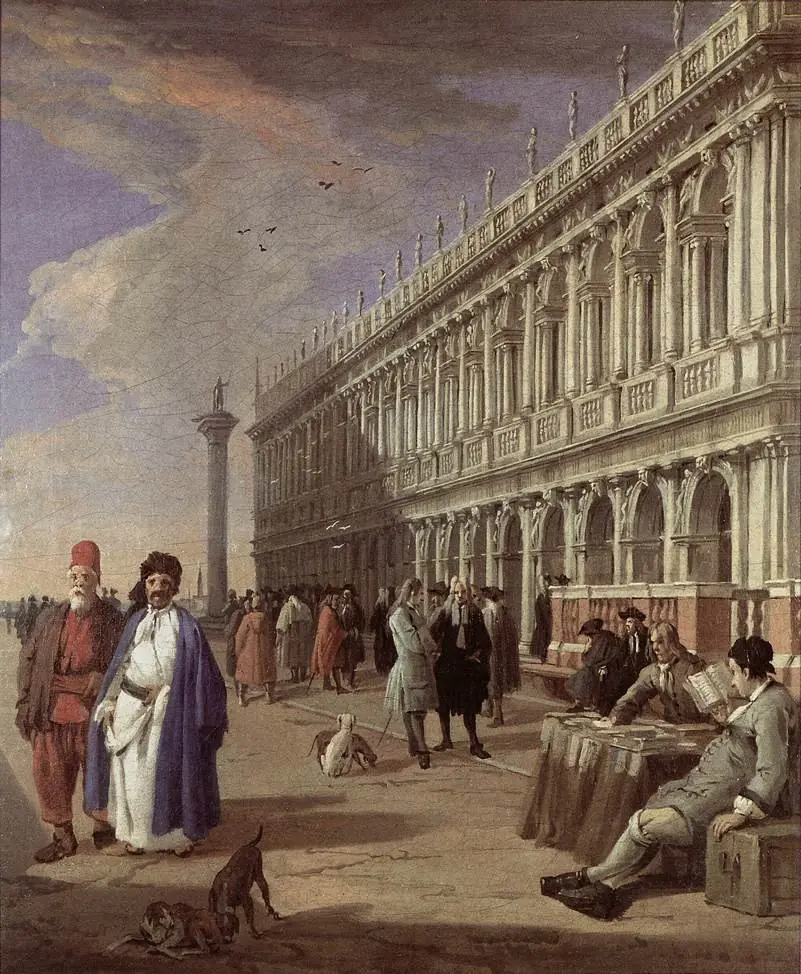
The Piazzetta, Venice is an oil painting by the Rococo painting artist Luca Carlevarijs. It dates from 1720 and is held in the collection of the Ashmolean Museum.
About this work
Overview
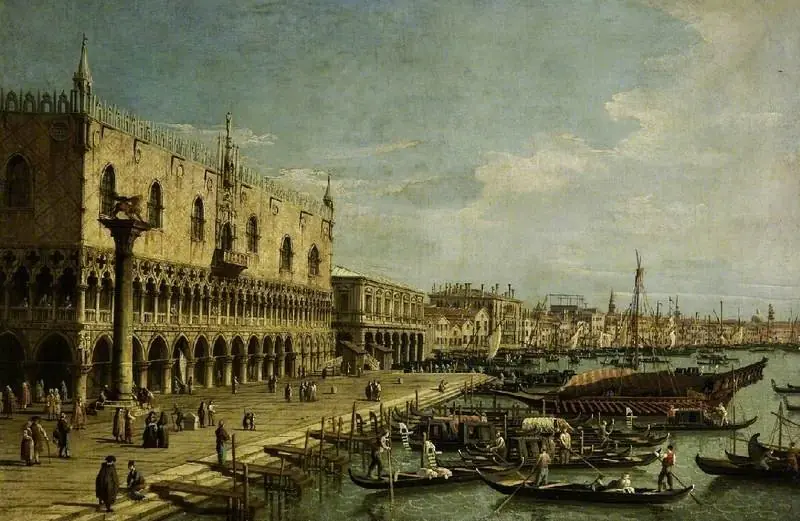
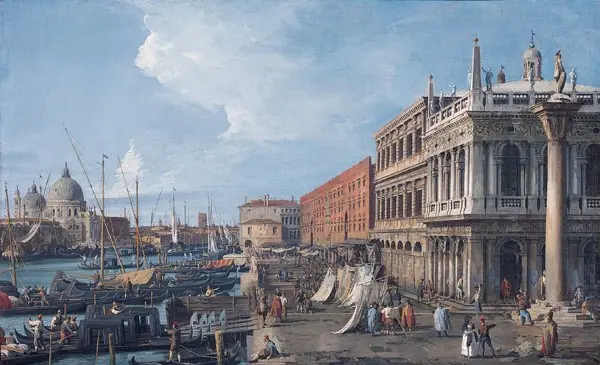
Painted in 1720 by Luca Carlevarijs, this oil-on-canvas work captures the Piazzetta, the narrow waterfront square in Venice that connects the Doge’s Palace to Saint Mark’s Basilica. Carlevarijs, among the first to treat urban views as subjects worthy of detailed artistic study, rendered the scene with careful attention to spatial depth and architectural precision, laying groundwork for later vedute painters like Canaletto.
Subject & Meaning
The absence of a single narrative focus emphasizes the vitality of the city as a living organism.
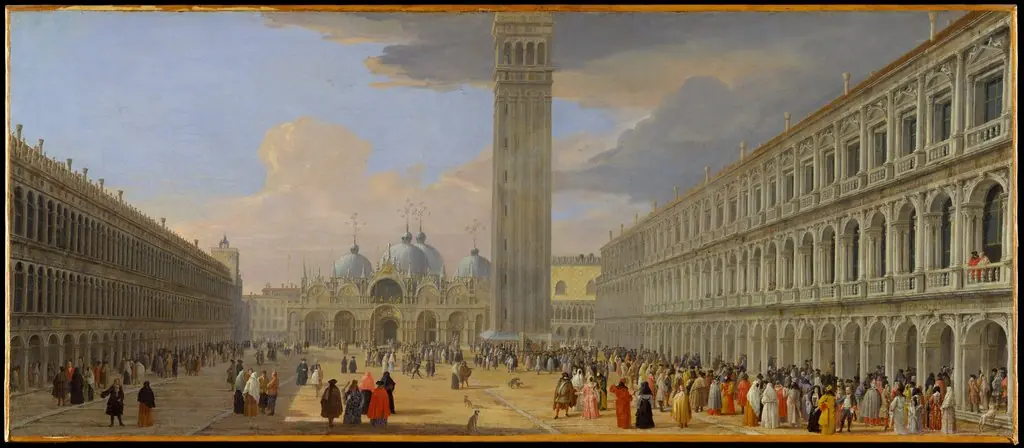
The scene portrays everyday life in one of Venice’s most public spaces, with figures of differing social standing moving through the square—merchants, nobles, laborers, and visitors. The absence of a single narrative focus emphasizes the vitality of the city as a living organism. The architecture, though grand, serves not as a monument but as a backdrop to human activity, suggesting a quiet celebration of civic rhythm rather than political power.
Technique & Style
Carlevarijs employed subtle chiaroscuro to model the stone surfaces and define the play of light across the water and buildings. His brushwork is precise yet unobtrusive, with soft transitions between shadow and highlight that lend atmospheric cohesion. Color is restrained but deliberate: warm ochres and muted blues anchor the composition, while the sky’s pale washes guide the eye toward the distant horizon and the Basilica’s domes.
History & Provenance
The painting entered the Ashmolean Museum’s collection in the 19th century, likely acquired through British travelers or collectors drawn to Venetian views during the Grand Tour era. Its survival in relatively intact condition reflects its early recognition as a significant example of Venetian topographical art. Prior to its museum acquisition, its ownership history is not fully documented, though it likely passed through private hands in Italy and England.
Context
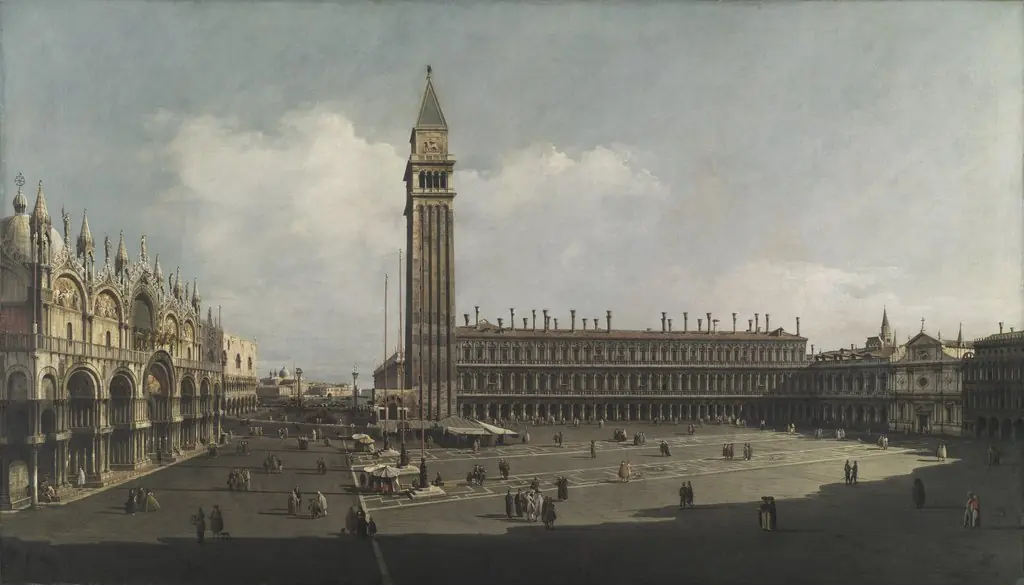
In early 18th-century Venice, the demand for accurate depictions of the city’s landmarks grew among foreign visitors and local elites. Carlevarijs responded by producing detailed vedute that balanced topographical fidelity with compositional grace. His work emerged alongside the rise of print culture and tourism, offering a visual record of Venice’s urban identity at a time when its political influence was waning but its cultural allure remained strong.
Legacy
Carlevarijs’s approach to urban observation influenced a generation of Venetian painters, most notably Canaletto and Guardi, who expanded the vedute tradition with greater dynamism and theatricality. While his style is less flamboyant than theirs, his emphasis on spatial accuracy and quiet observation established a foundational mode for recording the city’s architecture and social life, making him a key transitional figure in the evolution of topographical painting.
Artist & collection
Artist
Luca Carlevarijs or Carlevaris (20 January 1663 – 12 February 1730) was an Italian painter and engraver working mainly in Venice.