Artwork
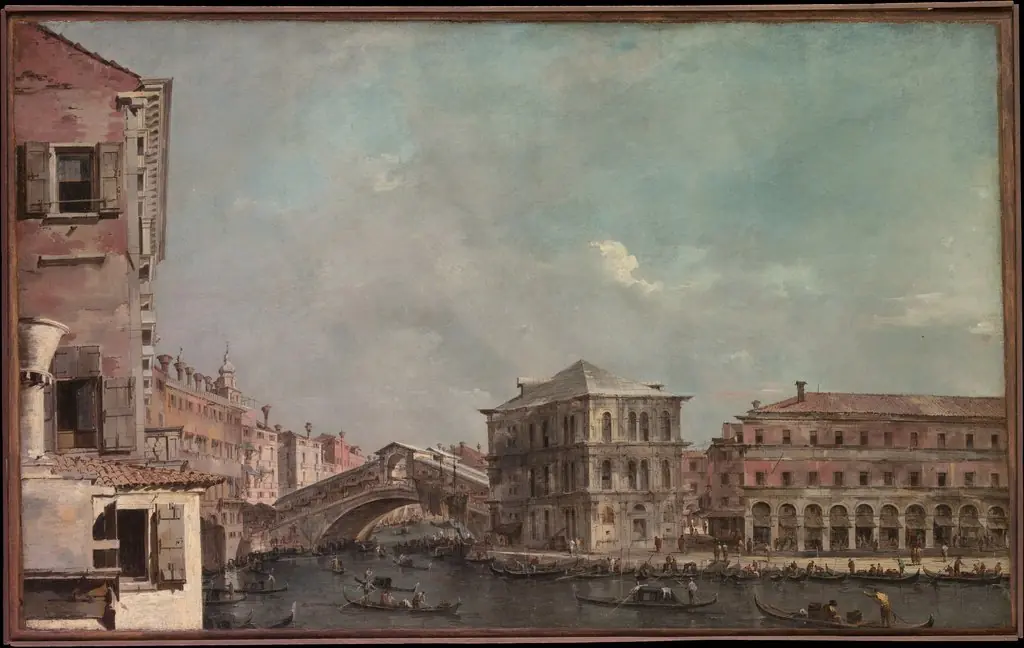
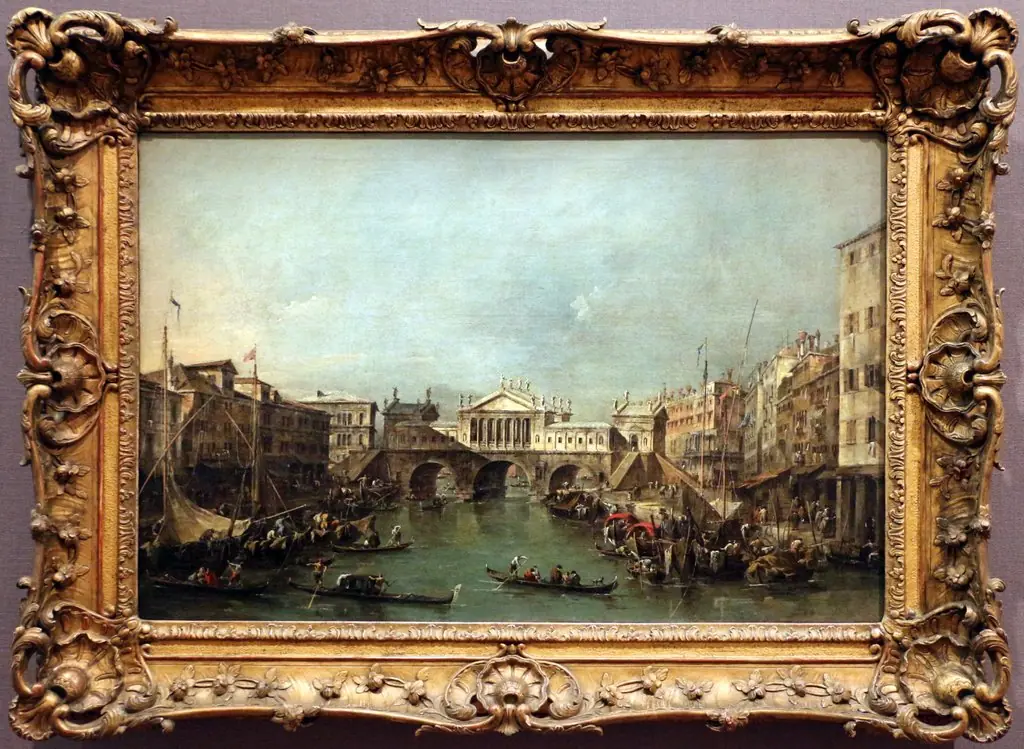
O Grande Canal na ponte Rialto
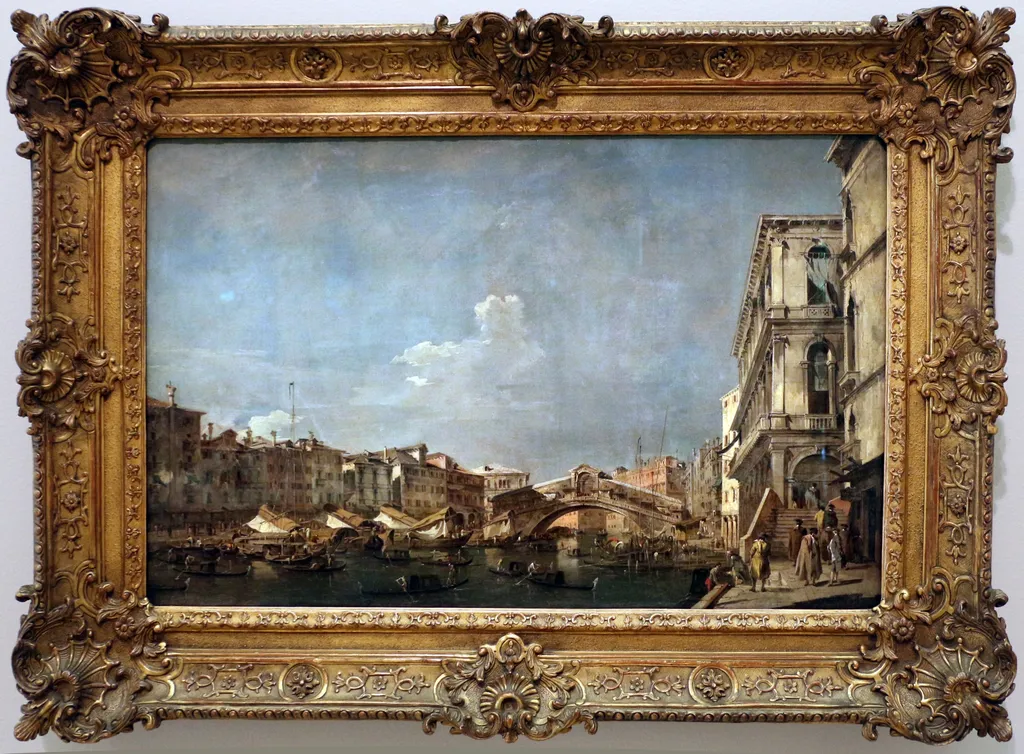
O Grande Canal na ponte Rialto is an unspecified painting by the Rococo painting artist Francesco Guardi. It dates from 1790 and is held in the collection of the Calouste Gulbenkian Museum.
About this work
Overview
It belongs to a series of vedute—urban landscapes—that Guardi produced in his later years, following the death of his brother and collaborator Gian Antonio.
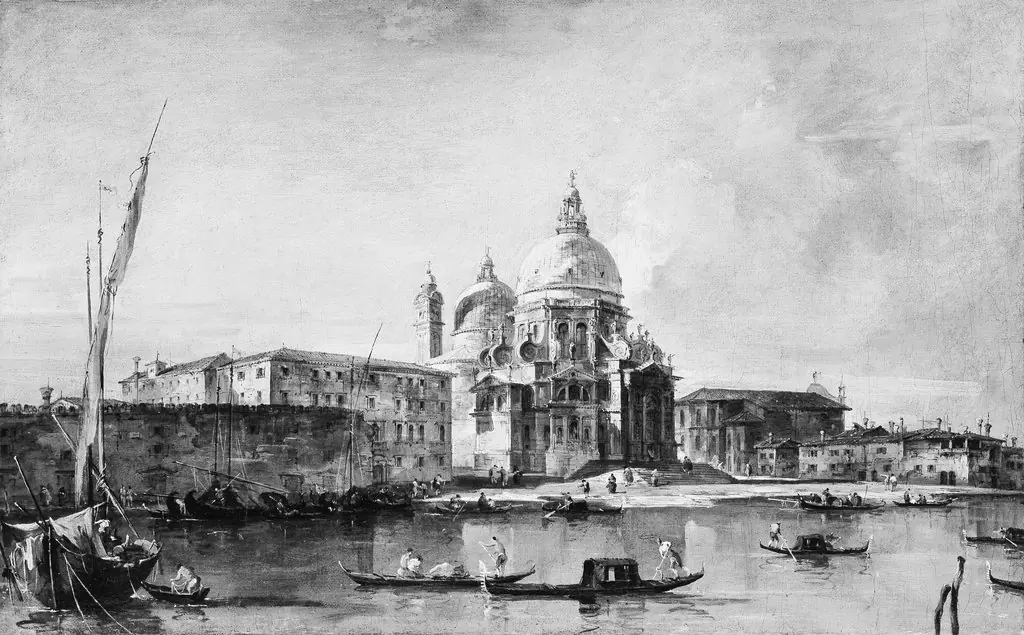
Painted in 1790 by Francesco Guardi, this work captures the Grand Canal at the Rialto Bridge in Venice. It belongs to a series of vedute—urban landscapes—that Guardi produced in his later years, following the death of his brother and collaborator Gian Antonio. Unlike the precise topography of earlier Venetian view painters, Guardi’s approach here emphasizes mood and movement over architectural accuracy.
Subject & Meaning
The scene centers on the Rialto Bridge, a vital commercial and social hub, framed by the canal’s bustling waterways and lined with dense Venetian architecture. Boats of varying sizes navigate the water, while figures move along the embankments, suggesting daily life in the city. The composition does not idealize the scene but rather observes it with quiet attentiveness, reflecting Venice’s enduring rhythm amid its physical decay.
Technique & Style
Guardi employs loose, expressive brushwork to render light and atmosphere. His use of chiaroscuro softens architectural edges, allowing the sky and water to blend into the buildings with subtle gradations. The brushstrokes are fluid and often impressionistic, conveying motion in the water and shifting clouds. This technique departs from the sharp detail of Canaletto, favoring emotional resonance over topographical fidelity.
History & Provenance
The painting entered the Calouste Gulbenkian Museum’s collection through the philanthropist’s acquisition of European art in the early 20th century. It was likely part of a private Venetian collection before being dispersed. Guardi’s later works, including this one, were less celebrated in his lifetime but gained recognition in the 19th century as tastes shifted toward atmospheric expression over precision.
Context
By 1790, Venice’s political and economic influence had waned, yet its visual identity remained a subject of fascination. Guardi’s vedute, though less commercial than Canaletto’s, captured the city’s quiet decline with poetic sensitivity. His work appealed to travelers and collectors seeking not grandeur but the intimate, transient character of Venetian life.
Legacy
Guardi’s later style influenced 19th-century painters who valued atmosphere over detail, including the Impressionists. His ability to evoke mood through brushwork and light helped redefine landscape painting beyond mere documentation. Today, his works are studied for their emotional depth and their role in transitioning Venetian art from the Baroque to modern sensibilities.
Artist & collection
Artist
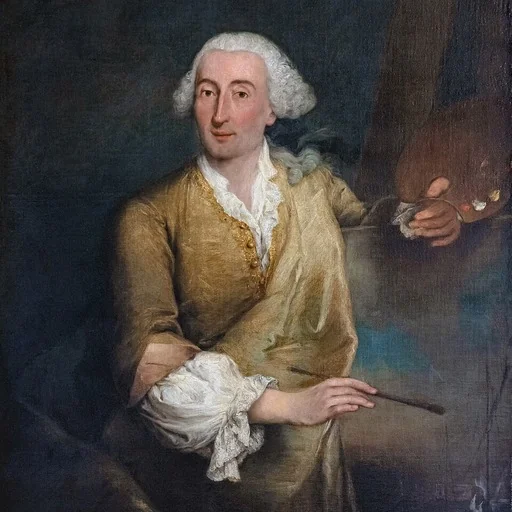
Francesco Lazzaro Guardi (Italian pronunciation: ; 5 October 1712 – 1 January 1793) was an Italian painter, nobleman, and a member of the Venetian School.