Artwork
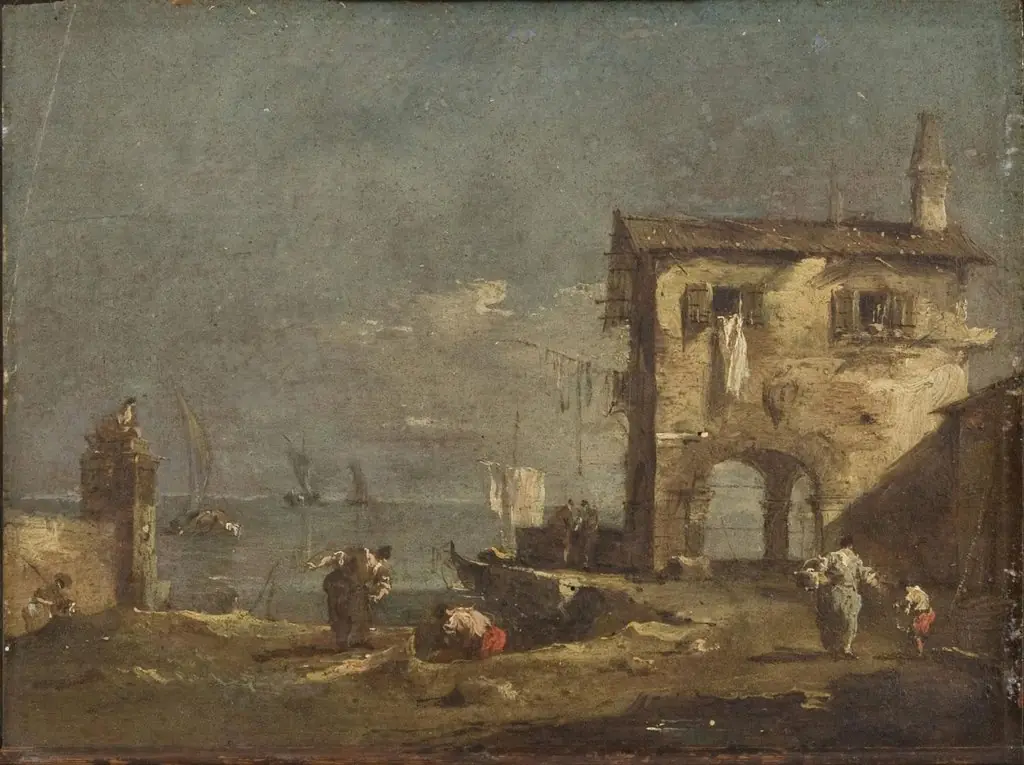
Capriccio con chiesa diroccata, casa rustica e figurine varie in riva alla laguna
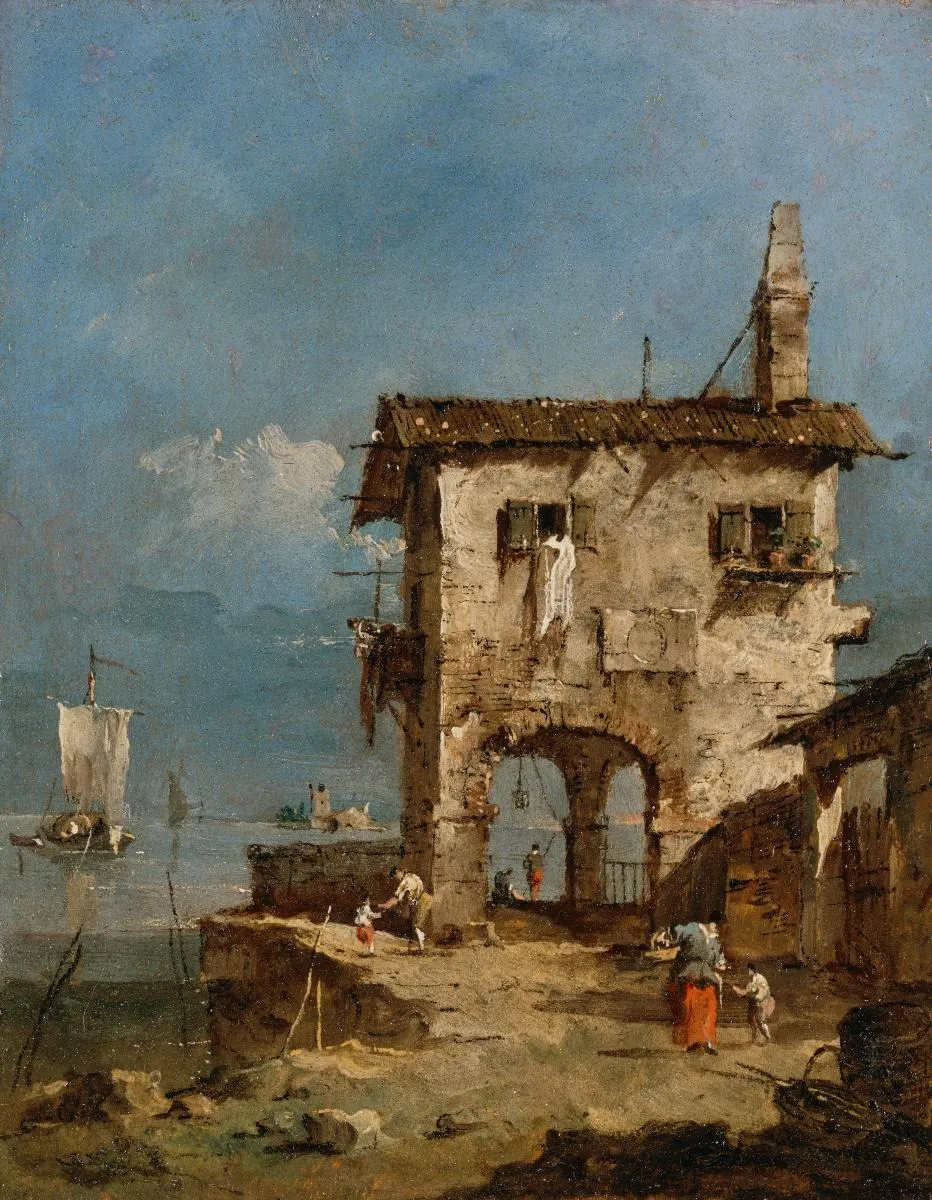
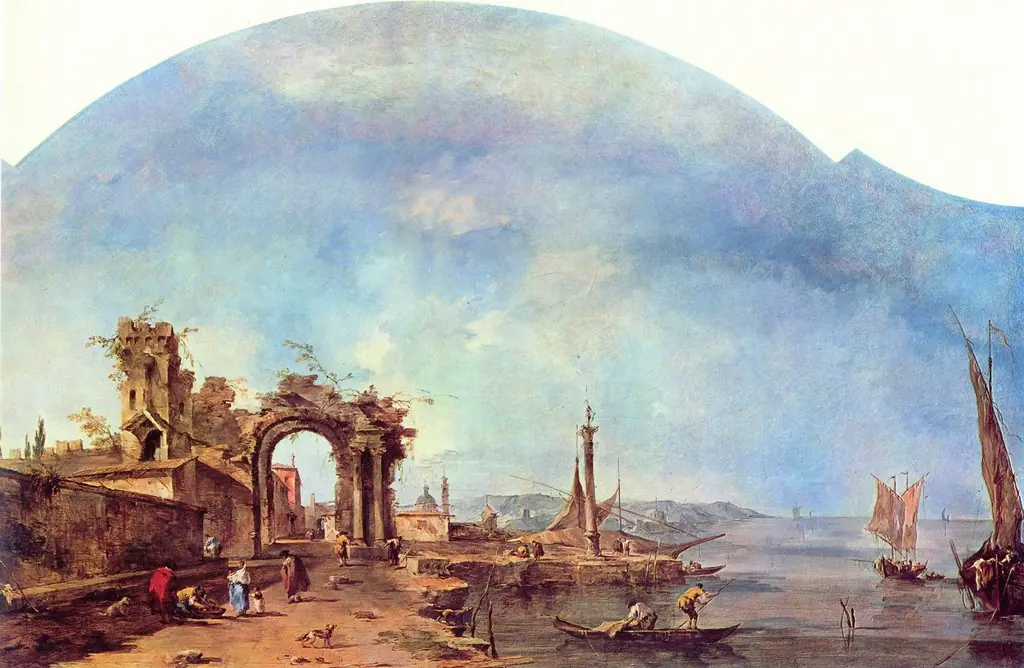
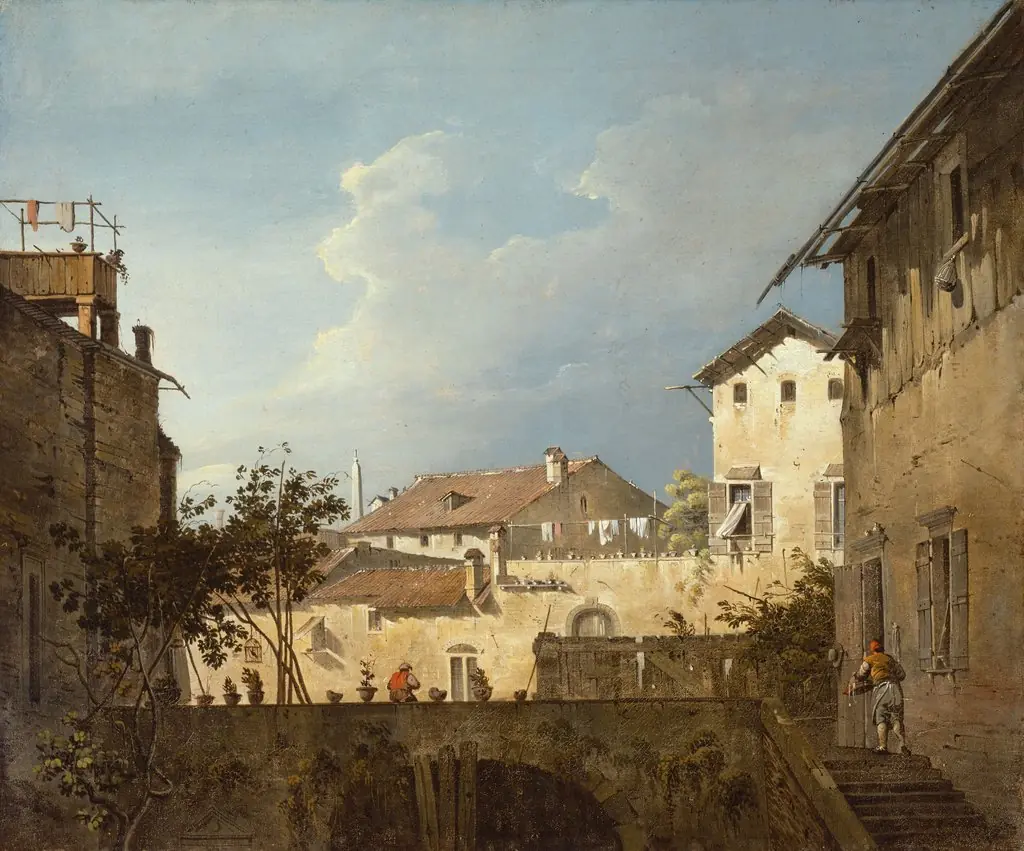
Capriccio con chiesa diroccata, casa rustica e figurine varie in riva alla laguna is an oil painting by the Rococo painting artist Francesco Guardi. It dates from 1791 and is held in the collection of the Kunsthaus Zürich.
About this work
Overview
Painted in 1791 by Francesco Guardi, this oil-on-canvas work presents a fictional lakeside scene characteristic of the Venetian veduta tradition.
Painted in 1791 by Francesco Guardi, this oil-on-canvas work presents a fictional lakeside scene characteristic of the Venetian veduta tradition. Guardi, a member of Venice’s artistic elite, moved from religious commissions to topographical fantasies after the 1760s. The painting combines architectural elements not found together in reality, creating an evocative, dreamlike landscape that reflects the city’s cultural imagination rather than its physical geography.
Subject & Meaning
The scene features a crumbling church, a rustic dwelling, and scattered figures along a lagoon’s edge, all arranged to suggest quiet daily life amid decay. The architecture is invented, blending Romanesque ruins with vernacular structures to evoke nostalgia and transience. Figures—dressed in modest attire—go about their routines, grounding the fantasy in human activity. The composition invites contemplation of time’s passage, without overt moralizing or narrative.
Technique & Style
Guardi employed loose, agile brushwork to suggest texture and movement, particularly in the sky, water, and fabric. Light falls unevenly across the stone surfaces, enhancing the sense of depth and atmosphere through subtle gradations rather than sharp contrasts. The figures are rendered with minimal detail, their forms implied rather than defined, allowing the environment to dominate. This approach aligns with late Rococo sensibilities, prioritizing mood over precision.
History & Provenance
Created near the end of Guardi’s career, the painting reflects his mature style, developed after decades of observing Venice’s changing urban fabric. It entered the Kunsthaus Zürich collection in the 19th century, likely through European art dealers who circulated Venetian works beyond Italy. Its survival and preservation reflect broader 19th-century interest in Venetian vedute as cultural artifacts rather than mere topographical records.
Context
In late 18th-century Venice, the city’s political decline coincided with a flourishing of artistic depictions of its architecture and canals. Painters like Guardi catered to foreign travelers seeking idealized visions of the city. While earlier vedute emphasized accuracy, Guardi’s capricci embraced invention, blending memory, imagination, and observation to capture Venice’s lingering grandeur amid its fading power.
Legacy
Guardi’s atmospheric, impressionistic approach influenced later generations of landscape painters, particularly those interested in light and mood over detail. His capricci helped redefine the veduta genre, shifting it from documentary to poetic expression. Though less celebrated in his lifetime than Canaletto, his work gained renewed appreciation in the 19th and 20th centuries for its emotional resonance and painterly freedom.
Artist & collection
Artist
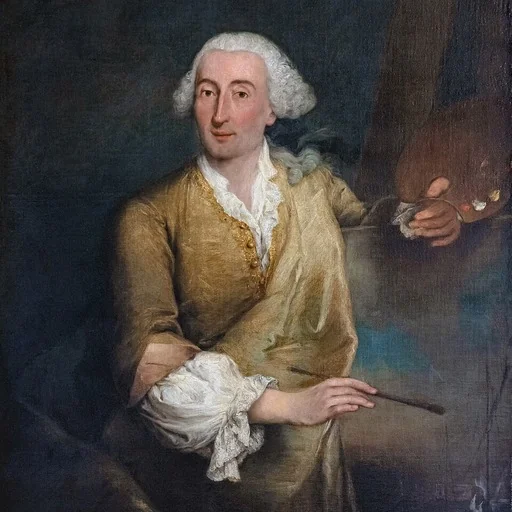
Francesco Lazzaro Guardi (Italian pronunciation: ; 5 October 1712 – 1 January 1793) was an Italian painter, nobleman, and a member of the Venetian School.

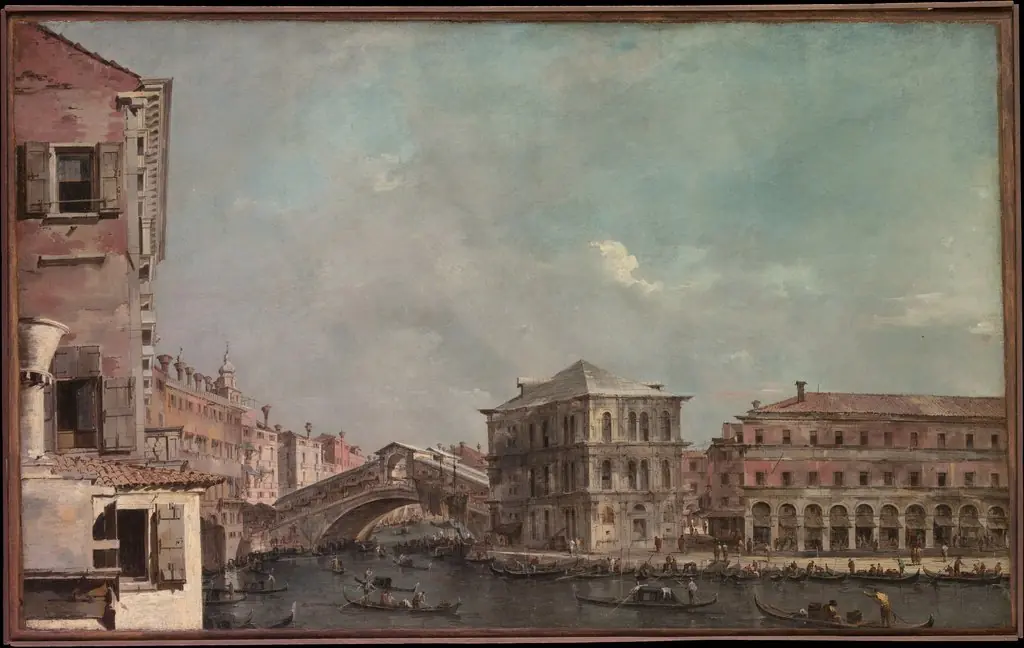
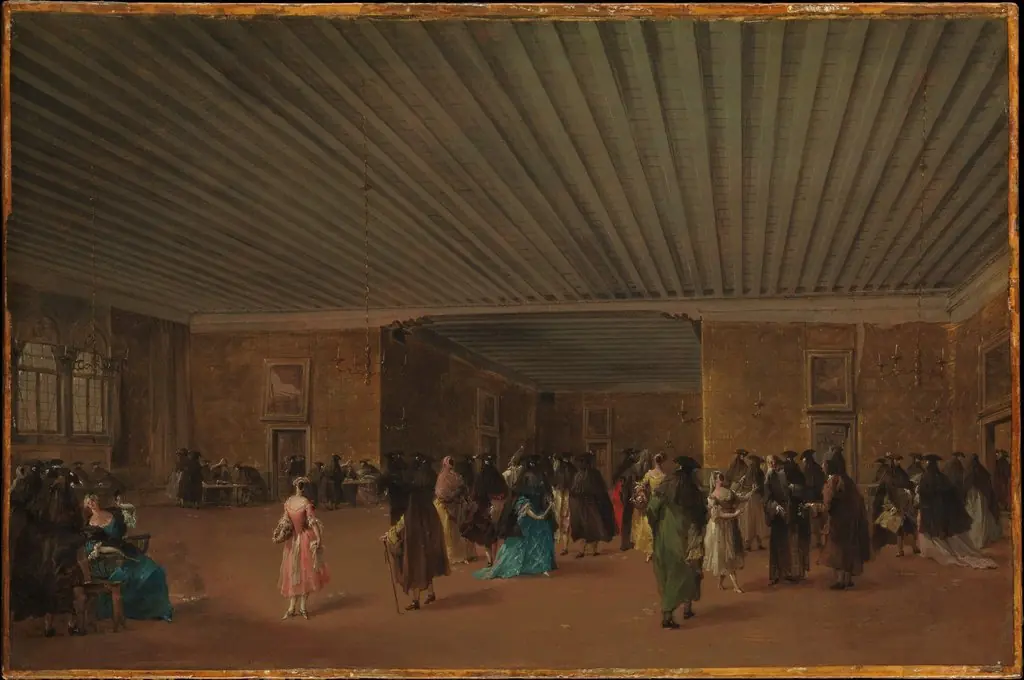
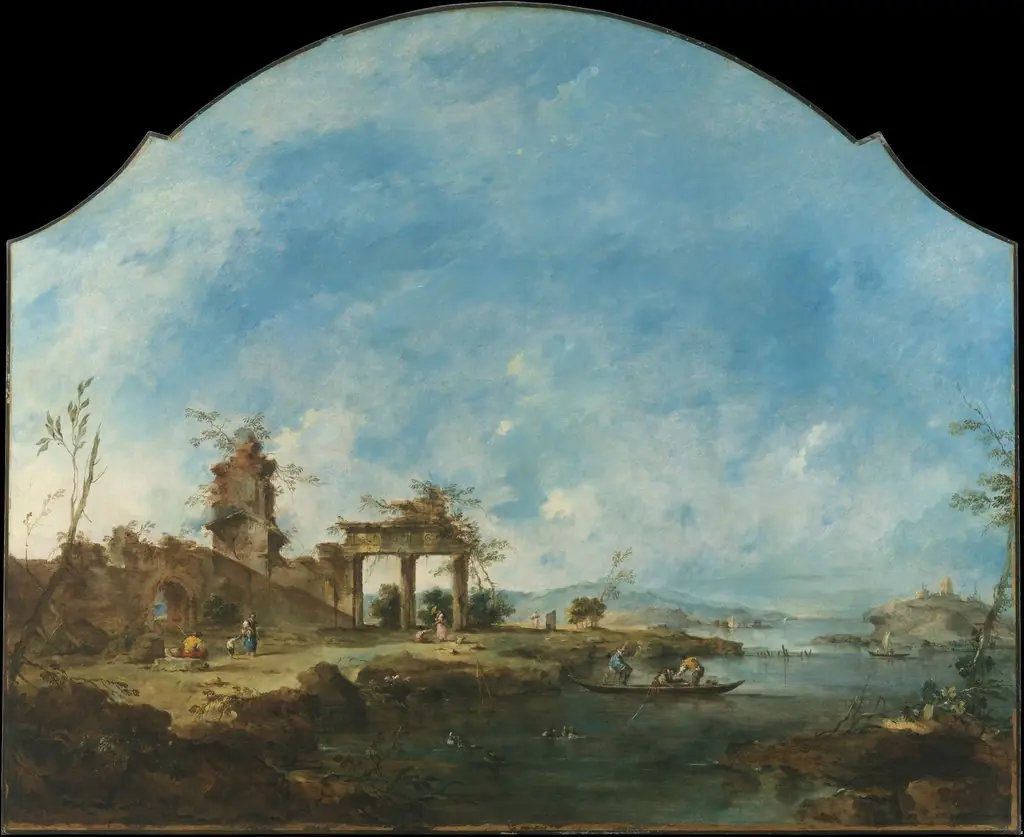
 Venetian View
 Landscape with a Quay and Ships on a Lake
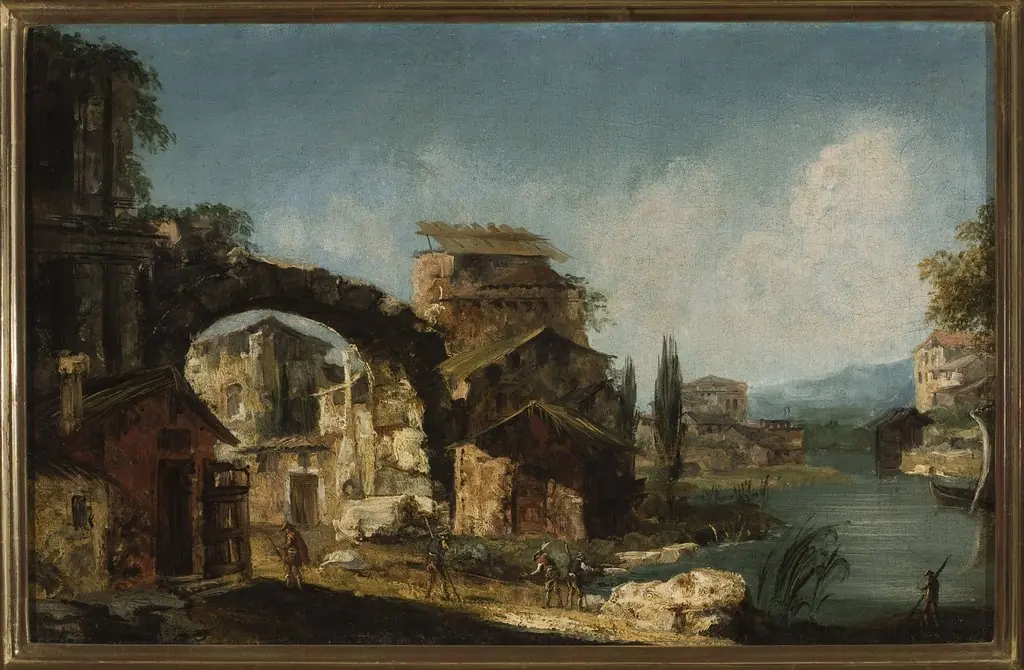 Landscape with ruins
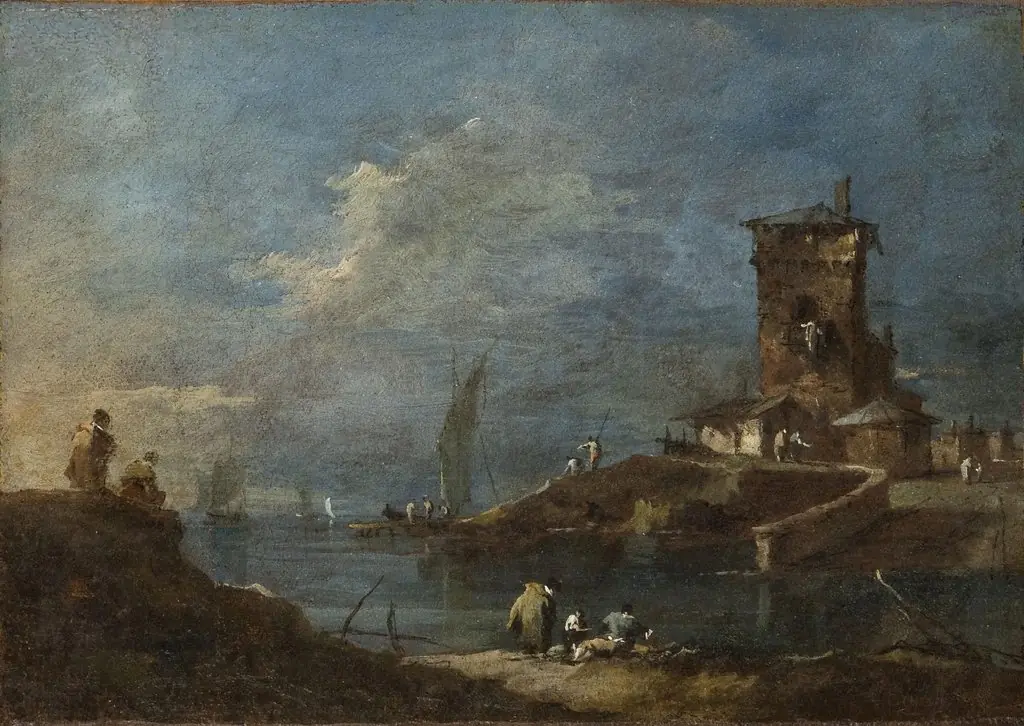 Seaport with a Castle
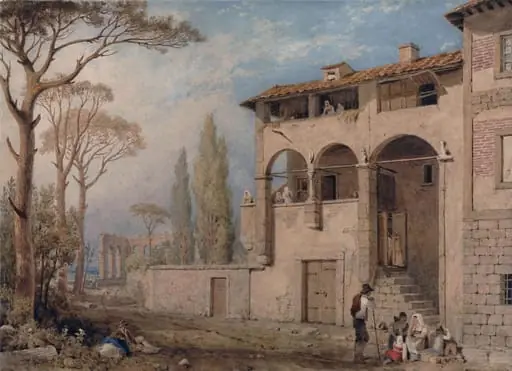 Buildings near Rome
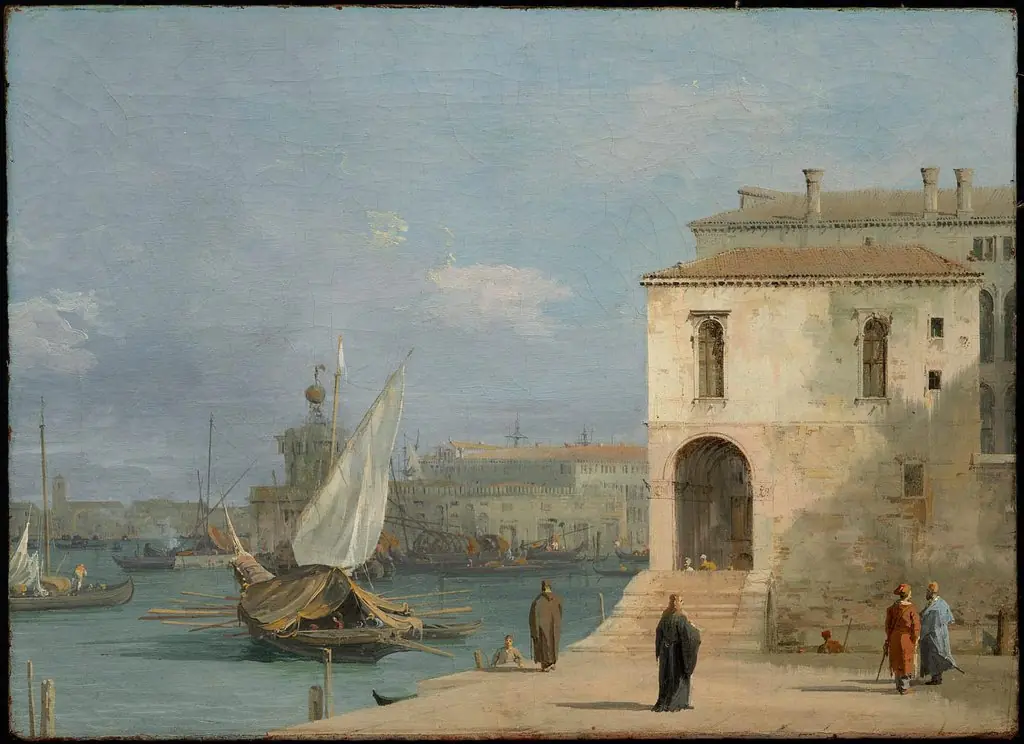 Fonteghetto della Farina, Venice
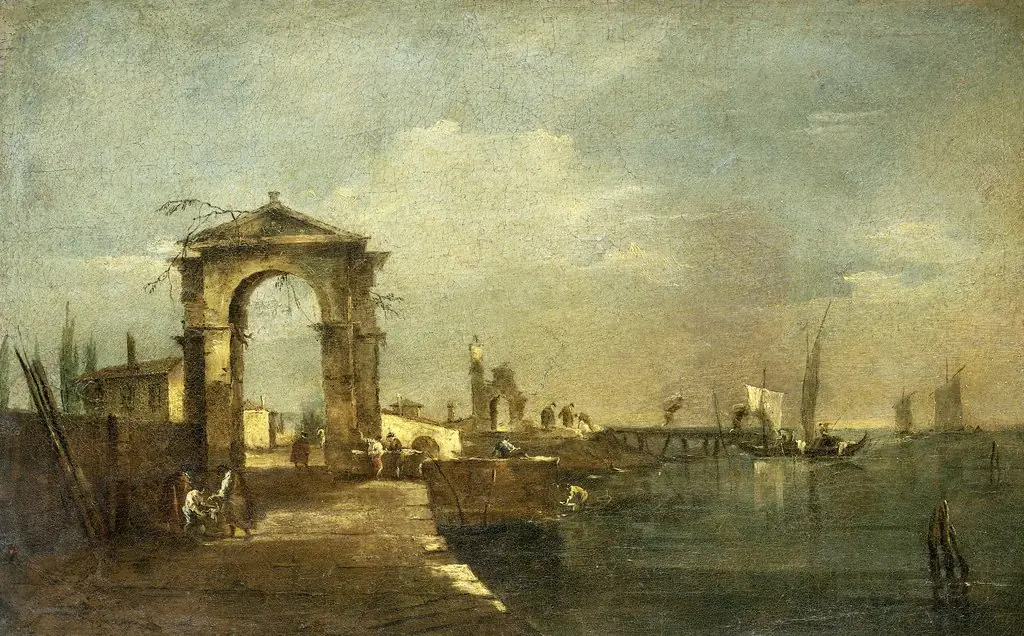 Landscape with a Quay and Ships on a Lake
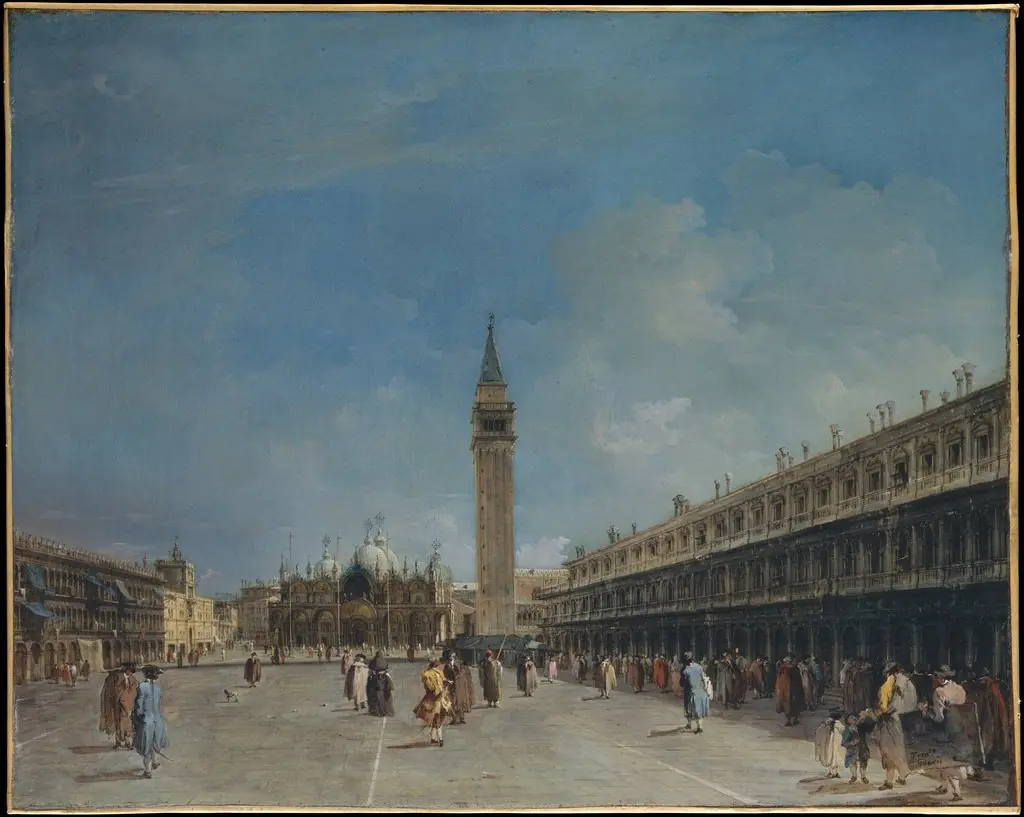
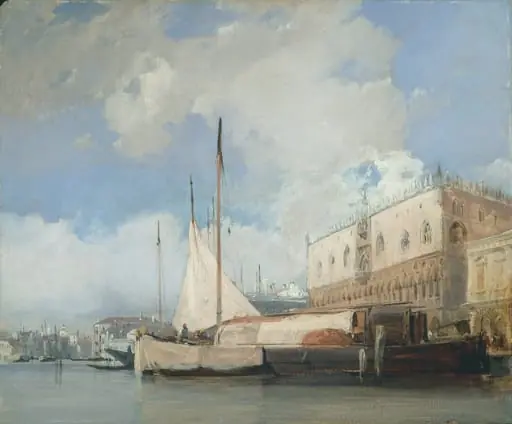 The Doge's Palace, Venice
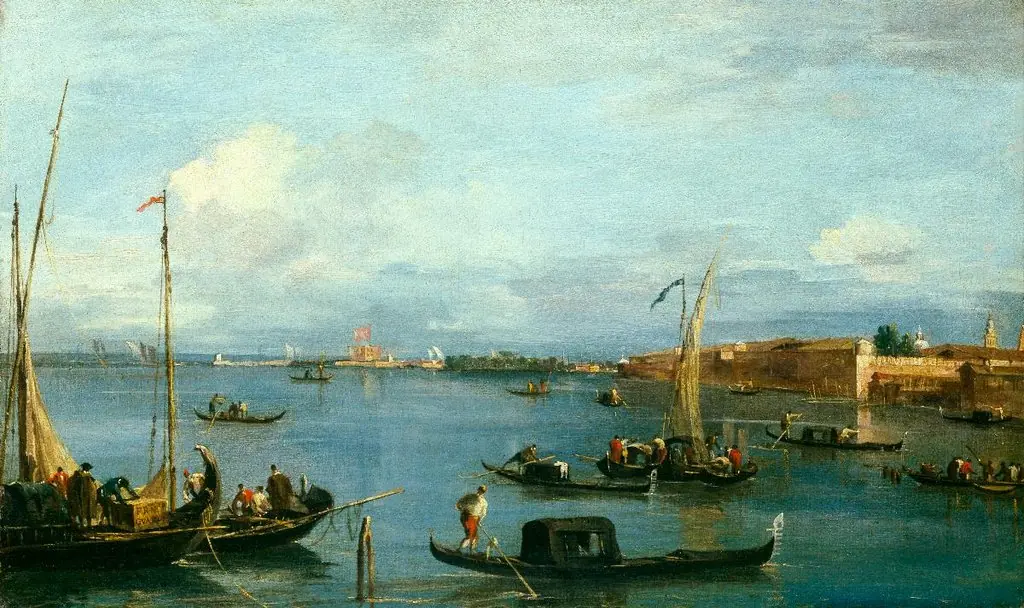 Die Lagune mit dem Fort San Nicolò
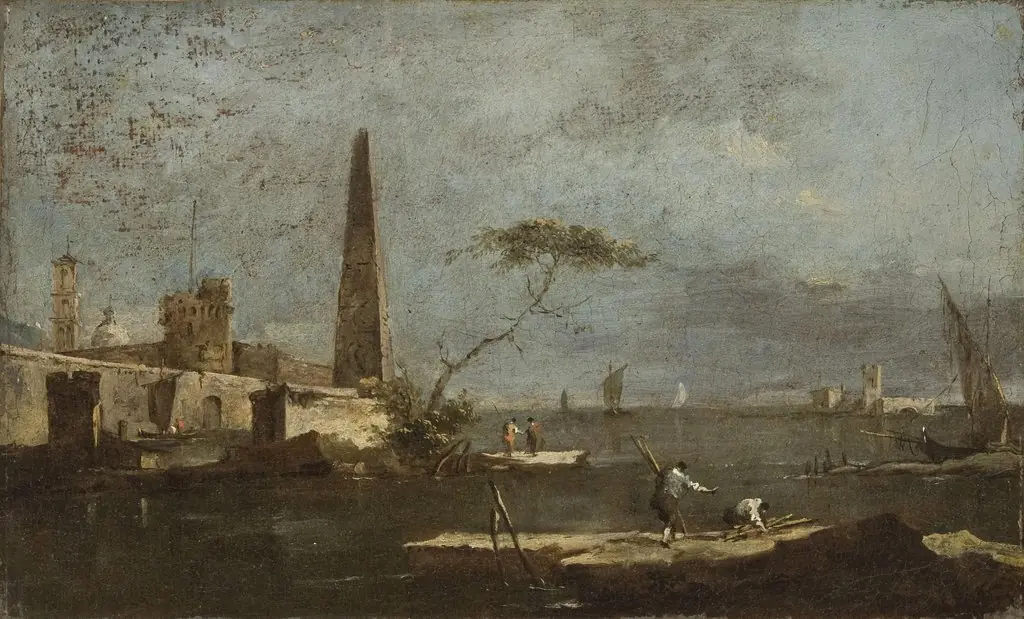 Capriccio with an Obelisk on a Lagoon
 The Terrace
 Ritratto di cardinale Tommaso Ruffo