Artwork
Predatory attack
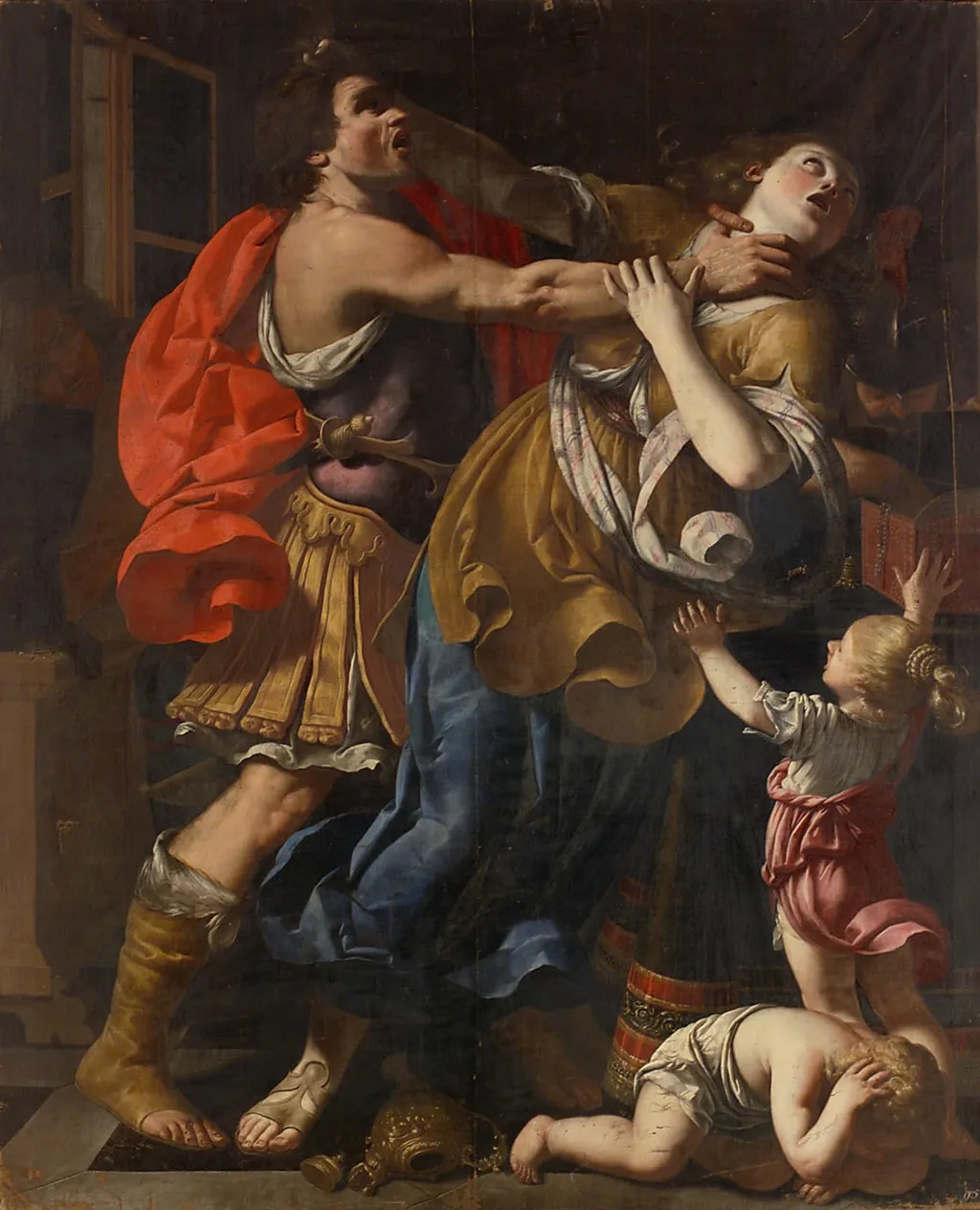
Predatory attack is an unspecified painting by the Early Baroque Italian artist Francesco Incarnatini. It dates from 1642 and is held in the collection of the Kunsthistorisches Museum.
About this work
Overview
Francesco Incarnatini’s oil painting *Predatory Attack*, executed in 1642, is part of the collection of the Kunsthistorisches Museum in Vienna. The work presents a violent encounter rendered on a modestly sized canvas, drawing the eye to a central struggle between a man and a woman while a child watches from the periphery.
Subject & Meaning
The composition captures a moment of aggression: a male figure in a red cloak and white tunic seizes a woman’s throat with one hand and brandishes a sword with the other. The woman, clothed in a yellow dress, resists the assault, while a small child crouches nearby, its gaze fixed on the unfolding drama, suggesting themes of vulnerability and fear.
Technique & Style
Incarnatini employs pronounced chiaroscuro, juxtaposing deep shadows with illuminated forms to heighten tension. The stark lighting isolates the principal figures, while the limited palette—rich reds, bright yellows, and muted whites—accentuates emotional intensity. The composition is tightly arranged, directing movement toward the central conflict and reinforcing the sense of urgency.
History & Provenance
Created in the mid‑seventeenth century, the painting entered the Kunsthistorisches Museum’s holdings during the institution’s early acquisitions, though the precise chain of ownership prior to its museum accession remains undocumented in available records.
Context
The work reflects Baroque sensibilities prevalent in Italy during the 1640s, where dramatic narratives and strong contrasts of light and dark were employed to convey moral and emotional weight. Incarnatini’s focus on a violent domestic scene aligns with contemporary interests in portraying human frailty and moral cautionary tales.
Artist & collection
Artist

 Death of Messalina
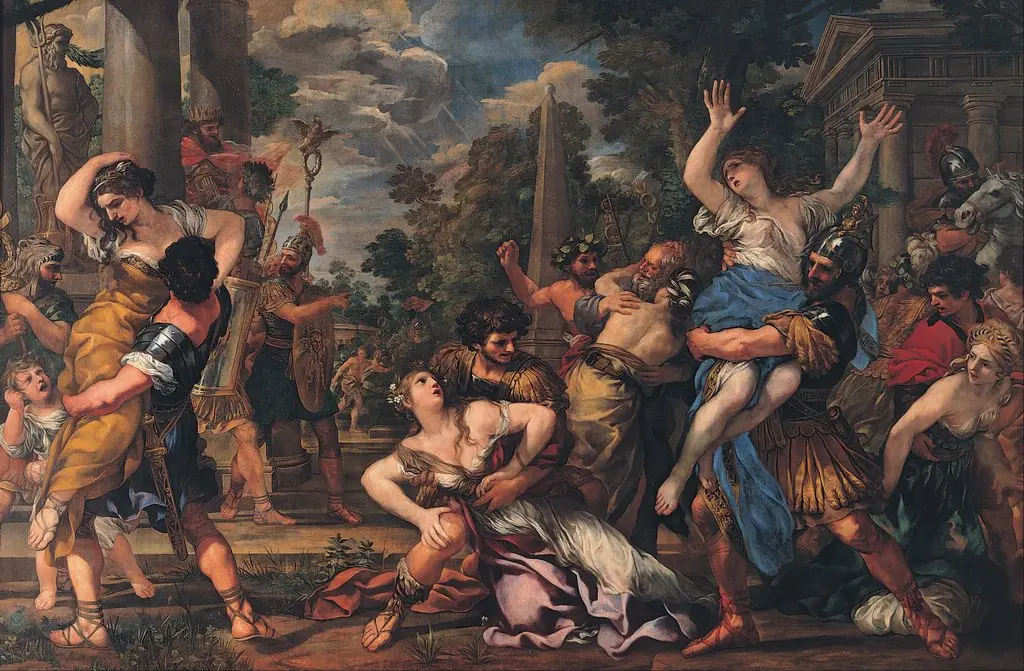 Rape of the Sabines
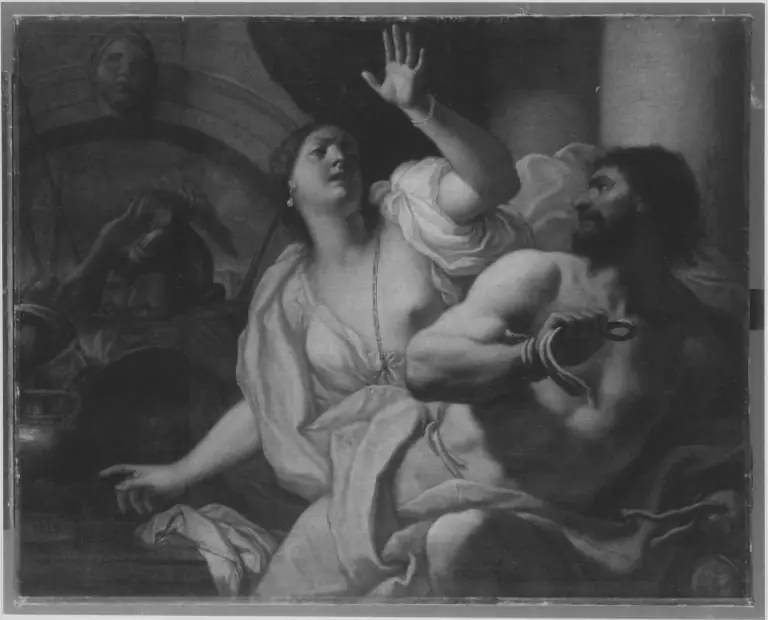 Samson und Dalila
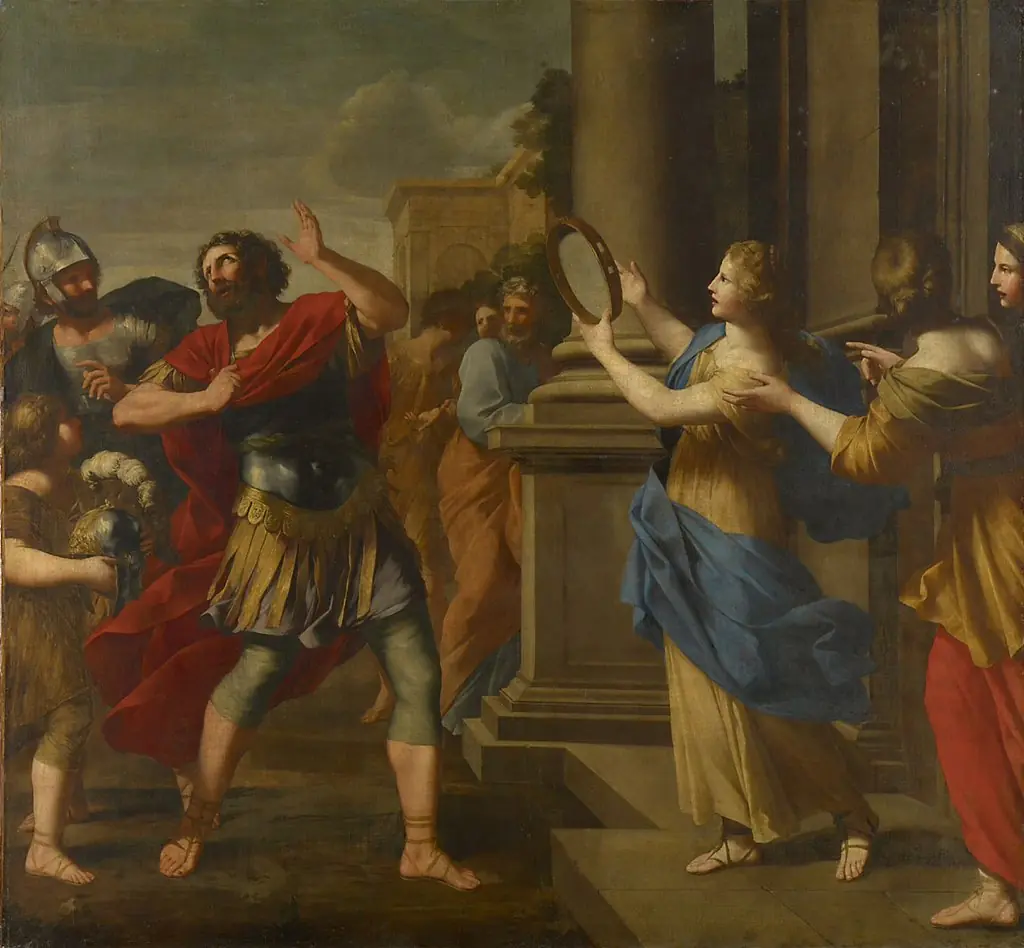 Jephta erblickt seine Tochter
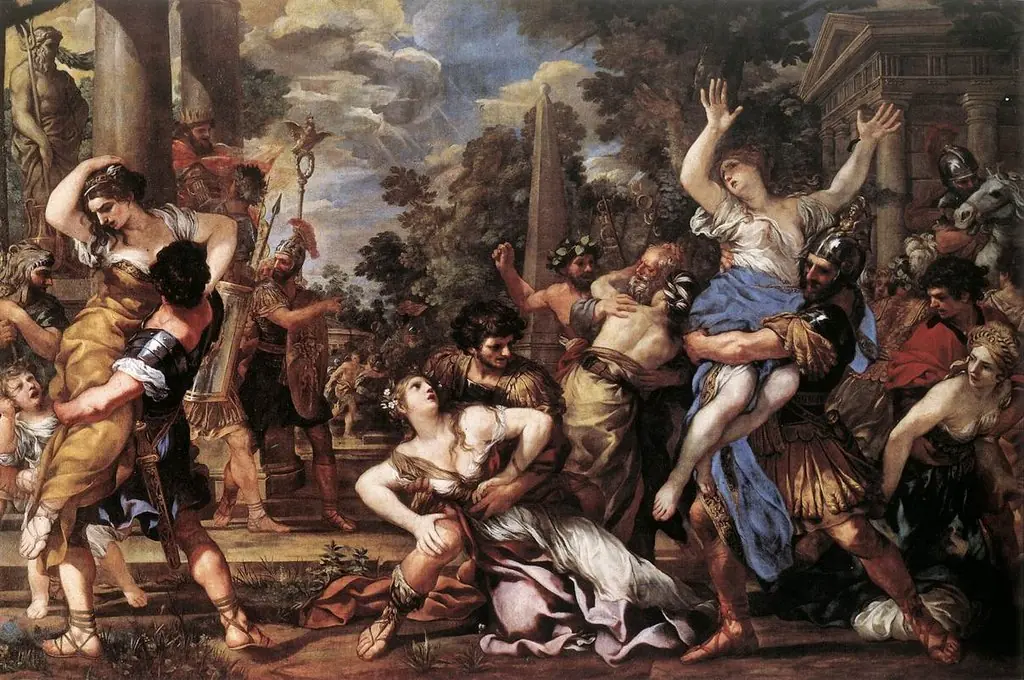 Rape of the Sabine Women
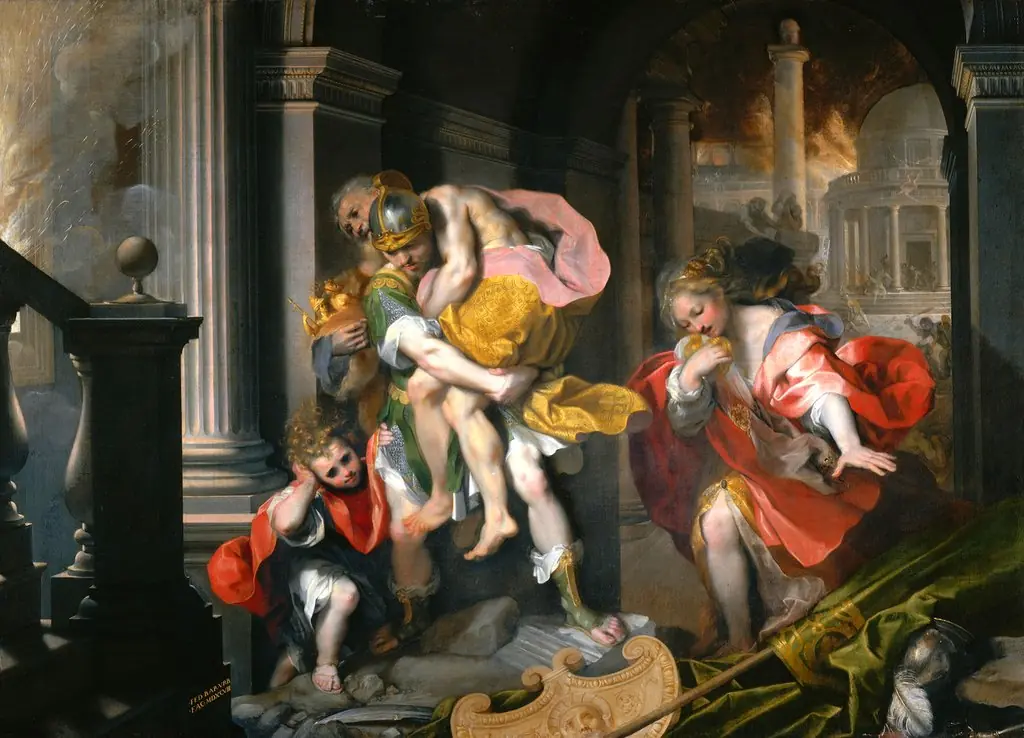 Escape of Aeneas from Troy
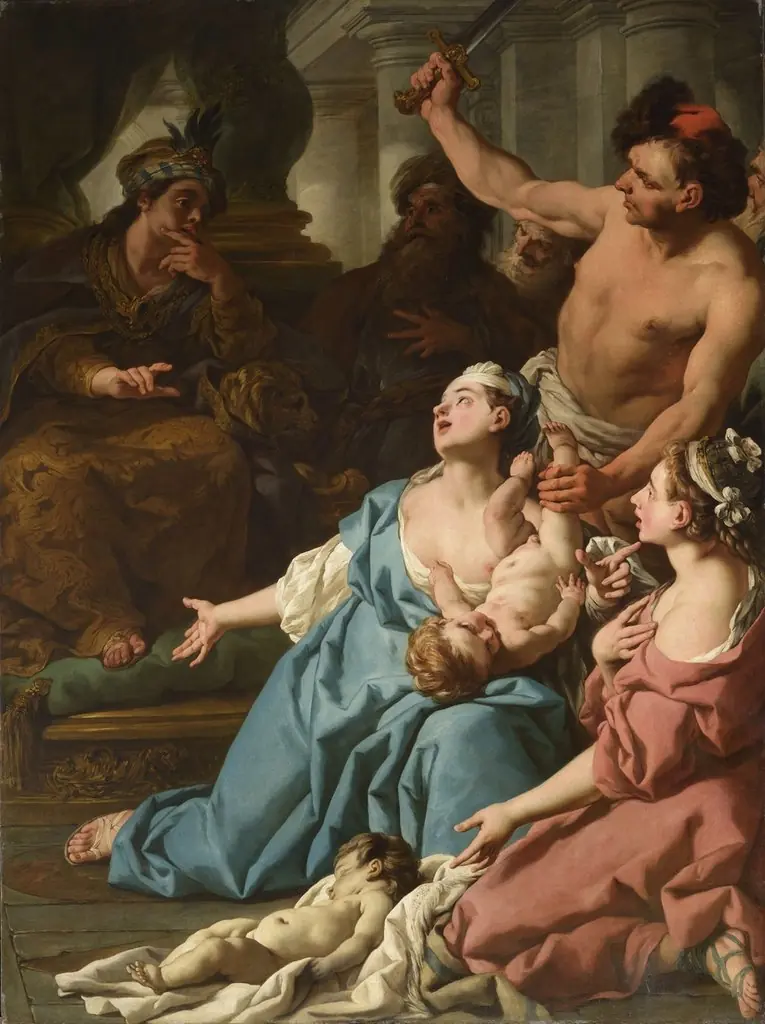 The Judgement of Solomon
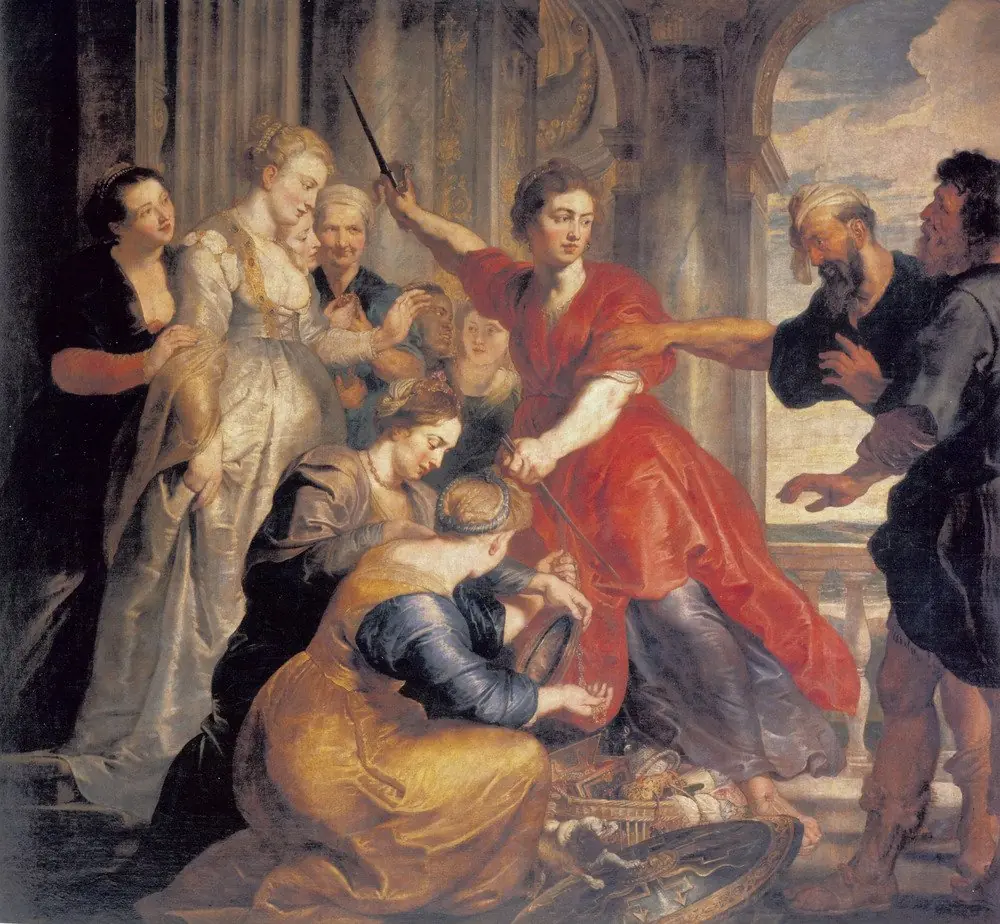 Achilles discovered by Ulysses and Diomedes
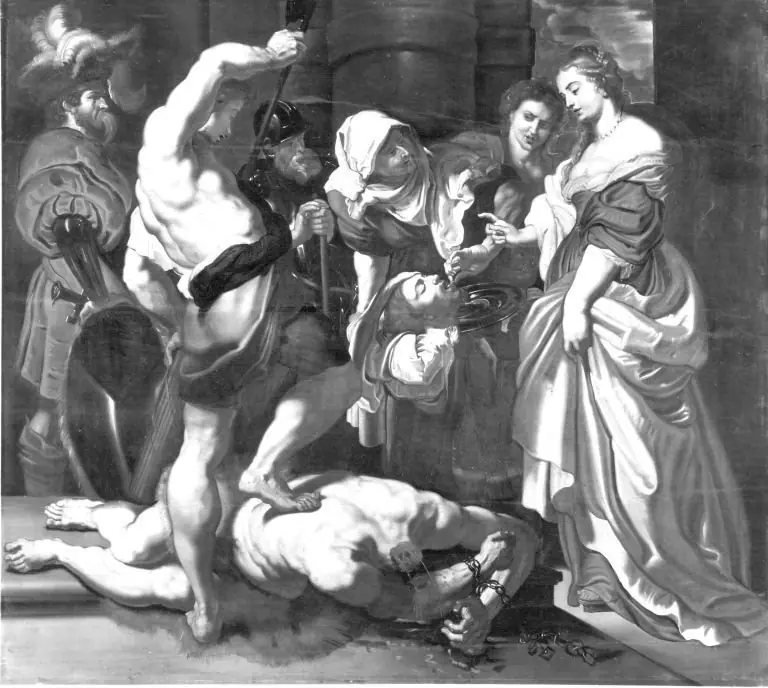 Salome is given the head of John the Baptist by the executioner
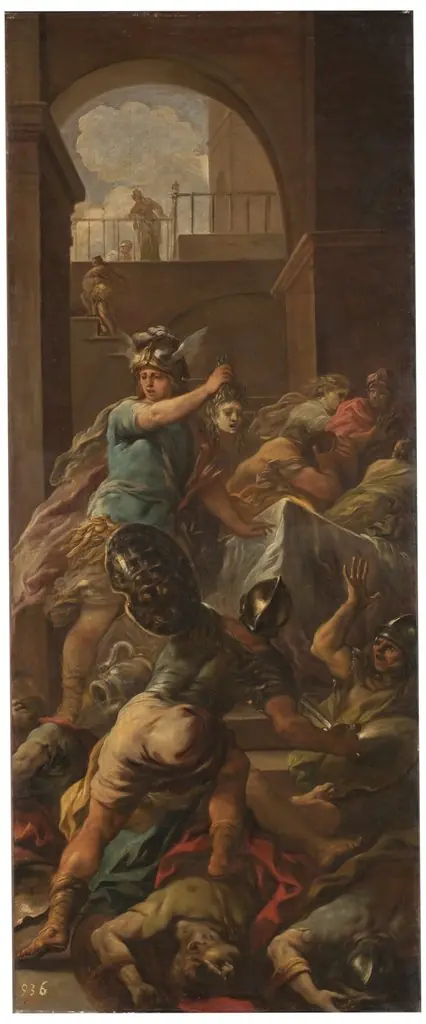 Perseo vencedor de Medusa
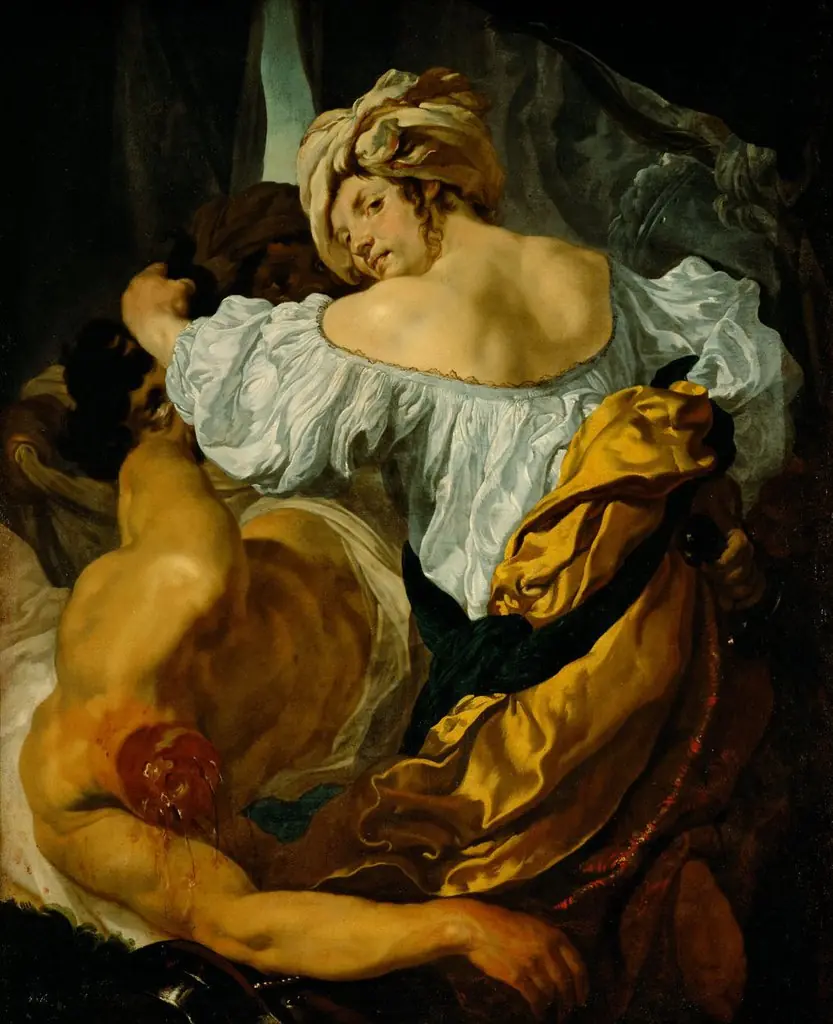 Judith and Holophernes
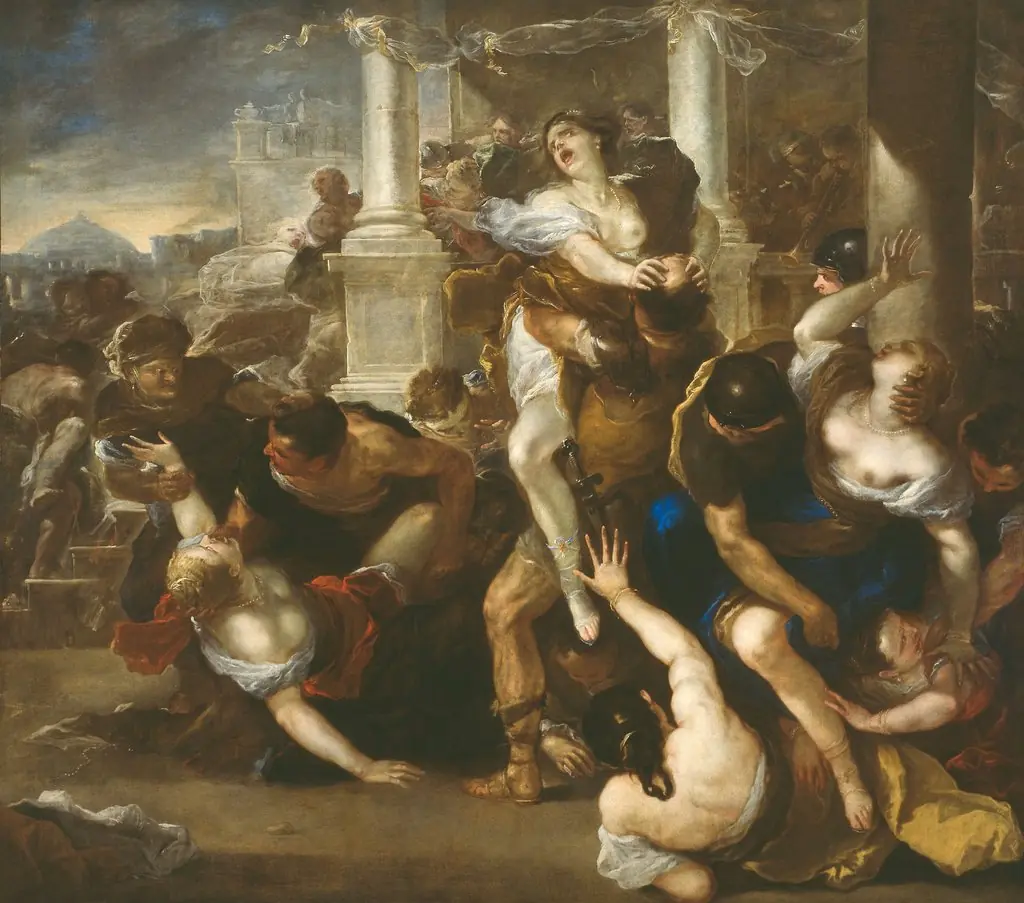 The Abduction of the Sabine Women