Artwork
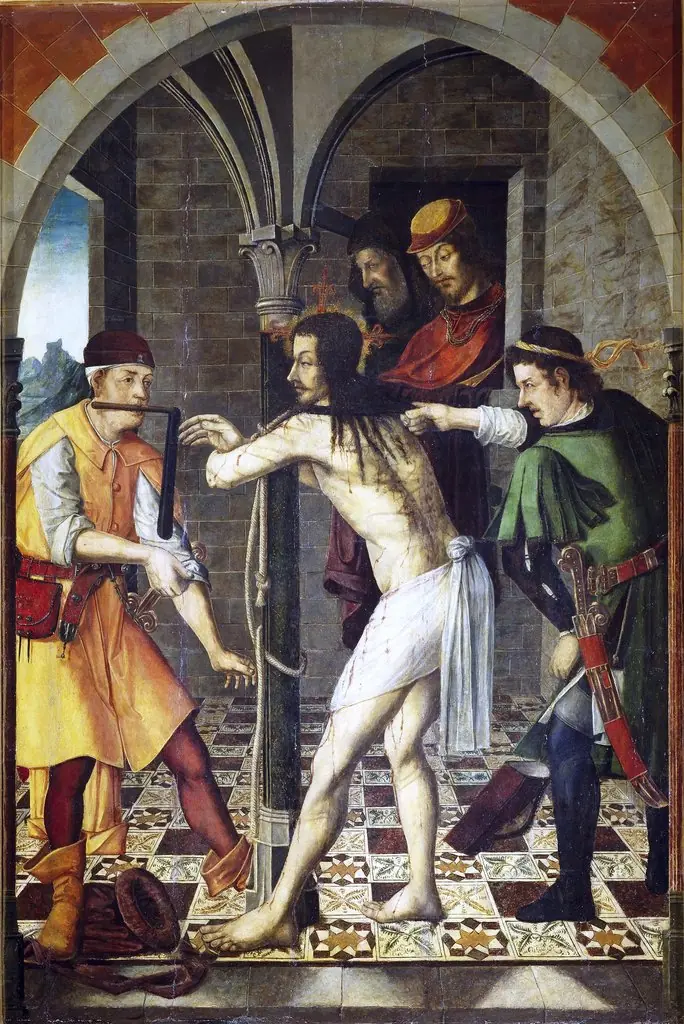
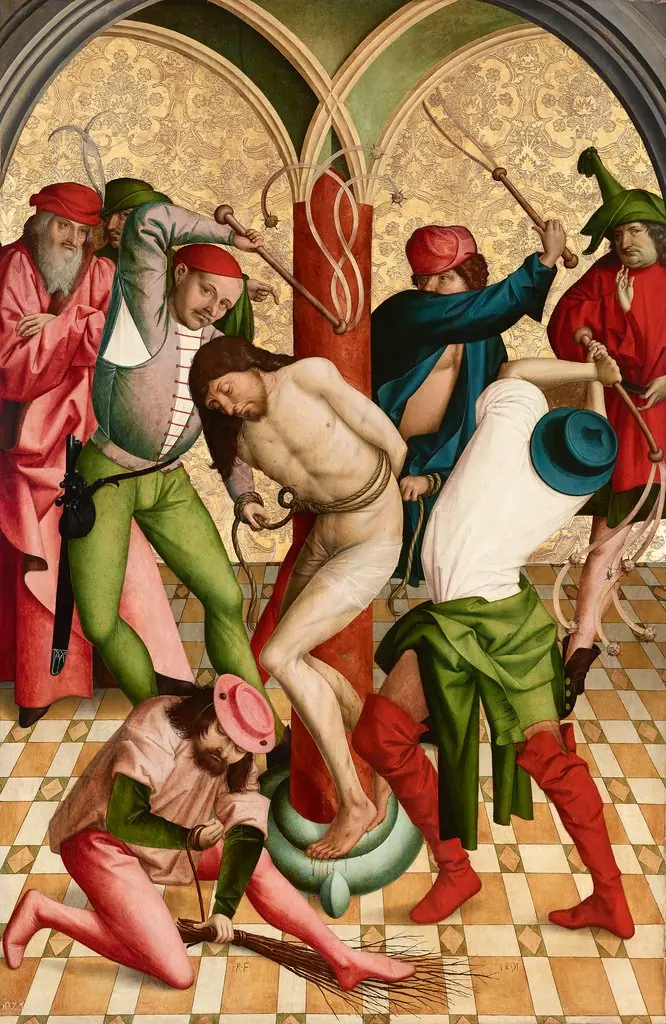
The Scourging of Christ with Saints Jerome and Benedict
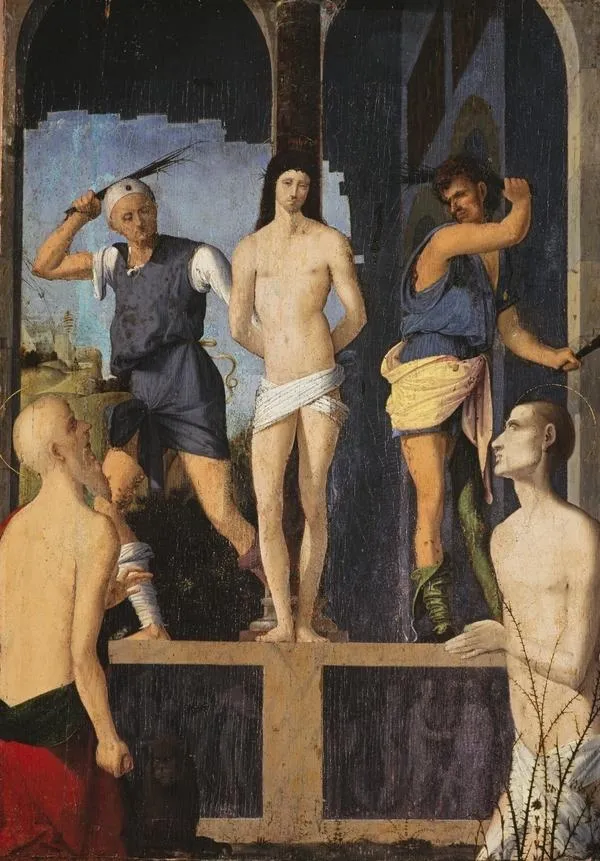
The Scourging of Christ with Saints Jerome and Benedict is an unspecified painting by Francesco Marmitta. It is held in the collection of the National Galleries Scotland.
About this work
Overview
Originally from Parma, Marmitta worked across painting and jewelry, and this piece reflects his engagement with religious themes.
Francesco Marmitta, an Italian artist active in the late 15th and early 16th centuries, produced this devotional panel combining a scene of Christ’s scourging with the figures of Saints Jerome and Benedict. Originally from Parma, Marmitta worked across painting and jewelry, and this piece reflects his engagement with religious themes. The work is now part of the Scottish National Gallery’s collection, alongside other examples of his output in institutions like the Metropolitan and Walters museums.
Subject & Meaning
The painting centers on Christ’s punishment, depicted with restrained intensity as he stands bound, clad in a simple loincloth, while two executioners administer the lashes. Flanking the scene, Saints Jerome and Benedict observe silently, their presence linking the moment to monastic tradition and scriptural scholarship. The inclusion of two seated figures in the foreground, one in red and one in white, may represent donors or contemplative witnesses, reinforcing the painting’s role as an object of private devotion.
Technique & Style
Marmitta employs a muted palette and controlled chiaroscuro to emphasize the gravity of the scene. The figures are rendered with crisp outlines and minimal background detail, drawing focus to their postures and expressions. The dark, indistinct landscape behind them enhances the somber mood, while the textured rendering of fabrics and skin suggests a quiet realism. The composition avoids theatricality, favoring stillness and introspection over dramatic motion.
History & Provenance
The painting’s early ownership is undocumented, but it entered the Scottish National Gallery’s collection in the 19th century, likely through a private acquisition or bequest. Its survival into modern times is notable, given the fragility of panel paintings from this period. Marmitta’s relative obscurity compared to contemporaries suggests the work may have circulated in regional devotional contexts before gaining institutional recognition.
Context
Created during a period of heightened religious devotion in northern Italy, the painting reflects the influence of devotional imagery popular among monastic communities. The pairing of Christ’s suffering with Saints Jerome and Benedict—figures associated with study and asceticism—aligns with the spiritual priorities of late Quattrocento patrons who sought meditative, rather than celebratory, religious art.
Legacy
Though Marmitta’s oeuvre is limited and largely overlooked in broader art historical narratives, this work exemplifies the quiet, introspective strand of Italian Renaissance painting that prioritized spiritual contemplation over grandeur. Its preservation in a major public collection ensures continued access for study, offering insight into the devotional practices of lesser-known regional artists.
Artist & collection

Artist
Francesco Marmitta (ca. 1460-1505) was an Italian painter and jeweler. Marmitta was born in Parma, Italy, between 1462 and 1466. His father was a merchant of wool and wax. His work is held in the collections of the…