Artwork
Flagellation of Christ
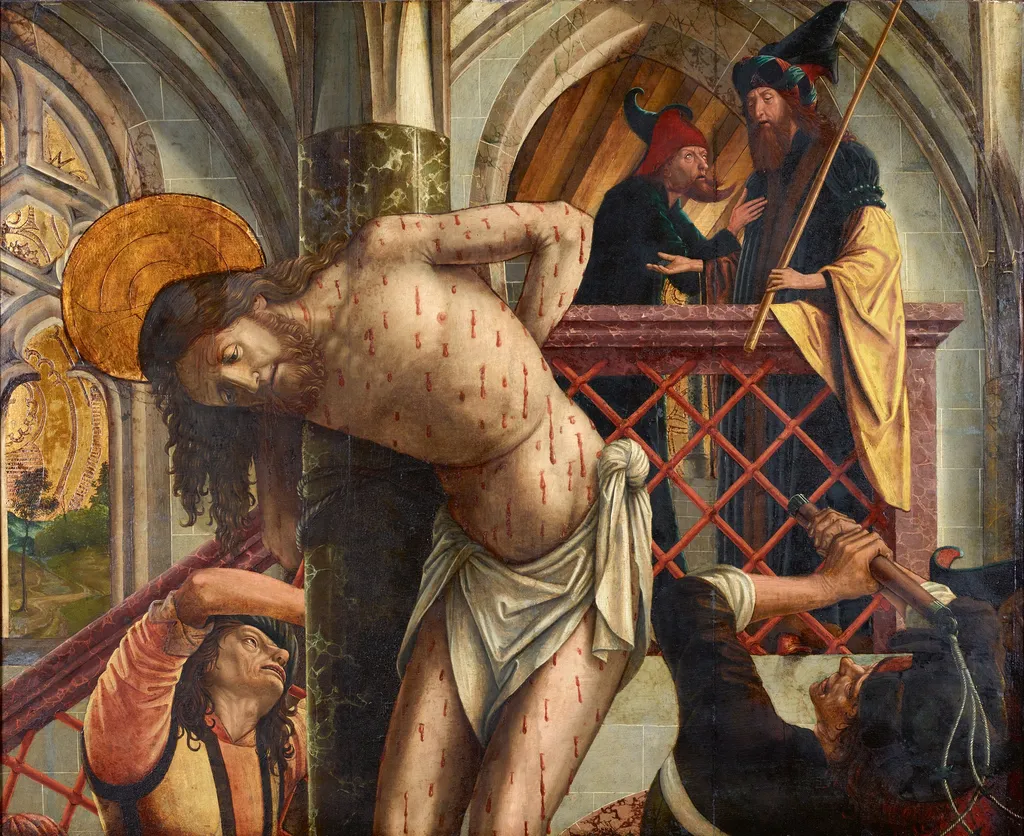
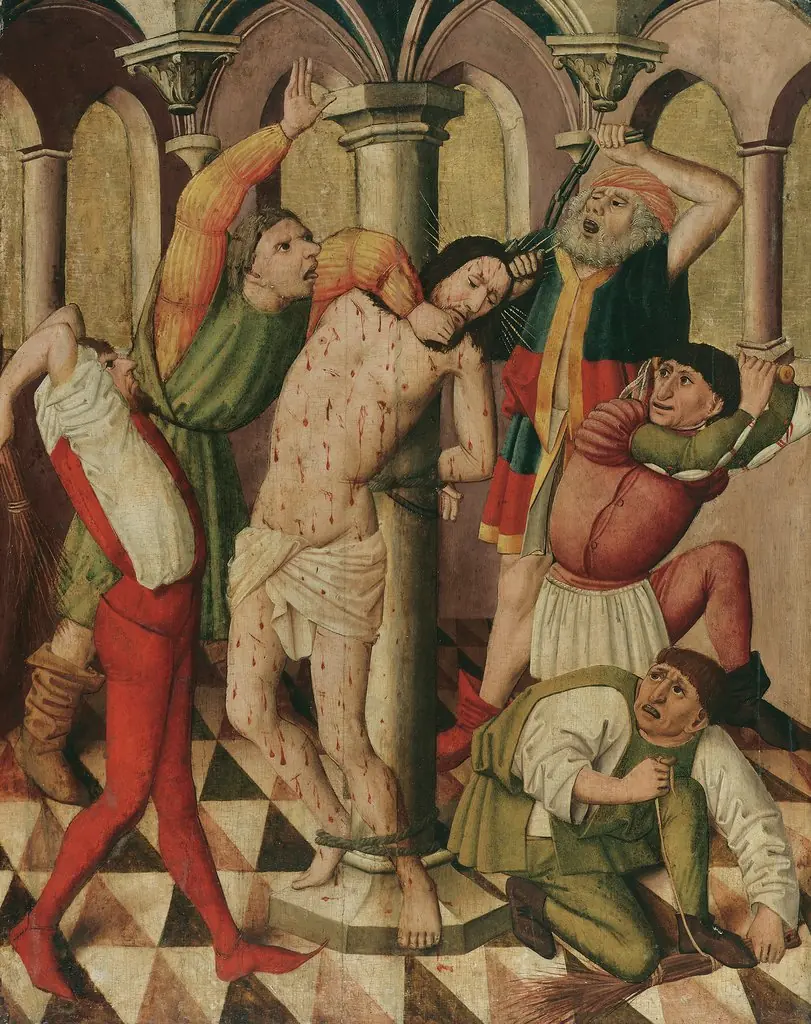
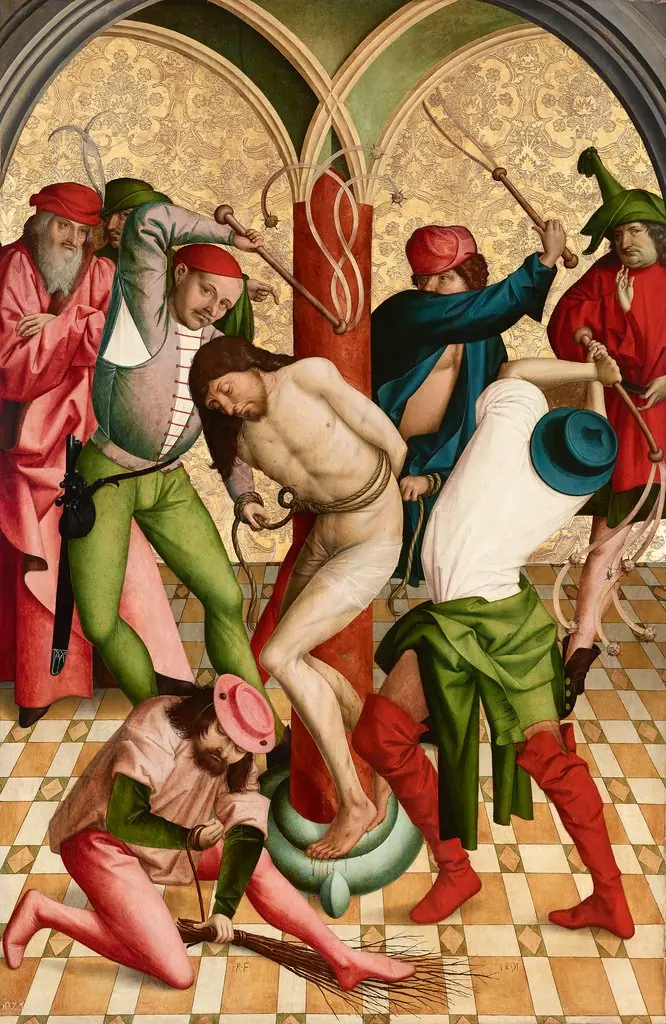
Flagellation of Christ is an oil painting by the Early Renaissance artist Michael Pacher. It dates from 1474 and is held in the collection of the Kunsthistorisches Museum.
About this work
Overview
Created in 1474 by the Tyrolean artist Michael Pacher, this oil painting portrays the Flagellation of Christ. The work belongs to the collection of the Kunsthistorisches Museum in Vienna and exemplifies Pacher’s synthesis of emerging Renaissance ideas with the Northern European visual tradition.
Subject & Meaning
The composition centers on a nearly nude Christ figure suspended on an X‑shaped cross, his torso marked by vivid red wounds and his head bowed in pain. Flanking him are three spectators in richly colored garments; one wields a rod while another gestures toward the wounded back, emphasizing the brutal nature of the episode.
Technique & Style
Pacher employs a pronounced chiaroscuro, using deep shadows to model the figure against a dark backdrop, thereby heightening the dramatic tension. Thick layers of paint render the flesh and injuries with tactile realism, while the surrounding figures are delineated with finer brushwork, creating a contrast between the central suffering and the observing onlookers.
History & Provenance
After its completion, the painting entered the imperial collections that later formed the core of the Kunsthistorisches Museum. It has remained in the museum’s holdings since the 19th century, providing scholars with a key example of Pacher’s late‑career output.
Context
Pacher’s career spanned painting, sculpture, and architecture, and he is noted for incorporating Renaissance spatial principles into Germanic art. His large‑scale altarpieces, such as the St. Wolfgang Altarpiece, combined intricate wood and stone structures, setting a benchmark for North European ecclesiastical art of the period.
Own this work as a print
Artist & collection
Artist
Michael Pacher (c. 1435 – August 1498) was a painter and sculptor from Tyrol active during the second half of the fifteenth century. He was one of the earliest artists to introduce the principles of Renaissance painting…

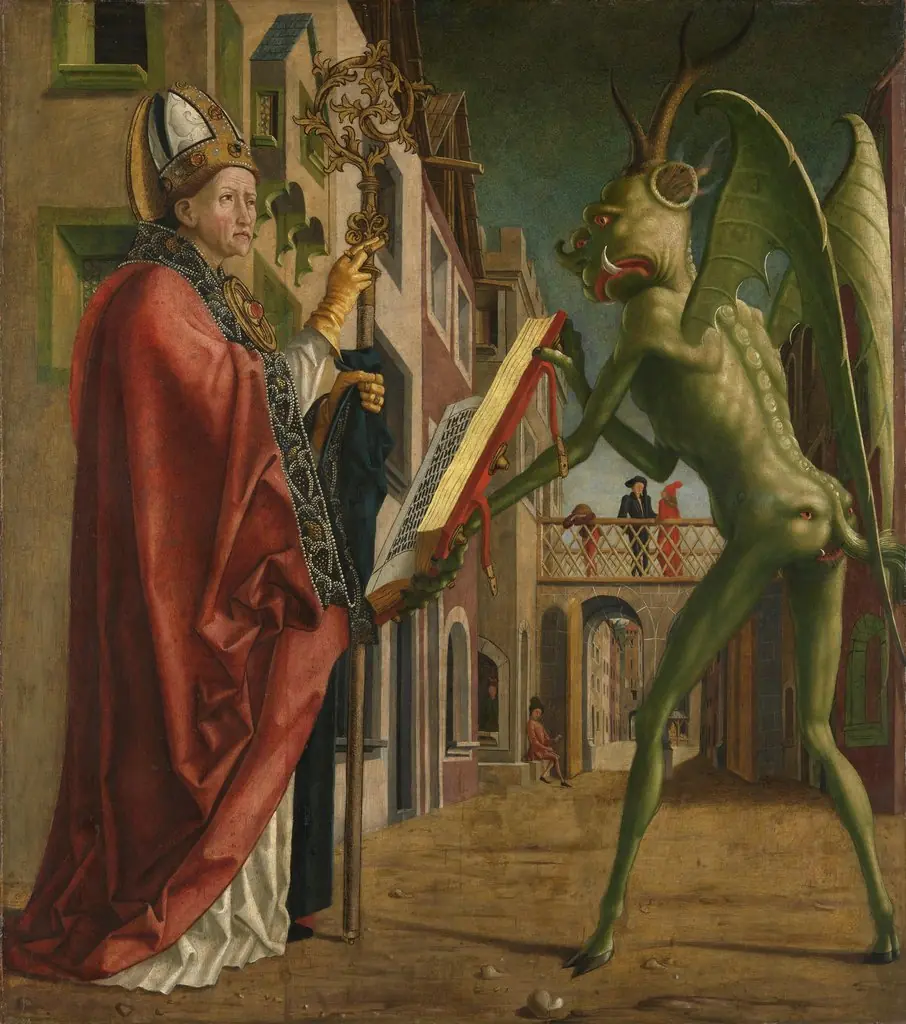 Kirchenväteraltar, Flügelaußenseite: Der Teufel weist dem hl. Augustinus das Buch der Laster vor
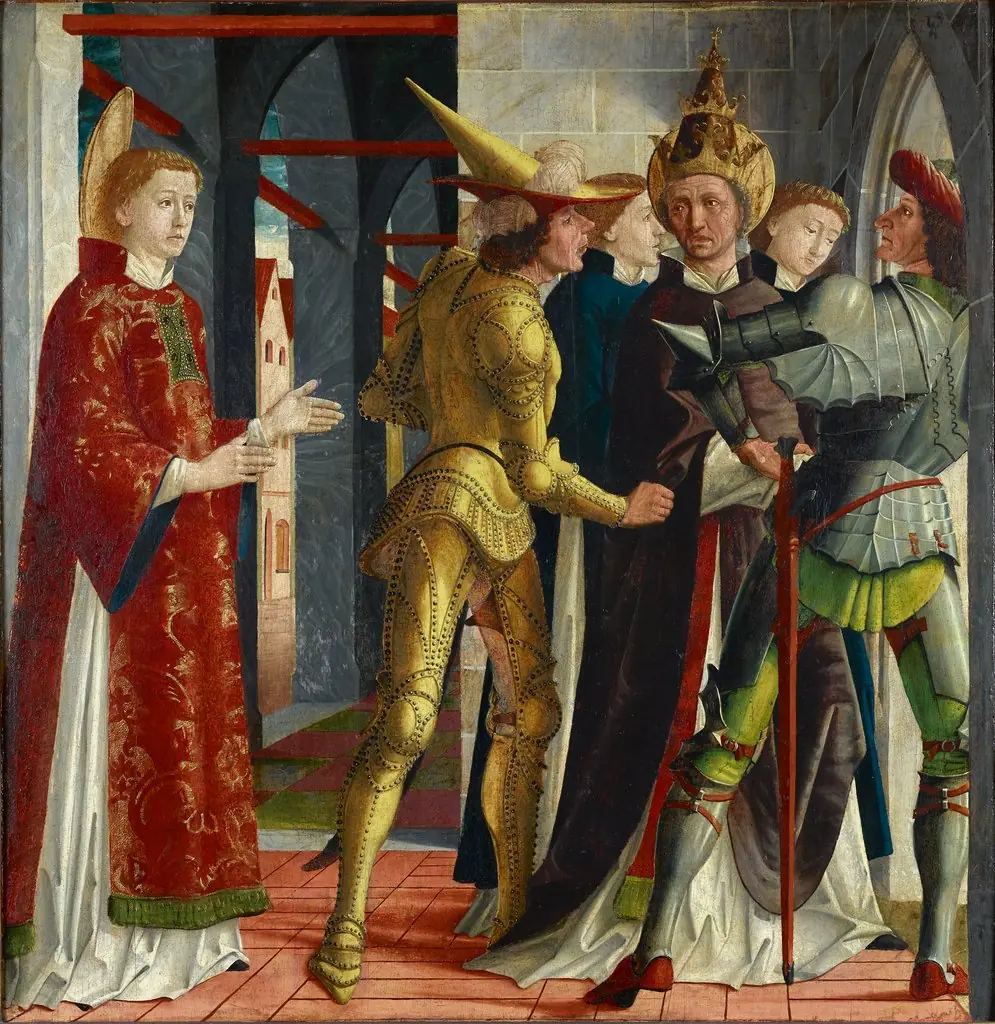 Pope Sixtus II. bids farewell to St. Lawrence
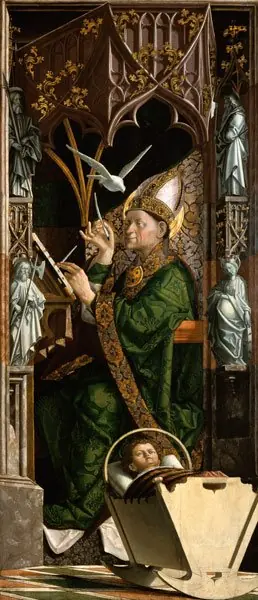 Saint Ambrose from Milan
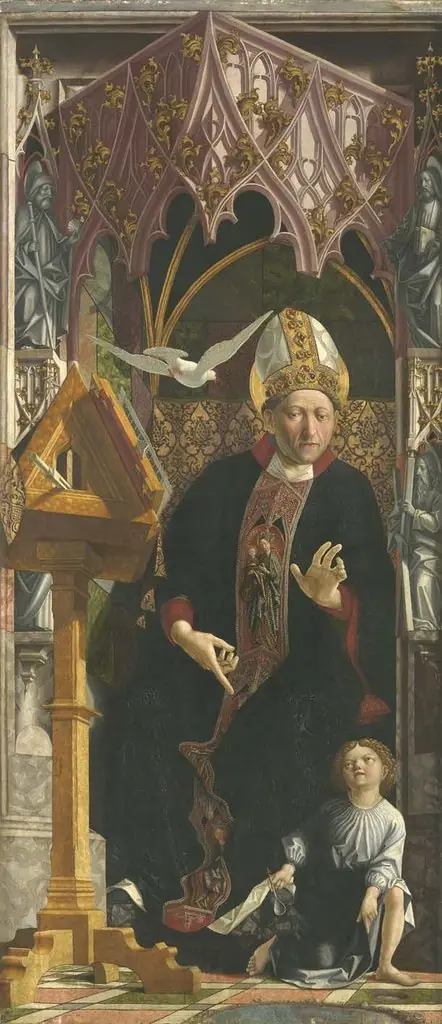 Kirchenväteraltar: Hl. Augustinus
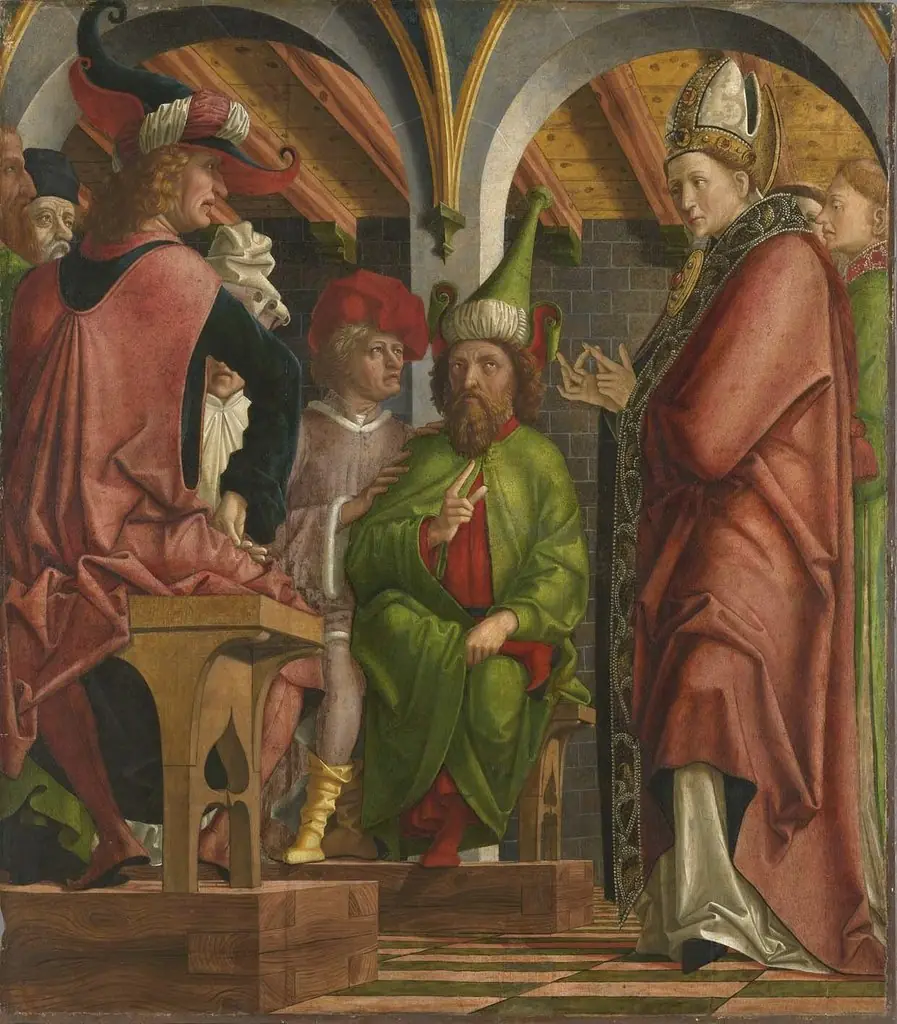 Kirchenväteraltar, Flügelaußenseite: Disputation des hl. Augustinus mit den Häretikern
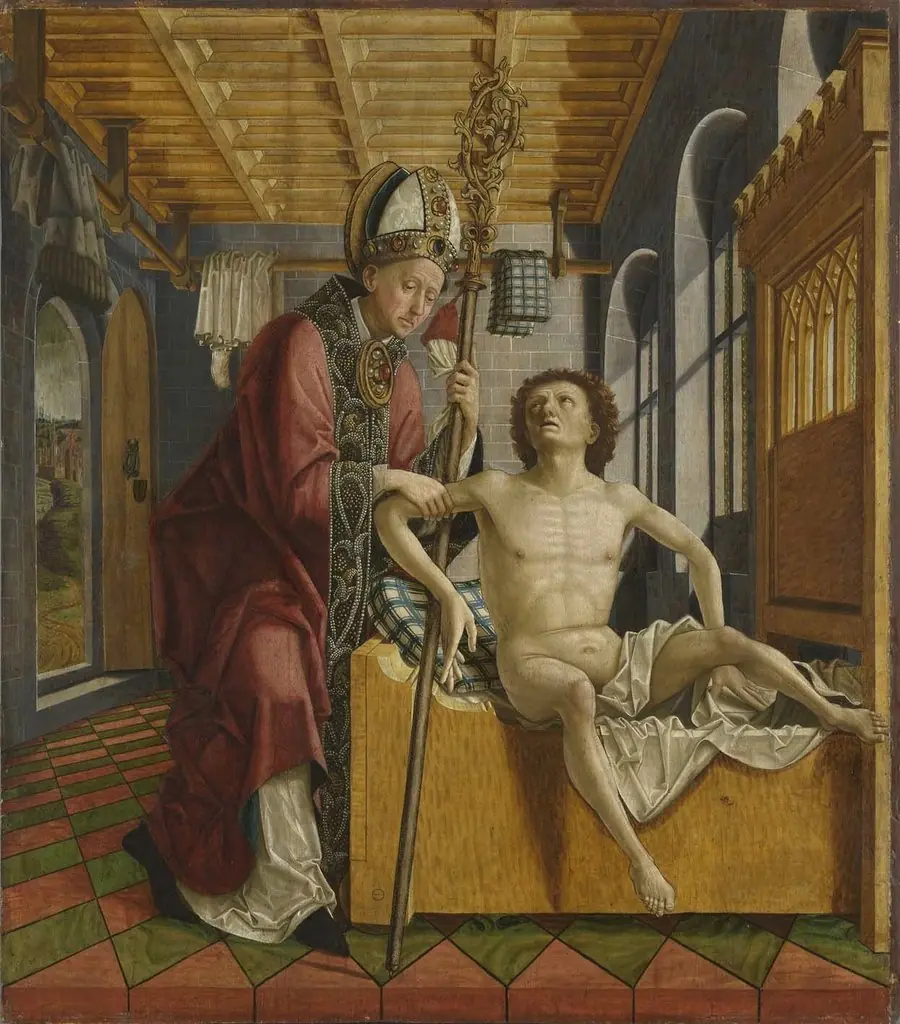 Kirchenväteraltar, Flügelaußenseite: Der hl. Augustinus heilt den Stiftsprobst
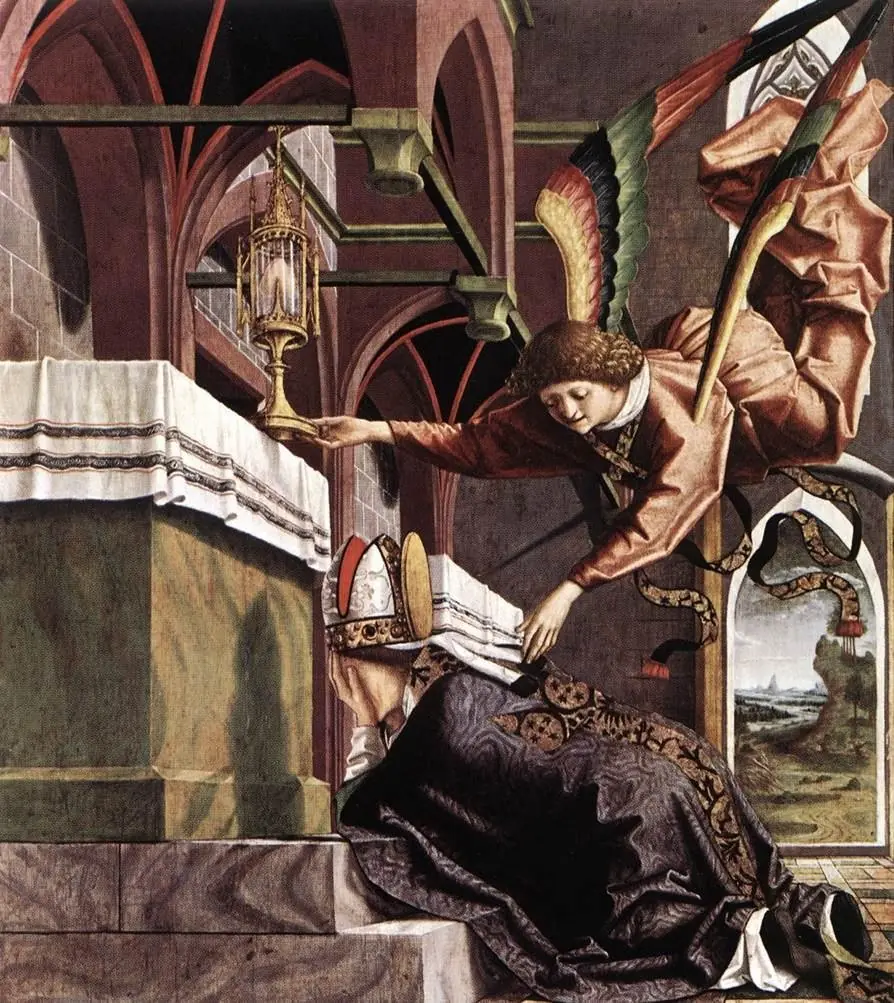 Altarpiece of the Church Fathers: Vision of St Sigisbert
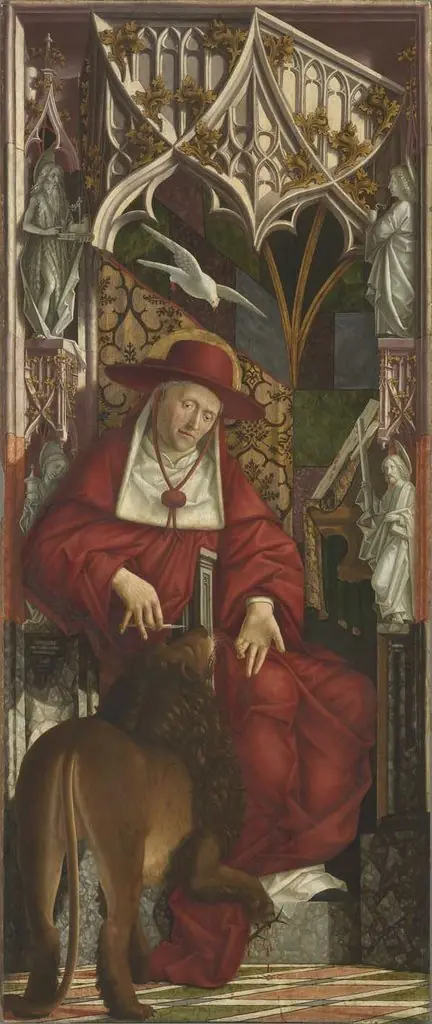 Kirchenväteraltar: Hl. Hieronymus