Artwork
The Temple of Isis at Pompeii
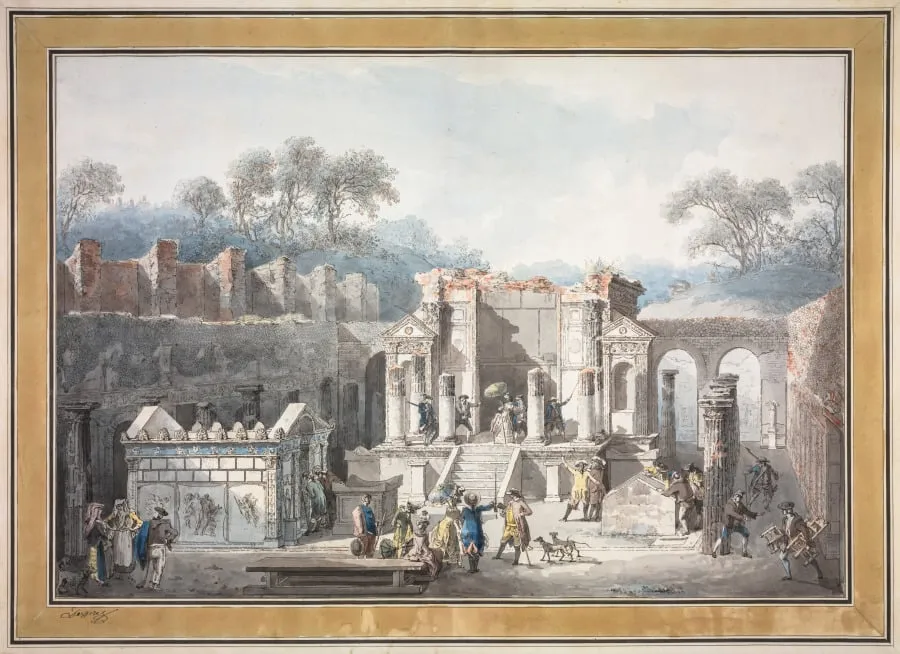
The Temple of Isis at Pompeii is a print by the Romanticist artist Francesco Piranesi. It dates from 1788 and is held in the collection of the Cleveland Museum of Art.
About this work
This print was made as a souvenir for travelers in the 1700s, after Pompeii was dug up from under volcanic ash.
You see a crumbling Roman temple half-buried in vines, its columns cracked but still standing.
This print was made as a souvenir for travelers in the 1700s, after Pompeii was dug up from under volcanic ash. The artist drew what he saw, then etched it so people could take a piece of history home. It’s like an old postcard—accurate, but also a little dramatic.
For more prints like this, look up the subject *Italy, 18th century*.
Overview
This 18th-century print depicts the Temple of Isis at Pompeii, capturing the site's state after its excavation from volcanic ash. Created as a souvenir, it combines observational accuracy with a touch of drama.
Subject & Meaning
The print shows the Temple of Isis, a significant archaeological find, in a state of ruin, overgrown with vines, and with cracked columns still upright, conveying the passage of time and the rediscovery of ancient Roman heritage.
Technique & Style
The work is an etching, originally based on Louis Jean Desprez's on-site observations, then etched by Francesco Piranesi. Some versions were hand-colored and signed by Desprez, marketed as 'dessins coloriés' for discerning collectors.
History & Provenance
Produced in the 1700s, following the rediscovery of Pompeii and Herculaneum, this print was part of a series capitalizing on the European Enlightenment's fascination with ancient Roman sites. Select impressions were personalized with hand coloring and signatures.
Context
Emerging during the Enlightenment, this print reflects Europe's growing interest in classical antiquity. It was designed for 'men of taste', suggesting its appeal to those with an appreciation for history and art.
Legacy
As an early example of archaeological souvenir art, it influenced how historical sites were visually represented for a broader audience, blending documentary precision with aesthetic appeal.
Artist & collection

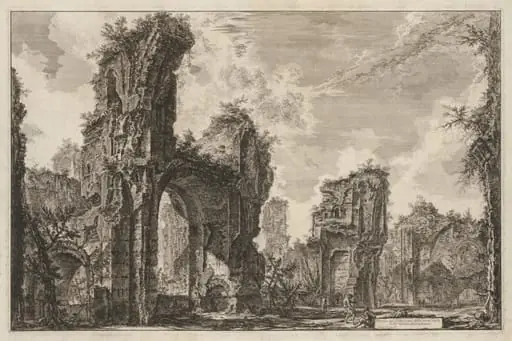 Views of Rome: Rovine del Sisto o sia della gran sala delle Terme Antoniniane
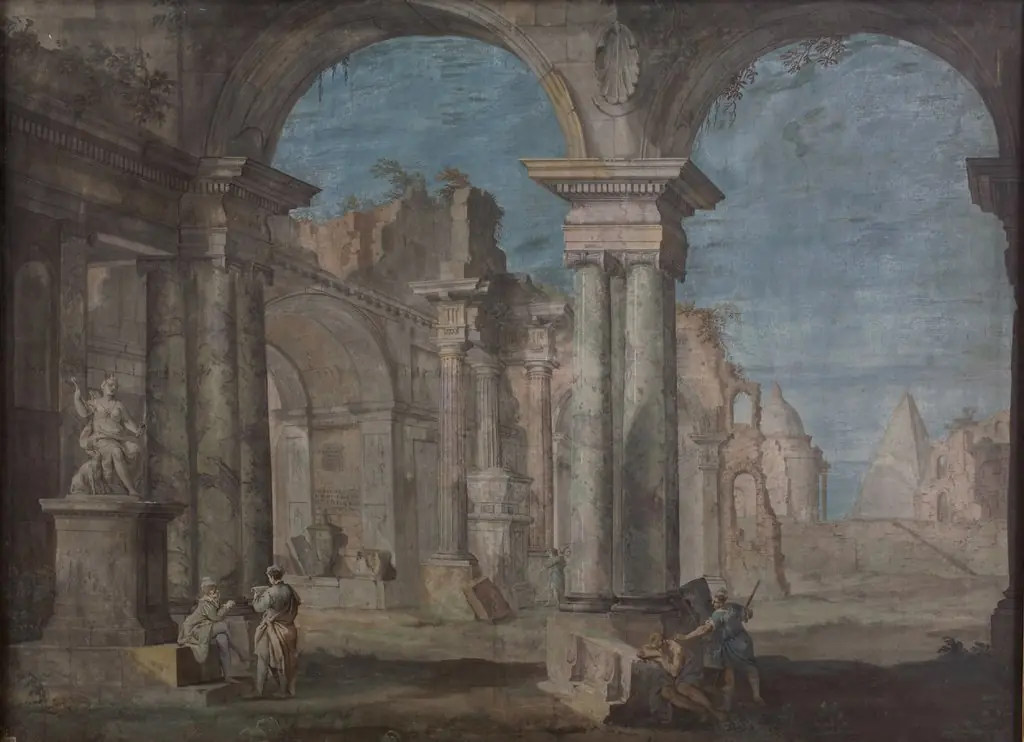 Architekturstück
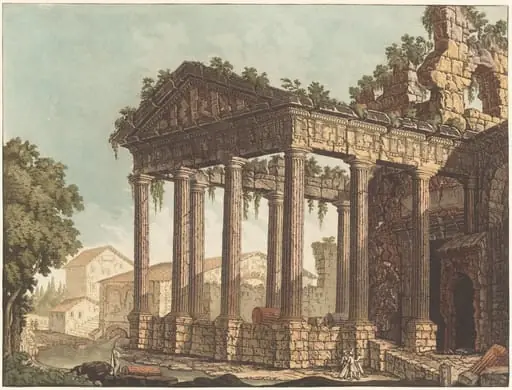 The Temple of Hercules at Cori
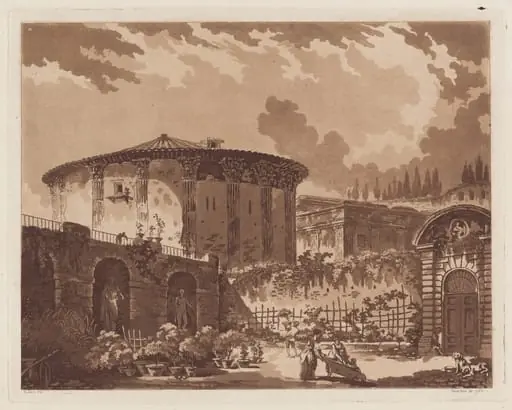 View in the Garden of a Roman Villa, with the Temple of Hercules Victor and the Temple of Portunus
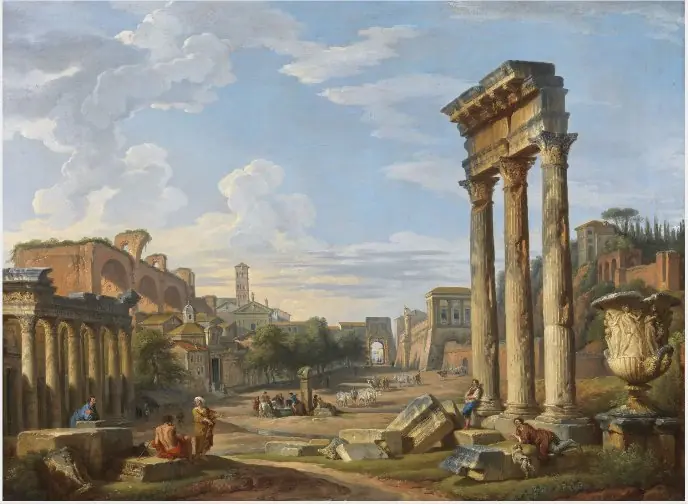 The Roman Forum
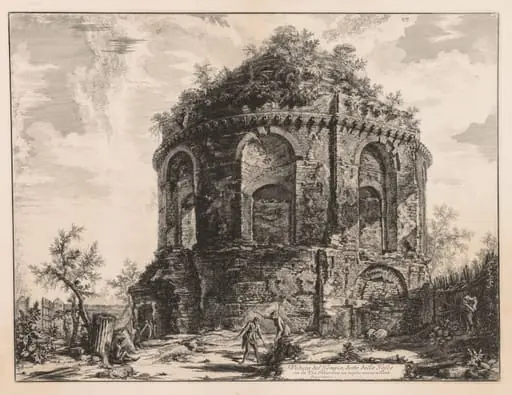 Views of Rome: The So-called Tempio della Tosse, near Tivoli
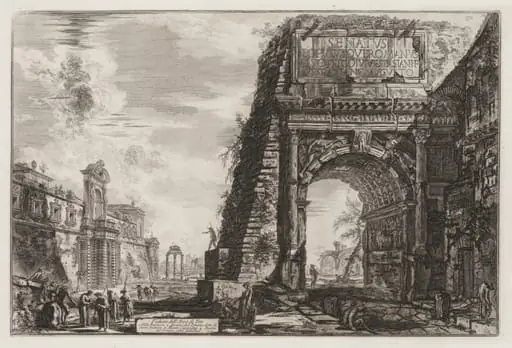 Views of Rome: The Arch or Titus
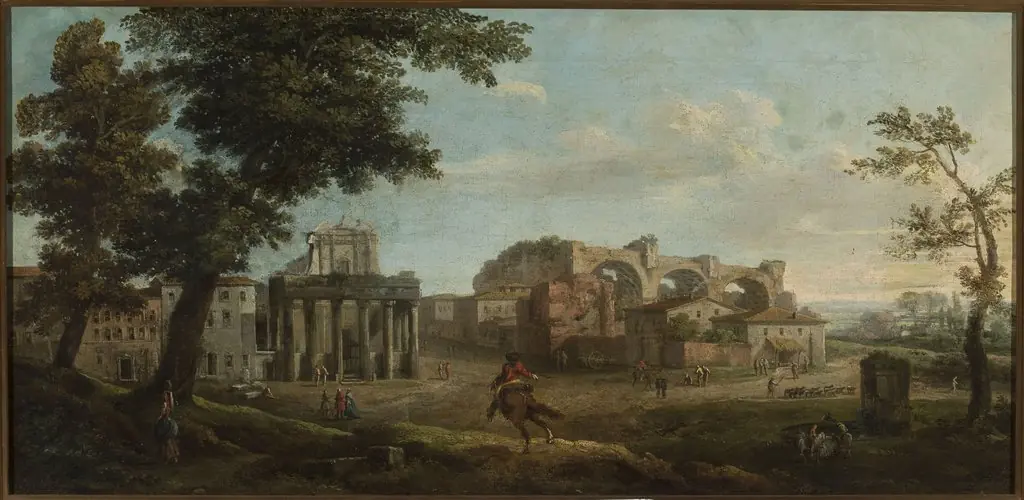 View of Rome
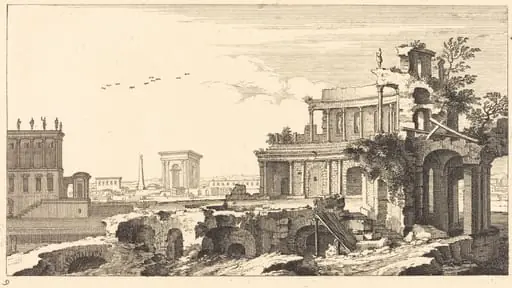 Landscape with Classical Ruins
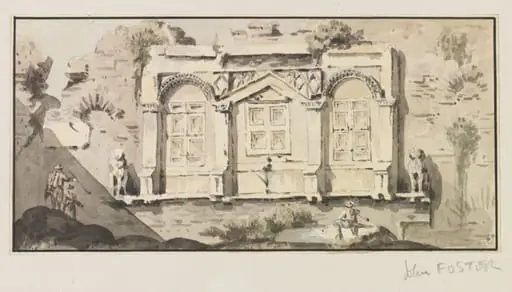 View of the Western facade of the Boukoleon Palace
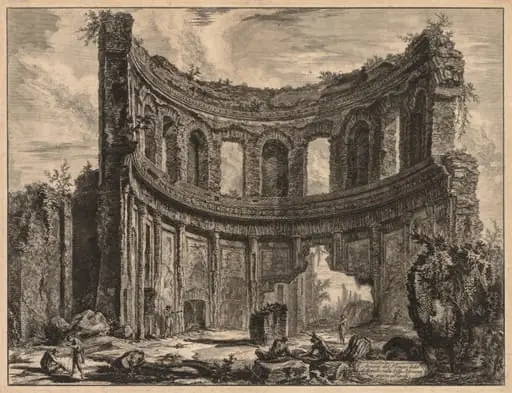 Views of Rome: Remains of the Temple of Apollo near Hadrian's Villa
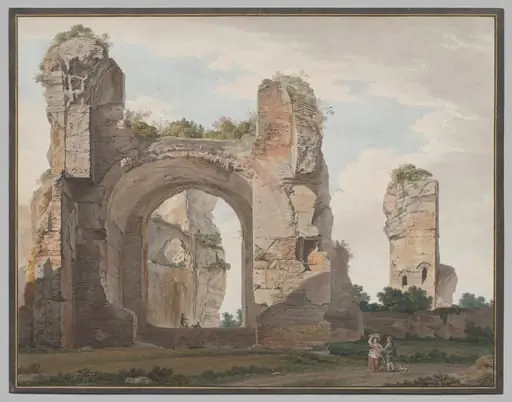 A View of the Ruins of the Baths of Caracalla