Artwork
Views of Rome: Rovine del Sisto o sia della gran sala delle Terme Antoniniane
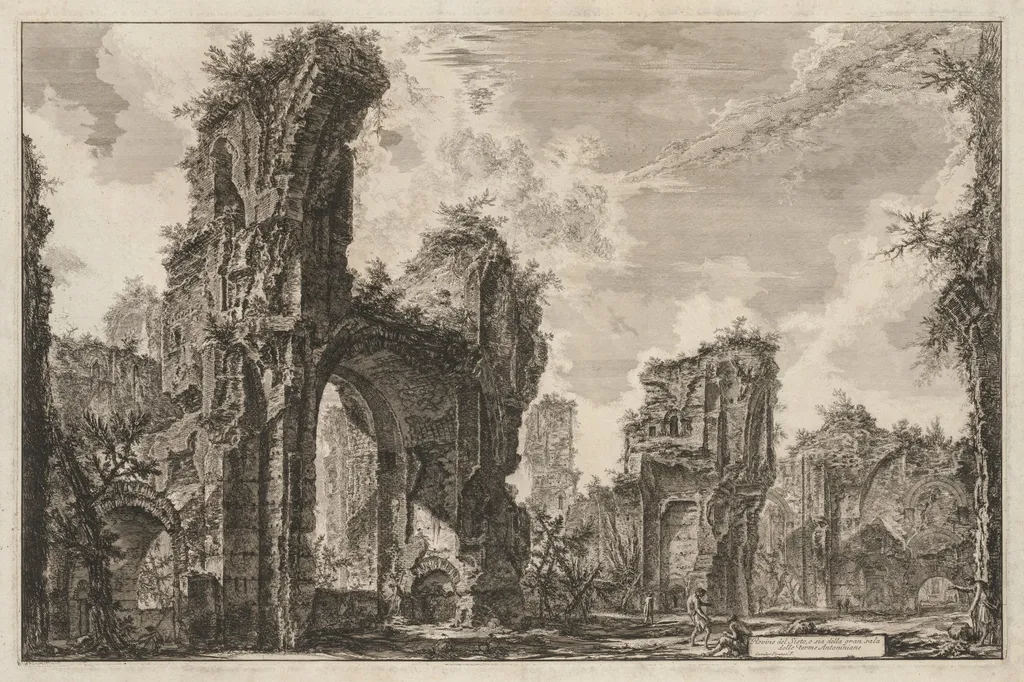
Views of Rome: Rovine del Sisto o sia della gran sala delle Terme Antoniniane is a print by the Romanticist artist Giovanni Battista Piranesi. It dates from 1765 and is held in the collection of the Cleveland Museum of Art.
About this work
Overview
The work is held in the collection of The Cleveland Museum of Art and exemplifies Piranesi’s focus on architectural archaeology through printmaking.
Created in 1765, this print by Giovanni Battista Piranesi depicts the ruins of the Great Hall of the Baths of Caracalla in Rome. Part of a series documenting ancient Roman architecture, it captures the scale and decay of imperial structures with precise linework. The work is held in the collection of The Cleveland Museum of Art and exemplifies Piranesi’s focus on architectural archaeology through printmaking.
Subject & Meaning
The scene portrays the vast, crumbling remains of one of ancient Rome’s largest bath complexes. Columns, vaulted ceilings, and fragmented masonry suggest the grandeur of imperial public life now overtaken by time. Rather than romanticizing decay, Piranesi presents the ruins as silent witnesses to historical continuity, inviting contemplation on the passage of power and the endurance of stone.
Technique & Style
Piranesi employed etching and engraving to render intricate textures and spatial depth. Fine, controlled lines define architectural details, while dense hatching and varying ink tones create dramatic contrasts. The use of chiaroscuro enhances the illusion of volume and shadow, grounding the ruins in a tangible, atmospheric space that feels both monumental and intimate.
History & Provenance
The print was produced during Piranesi’s decades-long engagement with Rome’s antiquities, following his move to the city in 1740. It was likely issued as part of his series on Roman ruins, circulated among European travelers and scholars. The Cleveland Museum of Art acquired the work as part of its broader collection of 18th-century topographical prints.
Context
In the mid-18th century, interest in classical antiquity surged across Europe, fueled by archaeological discoveries and Grand Tour travel. Piranesi’s prints responded to this demand, offering detailed, imaginative reconstructions that blended observation with artistic interpretation. His work influenced architectural theory and the neoclassical movement, positioning ruins as subjects worthy of scholarly and aesthetic study.
Legacy
Piranesi’s detailed renderings of Roman ruins established a visual language for antiquity that endured into the 19th century. Architects and artists drew from his compositions to evoke historical weight and spatial complexity. This print, like others in the series, remains a key reference for understanding how Enlightenment-era Europe perceived and reconstructed its classical past.
Artist & collection
Artist
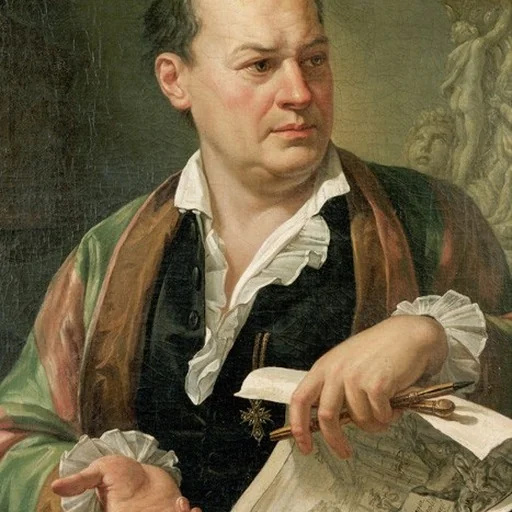
Giovanni Battista (or Giambattista) Piranesi (Italian pronunciation: ; also known as simply Piranesi; 4 October 1720 – 9 November 1778) was an Italian classical archaeologist, architect, and artist, famous for his…

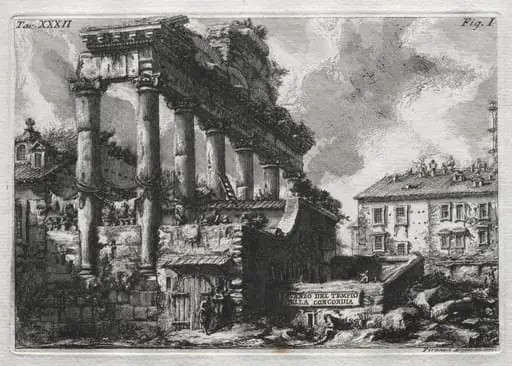 Avanco del Tempio della Concordia
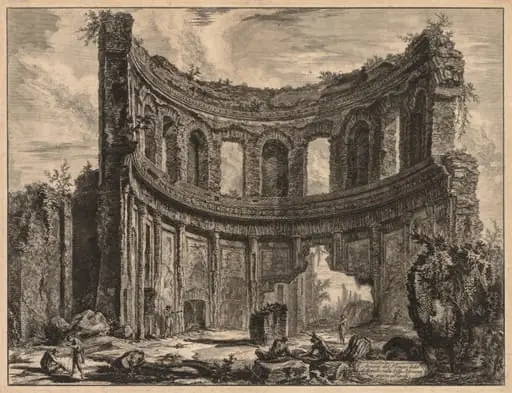 Views of Rome: Remains of the Temple of Apollo near Hadrian's Villa
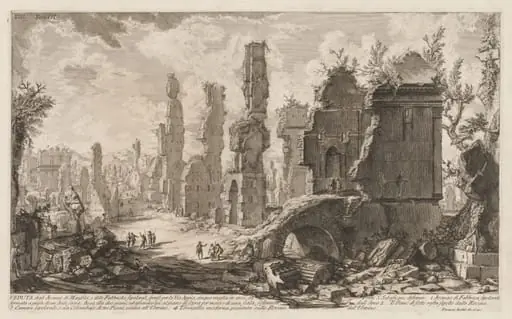 Antiquities of Rome: The Appian Way
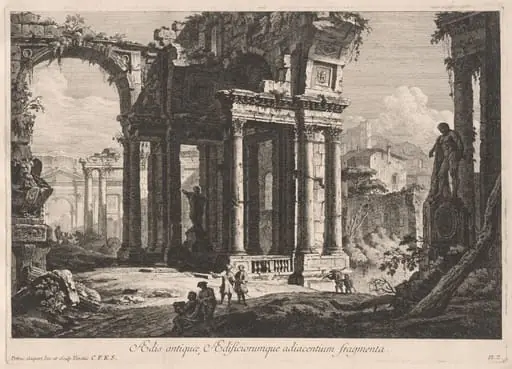 AEdis antiquae, AEdificiorumque adiacentium fragmenta
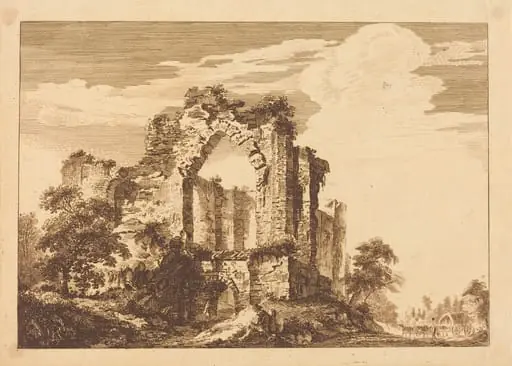 Ruins with a Seated Man, and a Covered Wagon in the Distance
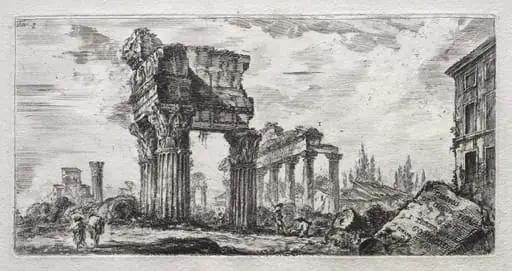 Tempio di Giove Tonante
 Antonine Baths, or Baths of Caracalla
 The Old Palace at Tivoli