Artwork
View in the Garden of a Roman Villa, with the Temple of Hercules Victor and the Temple of Portunus
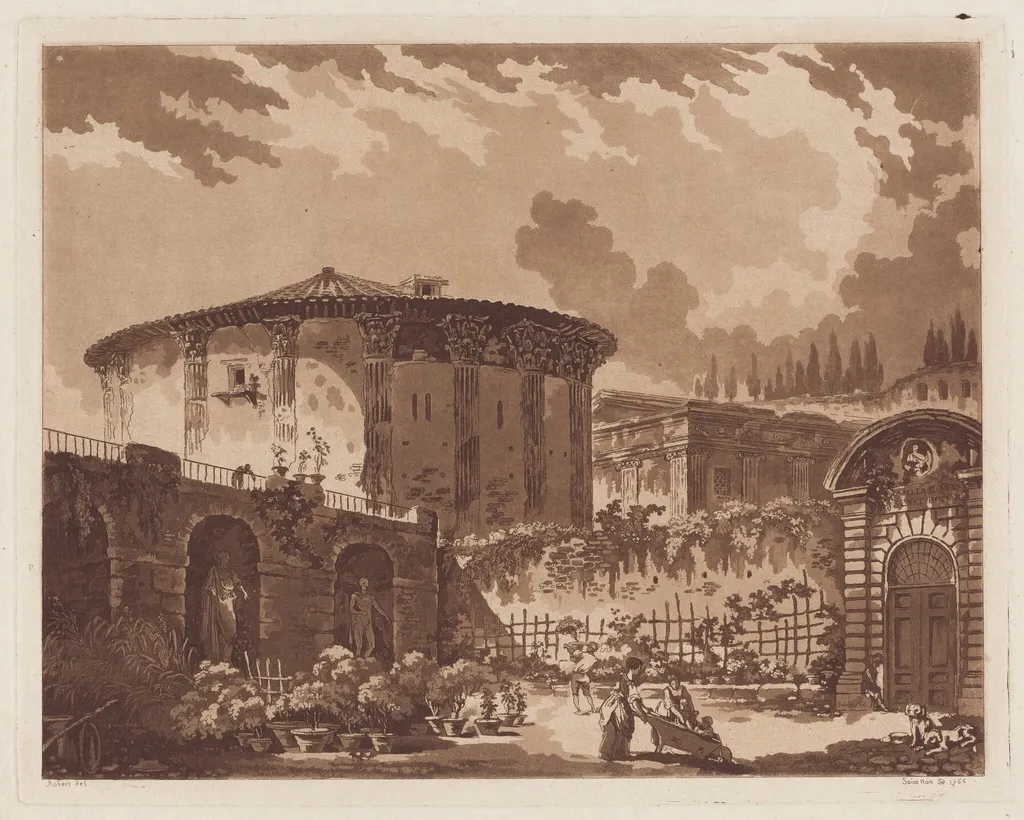
View in the Garden of a Roman Villa, with the Temple of Hercules Victor and the Temple of Portunus is an ink print by the Romanticist artist Jean-Claude-Richard, Abbé de Saint-Non. It dates from 1766 and is held in the collection of the National Gallery of Art. This 1766 print by Jean-Claude-Richard d'Antoine, Abbé de Saint-Non, depicts a tranquil garden setting near ancient Roman temples.
About this work
Overview
This 1766 print by Jean-Claude-Richard d'Antoine, Abbé de Saint-Non, depicts a tranquil garden setting near ancient Roman temples. Executed in etching and aquatint on laid paper, the work renders the scene in warm brown tones. It is part of a series documenting Roman antiquities and landscapes, and is held in the collection of the National Gallery of Art in Washington, D.C.
Subject & Meaning
The composition suggests contemplation and leisure, reflecting 18th-century ideals of pastoral retreat and reverence for antiquity.
The scene centers on a quiet garden with two ancient temples in the distance: one with rounded columns, likely the Temple of Hercules Victor, and a simpler structure, possibly the Temple of Portunus. A woman in classical dress stands near a stone arch, while two figures tend to potted plants. The composition suggests contemplation and leisure, reflecting 18th-century ideals of pastoral retreat and reverence for antiquity.
Technique & Style
Saint-Non employed aquatint to achieve soft gradations of tone, mimicking the effect of watercolor washes. This technique allowed subtle transitions in the sky and foliage, enhancing the atmospheric mood. Etching defined the architectural details with fine lines, while the overall palette of brown inks unified the scene in a restrained, harmonious palette typical of topographical prints of the period.
History & Provenance
Created during Saint-Non’s travels in Italy, the print was part of a larger project to document Roman ruins for European audiences. It was likely produced for collectors and scholars interested in classical architecture. The work entered the National Gallery of Art’s collection through established acquisition channels, preserving its role as a record of 18th-century antiquarian interest.
Context
In the mid-1700s, Grand Tour travelers sought out Roman ruins as symbols of cultural heritage. Artists like Saint-Non responded to this demand by producing detailed, atmospheric views that blended topographical accuracy with poetic mood. This print reflects a growing fascination with antiquity as both historical artifact and aesthetic ideal, particularly among educated elites.
Legacy
Saint-Non’s prints contributed to the dissemination of Roman architectural forms across Europe, influencing landscape design and decorative arts. Though less widely known today than contemporaries like Piranesi, his work remains a quiet testament to the period’s scholarly engagement with antiquity, offering a nuanced alternative to dramatic or monumental interpretations of ancient ruins.
Artist & collection

Artist
Jean-Claude-Richard, Abbé de Saint-Non
Saint-Non, Jean-Claude-Richard, Abbé de (1727–1791) was an artist.

 A Gardener and a Gentleman
 Interior of a Roman Villa
 Le concert
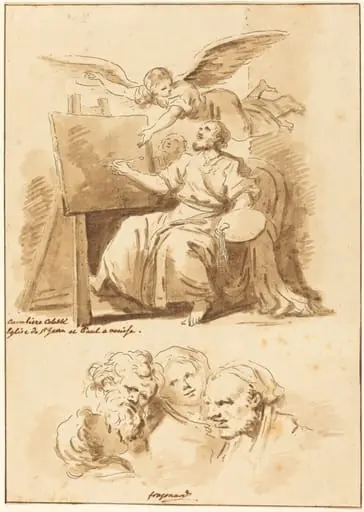 Saint Luke at His Easel and Four Expressive Heads
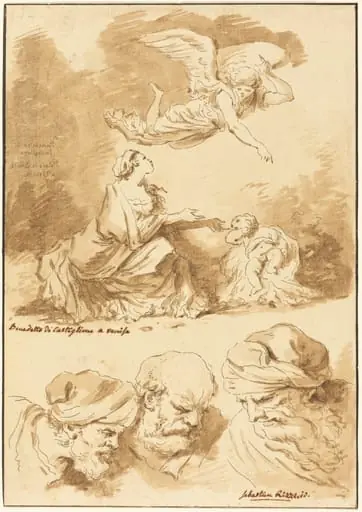 Hagar Consoled by an Angel (from a painting by Castiglione) and Three Heads of Old Men (from a painting by Ricci of Jesus and the Adultress)
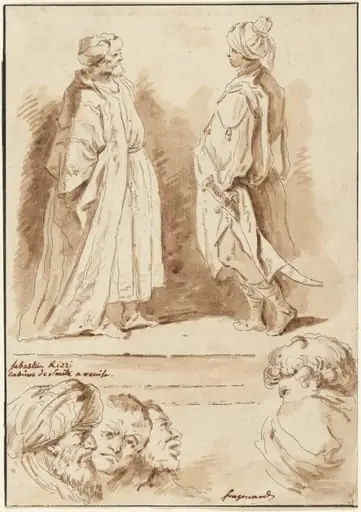 Details from "The Adoration of the Magi" and "The Pool at Bethesda"
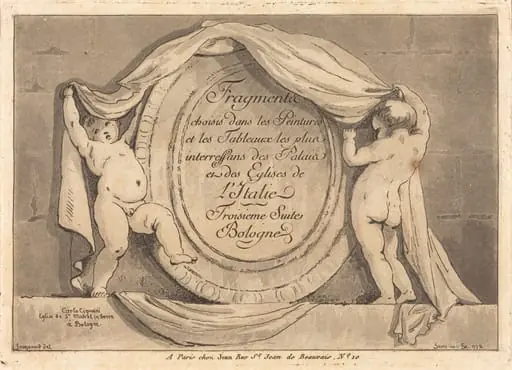 Title Page: Oval Design from the Church of San Michele de Bosco, Bologna
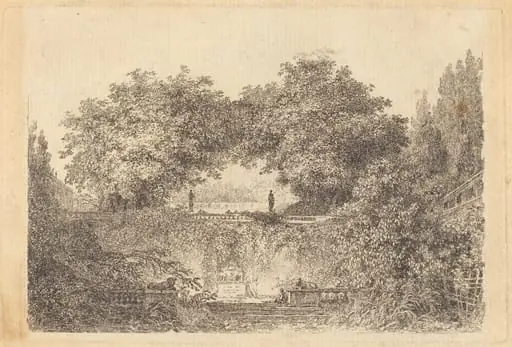 Le Petit Parc
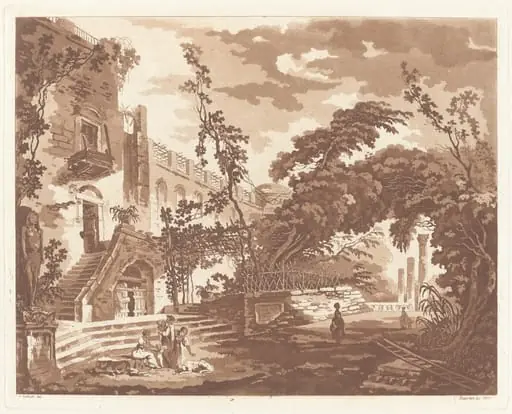 Entrance of the Temple of Serapis at Pozzuoli
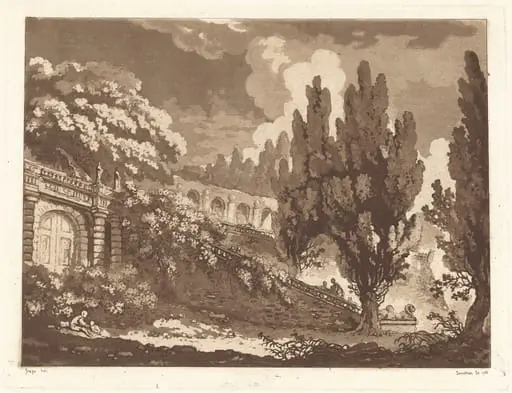 Stairway in an Italian Garden
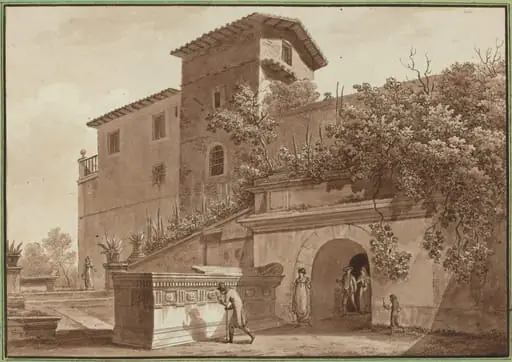 Tomb of Scipios
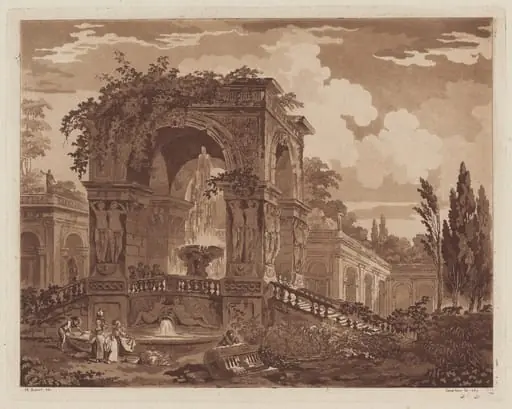 View of an Antique Fountain
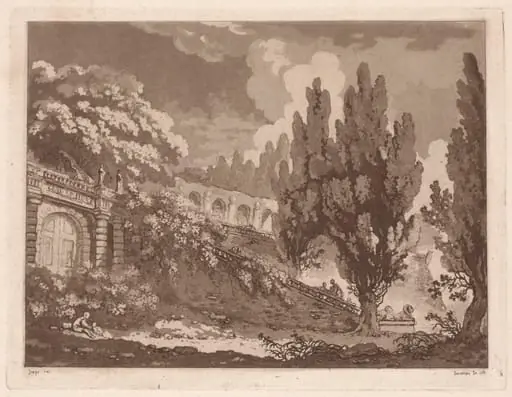 Stairs in an Italian Garden
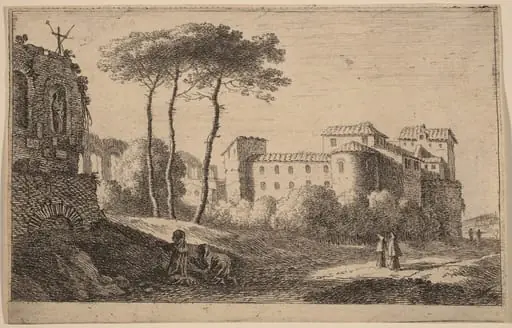 View of the Church "Quattro Santi Coronati"
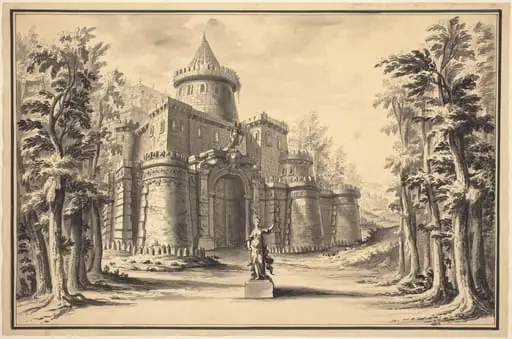 A Stage Set with a Statue and a Palace
 Entrance to the French Capuchin Convent at Athens
 The Temple of Hercules at Cori
 Santa Constanza, Rome