Artwork
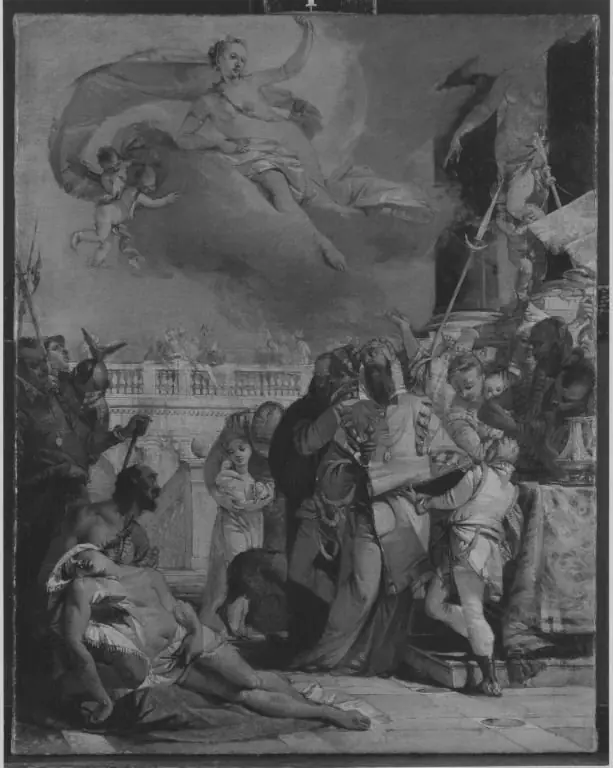
Iphigenie wird zum Tempel geführt
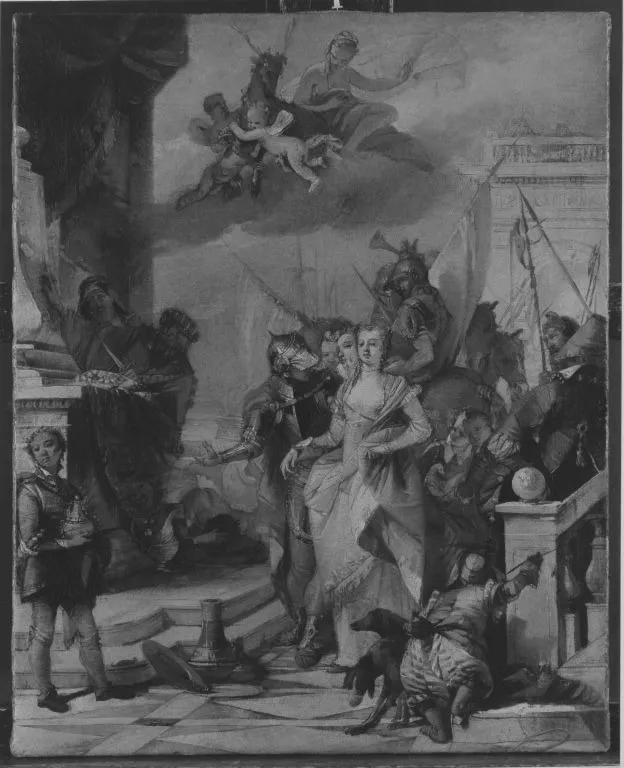
Iphigenie wird zum Tempel geführt is an unspecified painting by the Rococo painting artist Francesco Zugno. It dates from 1747 and is held in the collection of the Bavarian State Painting Collections.
About this work
You can find this painting at the Alte Pinakothek, or look up the technique of sfumato to learn more about how artists create soft, hazy effects in their work.
This painting is called Iphigenie wird zum Tempel geführt.
It was created by Francesco Zugno in 1747.
The story behind the title might be interesting to learn more about, as it seems to reference a character from ancient Greek mythology.
It's an allegory, which means it's using symbols and characters to convey a message.
I'm not sure what the message is, but allegories often have hidden meanings.
You can find this painting at the Alte Pinakothek, or look up the technique of sfumato to learn more about how artists create soft, hazy effects in their work.
Overview
Francesco Zugno, an Italian painter active in the mid‑18th century, completed the canvas *Iphigenie wird zum Tempel geführt* in 1747. Executed in the Rococo idiom that prevailed in Venice, the work exemplifies the period’s preference for refined, ornamental composition. Today the painting belongs to the collection of the Alte Pinakothek in Munich.
Subject & Meaning
The composition illustrates a moment from Greek myth in which Iphigenia, daughter of Agamemnon, is escorted to a temple. By portraying this episode, Zugno engages the allegorical tradition of using classical narratives to explore themes such as sacrifice, destiny, and divine intervention, inviting viewers to contemplate the moral dimensions of the story.
Technique & Style
Zugno employs the soft transitions and atmospheric modeling associated with the sfumato technique, creating a hazy, luminous effect that softens contours and unifies the scene. The palette is light and pastel, and the figures are arranged with a graceful rhythm, reflecting the decorative elegance characteristic of Venetian Rococo painting.
History & Provenance
After its creation in 1747, the painting entered various private collections before being acquired by the Alte Pinakothek, where it has been on display since the museum’s early acquisitions of 18th‑century Italian art. Its presence in the Munich collection underscores the institution’s commitment to representing the breadth of European Rococo.
Artist & collection
Artist
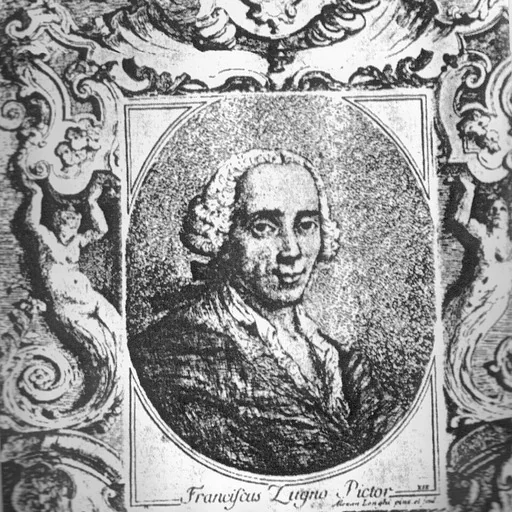
Francesco Zugno (Italian pronunciation: c. 1708–1787) was an Italian painter of the Rococo period who had a successful career in Venice.

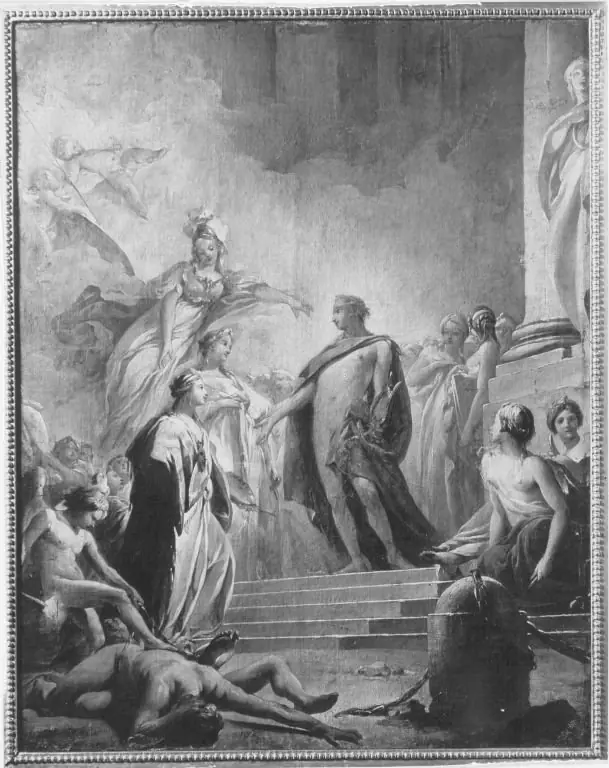 Allegorische Szene (?)
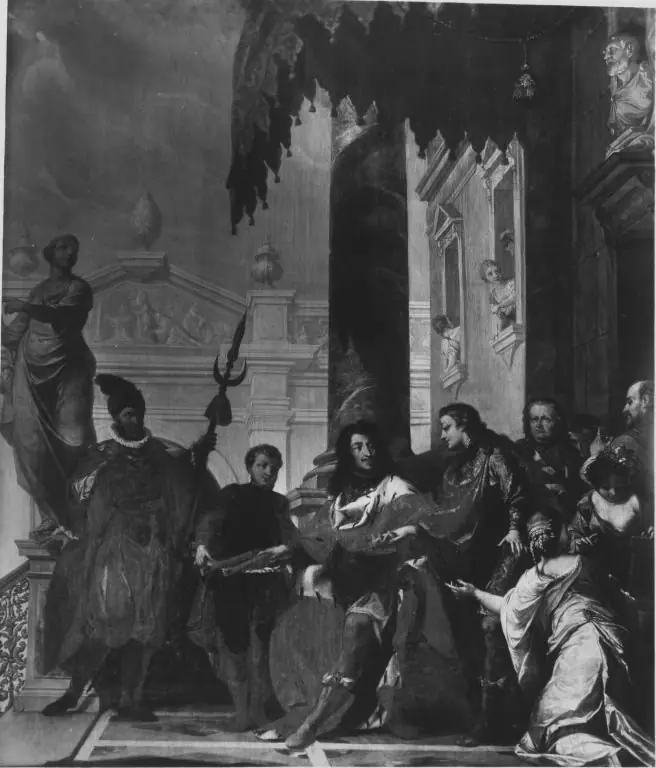 Kurfürst Johann Wilhelm übergibt den Kommandostab
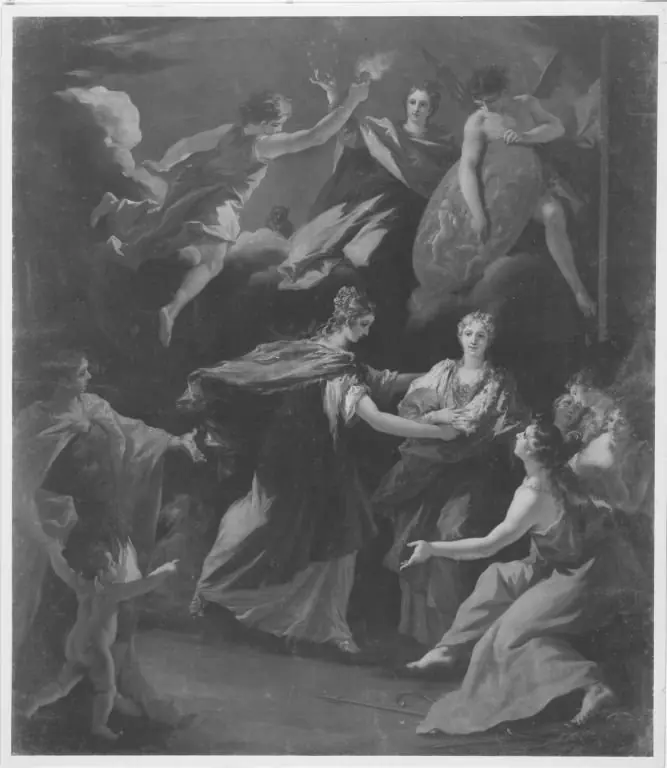 Begrüßung der Kurfürstin Maria Luisa von Toskana
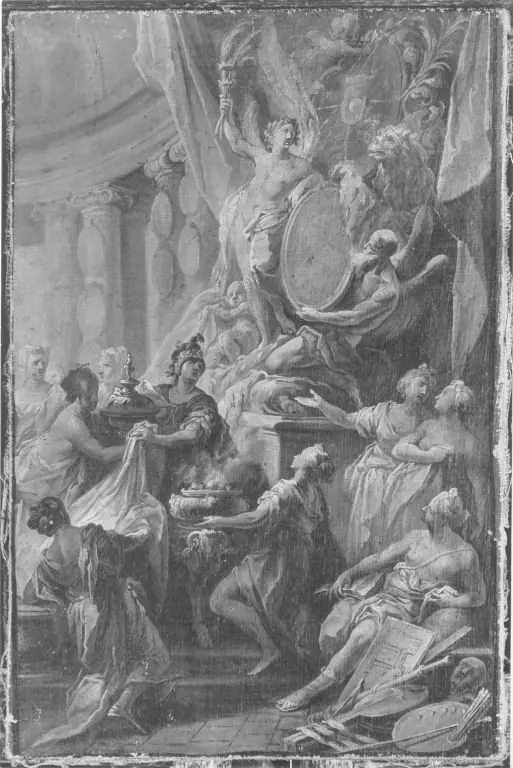 Huldigung an Kurfürst Maximilian III. Joseph von Bayern
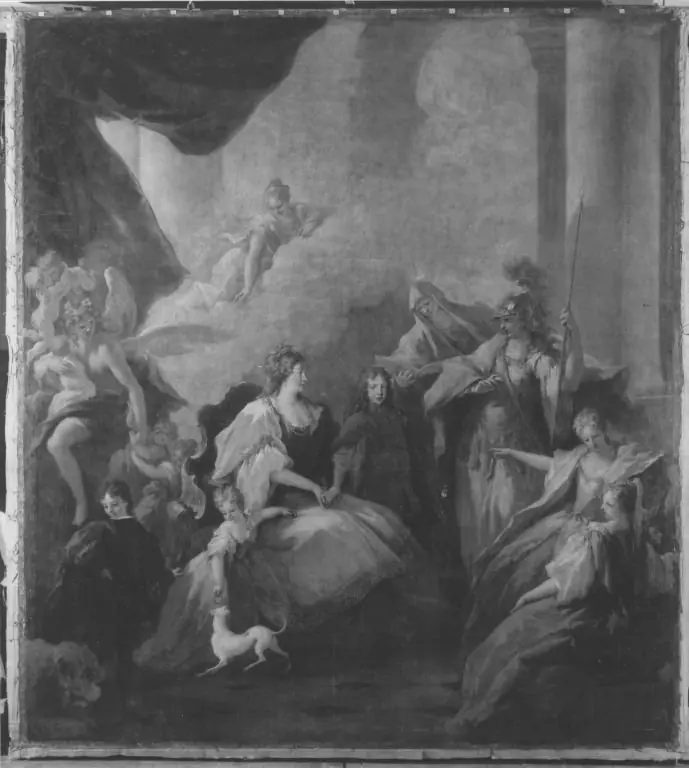 Erziehung des Kurprinzen Johann Wilhelm
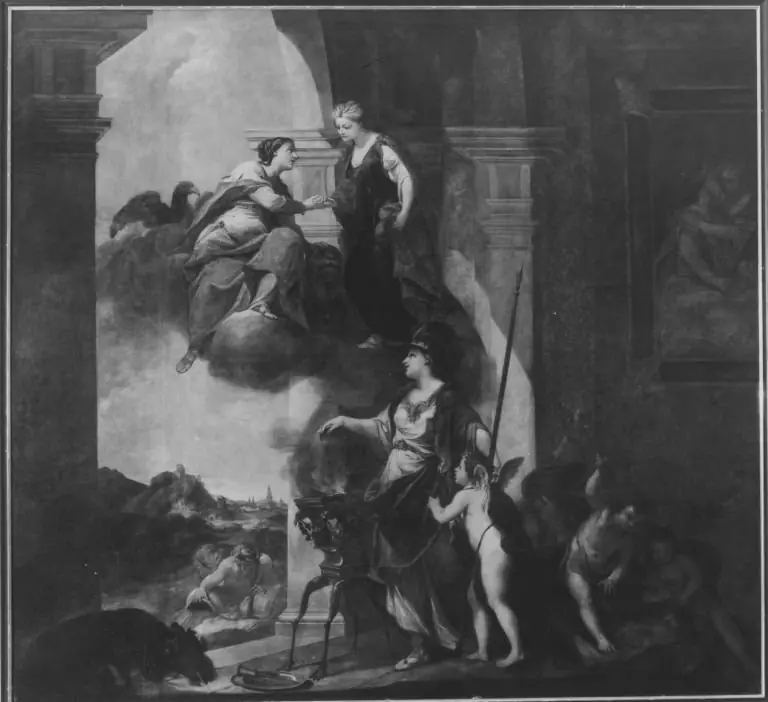 Minerva von Hymen Begleitet
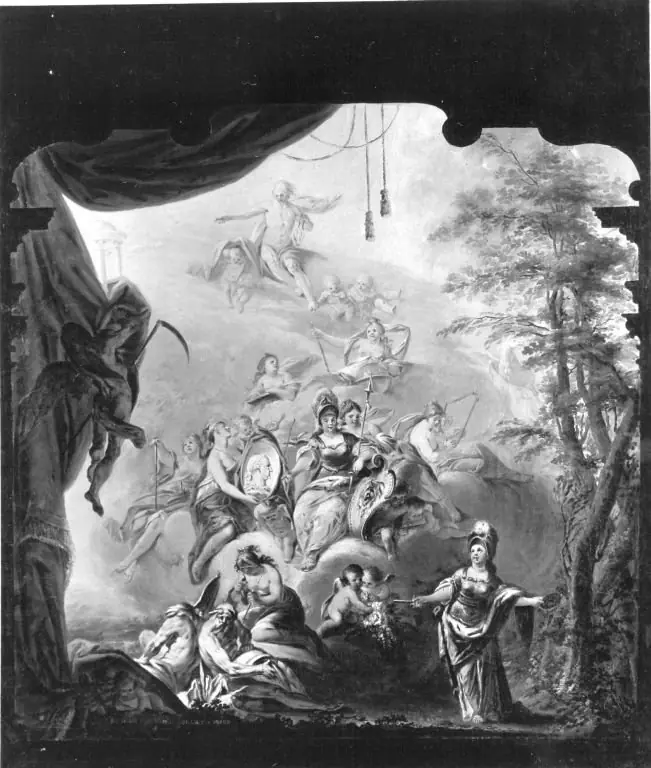 Verherrlichung des Kurfürsten Karl Theodor von der Pfalz
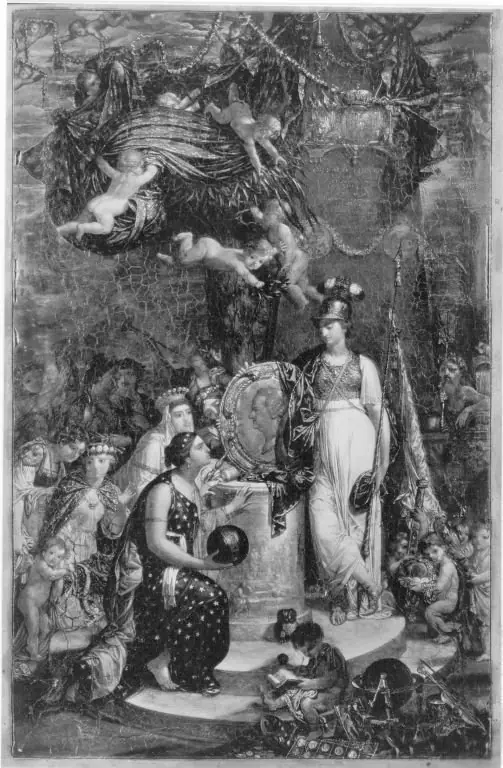 Apotheosis of the Elector Carl Theodor of the Palatinate
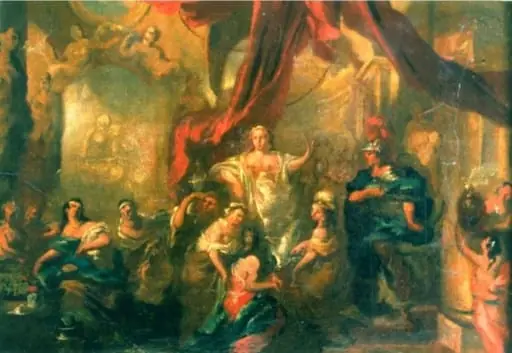 Scenă alegorică
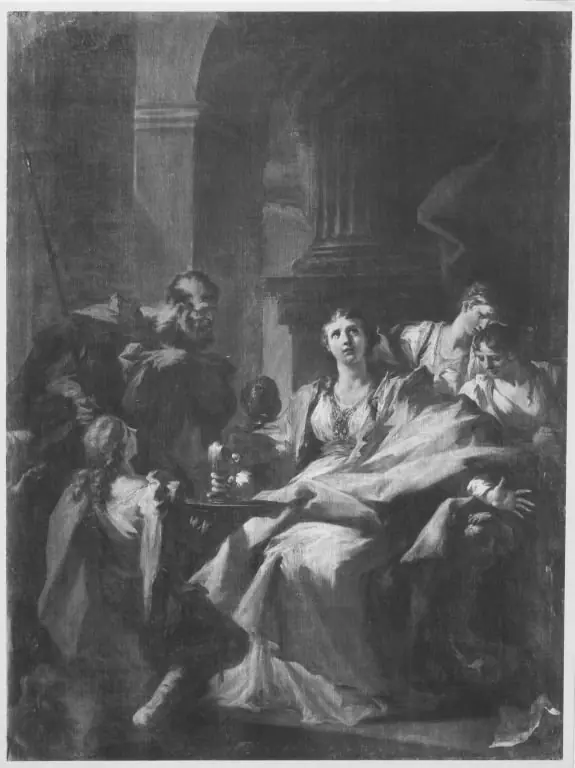 Sophonisbe empfängt den Giftbecher
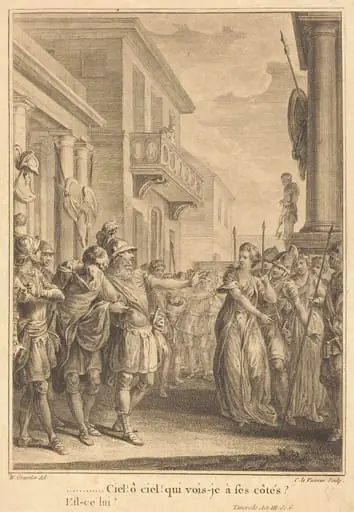 Ciel! ô ciel! qui vois-je à ses côtés?