Artwork
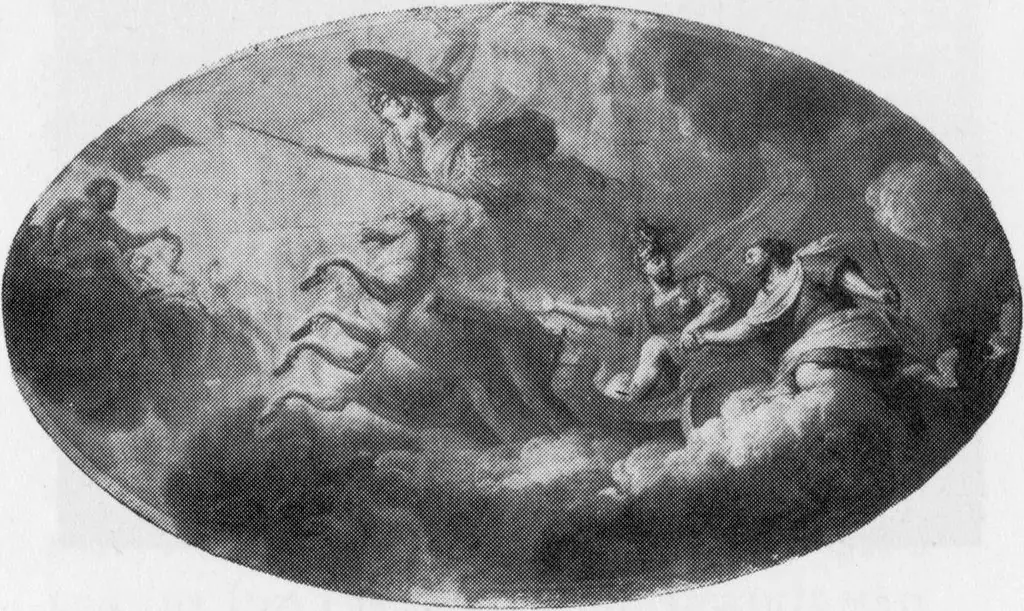
Verherrlichung des Kurfürsten Karl Theodor von der Pfalz
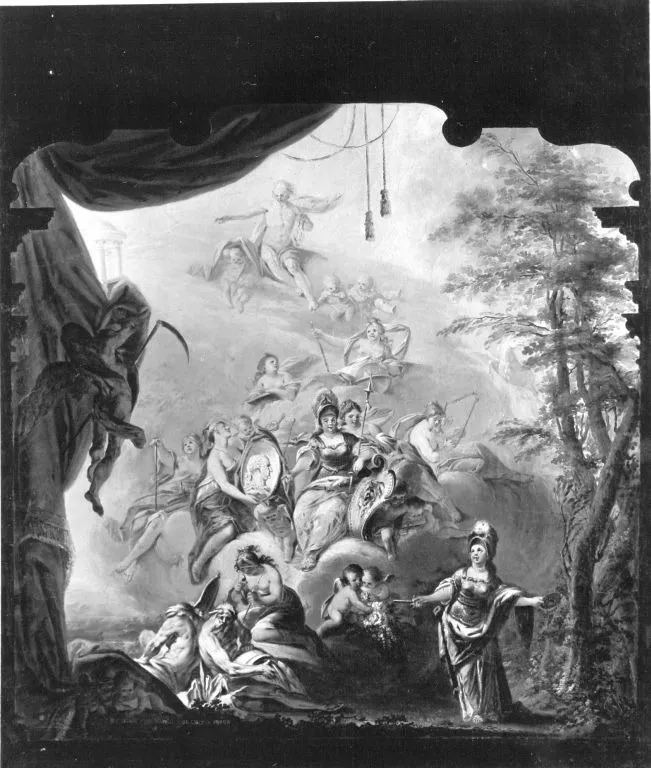
Verherrlichung des Kurfürsten Karl Theodor von der Pfalz is an unspecified painting by the Rococo painting artist Franz Anton von Leydensdorff. It dates from 1772 and is held in the collection of the Bavarian State Painting Collections.
About this work
Overview
It depicts a celestial assembly centered on a female figure symbolizing the Elector’s sovereignty, surrounded by attendants and mythological beings.
Painted in 1772 by Franz Anton von Leydensdorff, this work honors Karl Theodor, Elector Palatine, through an allegorical scene. It depicts a celestial assembly centered on a female figure symbolizing the Elector’s sovereignty, surrounded by attendants and mythological beings. The composition blends portraiture with fantasy, reflecting the Baroque tradition of glorifying rulers through symbolic imagery. The painting resides in the Alte Pinakothek in Munich.
Subject & Meaning
The central figure, seated on a throne with a scepter, represents the Elector’s authority personified as a goddess-like entity. Figures in flight, bearing bows, allude to Mercury or other divine messengers, reinforcing the theme of imperial favor and cosmic sanction. The gathering crowd, dressed in period attire, signifies courtly loyalty and the idealized harmony of the state under Karl Theodor’s rule, merging political tribute with mythological allegory.
Technique & Style
Leydensdorff employs richly detailed brushwork and vivid color to render textures in fabric, skin, and foliage. The scene is structured with theatrical depth, using layered space and dramatic lighting to elevate the central figure. Airborne figures and ornate backgrounds reflect the influence of late Baroque and early Rococo aesthetics, emphasizing movement and decorative grandeur over naturalism.
History & Provenance
Commissioned during Karl Theodor’s reign, the painting was likely intended for a courtly setting to affirm his legitimacy and cultural patronage. It entered the Alte Pinakothek’s collection in the 19th century as part of the Bavarian royal holdings. Its preservation reflects its continued recognition as a significant example of 18th-century German court art, though its original display location remains undocumented.
Context
In the late 18th century, German principalities used visual art to project political power through allegory. Leydensdorff’s work aligns with a broader trend of ruler glorification seen in courts from Vienna to Dresden. The fusion of classical mythology with contemporary portraiture was a common device to elevate secular authority to divine status, reinforcing the monarch’s role as a stabilizing, almost sacred figure.
Legacy
Though not widely known outside specialist circles, the painting remains a key example of courtly allegory in German-speaking regions. It illustrates how rulers leveraged artistic symbolism to communicate legitimacy during a period of shifting political structures. Leydensdorff’s approach, blending realism with fantasy, offers insight into the visual language of power in pre-revolutionary Europe.
Artist & collection
Artist
Here’s a plain-language version that sticks to hard facts: Franz Anton von Leydensdorff painted still lifes in the 1760s.

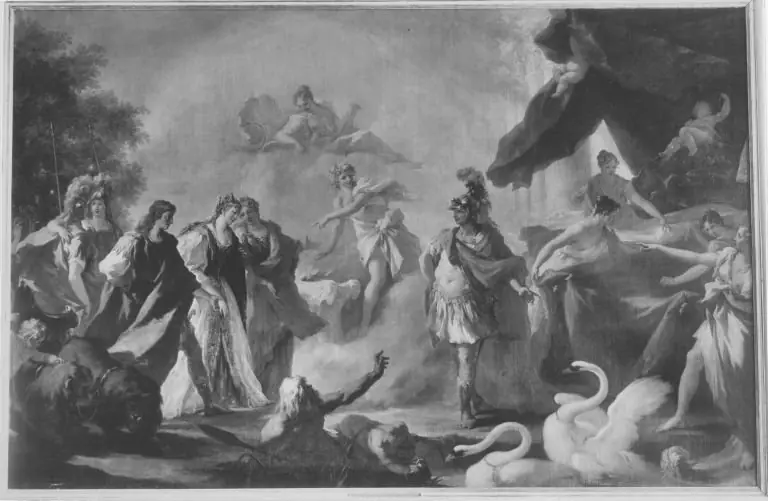 Beilager des Kurfürsten mit Maria Luisa
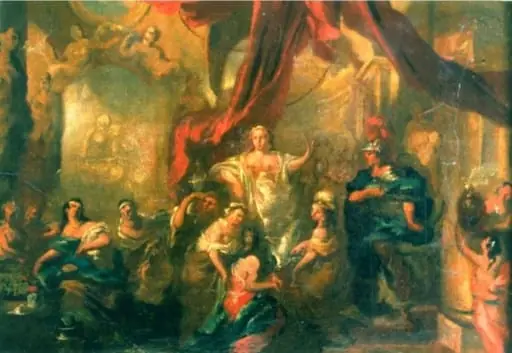 Scenă alegorică
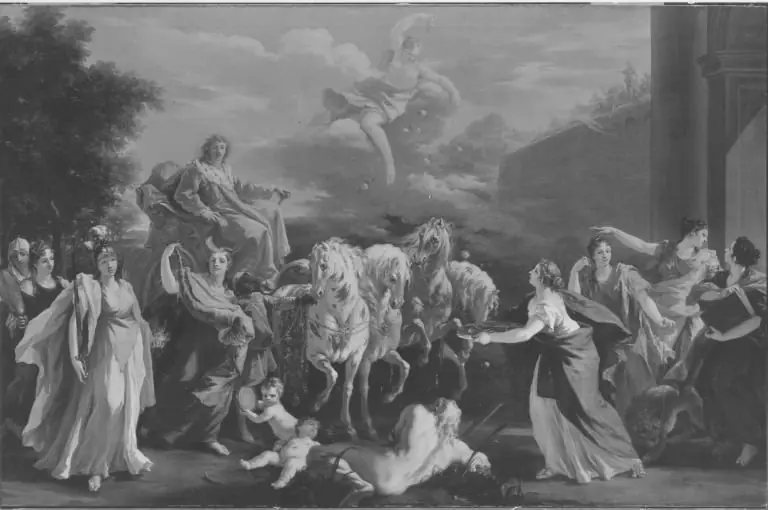 Einzug des Kurfürsten Johann Wilhelm von der Pfalz
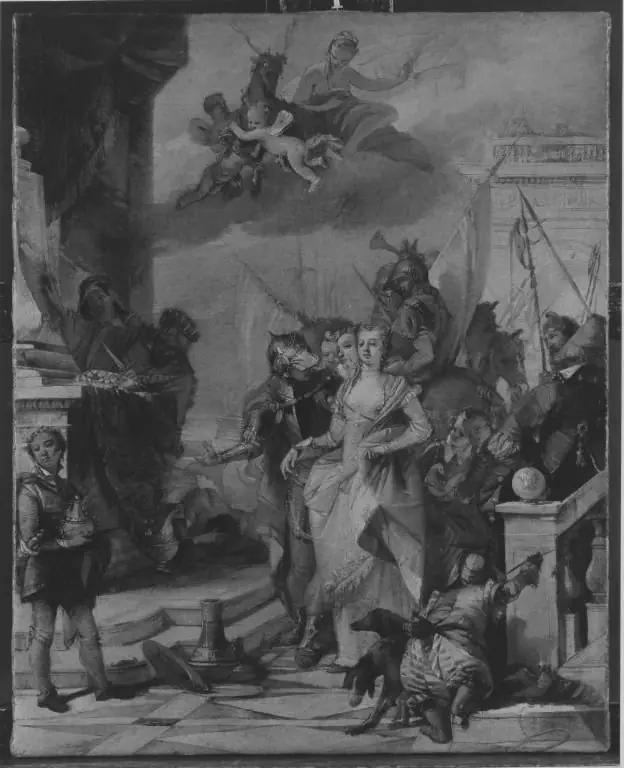 Iphigenie wird zum Tempel geführt
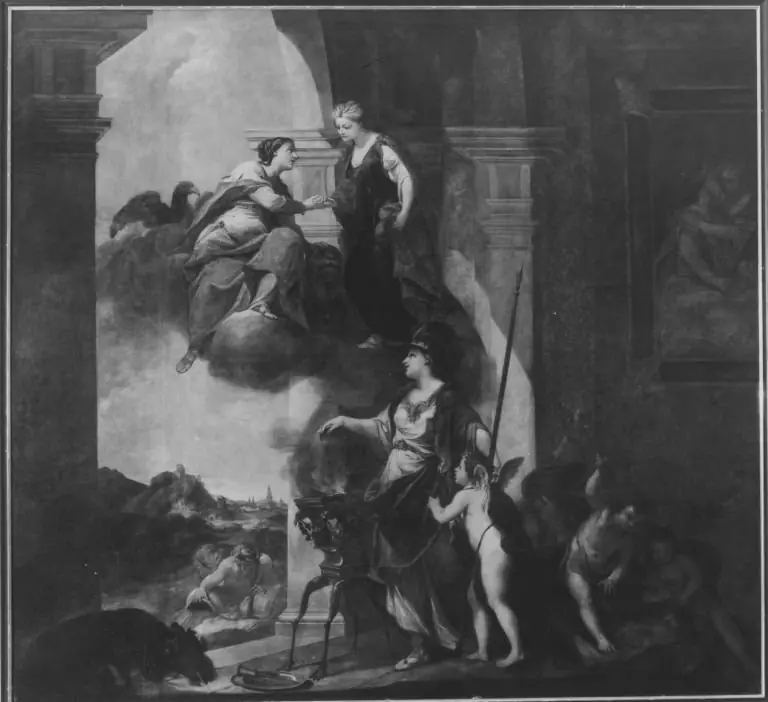 Minerva von Hymen Begleitet
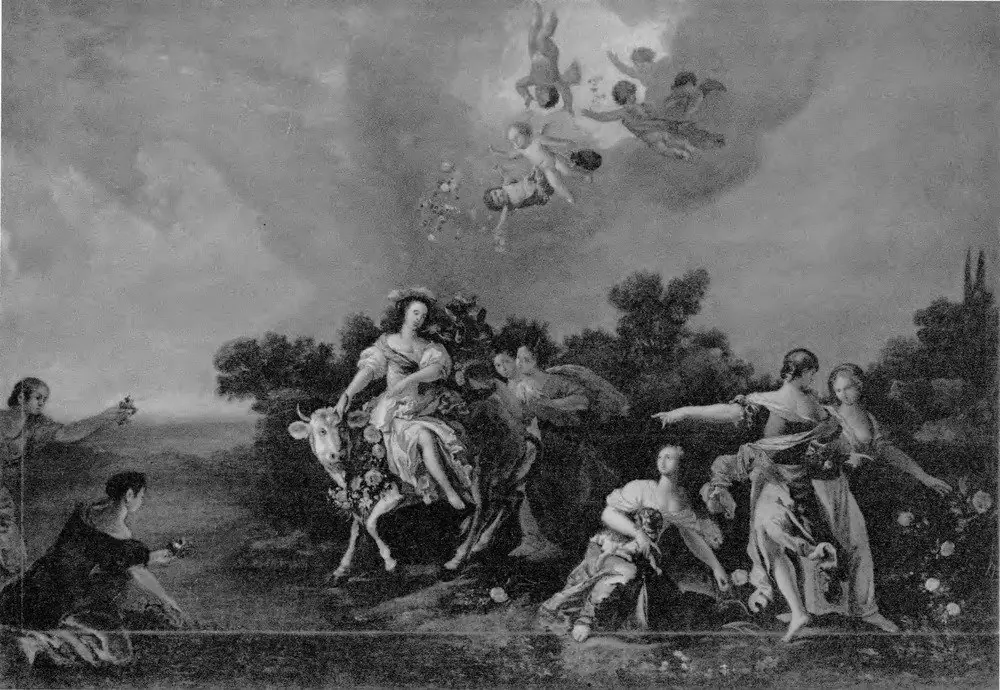 The Rape of Europa
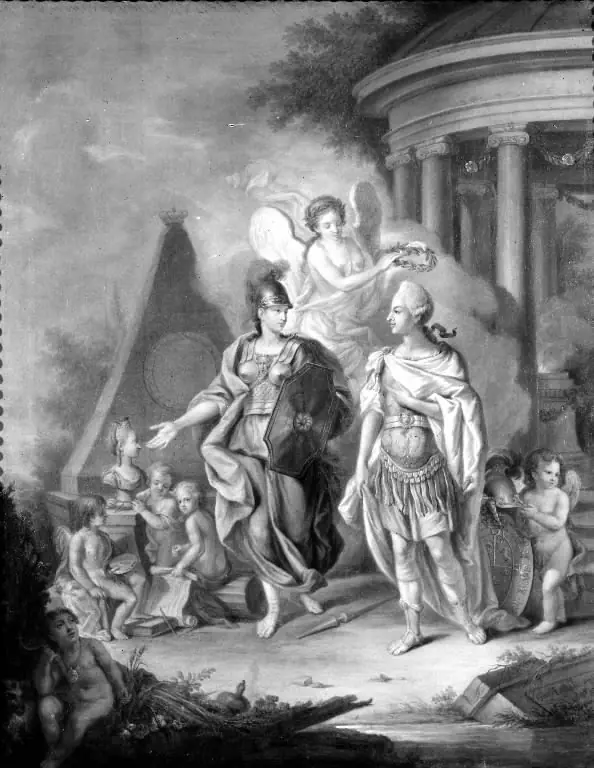 Christian VII som kunstens og videnskabens beskytter. Allegori
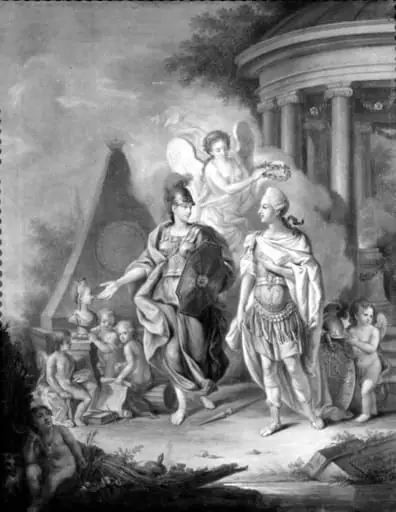 Christian VII som kunstens og videnskabens beskytter. Allegori
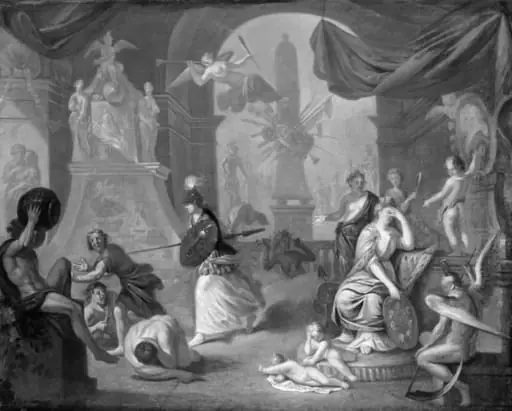 An Allegory
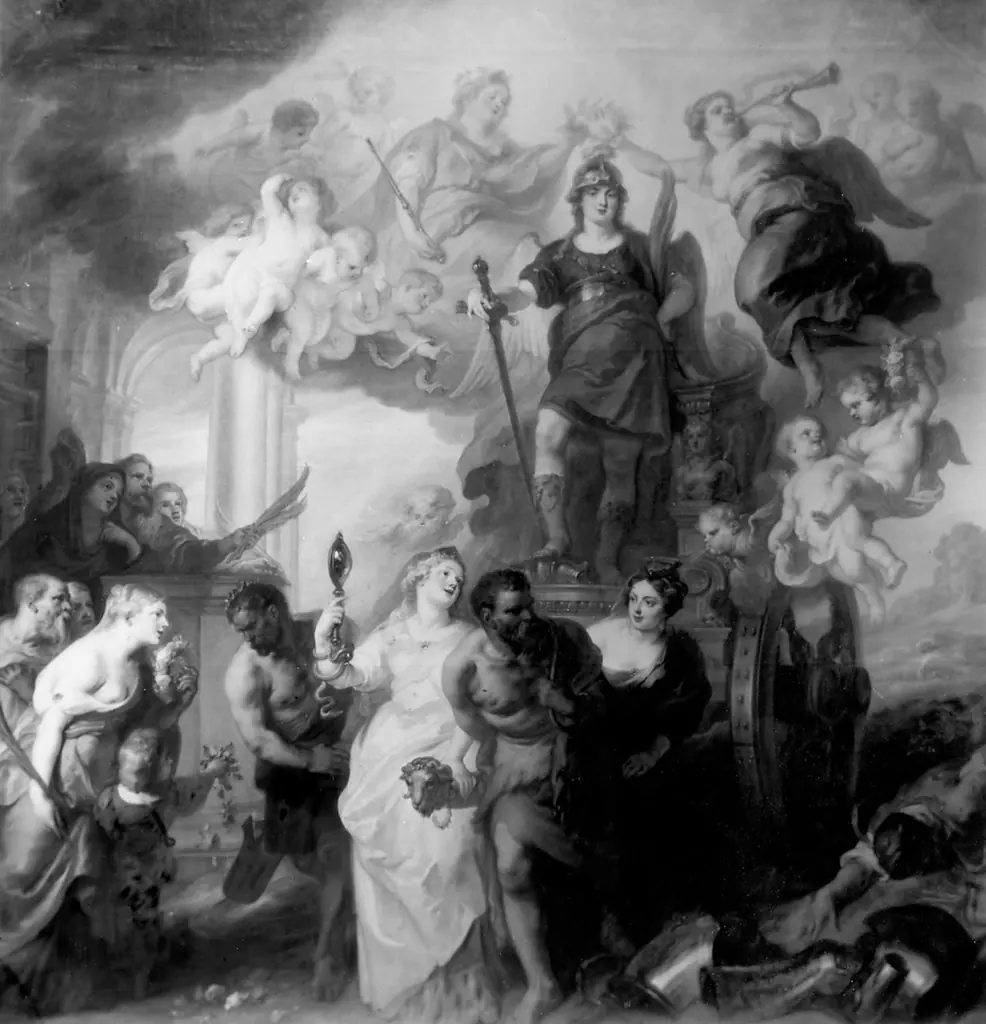 Rückkehr des Friedens
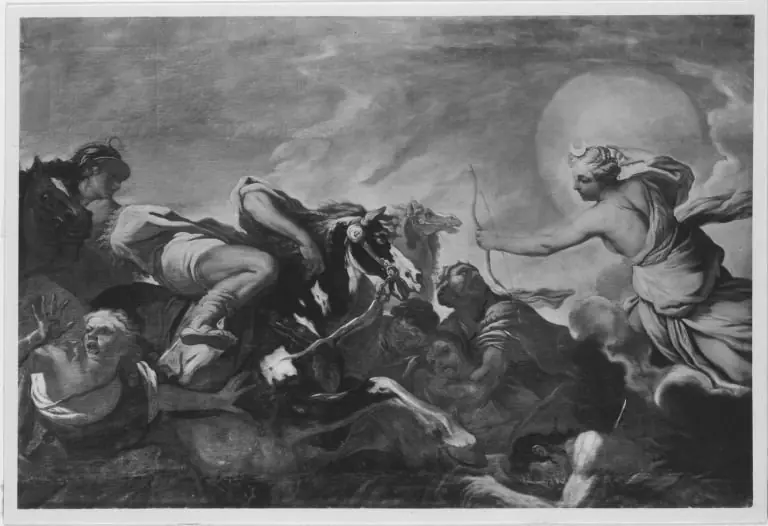 Diana tötet die Kinder der Niobe
 Plafondstuk met de apotheose van een vorst, die door Mars en Minerva tot Jupiter wordt gevoerd