Artwork
A Vase of Flowers
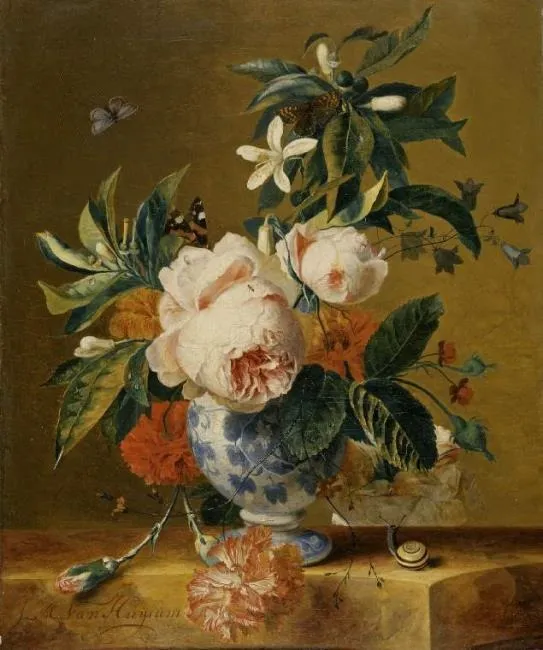
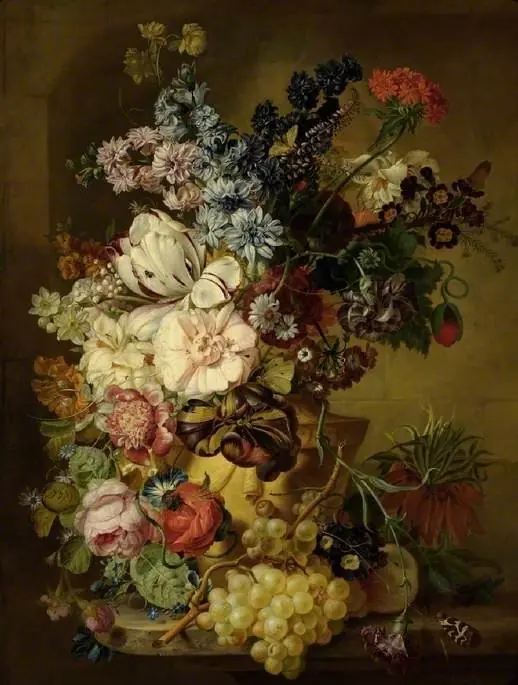
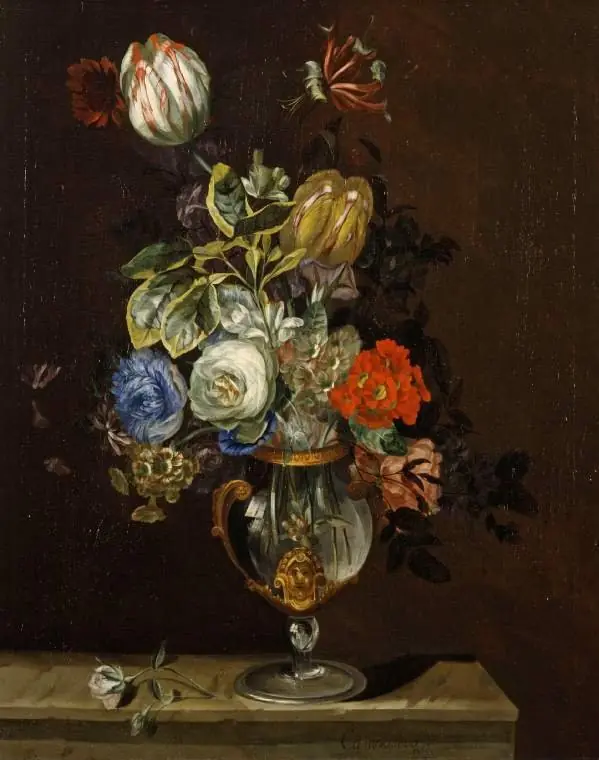
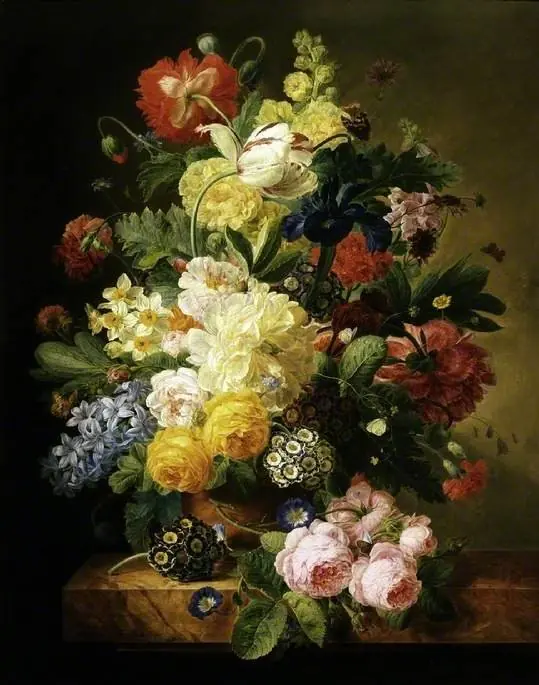
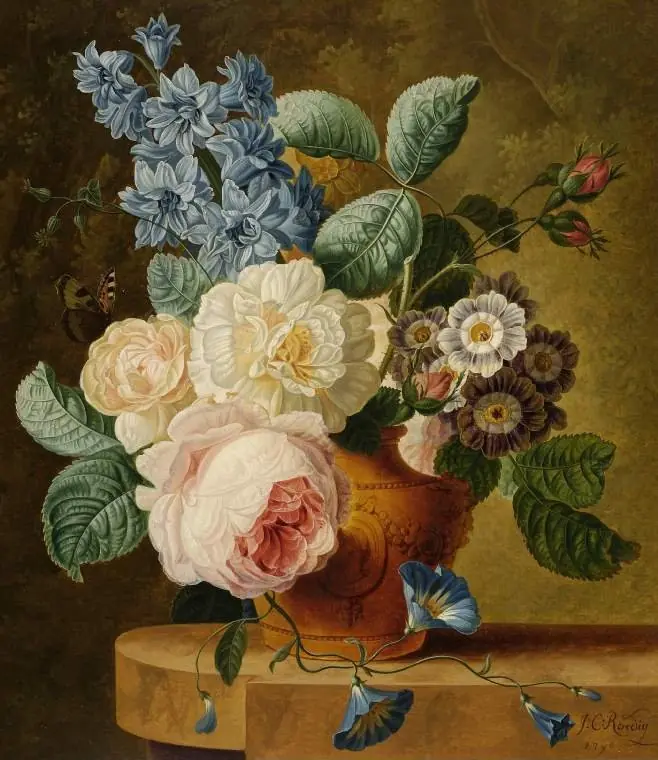
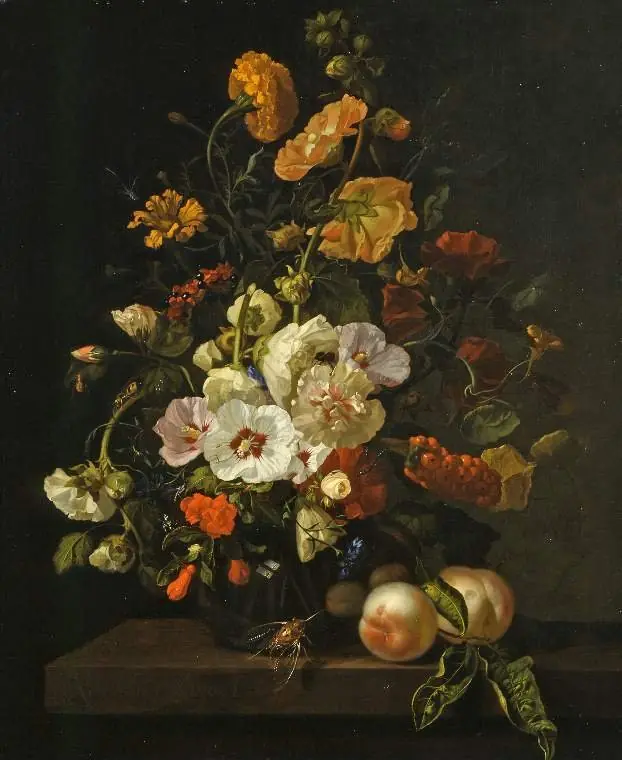
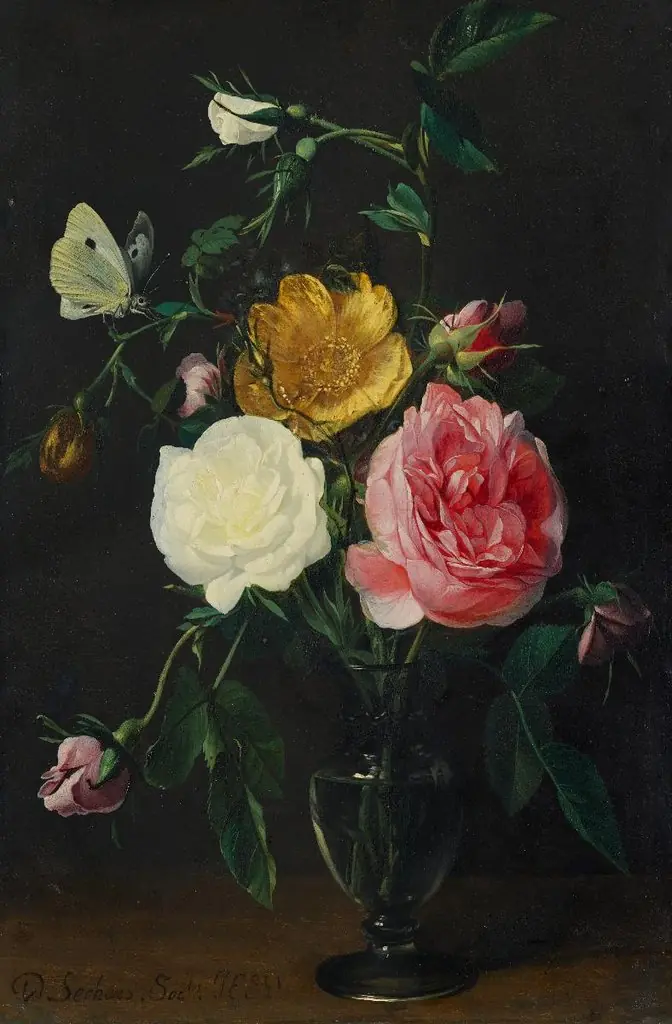
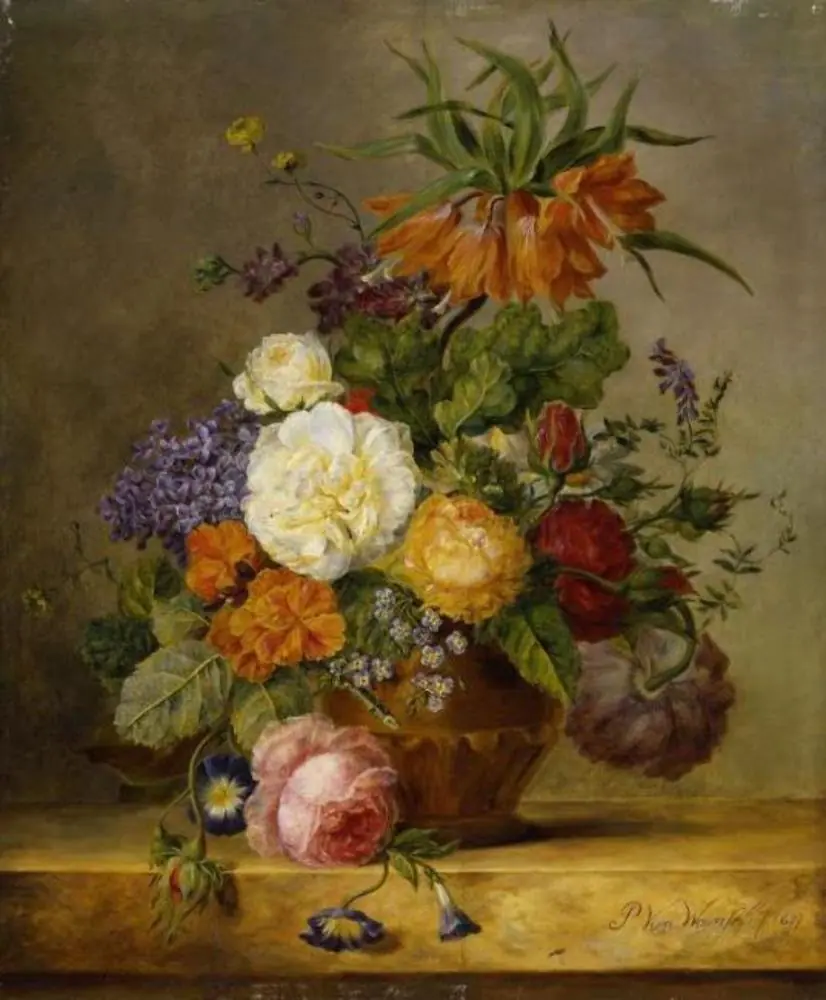
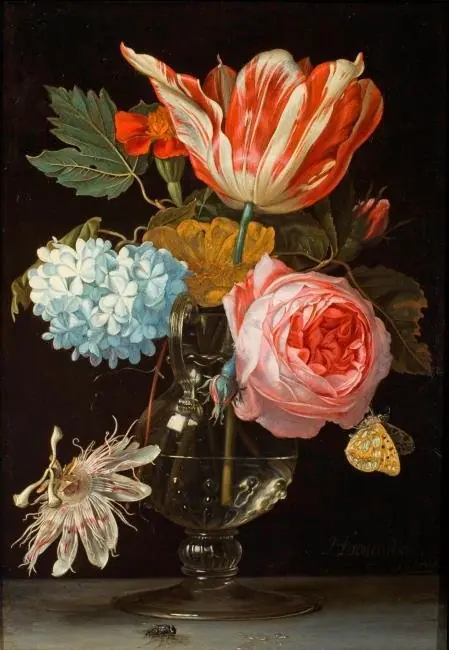
A Vase of Flowers is an oil painting by the Rococo painting artist Francina Margaretha van Huysum. It dates from 1729 and is held in the collection of the Fitzwilliam Museum.
About this work
Overview
The work exemplifies the Dutch tradition of floral still life, emphasizing naturalism and careful observation over theatricality.
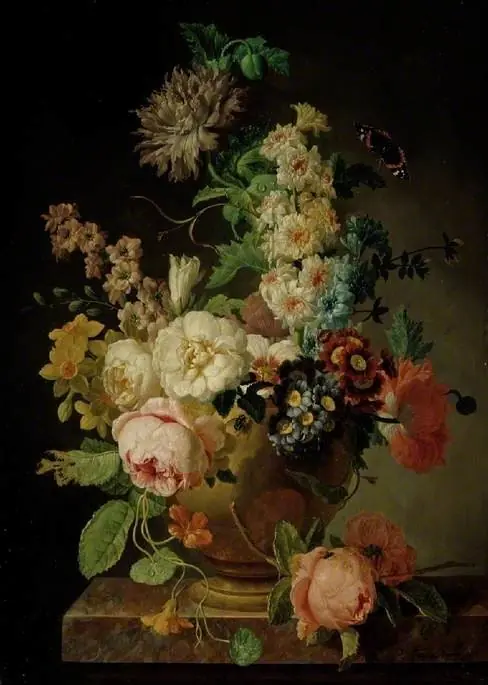
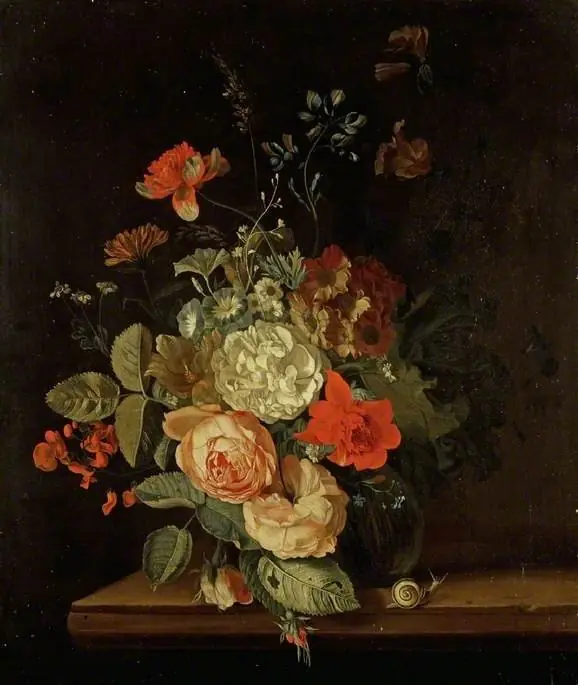
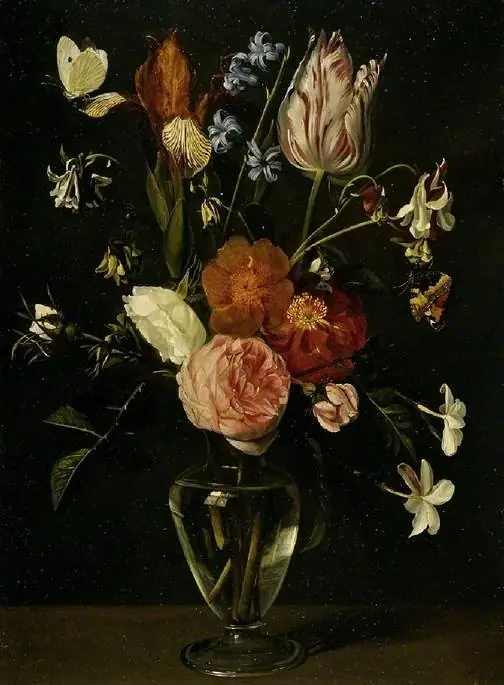
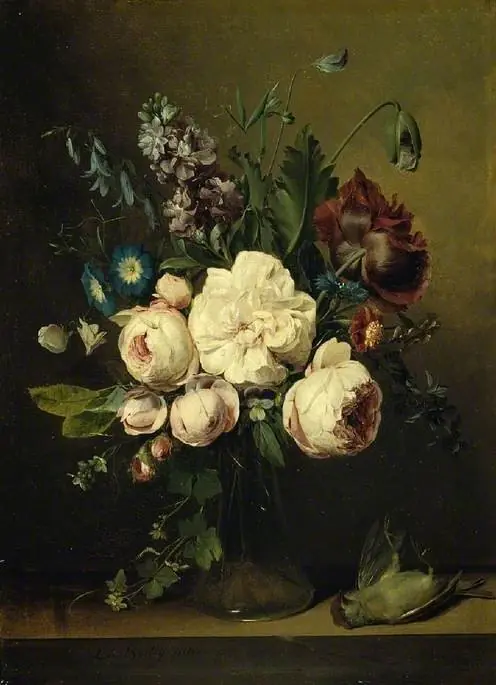
Painted in 1729, A Vase of Flowers is an oil-on-canvas still life by Francina Margaretha van Huysum. It depicts a ceramic vase filled with blossoms, positioned on a wooden table against a muted brown wall. The composition includes delicate flora, insects, and a snail, all rendered with quiet precision. The work exemplifies the Dutch tradition of floral still life, emphasizing naturalism and careful observation over theatricality.
Subject & Meaning
The arrangement features white and pink blooms, lush green foliage, and small creatures—a butterfly and a snail—nestled near the vase. These elements suggest themes of transience and the quiet rhythms of nature. The inclusion of insects, often overlooked, invites contemplation of life’s fleeting moments. The painting avoids overt symbolism, instead conveying serenity through understated detail and balanced composition.
Technique & Style
Van Huysum employed fine brushwork and layered glazes to achieve subtle gradations of color and texture. Petals appear translucent, leaves glisten with moisture, and the ceramic vase reflects ambient light with cool clarity. The smooth wooden surface and soft shadows ground the scene in tangible space. Her technique reflects the meticulous approach of Dutch still life painters, prioritizing optical accuracy and tactile realism.
History & Provenance
The painting has been in the collection of the Fitzwilliam Museum since the 19th century, acquired as part of a broader donation of Dutch and Flemish works. Its attribution to Francina Margaretha van Huysum is supported by stylistic parallels to her known works and archival records of her activity in Amsterdam during the early 1700s. The painting’s provenance remains largely unbroken since its creation.
Context
Created during the height of Dutch still life painting, the work reflects a cultural fascination with botany and the domestication of nature. Van Huysum, part of a family of artists, contributed to a tradition dominated by male painters, yet her works were respected for their technical refinement. Such paintings often adorned private homes, serving as quiet meditations on beauty and impermanence.
Legacy
Though less widely known than her male contemporaries, van Huysum’s work contributes to the recognition of women artists in 18th-century Dutch art. A Vase of Flowers remains a representative example of refined floral still life, valued for its calm precision and understated elegance. It continues to be studied for its technique and as evidence of the expanding role of female artists in the genre.
Artist & collection
Artist
Francina Margaretha van Huysum
Francina Margaretha van Huysum (1707–1789) was an artist, born in Amsterdam.