Artwork
Old Chelsea Church
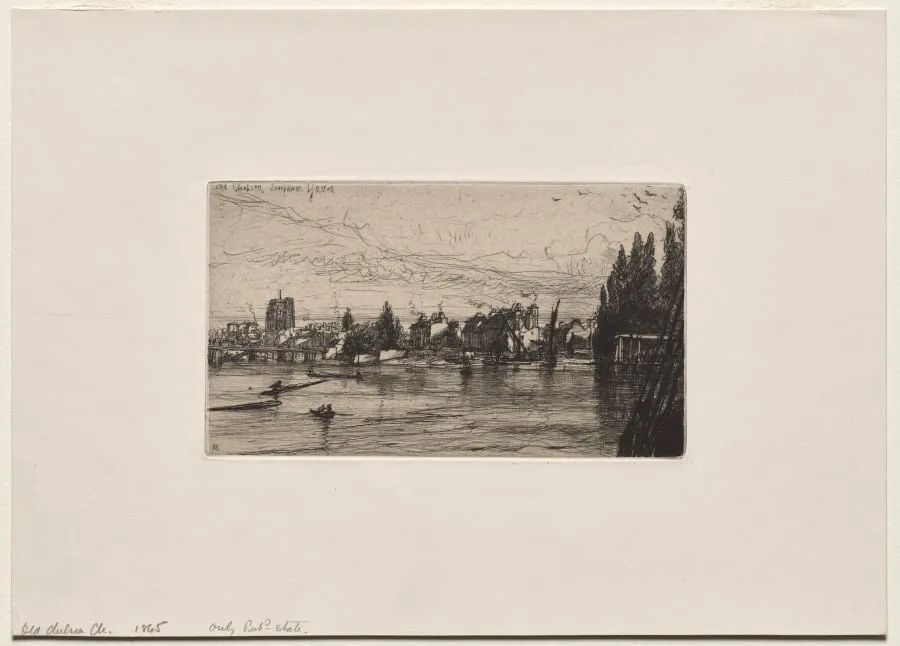
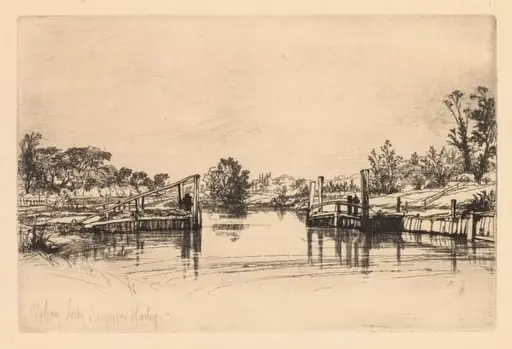
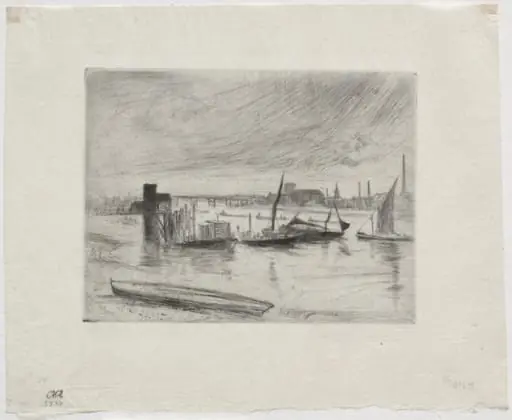
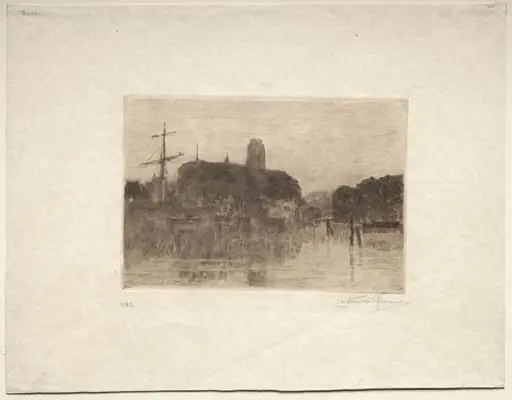
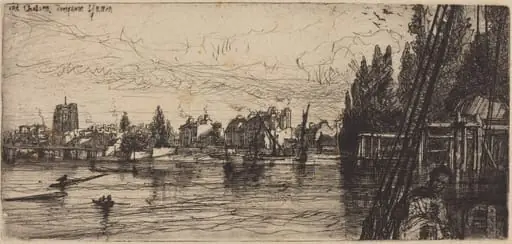
Old Chelsea Church is a print by the Impressionist artist Francis Seymour Haden. It dates from 1865 and is held in the collection of the Cleveland Museum of Art.
About this work
Overview
The work is part of the collection at The Cleveland Museum of Art, where it is valued for its intimate scale and nuanced handling of light and texture.
Created in 1865 by Francis Seymour Haden, Old Chelsea Church is a print made using etching and drypoint techniques. It captures the quiet presence of the historic church in London’s Chelsea district, set against the still waters of the River Thames. The work is part of the collection at The Cleveland Museum of Art, where it is valued for its intimate scale and nuanced handling of light and texture.
Subject & Meaning
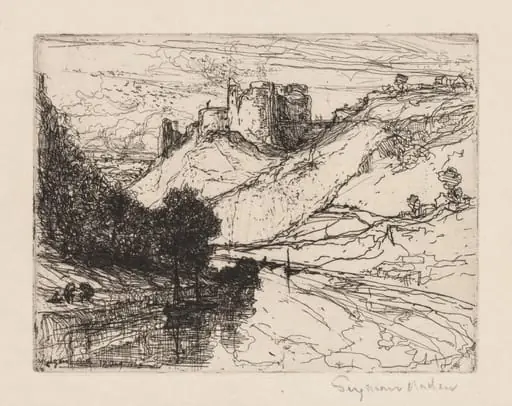
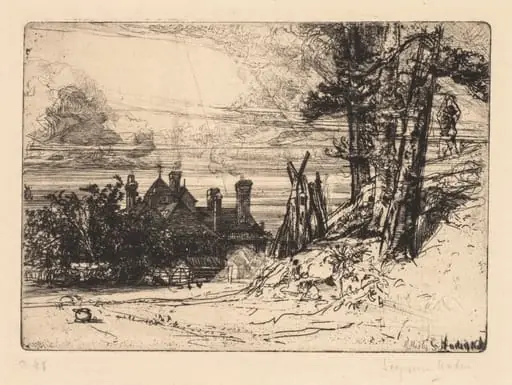
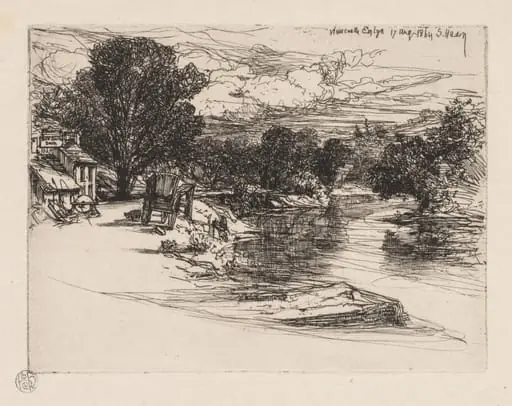
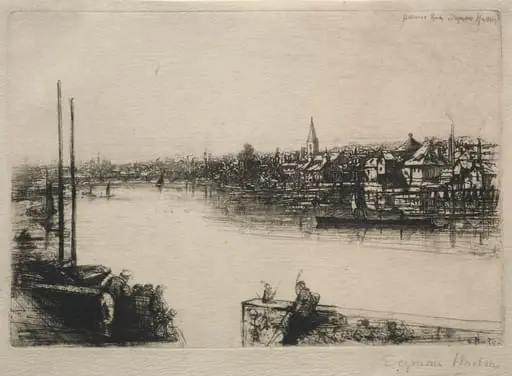
The scene portrays Old Chelsea Church, a real structure with medieval origins, surrounded by modest riverside buildings and trees. The inclusion of small boats on the water suggests daily life along the Thames without disrupting the overall stillness. Haden’s choice of subject reflects a quiet reverence for England’s architectural heritage, emphasizing continuity rather than grandeur.
Technique & Style
Haden employed etching and drypoint to achieve fine, expressive lines and rich tonal variations. The contrast between darkened shadows and delicate highlights models the church’s stonework and the water’s surface. Subtle textures in the foliage and brickwork reveal his meticulous approach, while the loose, atmospheric handling of the background enhances spatial depth without overt detail.
History & Provenance
The print was made during a period when Haden was deeply engaged in printmaking, often depicting English landscapes and architecture. It entered The Cleveland Museum of Art’s collection in the 20th century, likely through a donation or acquisition focused on British graphic art. Its preservation reflects early interest in etching as a serious artistic medium beyond reproductive purposes.
Context
In mid-19th century Britain, there was a revival of interest in etching as an original art form, led by artists like Haden who rejected mass-produced imagery. Old Chelsea Church aligns with this movement, favoring personal observation over idealization. The church itself, though not a major monument, represented the enduring character of London’s older neighborhoods amid rapid urban change.
Legacy
Haden’s work contributed to the reestablishment of etching as a respected medium in Britain. Old Chelsea Church exemplifies his commitment to capturing quiet, unembellished scenes with technical precision. Though not widely exhibited today, the print remains a reference point for understanding the aesthetic values of the British etching revival in the Victorian era.
Artist & collection