Artwork
Out of Study Window
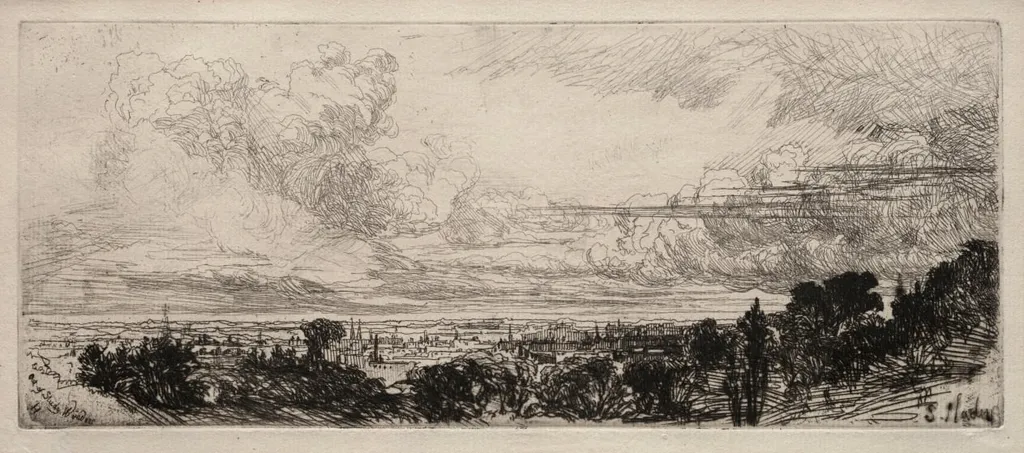
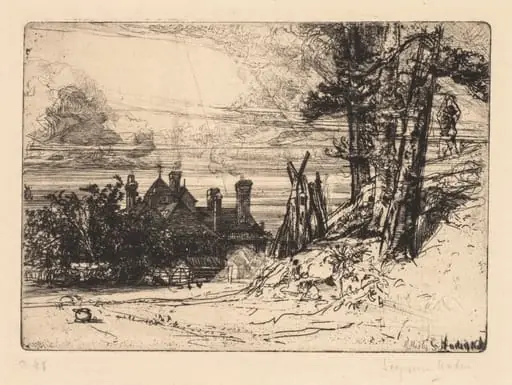
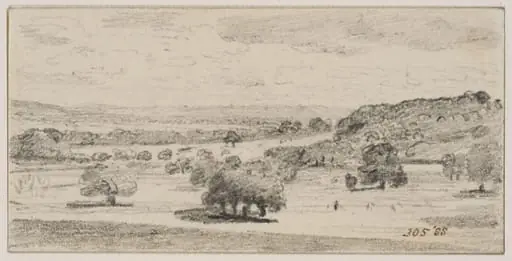
Out of Study Window is a print by Francis Seymour Haden. It dates from 1868 and is held in the collection of the Cleveland Museum of Art.
About this work
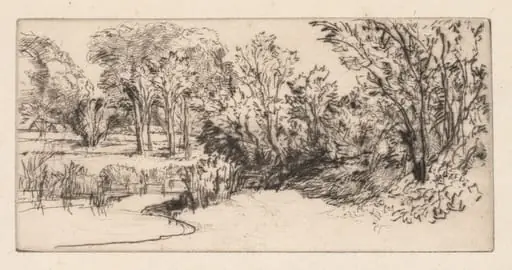
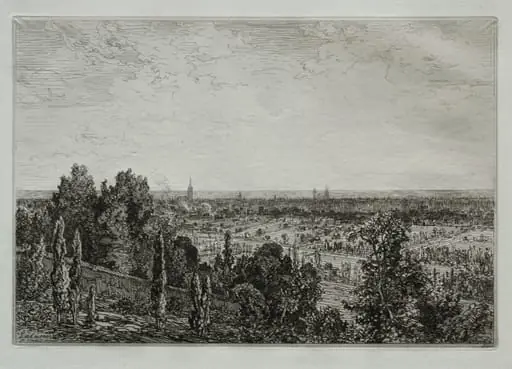
The artist's use of light and shadow creates a sense of atmosphere, with the tree's leaves and branches casting intricate shadows on the ground.
This painting presents a serene landscape, with a large tree standing in the foreground on the right side. The tree's branches stretch upwards, while its trunk is adorned with leaves that appear to be blowing in the wind. In the background, a few buildings are visible, adding depth to the scene.
The artist's use of light and shadow creates a sense of atmosphere, with the tree's leaves and branches casting intricate shadows on the ground. The overall effect is one of tranquility, inviting the viewer to step into the peaceful world depicted in the painting.
For more information on the artist behind this work, explore the profile of Francis Seymour Haden (British, 1818–1910).
Overview
Created around 1868 by Francis Seymour Haden, Out of Study Window is a drypoint etching that captures a quiet outdoor scene viewed through a window. The work belongs to the collection of The Cleveland Museum of Art and exemplifies Haden’s interest in intimate, observational landscapes. Unlike grand historical subjects, this piece focuses on a modest, everyday view, reflecting the artist’s preference for quiet, personal moments in nature.
Subject & Meaning
The composition centers on a large tree in the foreground, its branches reaching upward and casting delicate shadows across the ground. Behind it, distant buildings suggest a rural or suburban setting, hinting at human presence without intrusion. The scene evokes contemplation rather than narrative, emphasizing stillness and the subtle interplay between nature and the built environment. It may reflect the artist’s meditative state while working indoors, looking outward.
Technique & Style
Haden employed drypoint etching, a technique known for its rich, velvety lines and tonal depth. The tree’s foliage and the play of light are rendered through fine, expressive incisions that suggest movement and texture without detail. The contrast between the dark, dense branches and the lighter, open background creates atmospheric perspective. His approach favors suggestion over precision, aligning with the aesthetic of the British etching revival.
History & Provenance
The print was made during a period when Haden was actively promoting etching as a fine art medium in Britain. It entered The Cleveland Museum of Art’s collection through established acquisition channels, likely as part of a broader interest in 19th-century British prints. Its provenance remains unbroken since its acquisition, with no record of significant ownership changes beyond institutional custody.
Context
In the late 1860s, Haden was part of a movement redefining etching as an autonomous art form, distinct from reproductive engraving. Artists like him turned to personal, everyday subjects as a reaction against academic grandeur. Out of Study Window reflects this shift, aligning with contemporary interests in naturalism and the quiet beauty of ordinary views, influenced by both French Barbizon painters and Japanese prints.
Legacy
Though not widely exhibited today, the work stands as a representative example of Haden’s contribution to the revival of etching in Britain. Its restrained composition and technical finesse influenced later generations of printmakers who valued intimacy and craftsmanship over spectacle. The piece remains a quiet testament to the artistic potential of the everyday view.
Artist & collection